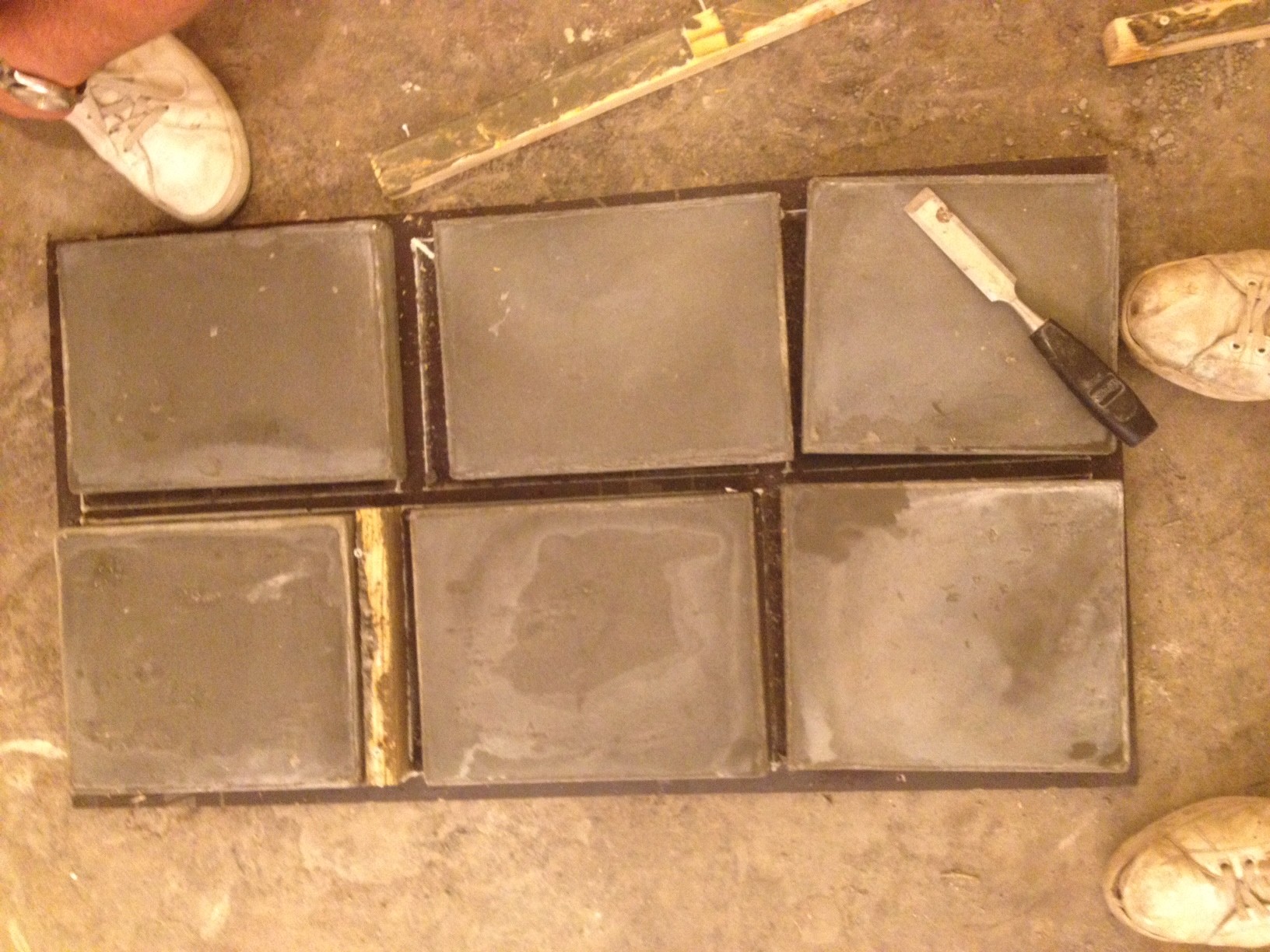
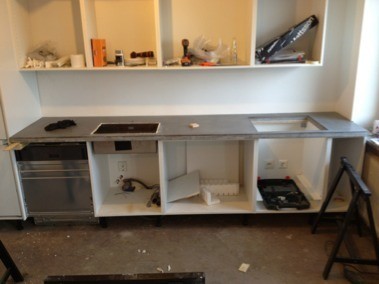
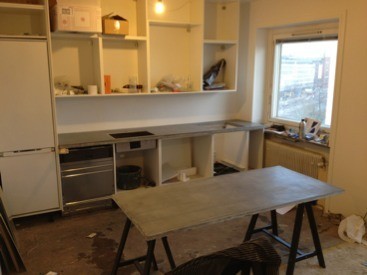
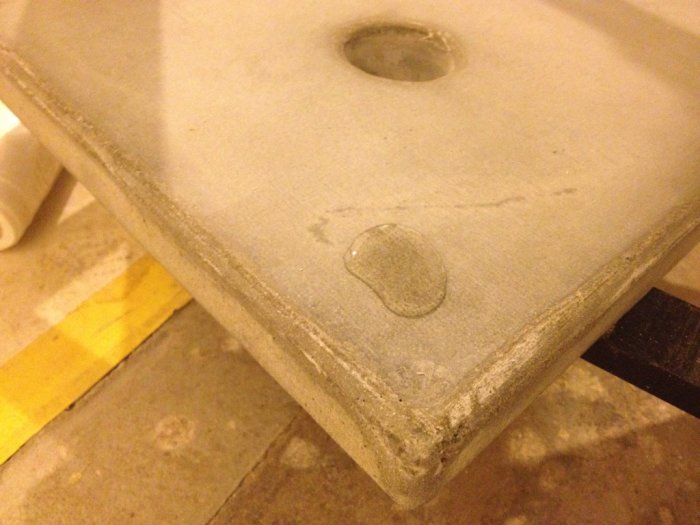
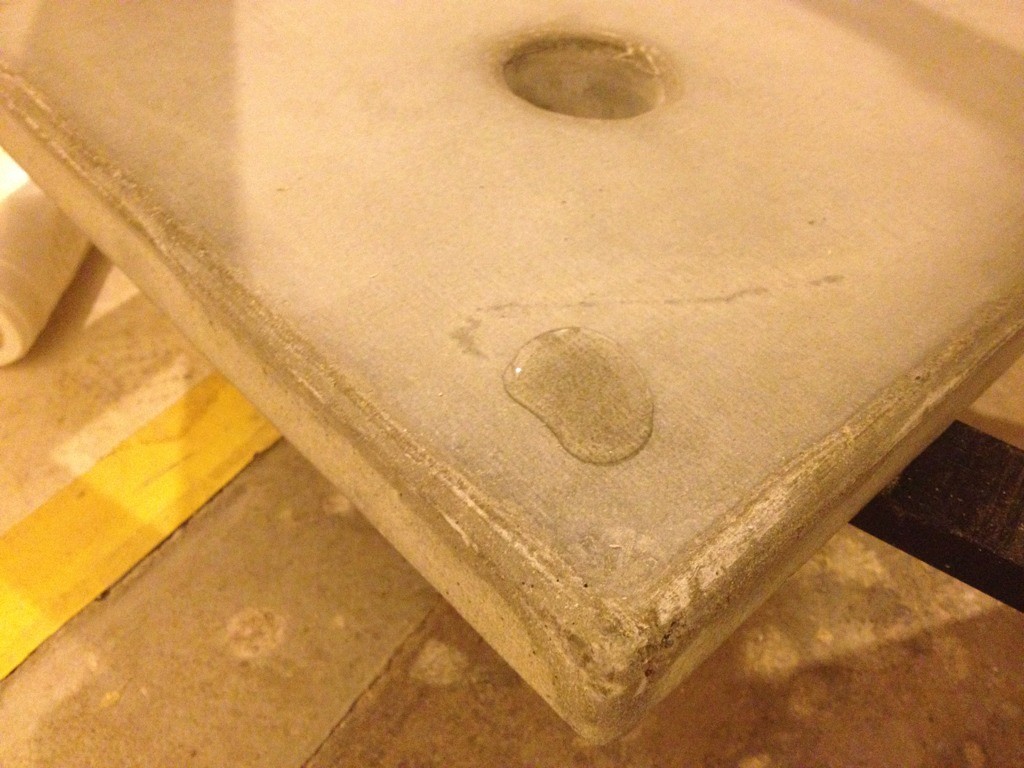
Bottom 3 pieces Cast fine.
Top 3 pieces with expanding mortar.
Cast fine turned out a bit patchy and not as dense.
The expanding mortar turned out perfect!
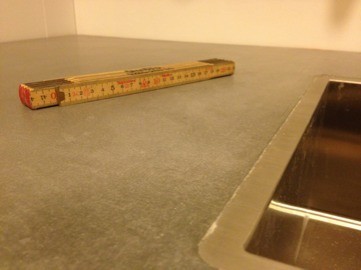
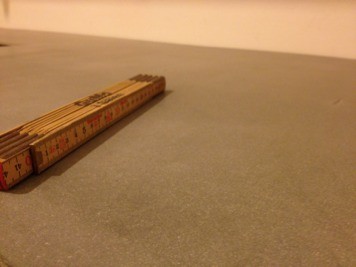
Sanded lightly with wet sandpaper 1200 and got a very fine surface (don't want to expose the ballast)... Now it's just a matter of treating the surface of the slabs to make sure they look good too...
Have a great weekend!
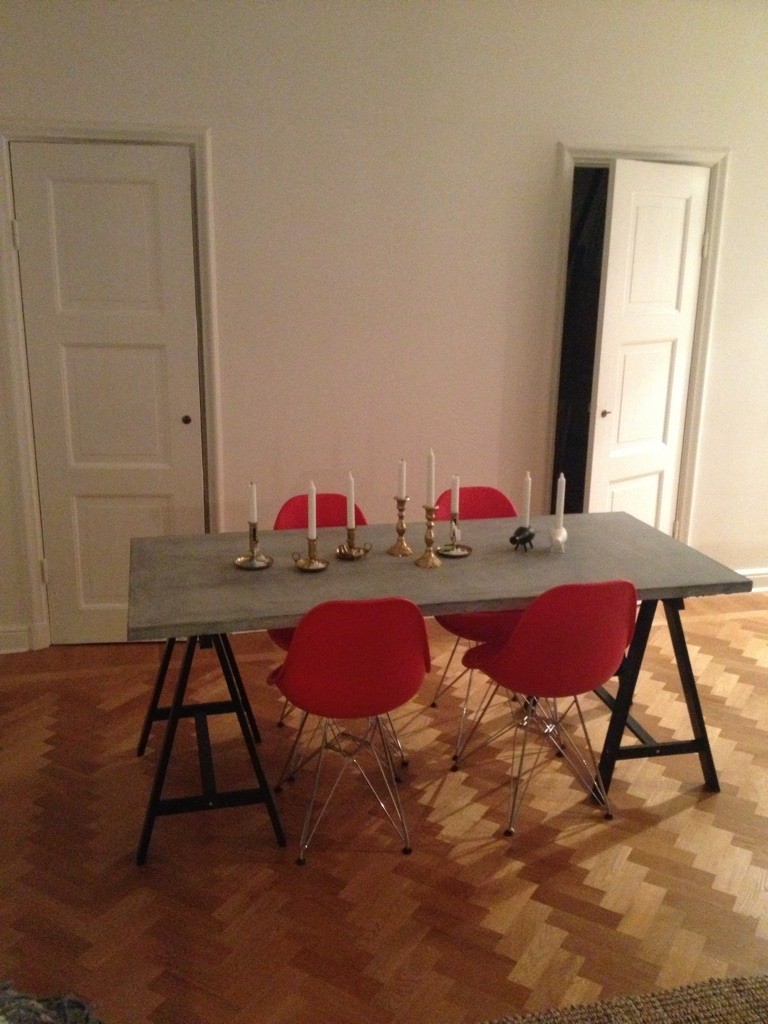
The table is now finished.
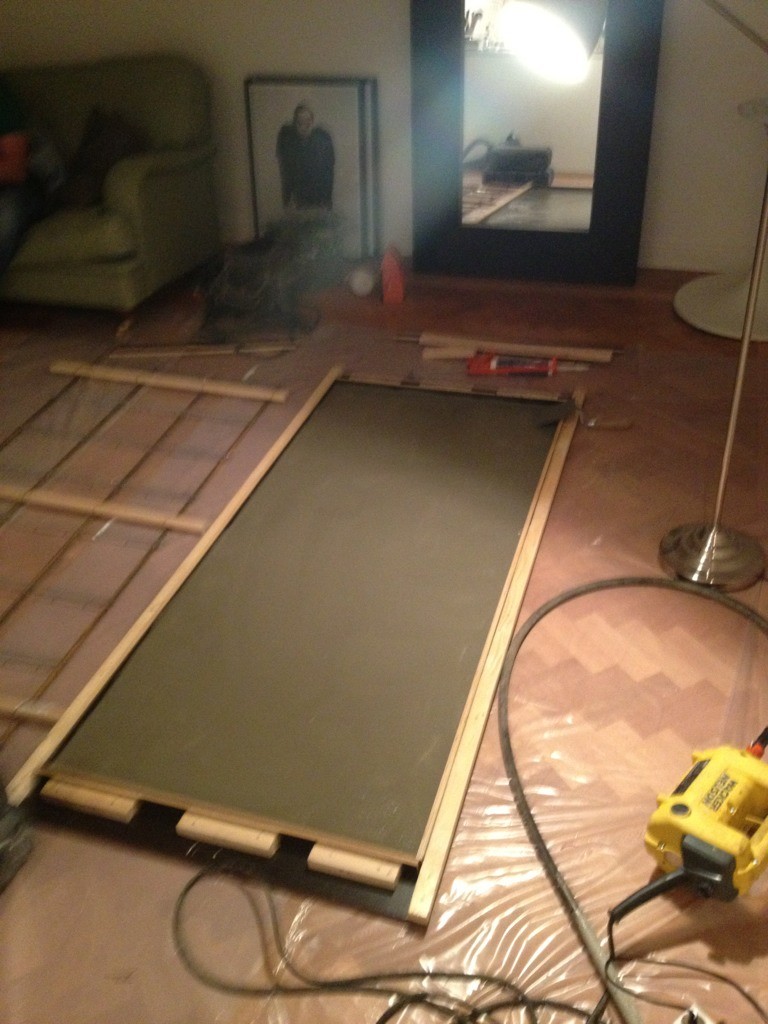
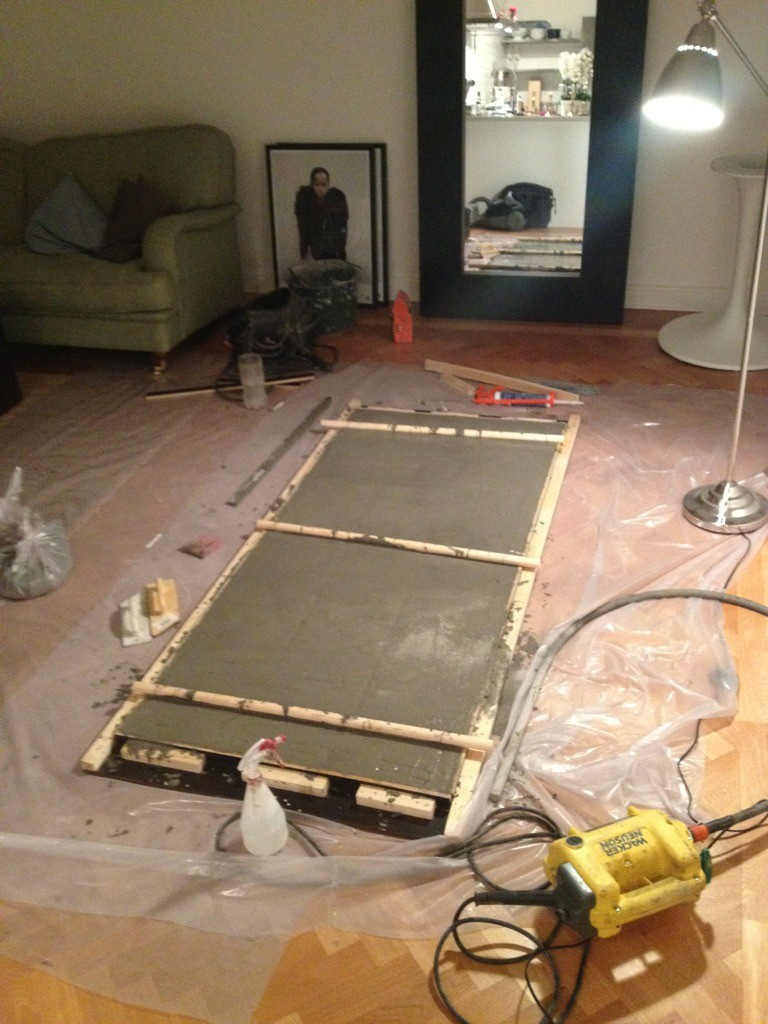
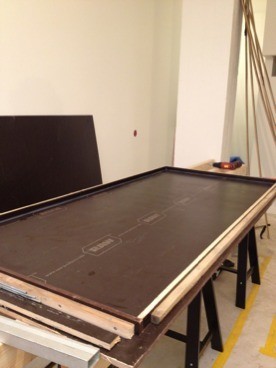
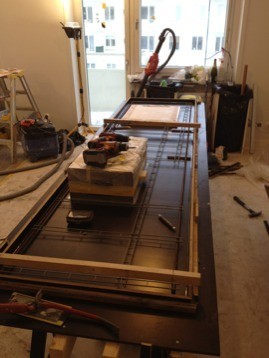
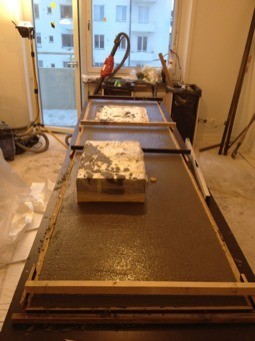
3 pictures showing the table during casting, after casting, and de-molded in place.
The result turned out great!
Lightly sanded with wet sandpaper and now just needs to be surface treated with oil...
The legs in this case are sawhorses from Ikea. This table I made for a friend, for the one I'm going to make for myself it will have welded legs in black steel.
Well done! Nice!
What kind of reinforcement did you use? Standard mesh? Thickness of the slab?
I'm planning to cast a countertop 3.6 meters long and I'm also curious about the weight!
I assume you need to rent a concrete vibrator to get it right, correct?
Many questions...
The slab weighs 120 kg. We were three "youngsters" in our early 30s, and it was quite easy to handle as long as you don't need to move it very far. We cast it directly in the apartment to make it as simple as possible.
You calculate the weight of the slab by multiplying its volume by the concrete's density, which is 2400 kg/cubic meter (2.4 kg/liter).
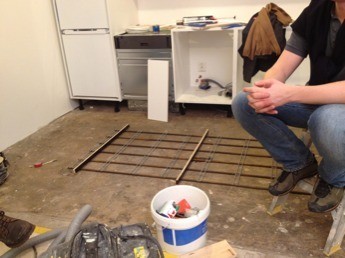
I used four 12mm rebar rods lengthwise and about 10 cross steel bars for reinforcement. I tied these together into a grid, which can be seen next to the form in one of the pictures.
I used a small poker vibrator with a tube thickness of about 25mm that I borrowed from work. I would never pour anything without vibrating. Of course, it can be done in several other ways, but if you have access to a poker vibrator or a vibrating table, that is obviously the best.
If I were to recommend anything, it would be to use expanding grout for its high flowability and a poker vibrator. Mixing cheaper concrete with more water to make it looser will not result in as good a final product. Mixing cheaper concrete with the right amount of water works, of course, but it then requires more extensive vibrating efforts and proper equipment. Expanding grout is very easy to work with.
Form and reinforcement were completed on Saturday. Poured on Sunday. Felt really good and everything went smoothly. Chose to make the slab 30 mm thick and reinforced with 6 longitudinal 12mm iron bars and a bunch of 40mm bistål as transverse reinforcement.
How many and how large are the pores? Can we be invited to an extreme close-up of the final result? How thin can you cast? I'm considering making a backsplash for the kitchen and I want it as thin as possible.
How thin depends mainly on how low you can build the mold and the size of the slab, as it becomes difficult to handle without breaking as it gets larger. 1 cm should not be any problem at all. Remember to impregnate since the splash guard would otherwise become very stained. I can take a close-up for you tomorrow of my slabs, but I can already tell you that there are no traces of air pores. I am very satisfied.