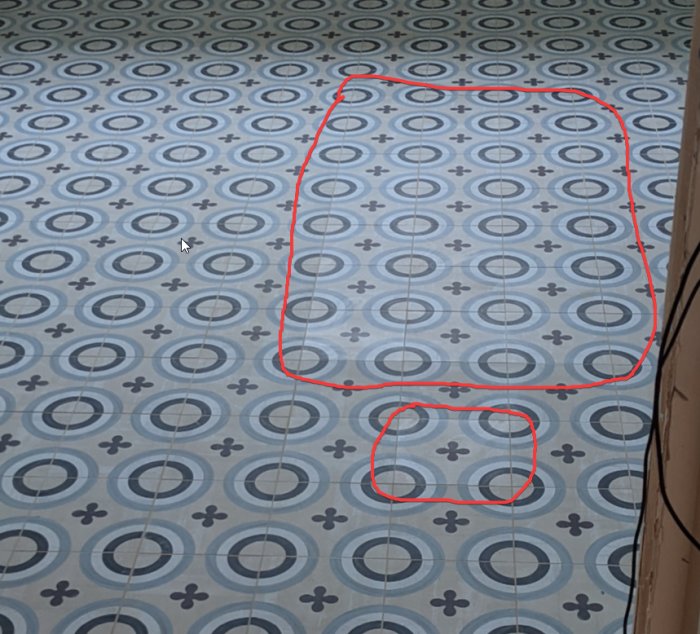
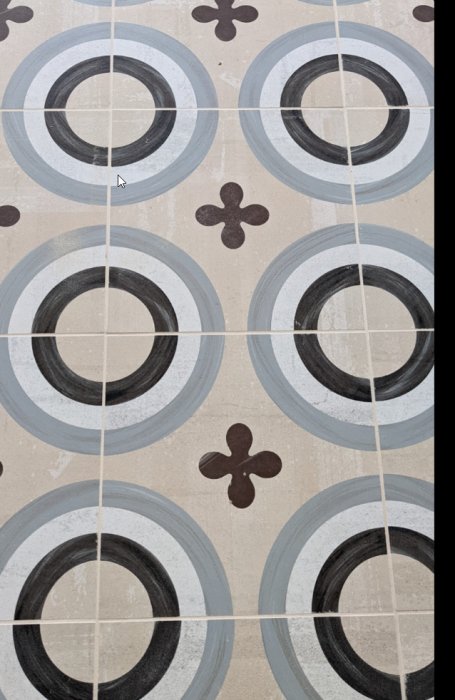
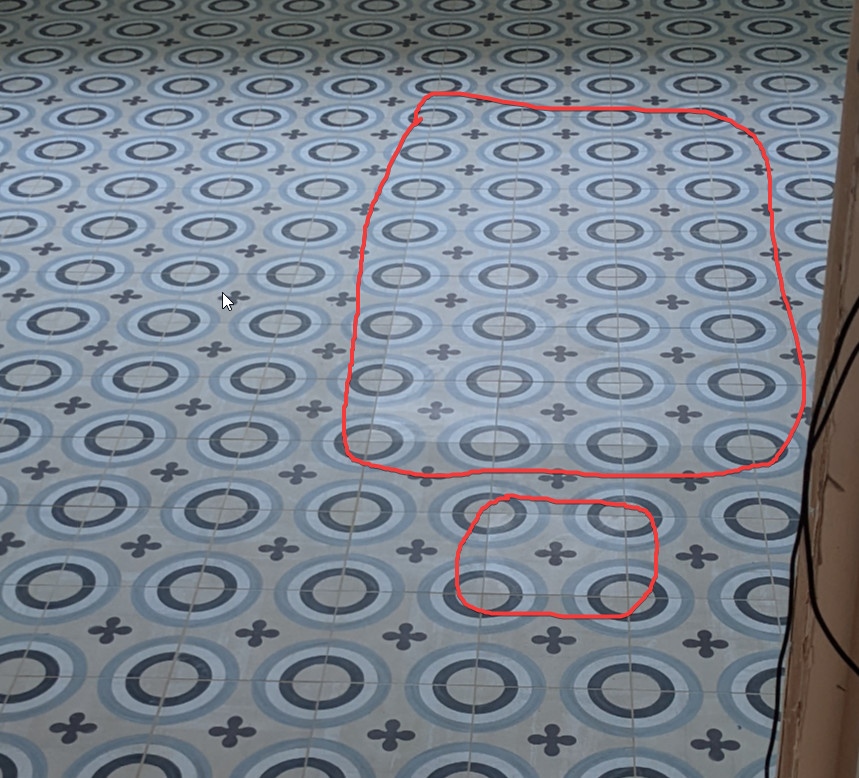
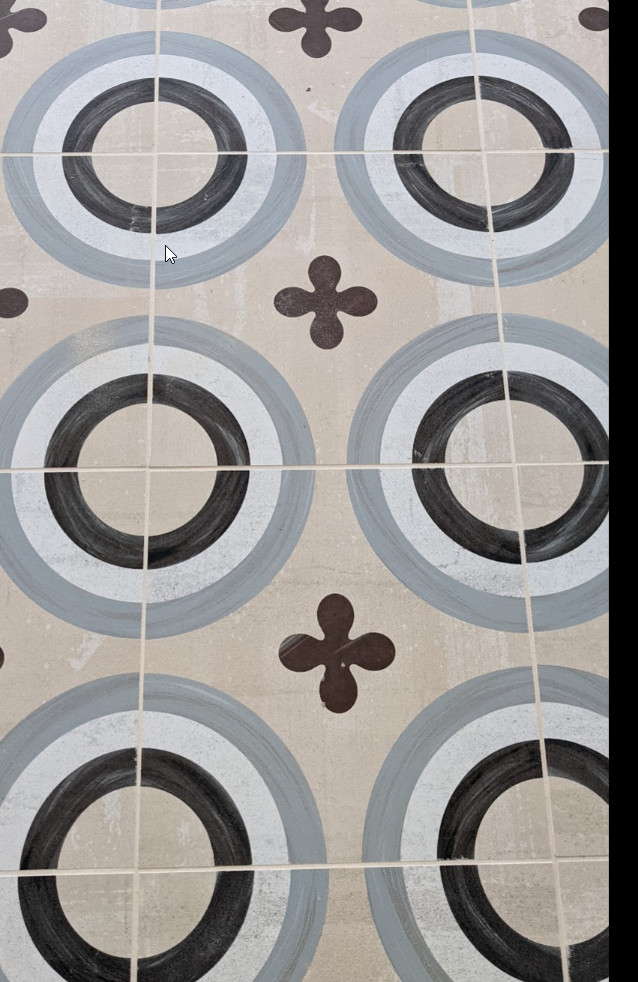
Renovating the kitchen and have just laid tiles and finished grouting when I discover an area with a different appearance (it has a different gloss that is visible under raking light, not otherwise/from above).
Upon checking the tile boxes, it turns out I received two different batches of tiles. 25 tiles have a different firing than the rest of the floor. I have contacted the retailer who is compensating financially and also delivering the correct batch (so my thread is not about that part).
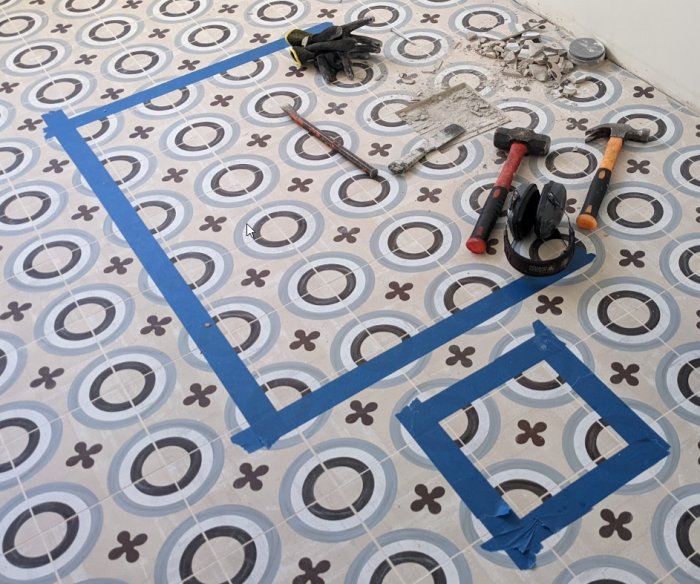
Since part of the floor will be under kitchen cabinets, I need to replace about 10 tiles to fix the issue. My question: how difficult is it to chisel out these 10 tiles without damaging the surrounding tiles? And what is the best method for removing the tiles in that case? The floor was laid with about 1mm grout.
Alternatively, since the issue is gloss. Is it possible to fix it another way? For example, dull the glossier tiles with a sander or another method, or treat the rest of the floor (wax or other) so the entire floor has a uniform gloss?
A bit unsure if it will fit in such a narrow joint, but with a diamond blade for the multicutter you should be able to remove the joint to then break a tile, which will allow you to pry up the others afterward. To crack a tile, something hard and pointed is sufficient.
If it's only visible in raking light, I would consider what's worse: a slight difference in sheen or risking a different appearance during reinstallation.
How long does the sheen difference last after the floor has been used? (I have no idea what cleaning and wear do to the surface).
To remove them, I would ask where you bought them.
I broke up tiles on a concrete floor by using a demolition hammer on the tile I wanted to remove. I thought it was an unnecessary risk to fiddle with the grout first.
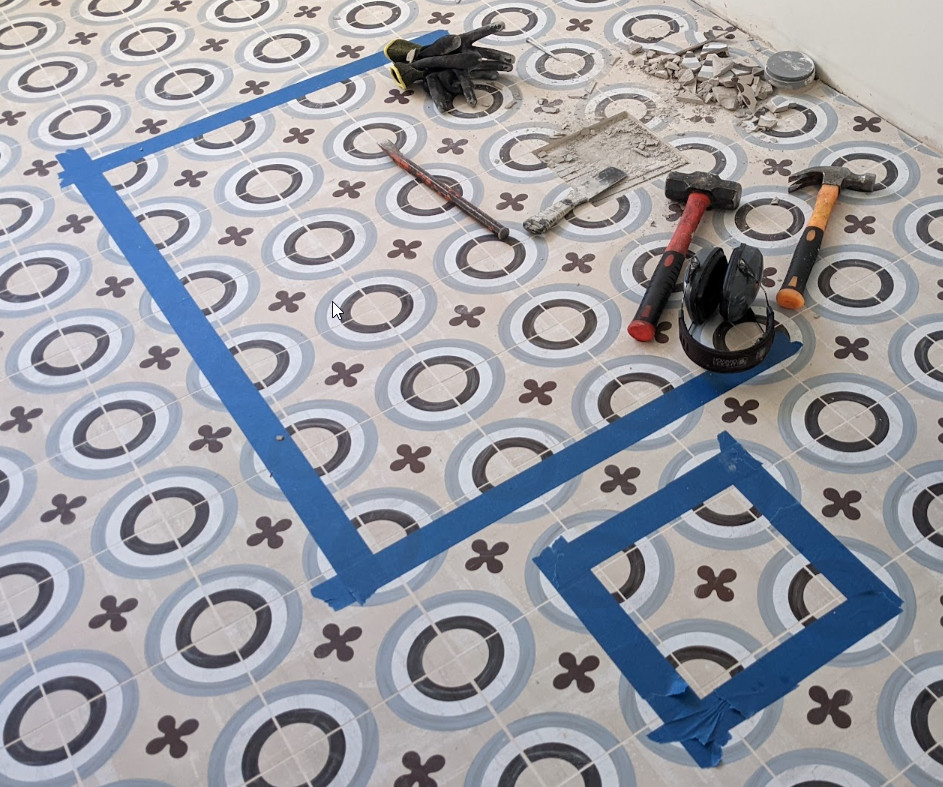
Now I have tested with a tile and it seems doable!
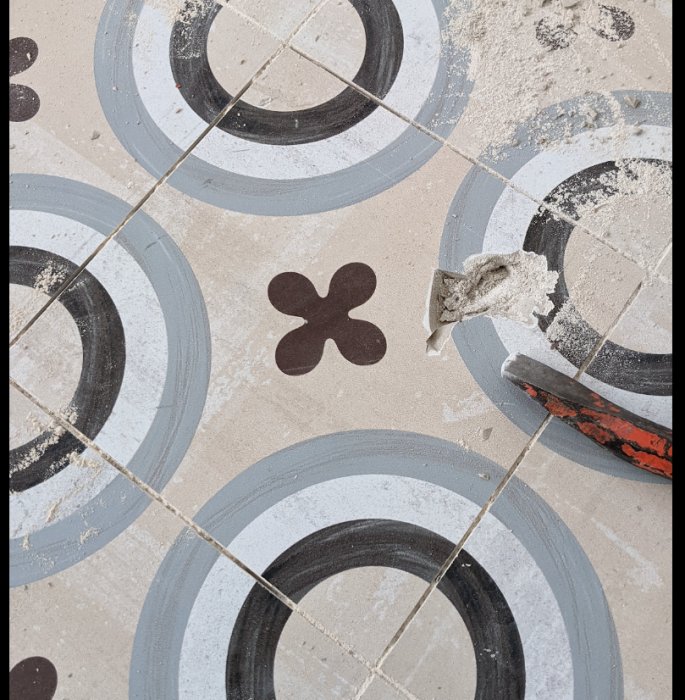
* Started by removing the grout with a knife/spatula
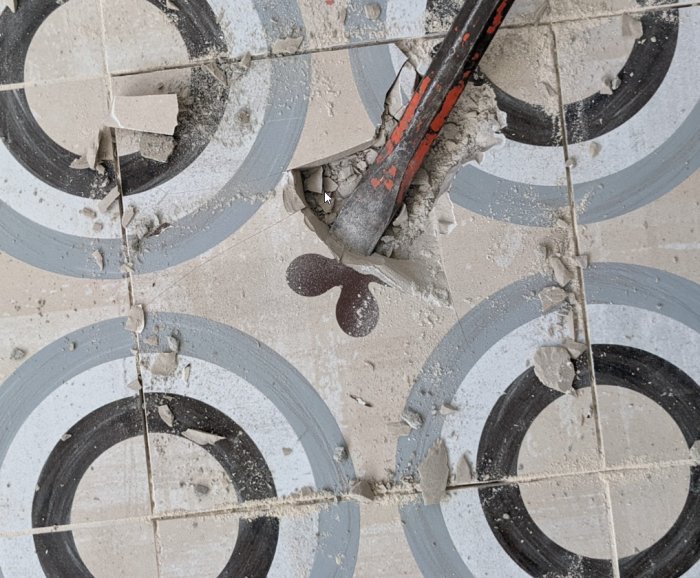
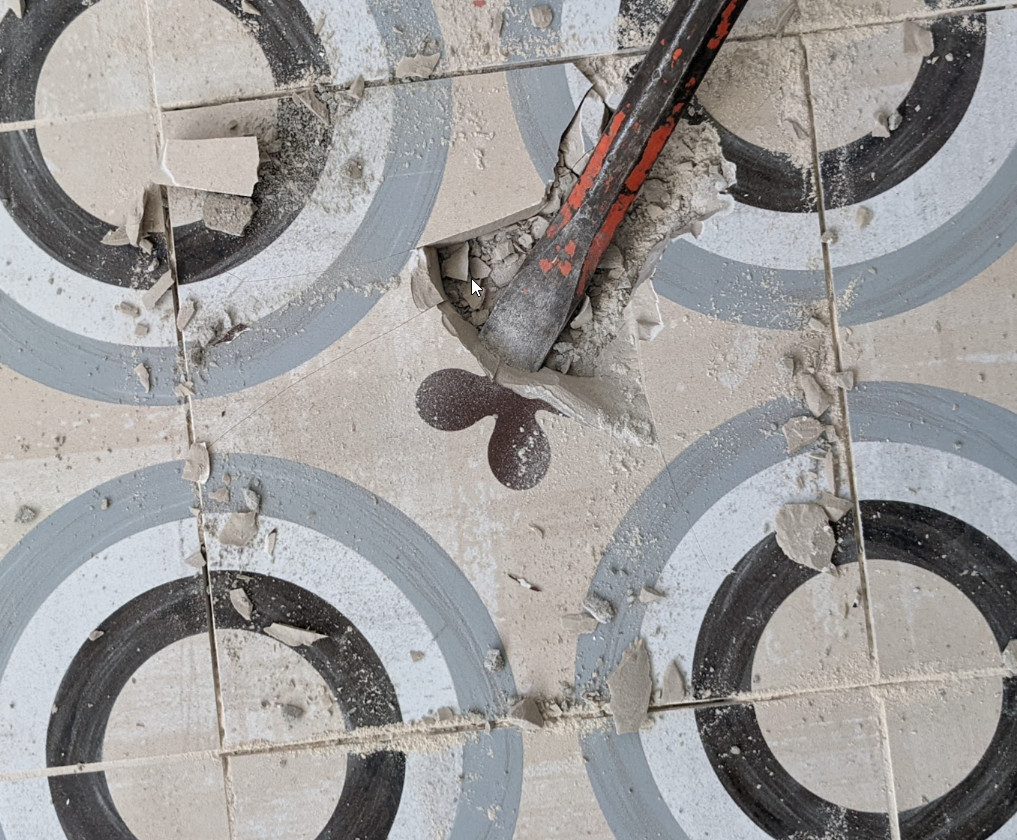
* Then worked up a hole in a tile with a hammer/crowbar (had to work quite a bit with it, very hard tile)
* From the hole, carefully worked under the tile and picked it up/out in pieces (sometimes hammered as well to make smaller pieces/reduce tensions).
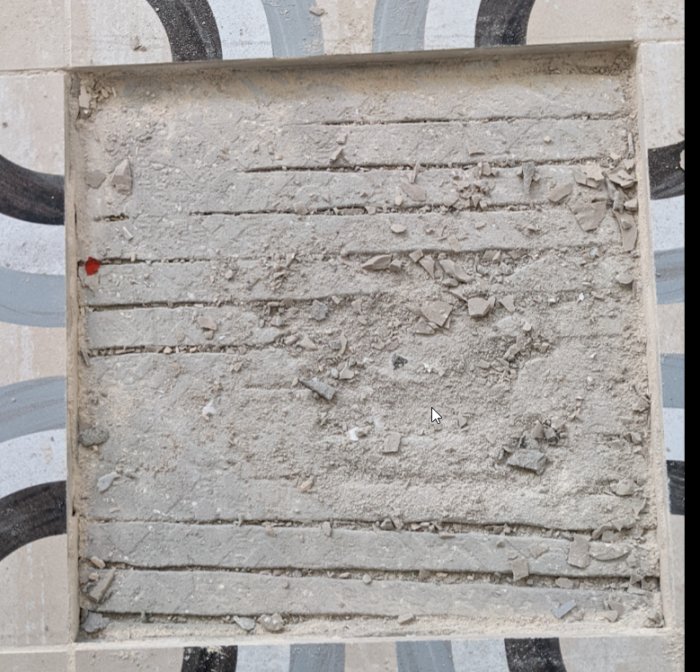
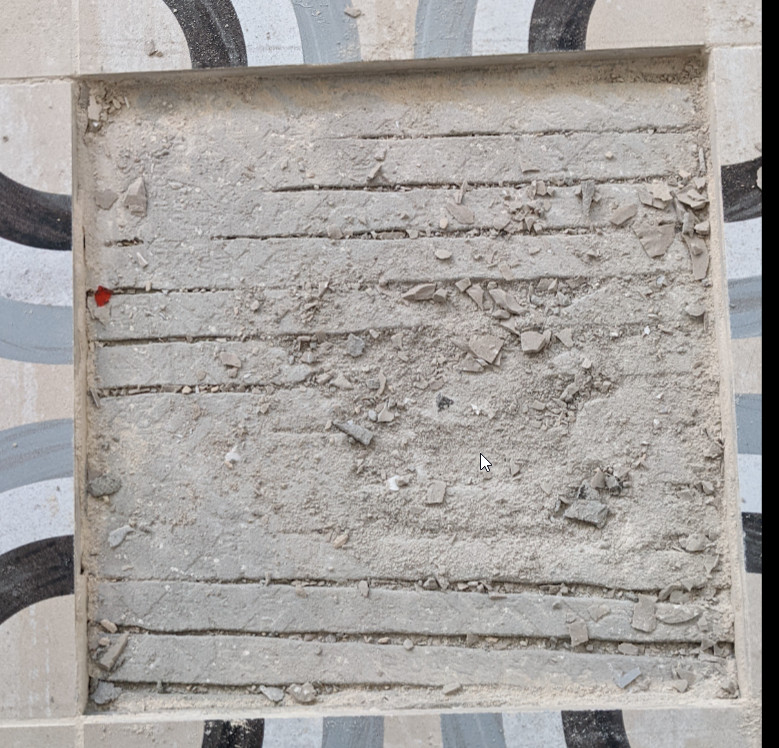
* Still need to remove the adhesive remnants, also here without damaging the surrounding tile
So it's doable in my case, but requires being careful.
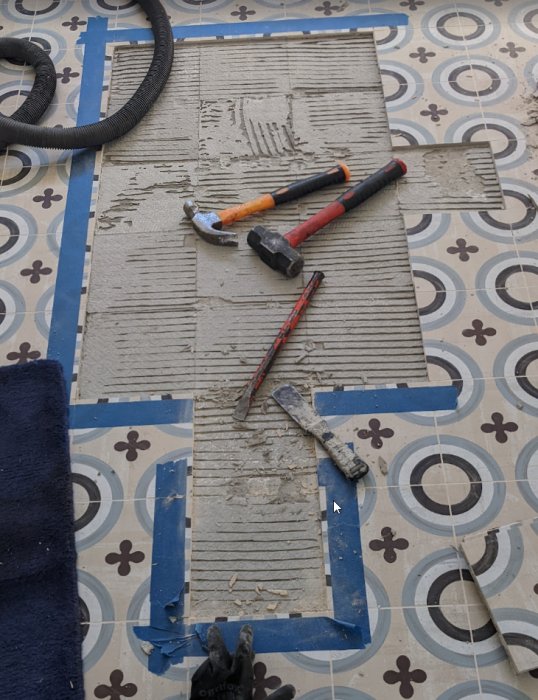
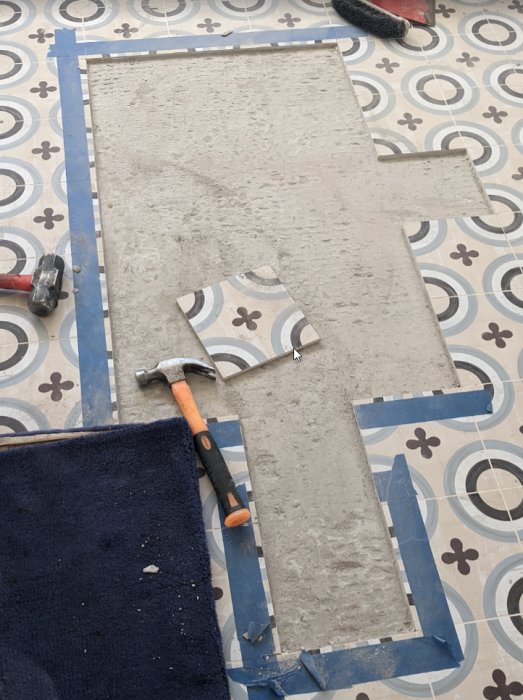
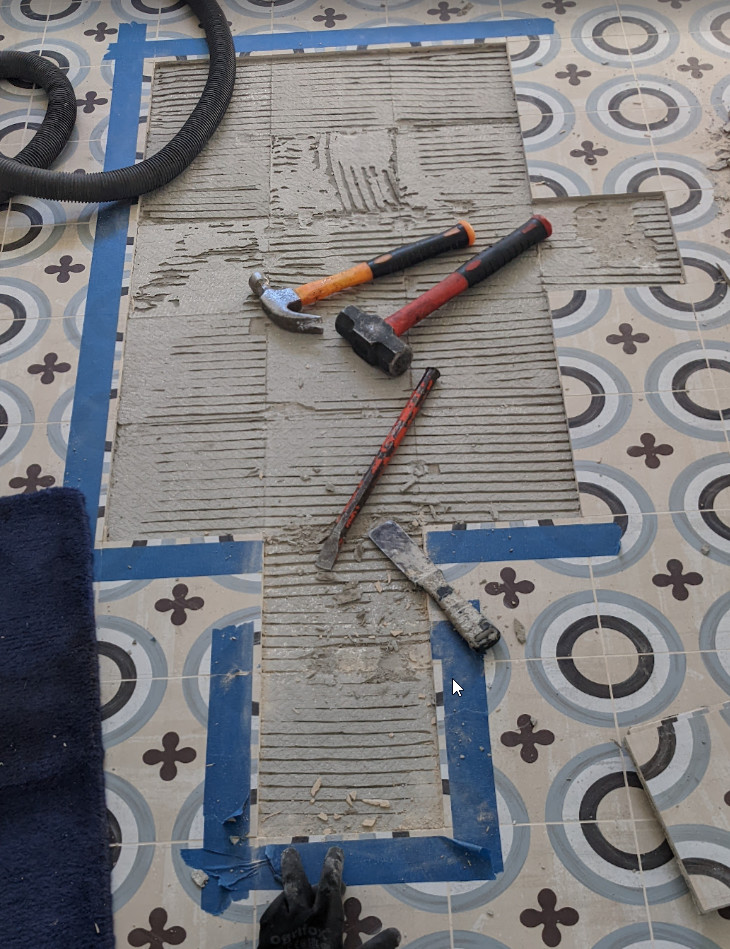
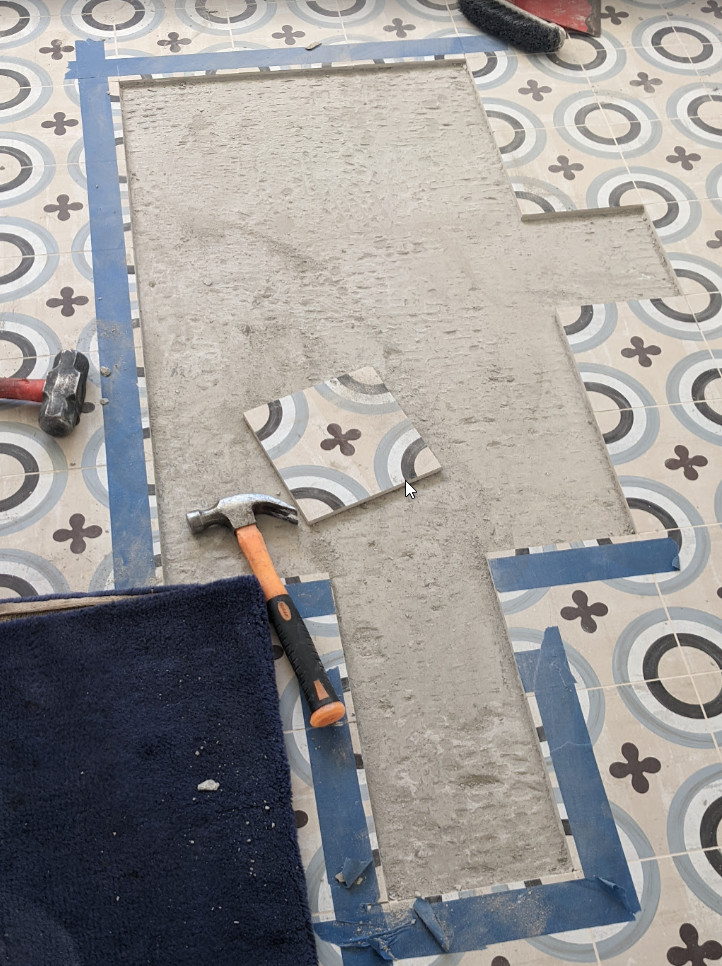
A lot of work later, it looks like the following. Removing the tiles was quite easy once the first tile was up. Managed to get most of them whole. However, removing the adhesive was tougher. It took a few hours to clean. I don't really have the possibility to isolate the area from the rest of the house, so I've only used a sledgehammer and a "chisel," no grinder..