
11,864 views ·
16 replies
12k views
16 replies
Change heel for the garage?
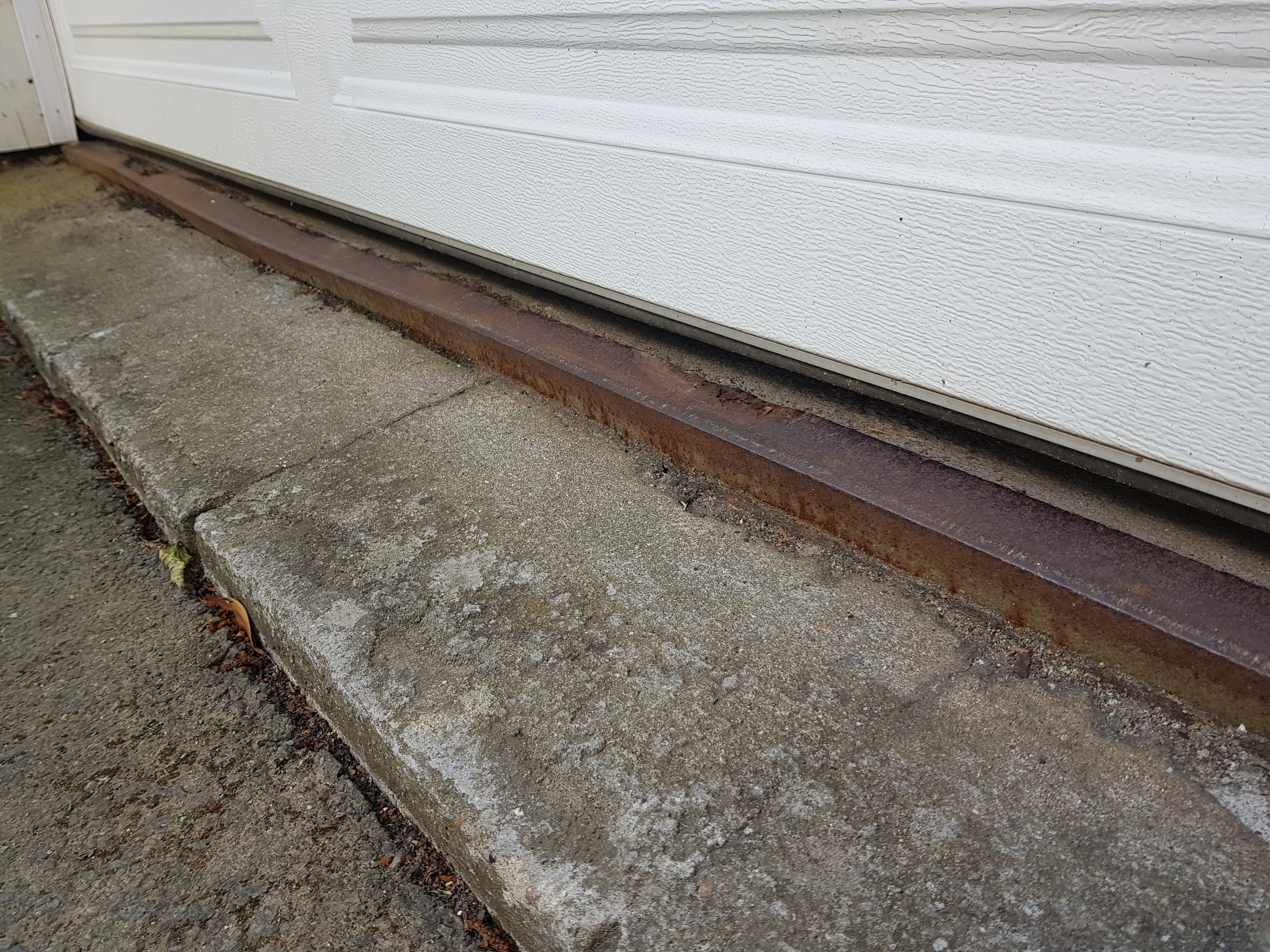
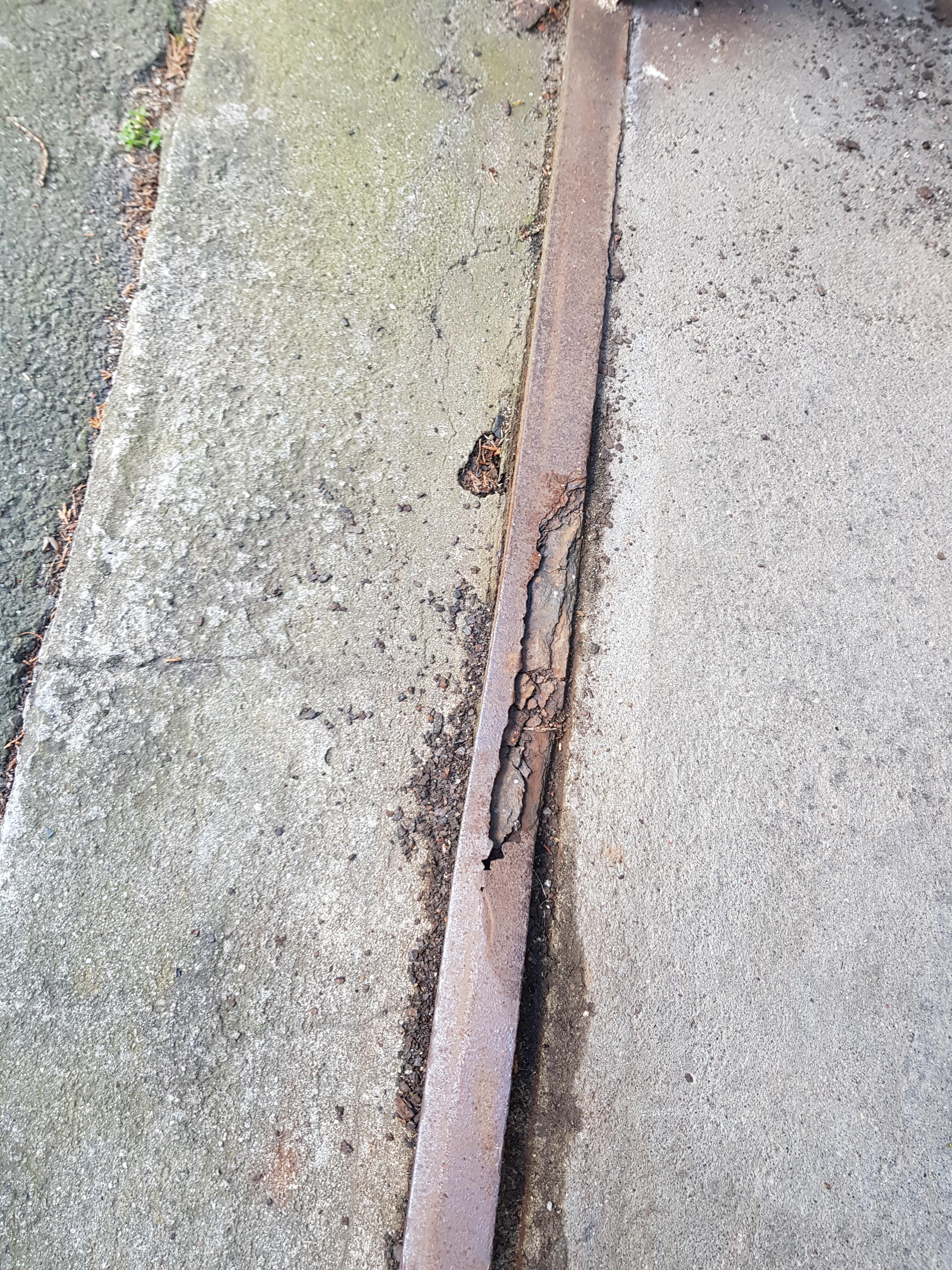
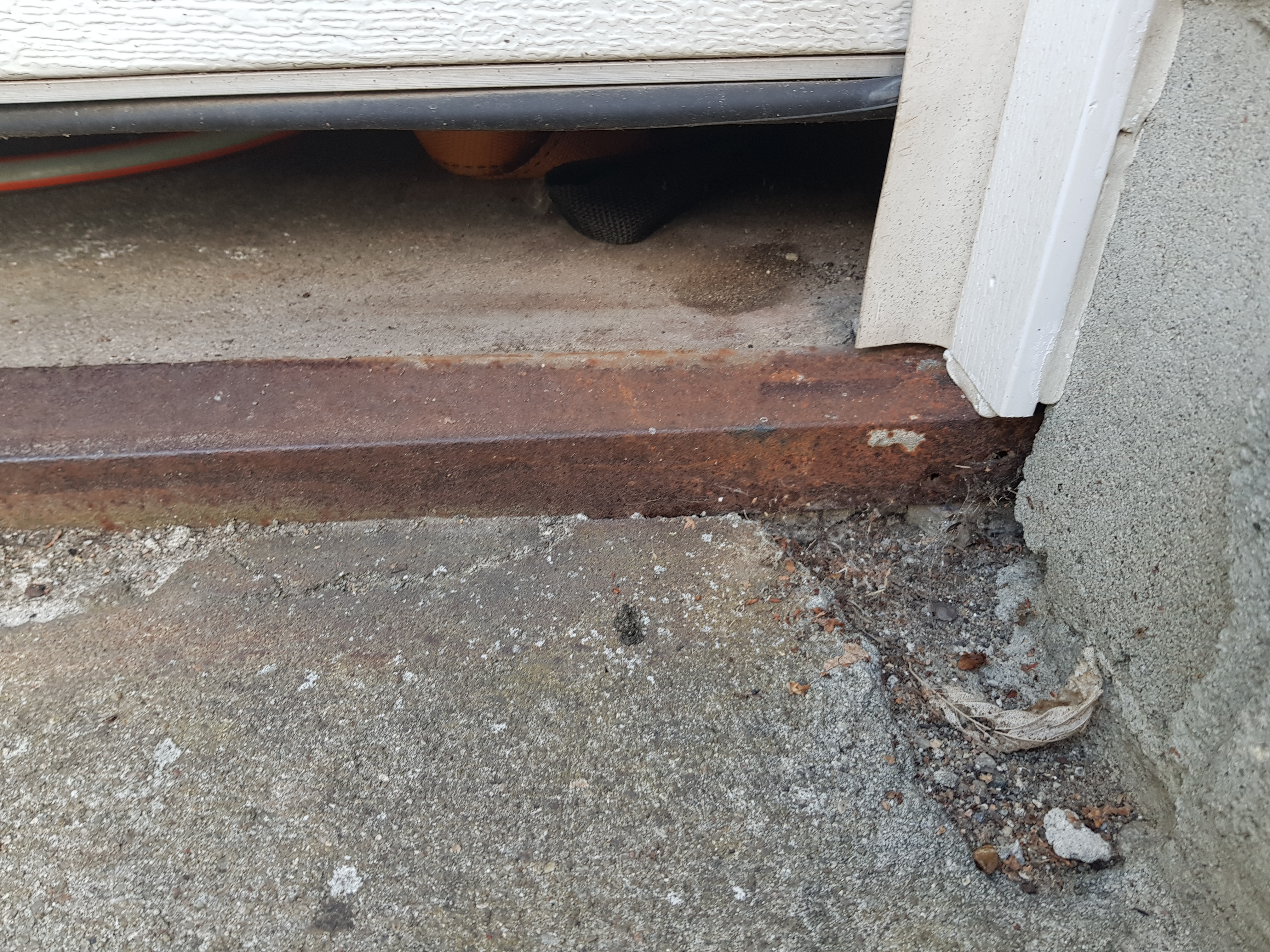


with a good demolition hammer you can remove the old material in 1-2 hours
you'll probably have to chisel up about 15 cm inside the iron, then you can drill in some dowels into the old concrete and maybe apply some adhesive
then place the new iron and fill it in with some fine concrete
you'll probably have to chisel up about 15 cm inside the iron, then you can drill in some dowels into the old concrete and maybe apply some adhesive
then place the new iron and fill it in with some fine concrete


I see that you have a sectional garage door; previously, it used to be two swinging doors. That angle iron has now outlived its purpose.
I would have chipped away parts/all of the concrete on the outside and some on the inside, then I would have cast new concrete from the asphalt into the garage, with a slight uphill slope on the inside and then a slope outward. I would place the crest of the slope 1-2 cm inside the door.
If you want, you can cast an angle iron right where the seal strip on the door hits, so there won't be any wheel tracks that the rubber seal later won't seal against.
I would have chipped away parts/all of the concrete on the outside and some on the inside, then I would have cast new concrete from the asphalt into the garage, with a slight uphill slope on the inside and then a slope outward. I would place the crest of the slope 1-2 cm inside the door.
If you want, you can cast an angle iron right where the seal strip on the door hits, so there won't be any wheel tracks that the rubber seal later won't seal against.

Member
· Västerbottens län
· 18 064 posts
That reinforces my opinion that threshold strips shouldn't be used.
If you only have concrete, it becomes smoothly rounded and kinder to the tires.
Also doesn't rust
Protte
If you only have concrete, it becomes smoothly rounded and kinder to the tires.
Also doesn't rust
Protte
Greater risk of it cracking though. Have seen several that have been cast and where it cracked after a few years despite being reinforced.
Several/a few years ago (fall 2015) I did exactly as I described earlier except that the peak is about 1dm inside the gate, the peak is right at the seam between the old concrete floor and the new casting.
No cracks are visible yet, except a little right at the seam between the old & new concrete, but those cracks are so small that they are barely visible.
No cracks are visible yet, except a little right at the seam between the old & new concrete, but those cracks are so small that they are barely visible.
Yes, it is, but it adheres well because it's applied in a bath of molten zinc and not "painted" on with a brush. Why would it wear off? How often do you drive in and out with the car? All the guardrails along our roads are hot-dip galvanized, and they hold up well against rust. If, against all odds, you do wear off the hot-dip galvanization precisely in the wheel tracks, it will likely result in the rust being worn off as well. You'll definitely avoid having the metal rust away at the edges like in the original image. Sure, stainless steel is even better, but it also has a much higher price.S snowjim said:
Edge strips on bridges are also made of hot-dip galvanized steel and we're talking about maybe 50,000-100,000 crossings per day and sometimes even more. And there have not yet been any requests to replace hot-dip galvanized steel with stainless steel because the hot-dip galvanized steel suffices and works excellently. Here we can talk about the galvanization wearing away in exposed areas but remaining in all other places, and where the galvanization wears away the rust also does, so the steel does not rust away. It is the wear and tear that determines the lifespan of the edge iron.
Our garage is not used for a car, but we still walk back and forth a lot here. Additionally, the pellet pallets come in this way and have hit that strip a few times, which is one reason it's completely bent.R roli said:
Leaning towards just casting, but to do that, I first have to break up a lot. Do you think it will work to break up with this:
BORRHAMMARE MAKITA 800W HR2630J SDS-PLUS.
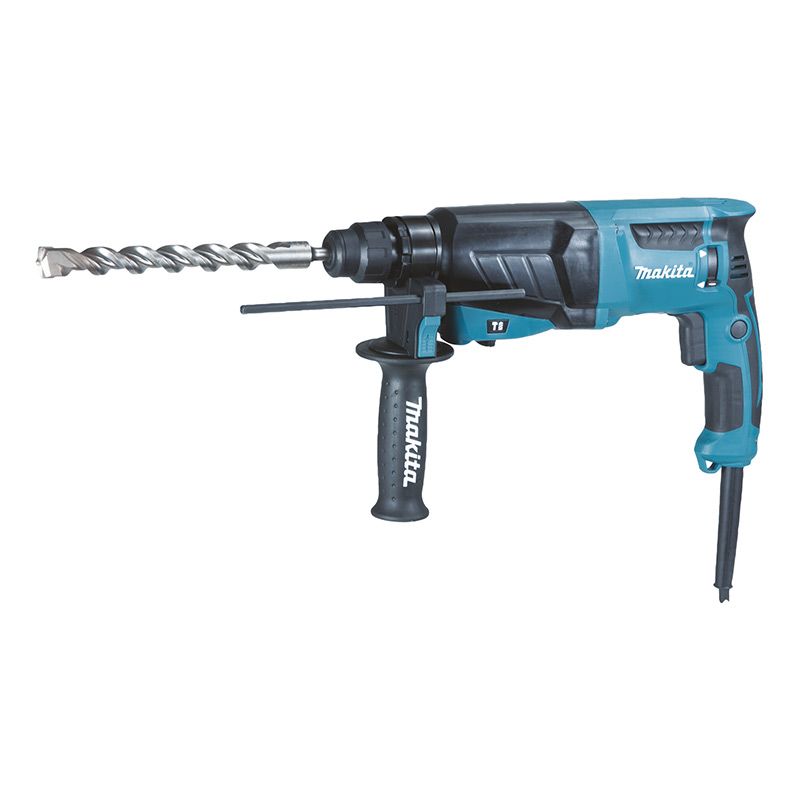
I've previously used it to break up tiles, which worked excellently. This is likely to be a tougher job, though.

