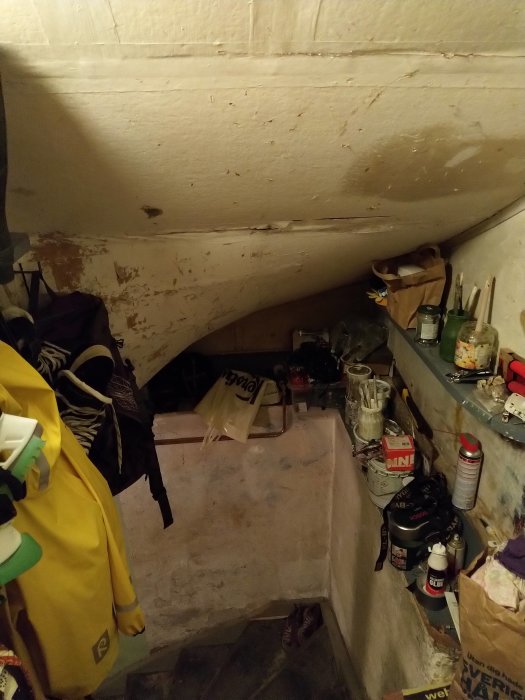
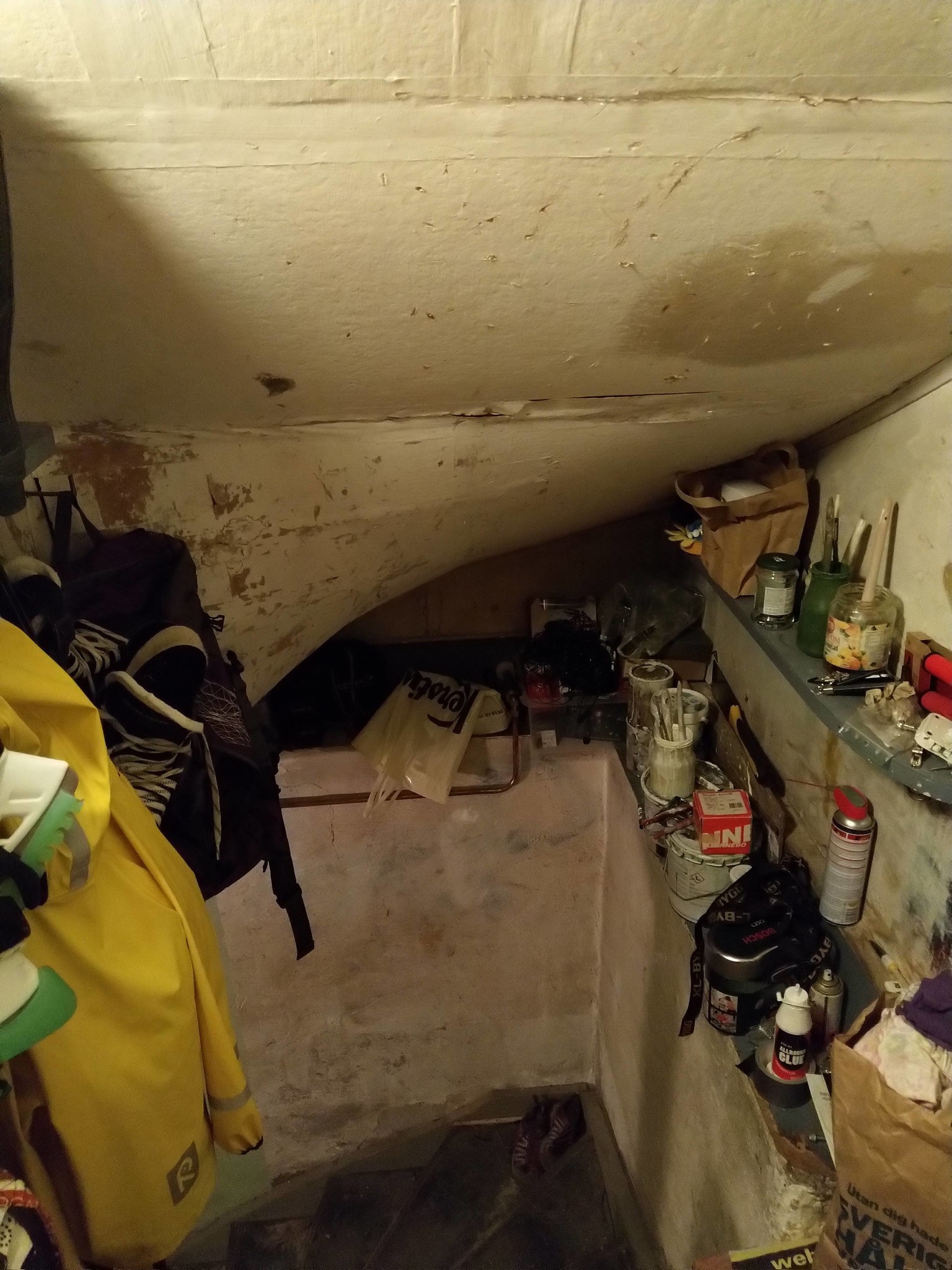
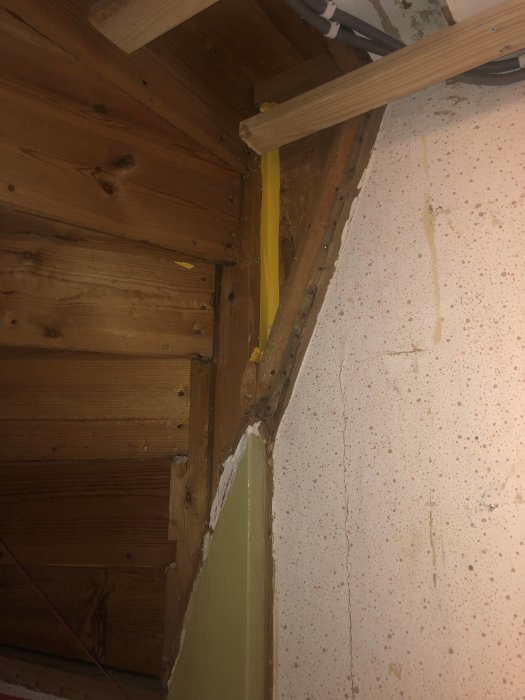
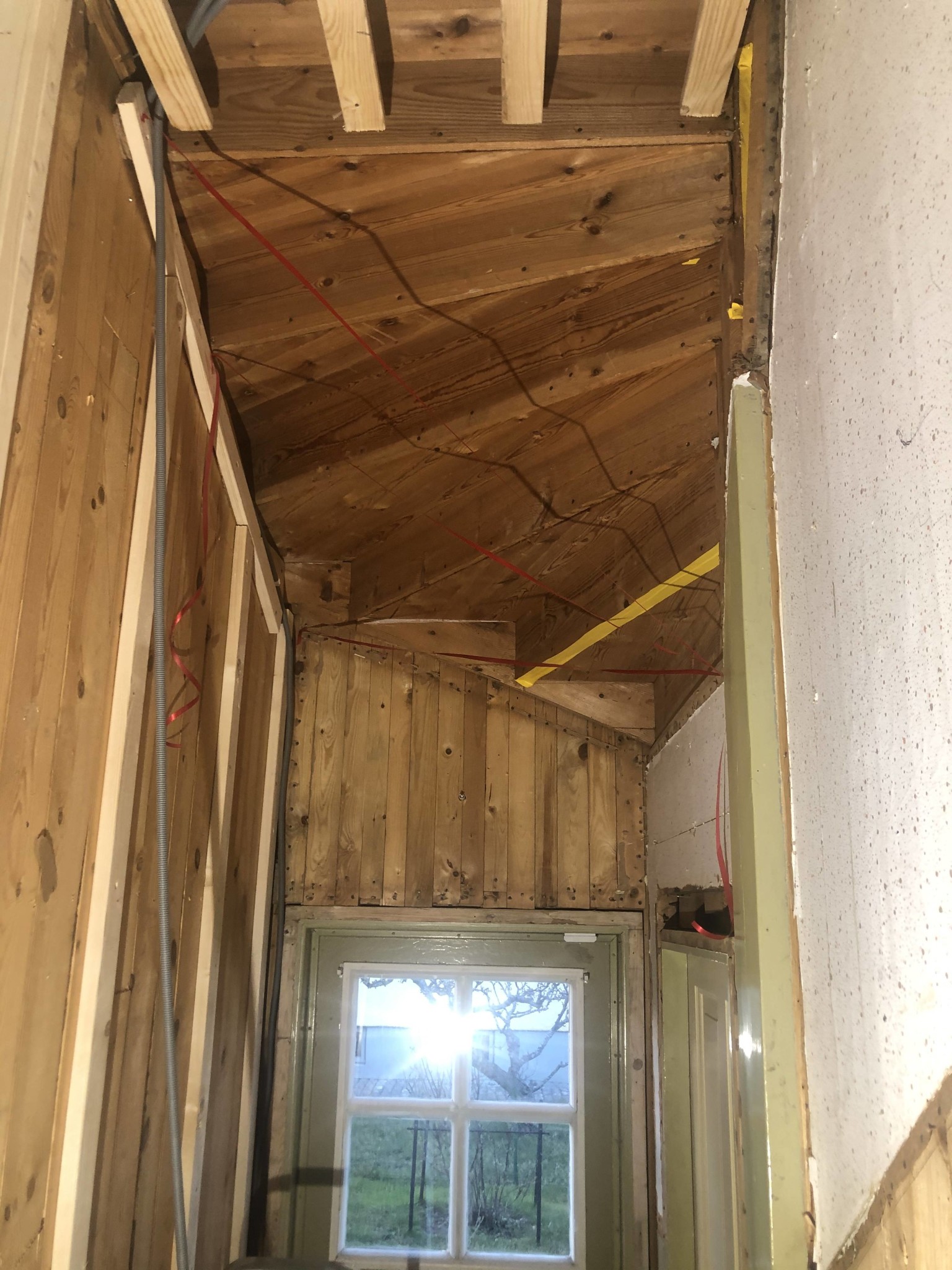
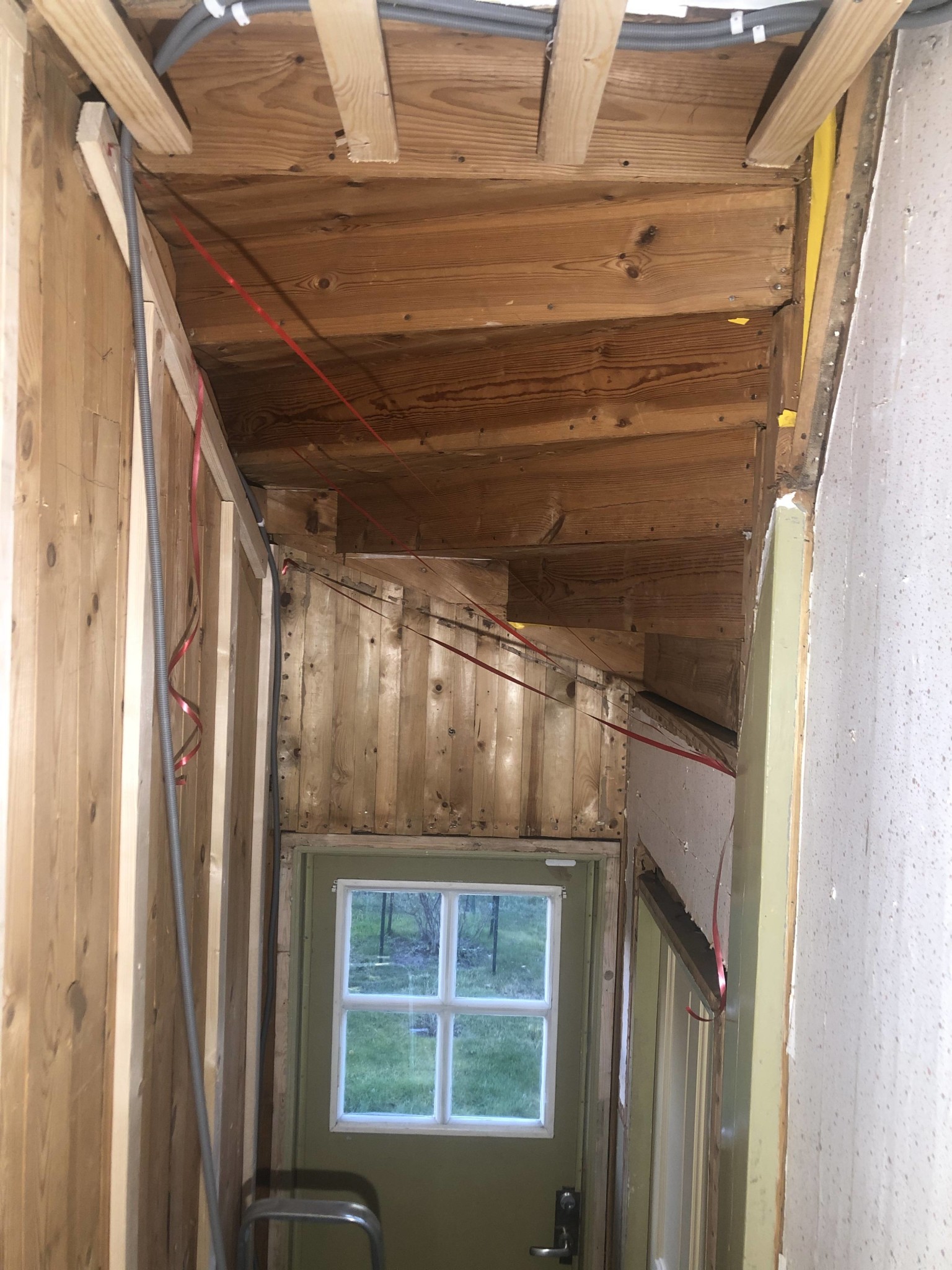
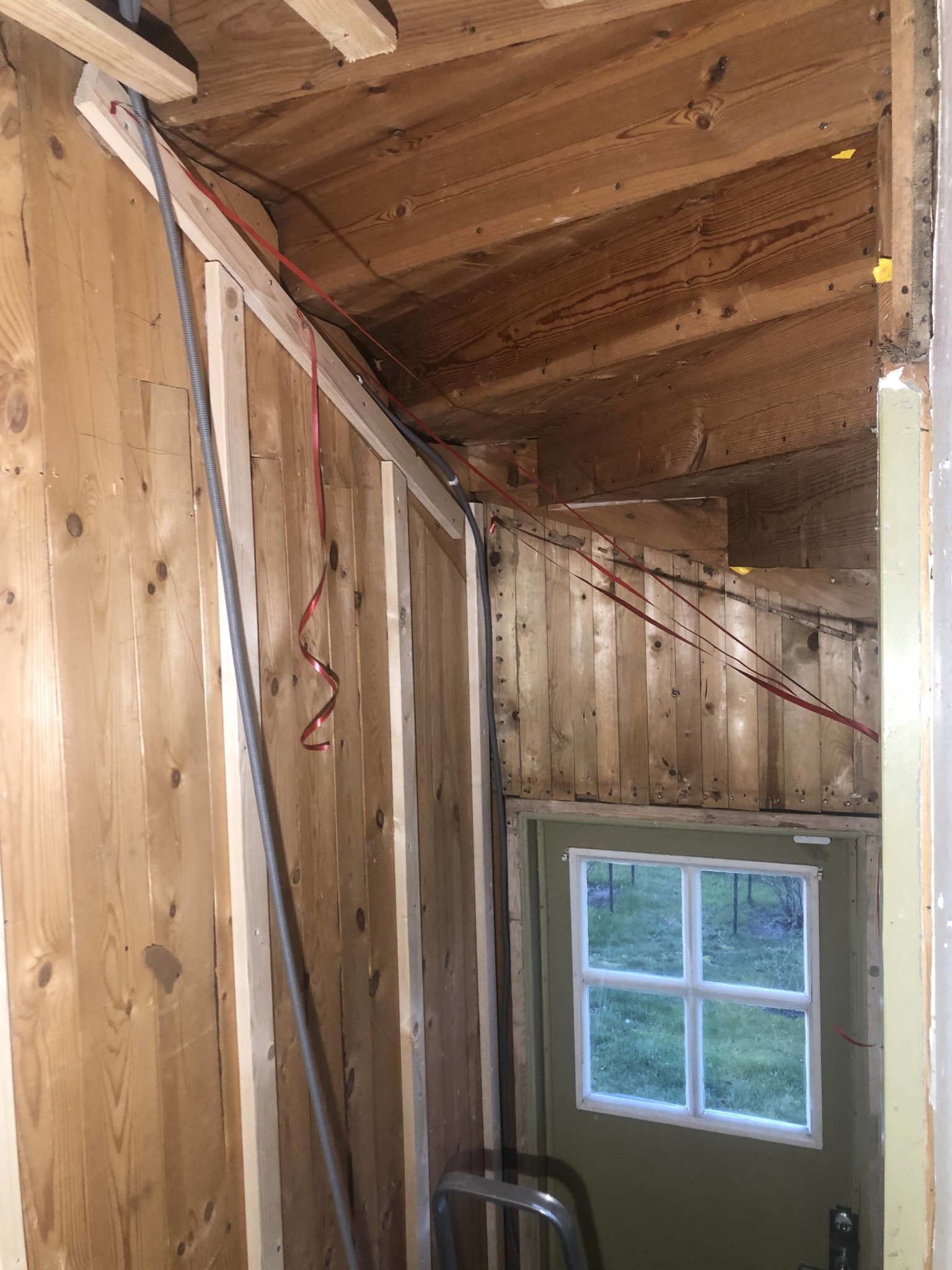
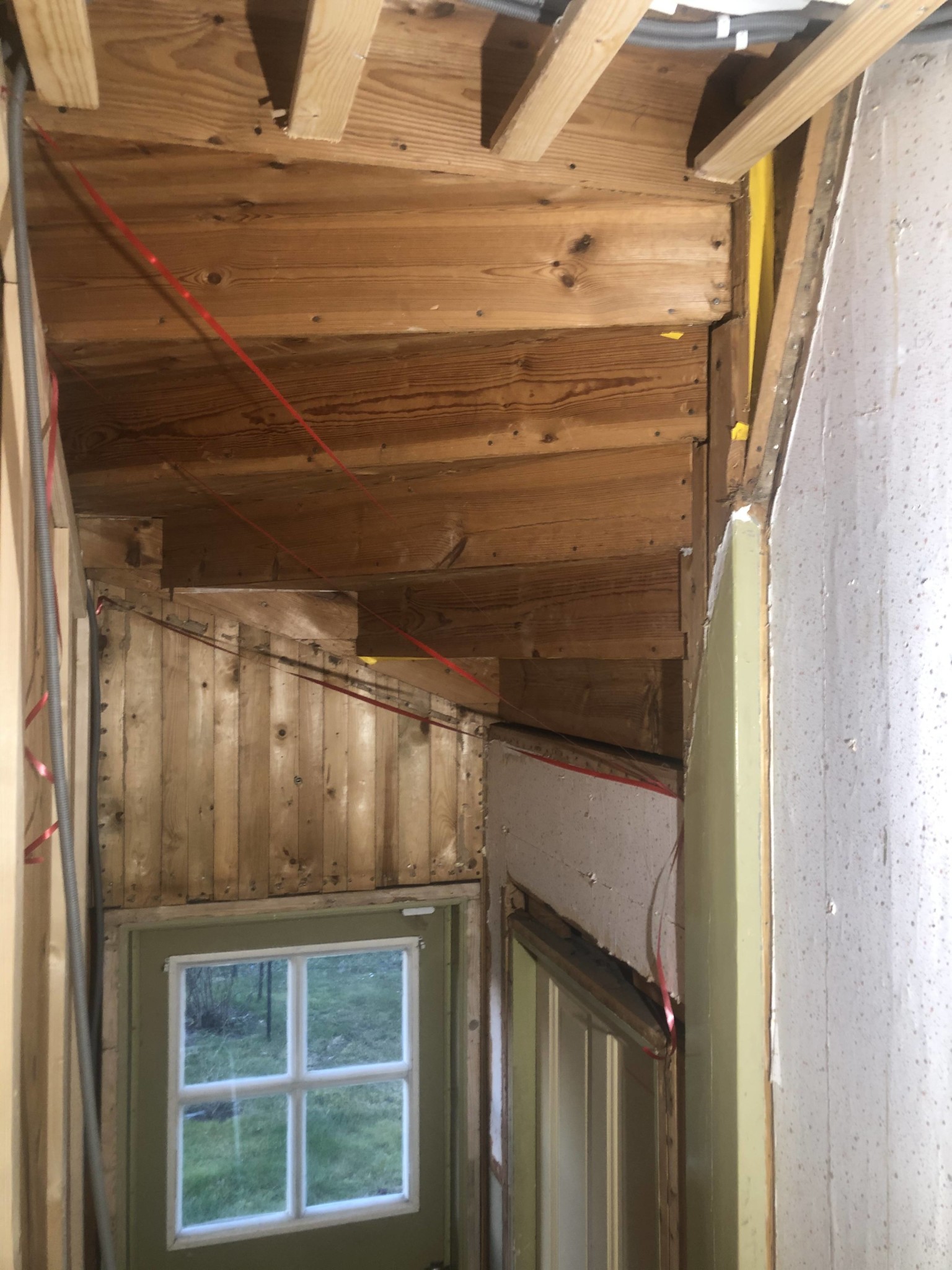
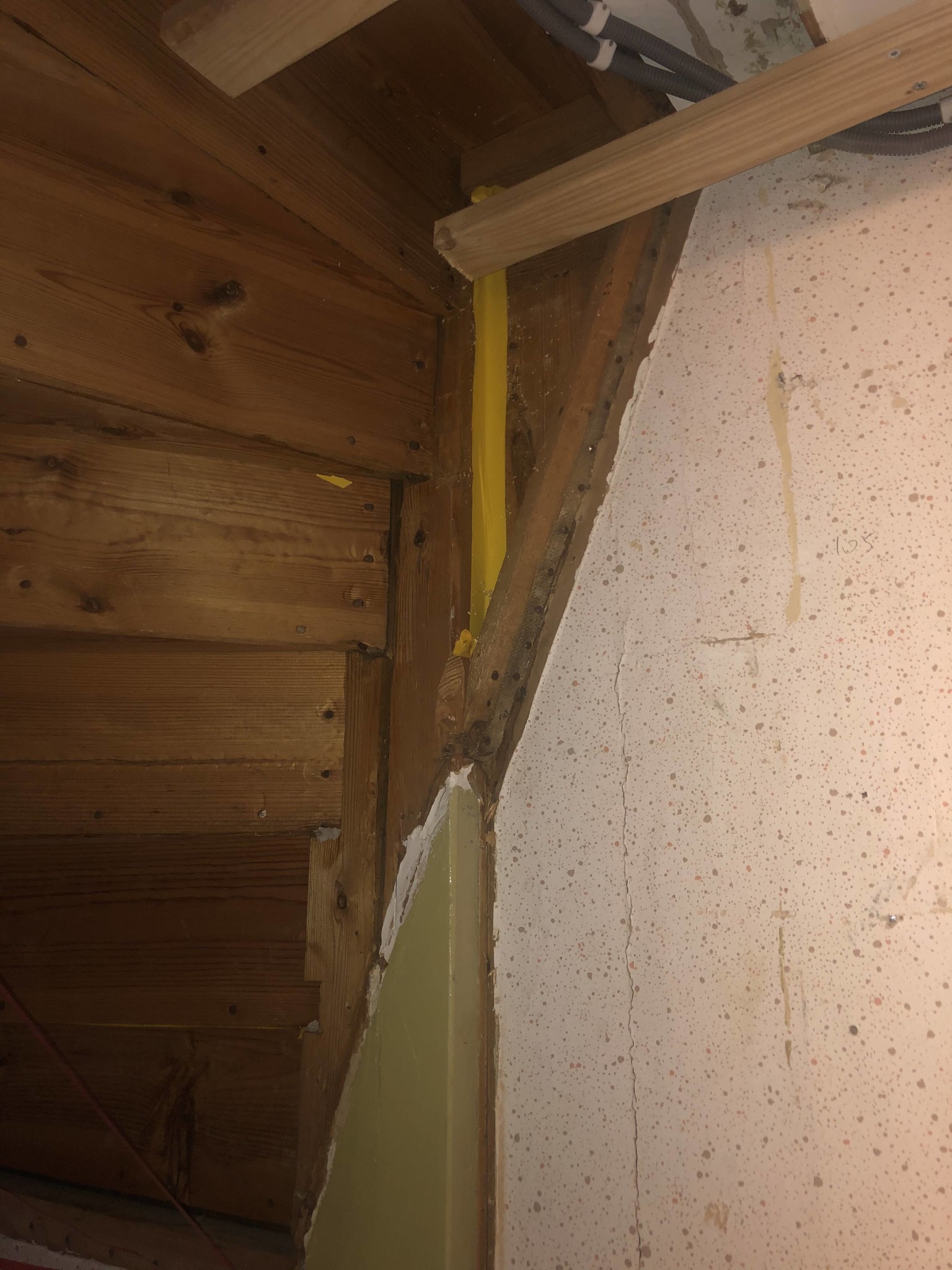
We are in the process of renovating the hall and entrance in a 1920s house. We have a curved staircase leading up to the upper floor that passes over the hallway where there is a small staircase down to the ground floor and basement door. The staircase is quite raw and was never built to be visible from underneath. Originally, it was covered with a stretched fabric, and you can see traces of that.
Now we are considering how to create a nice ceiling or covering. One option is, of course, to keep it visible, which actually feels quite appealing to maintain the maximum spaciousness in the room. The question then is how best to make it smooth and nice. You could probably cover it with gypsum board step by step, but it is a lot of fiddling, and the question is whether it will hold. Perhaps we could paint it as it is, but as mentioned, it's rough with pieces added to the stringer, risers, and treads that meet in various ways, so it will be a lot of work to make it look nice.
Another option that has probably been the main consideration is to build a gypsum board ceiling, but we're having trouble deciding what would look best. We are experimenting with stretching strings and using a laser level, but no solution has convinced us. We want to avoid it looking like a big block encountered when going down the basement stairs, while also not wanting the ceiling to be overly faceted.
What are your opinions, ideas, and experiences to share?
Hmm, don't you happen to have a picture of what you mean?
No, I just "invented" the method...
I'm thinking that slats with narrow gaps can handle the double-curved surface and then smooth it out with Masonite.
No, I just "invented" the method...
Thinking that slats with narrow gaps can handle the double-curved surface and then smooth it out with masonite.
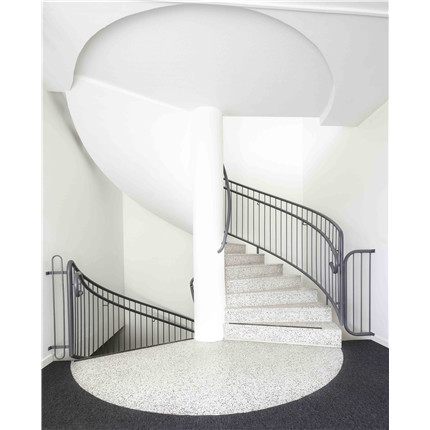
[image]
Think of the underside of this staircase
Aha, now I get it. I read in a construction restoration forum that you could soak masonite and get it to follow the shape. If you managed that, it would probably look quite sophisticated, and that's roughly how it was done with fabric stretching at one time. But I don't think regular dry 3 mm masonite can be shaped without soaking, so it's a bit of an adventure. I'll process that thought a little
I like the creativity but find it hard to envision an attractive result. But perhaps that's because my references with that material combination mostly come from kindergarten... Is it used to shape surfaces in houses or would we be the first?
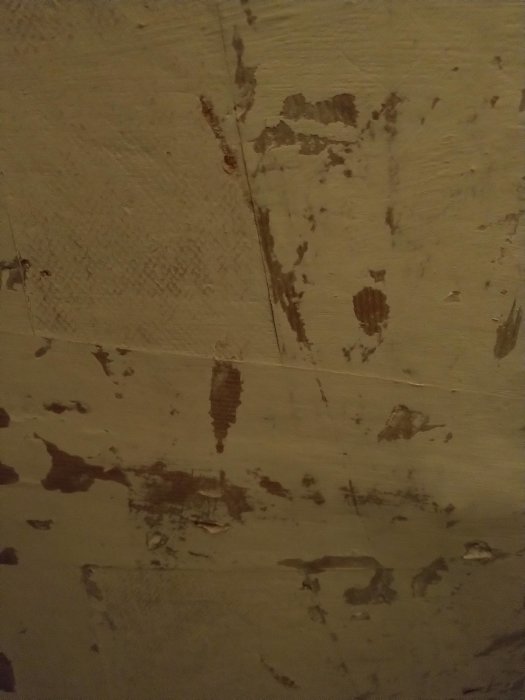
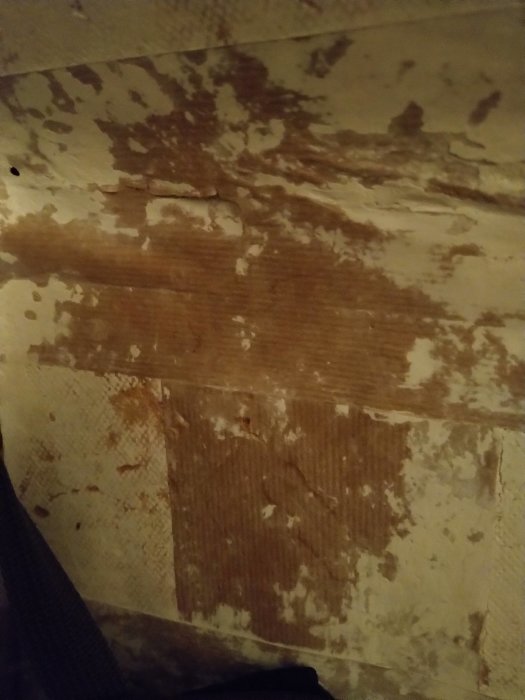
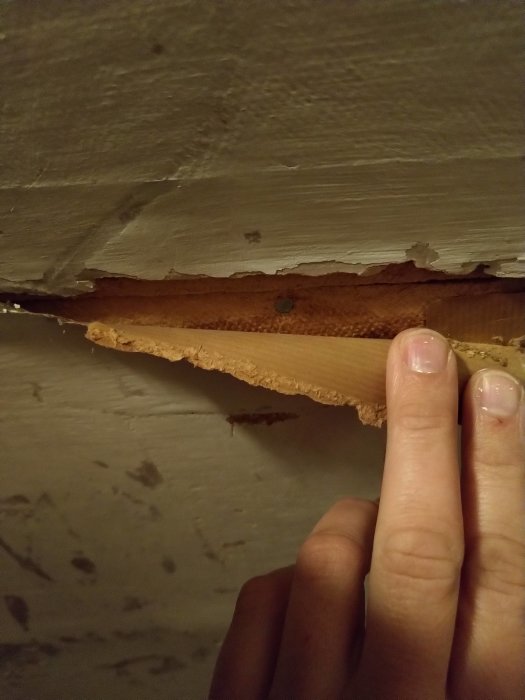
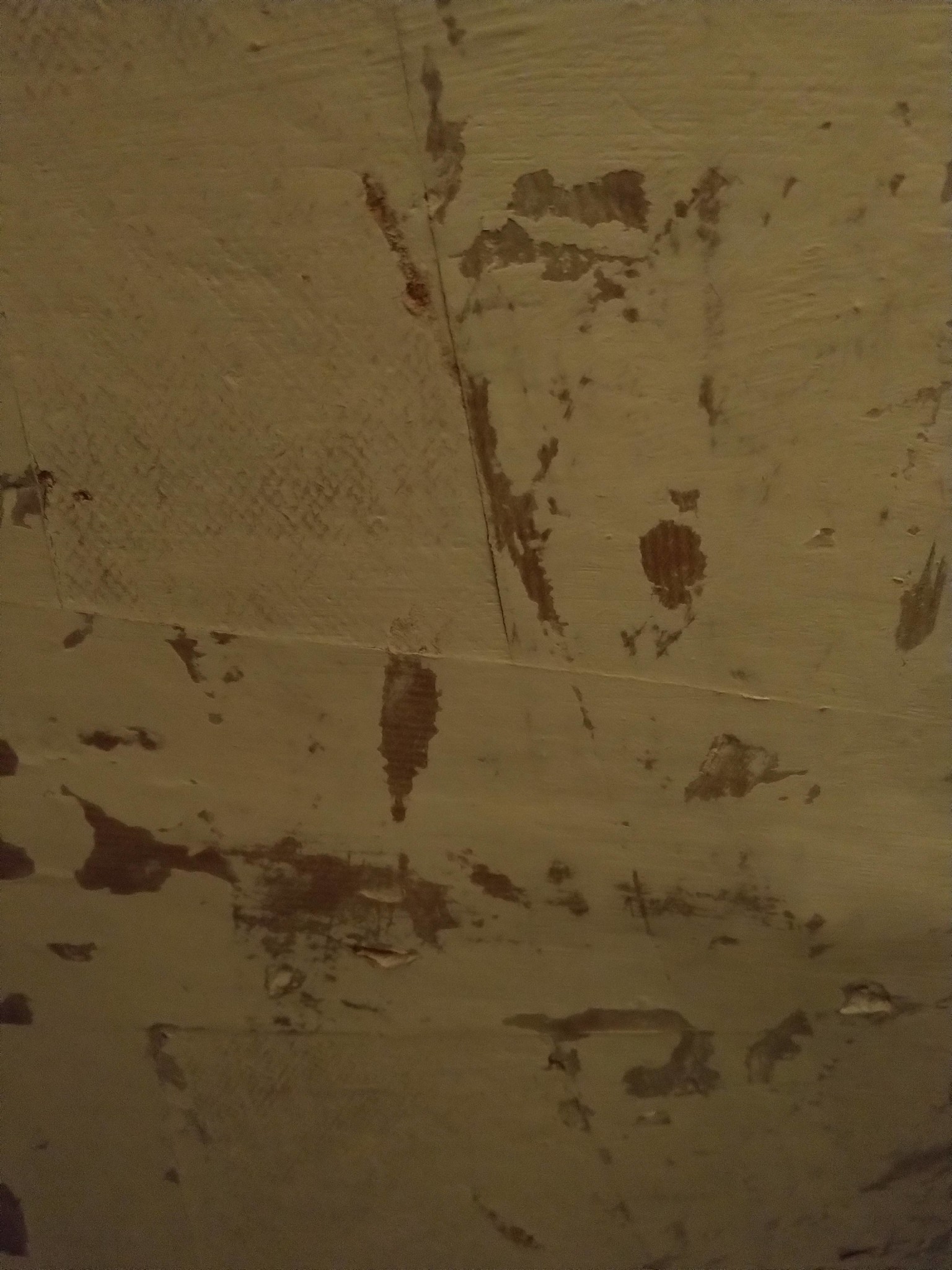
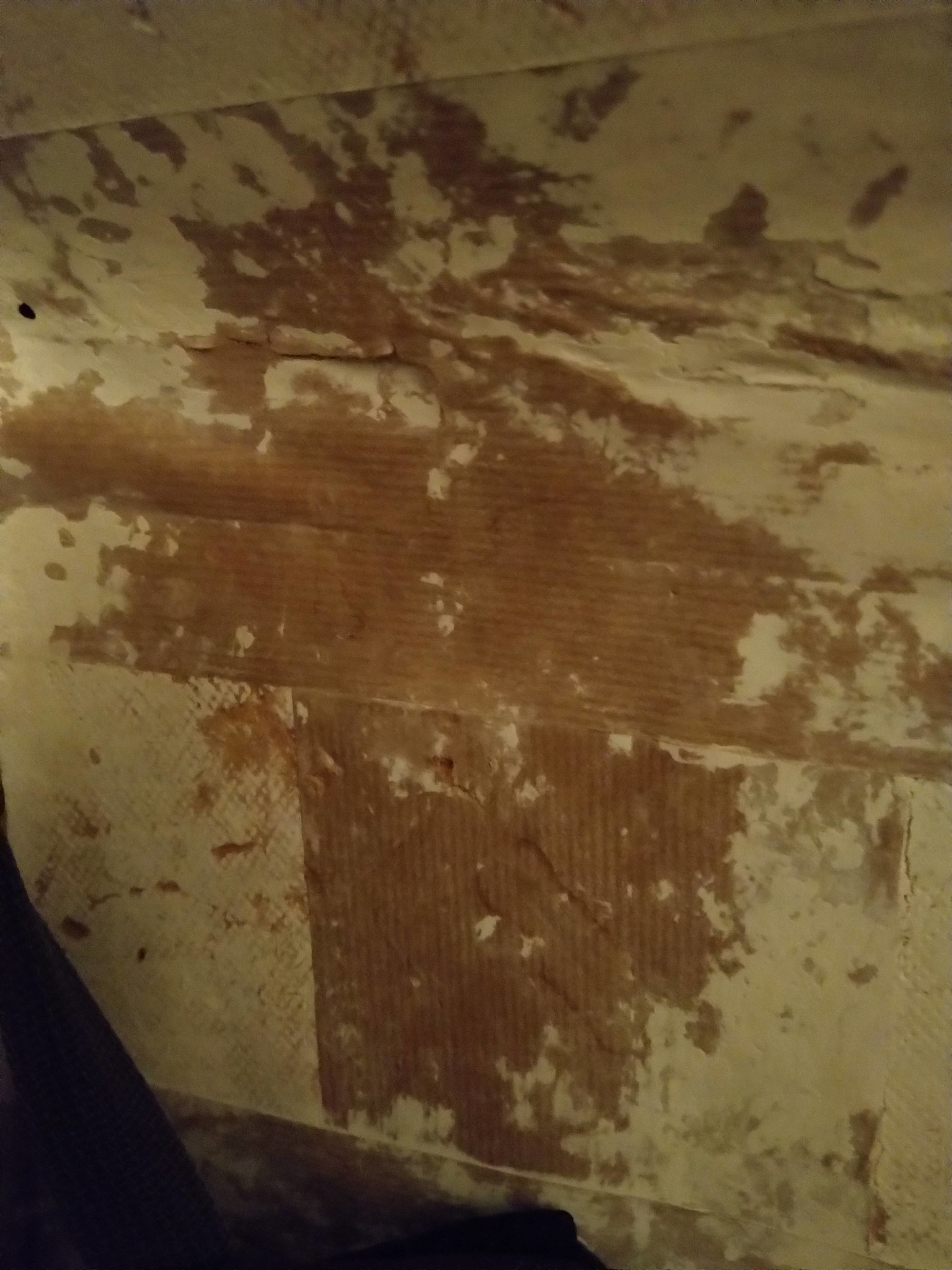
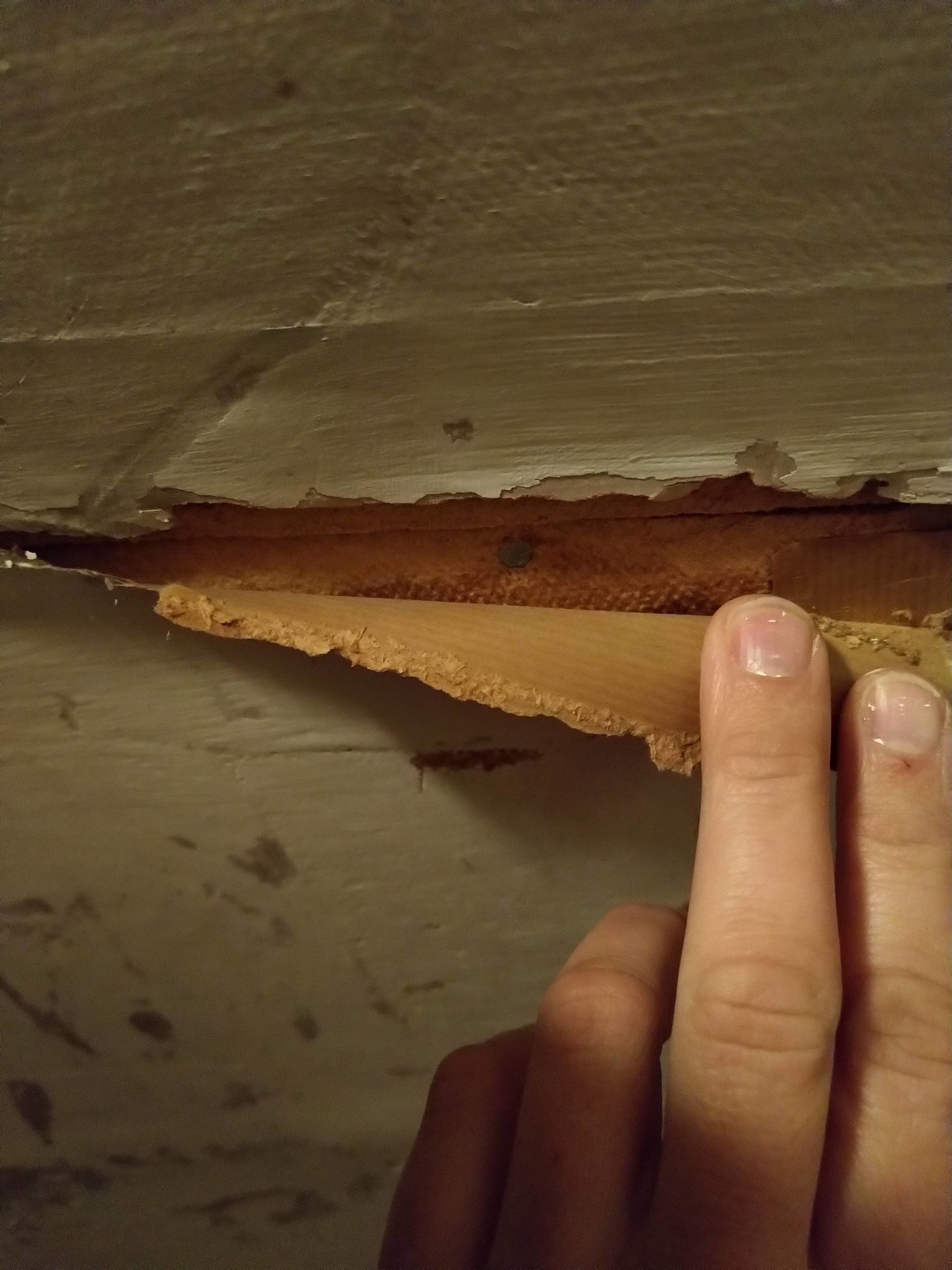
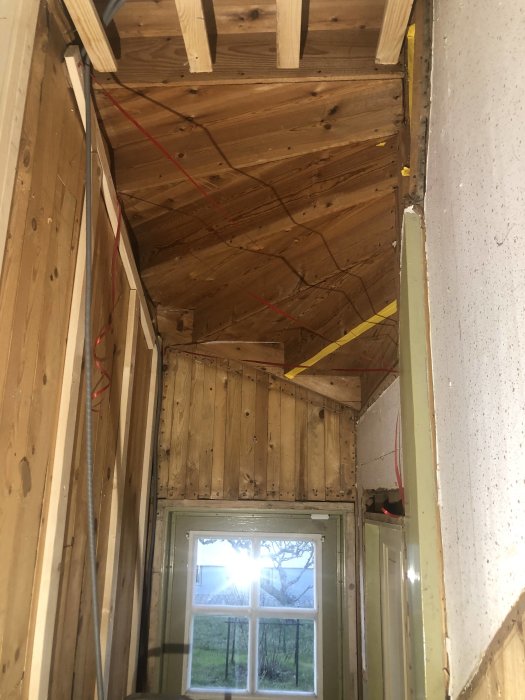
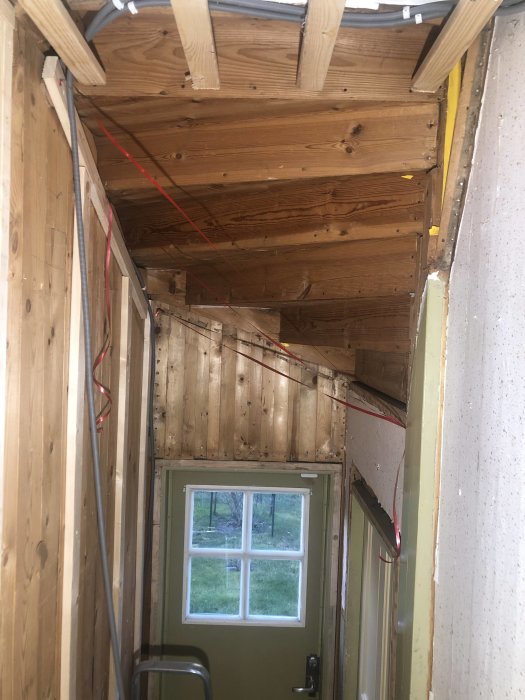
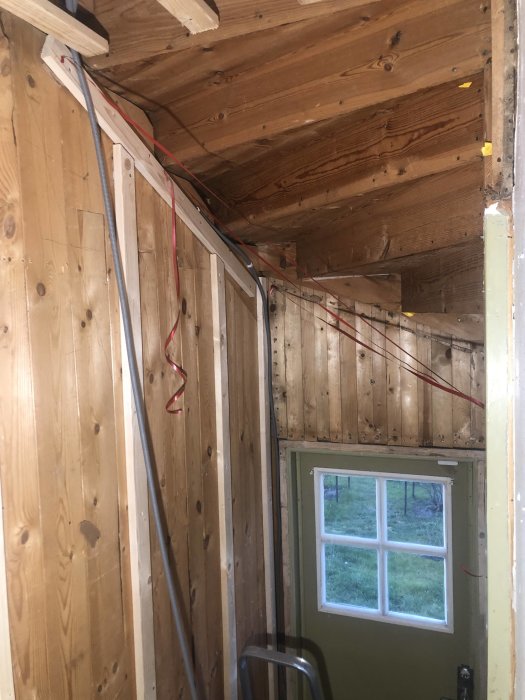
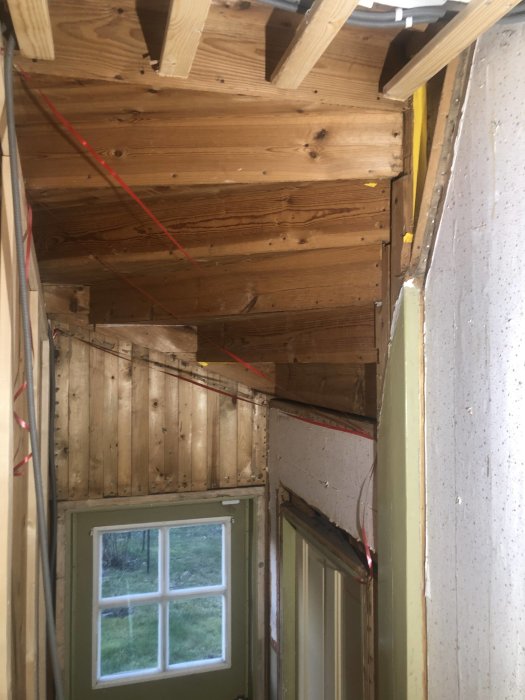
I'm attaching some pictures of how it looks in our basement stairs (sorry for the mess). I *guess* it's original from 1933. As previously written, it seems to be masonite with some kind of strips glued over at least the joints.
I attach some pictures of how it looks in our basement staircase (sorry for the mess). I *guess* it is original from 1933. As previously written, it seems to be masonite with some kind of strips glued at least over the seams.
[image]
[image]
[image]
[image]
Well, there we have at least a concrete result of a doubly curved solution. Your basement staircase is certainly very nice but perhaps has its sights set on even higher finish It should match with herringbone parquet and mirror panels on the walls. Is it built from many pieces of masonite because there are large bending angles, or do you think it's because large pieces are troublesome and it's just a basement staircase?
It is difficult to assess how large the pieces are without tearing it apart. I think it is possible to achieve a much better finish with fairly small means. I have thought that it might be possible to fill it up, and it is part of the five-year plan.
Maybe, but it needs to be double-curved so there would need to be grooves in two directions and withstand stretching a bit, and then I don't believe in MDF unfortunately.
I like the creativity but have a hard time picturing a neat result. But maybe it's because my references with that material combination mostly come from preschool... Is it used to shape surfaces in houses, or would we be the first?
I'm just throwing out suggestions...
Vi vill skicka notiser för ämnen du bevakar och händelser som berör dig.


Byurn said: