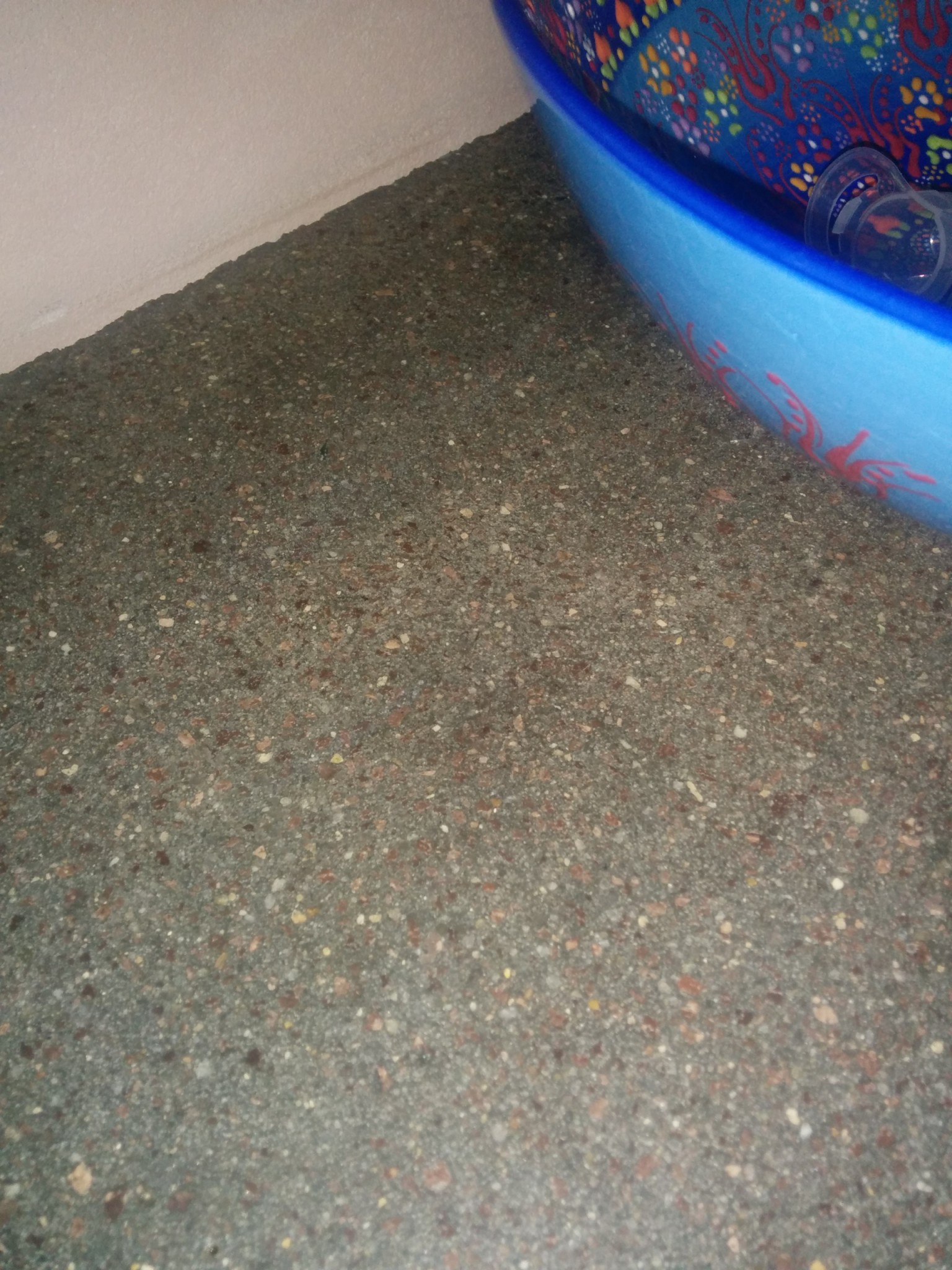
I just started the project of making a concrete slab for our upcoming kitchen island. To test different surface treatments, I made a piece measuring 20x40 cm, 2 cm thick. To easily vibrate out the bubbles with a hammer drill, I made the concrete quite watery, which made the casting itself easy. But now it has cured for two weeks, and today when I took out the test piece, I was initially very pleased with how smooth and fine it turned out. But I could polish the slab with my fingers, which seems to indicate that the concrete is very porous. Is this due to my mix being too diluted? I made it with Byggmax Gjuta Fin.
The pros use a very thick mixture.
Fu-Tung-Cheng is the guru of casting countertops.
Watch one of the videos below, there are plenty on Youtube. http://www.youtube.com/watch?v=yFFrTbEPhM8
It may be that when the water evaporates in your loose mixture, micro pockets are left in the concrete making it porous.
Hello,
the mixture was too wet, making it weak and porous. Cast a new one and polish the surface with a sheet sled of some sort. A metal paint can lid glued to the sander is magical.
Feel free to mix epoxy into the surface layer - 1 part epoxy + two parts wet fine concrete - not too wet. It is actually possible to mix epoxy with ketchup if you want to.
Otherwise, you can apply only epoxy to the finished and slightly uneven slab. I did just this the other day. Outside and close to freezing at night. It resulted in a beautiful crackled pattern, almost like lizard skin - cool!
C.
I have not read Finja's article, but in general, I don't understand why there should be any problems with casting a slab. Raceman refers to a YouTube post that shows how it's done, and also what consistency the concrete should have. I don't get why you would want to use fine concrete; isn't it the coarse one you need? It's the stones in the concrete that add life to the slab. And the other thing... Water glass has been used for 100 years in concrete to protect it from water. Water glass should be added to the concrete or the water that will be mixed with the concrete. SIKA has other products/additives for concrete in their range. It's the mold for the slab that determines the result of the casting, so use construction plywood, new or cleaned/washed, before pouring in the concrete. So sprinkle/spray the mold with water. What's also important is the temperature; if you're making the slab at home in the kitchen/bathroom, it's too warm there. Choose a place where you maintain about 10 degrees Celsius+. You must not have too much water when mixing concrete, water should be used when the concrete sets/dries = sparingly. When you vibrate the mold (from underneath) with an old-fashioned hammer drill, a type that only whirs, with a carriage bolt in the chuck, this should also be done sparingly! Otherwise, the coarse stone will end up on the underside of the slab. Someone can vibrate the mold from underneath, and another person checks how the air bubbles pop up. A slab measuring 300X63 cm takes 1 minute to vibrate; it should be done quickly. Use a board to level it off, as the YouTube post shows, but also have a trowel on hand. Everything (the mold) must be placed on a sturdy base, for example, 2 - 3 pallets on their sides and strong 95X45--120X45 battens for the mold to rest on. OK, enough about this; most of you have probably dropped out of the project by now. Those who want to test cast a smaller piece can, after you have sprinkled the mold, sprinkle a little pure cement at the bottom of the mold to get a harder/stronger surface on the slab.
I have just started the project of making a concrete slab for our upcoming kitchen island. To test various surface treatments, I made a piece 20x40 cm, 2 cm thick. To easily vibrate out the bubbles with a hammer drill, I made the concrete quite loose and watery, which made the casting itself easy. But now it has set for two weeks and today when I took out the sample piece, I was initially very satisfied with how smooth and fine it turned out. But I could polish the slab with my fingers, so it seems that the concrete is very porous. Is this because my mix was too diluted? I made it with Byggmax Gjuta Fin.
With concrete as with plaster, it's important not to work with it too long, you draw the cement/KC out of the mix then, and if you vibrate too long, only the water remains.
A tip for achieving a smooth surface: Don’t pour all the concrete at once. Start by laying a layer of about 1 cm and ensure it fills the entire area. Pat the concrete with your hands to release air and vibrate the form. Now you can add the rest and do the same thing. Hopefully, you will avoid air bubbles.
I have managed to find sandpaper for stone anyway, even if it's only up to 600 grit... I wonder if it's possible to use coarse wet sandpaper after that?
Great! Just ordered 1200, after that I guess it will be sandpaper.
1200 grit is very fine. The scale is "reversed," 40 is coarse, 120 is finer, etc.
1200 is usually the finest you can find, then you have to use polishing compound.
What have I done wrong?
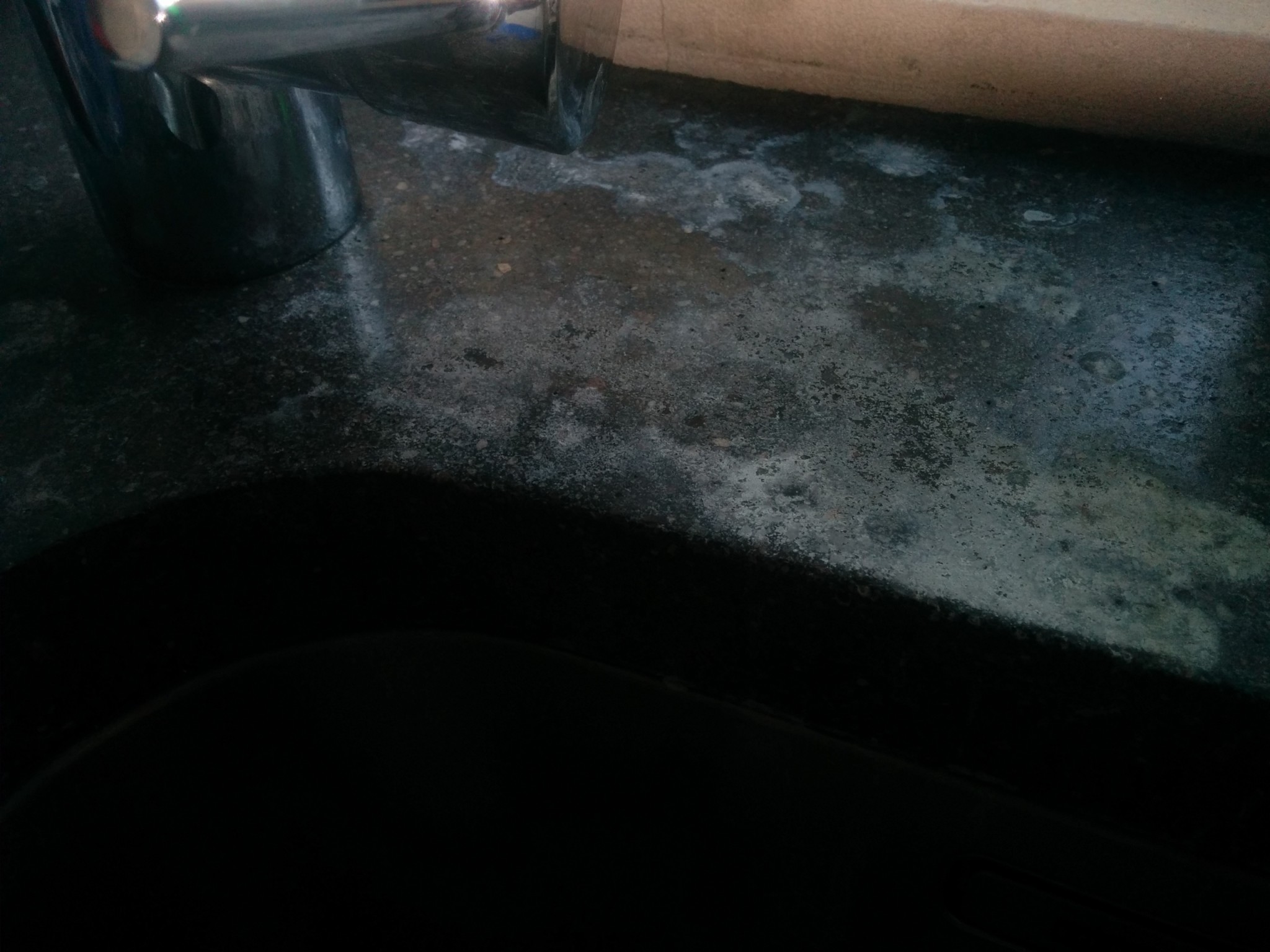
I have cast, sanded to expose the grains. Applied water glass twice and oiled it. Now I'm getting ugly lime stains from every water droplet plus the surface becomes rough where the deposit remains. I assume the white is lime, but does anyone have an idea about the cause and how I can fix it?
Thanks!
What did I do wrong?
I have cast, polished to reveal the grains. Applied water glass twice and oiled. Now I get ugly lime stains from every water drop plus the surface becomes rough where the deposits remain. I assume the white is lime, but does anyone have an idea about the cause and how I can fix it?
Thanks!
[image]
[image]
Have you acid washed it before you applied the water glass? Otherwise, it is very likely why you have lime deposits.
Regards, K
Missed the acid wash the first time. Have sanded again, washed, acid washed, and applied water glass and finally used cold-pressed linseed oil. The result is that I get no more deposits, but it is a bit streaky around the edges. I still don't know how to fix that. But it mostly bothers me. Best regards Magnus
Thank you all for your responses and thoughts.
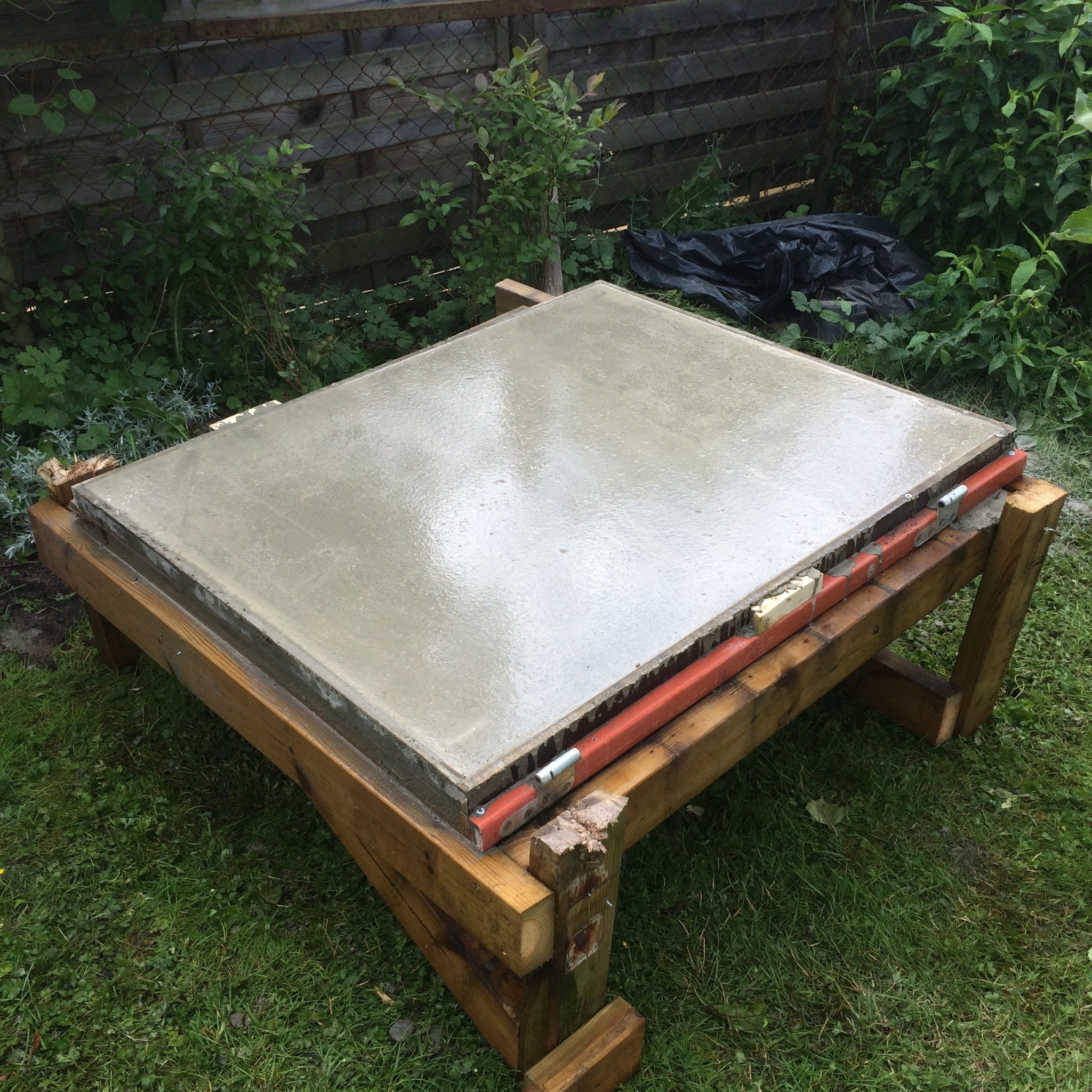
I have now also cast with weber fine expanding concrete.
First, I spread it on the bottom and patted it down with my hand, put in the reinforcement bar, and then spread the remaining concrete.
For a slab measuring 105x85x3.5cm, it took 3 bags.
Built a stand outside using 45x95 studs.
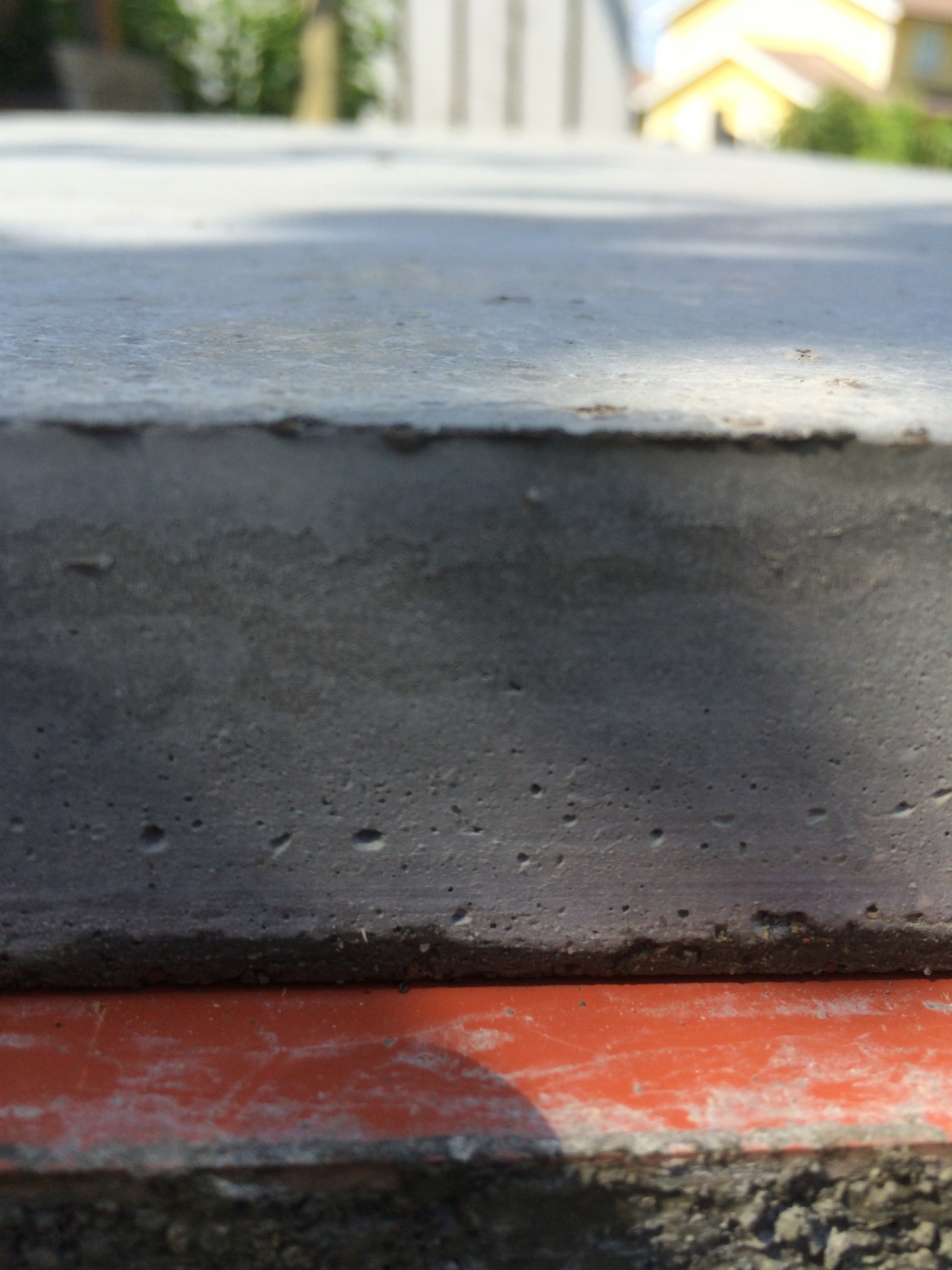
Now the disc is unveiled and I am really pleased with the result, I have now tested sanding with regular 80 grit paper using an orbital sander.
But of course, tastes vary, so how much should one sand down??
I have also ordered steinfix 100+ as a surface treatment
Which acid should be used for cleaning?
Vi vill skicka notiser för ämnen du bevakar och händelser som berör dig.