D
I am going to add an extension to a door frame and then install trim. I usually miter both the extension and the trim at a 45-degree angle centered over the corner. This would mean there is a general overlap, meaning the joint between the extensions and the trim ends up in the same place, perhaps that's not a problem?
 
D Derbyboy said:
I will extend a door frame and then attach trim. I usually miter both the extension and the trim at 45 degrees centered over the angle. This would indeed mean that there is a general overlap, i.e., the joint between the extensions and the trim ends up in the same place, maybe it's not a problem?
Not if there is good adhesion. Personally, I don't miter the extension because it's easier to screw together and I don't think it shows or looks bad. A tip is to glue the miter on the trim and attach the trim with thin brads. This way, the trim will hold together stronger than the extension, and the miter will remain tight even when the wood moves. The brads will give a little instead.
 
D
The cut will be 15mm high and 20mm wide. I have a good grip to nail the trim to the frame.

I'm not quite following what you're describing.

What are trim and thin brads?
 
D Derbyboy said:
The strike is 15mm high and 20mm wide. I have a good attachment to nail the casing to the frame.

I'm not quite following what you're describing.

What are lists and thin brads?
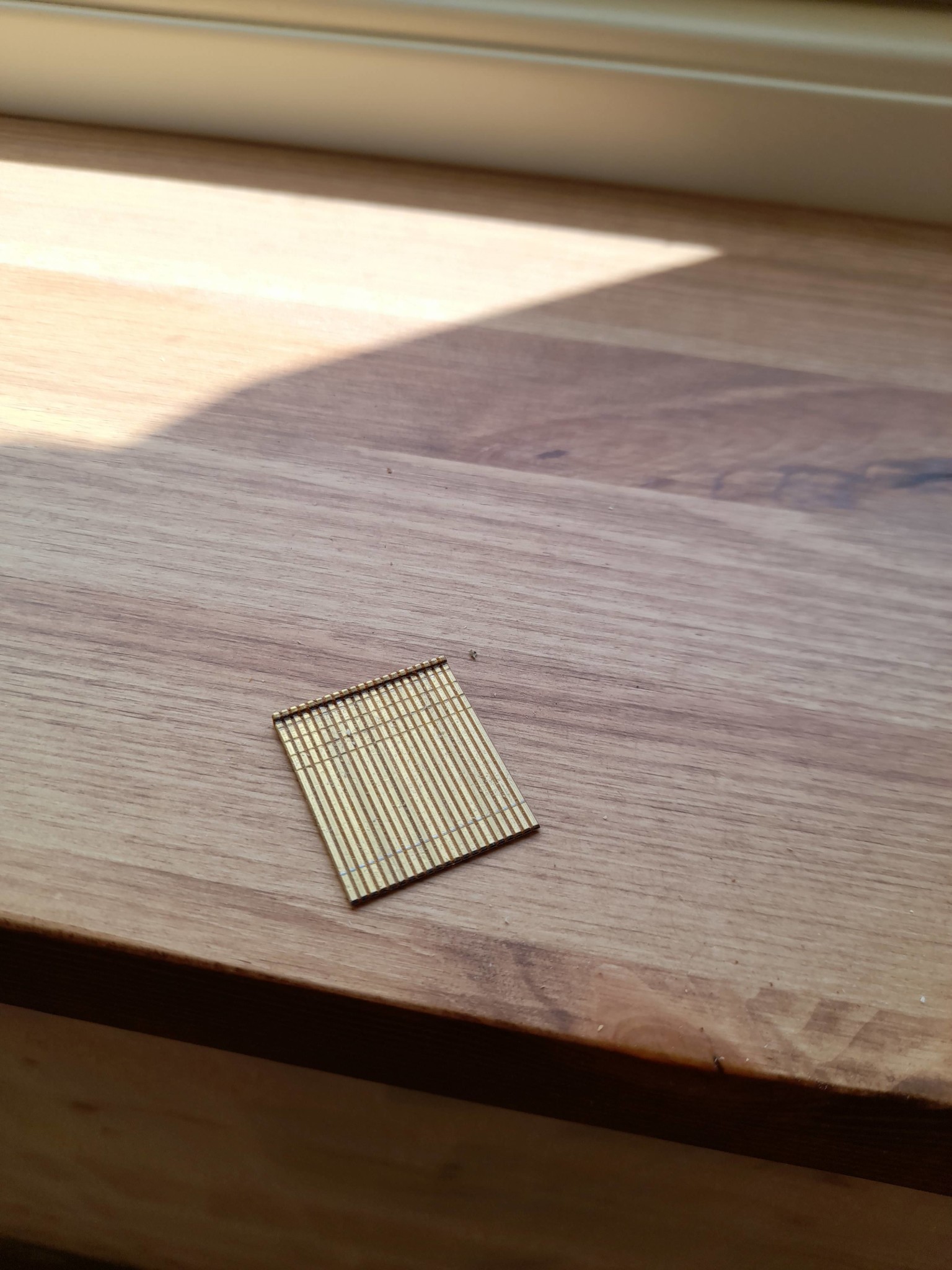
By list, I mean in your case casings. A small stack of brad nails on a wooden surface, used for attaching trim with a nail gun. These are brads, small nails that are usually shot in with a nail gun.
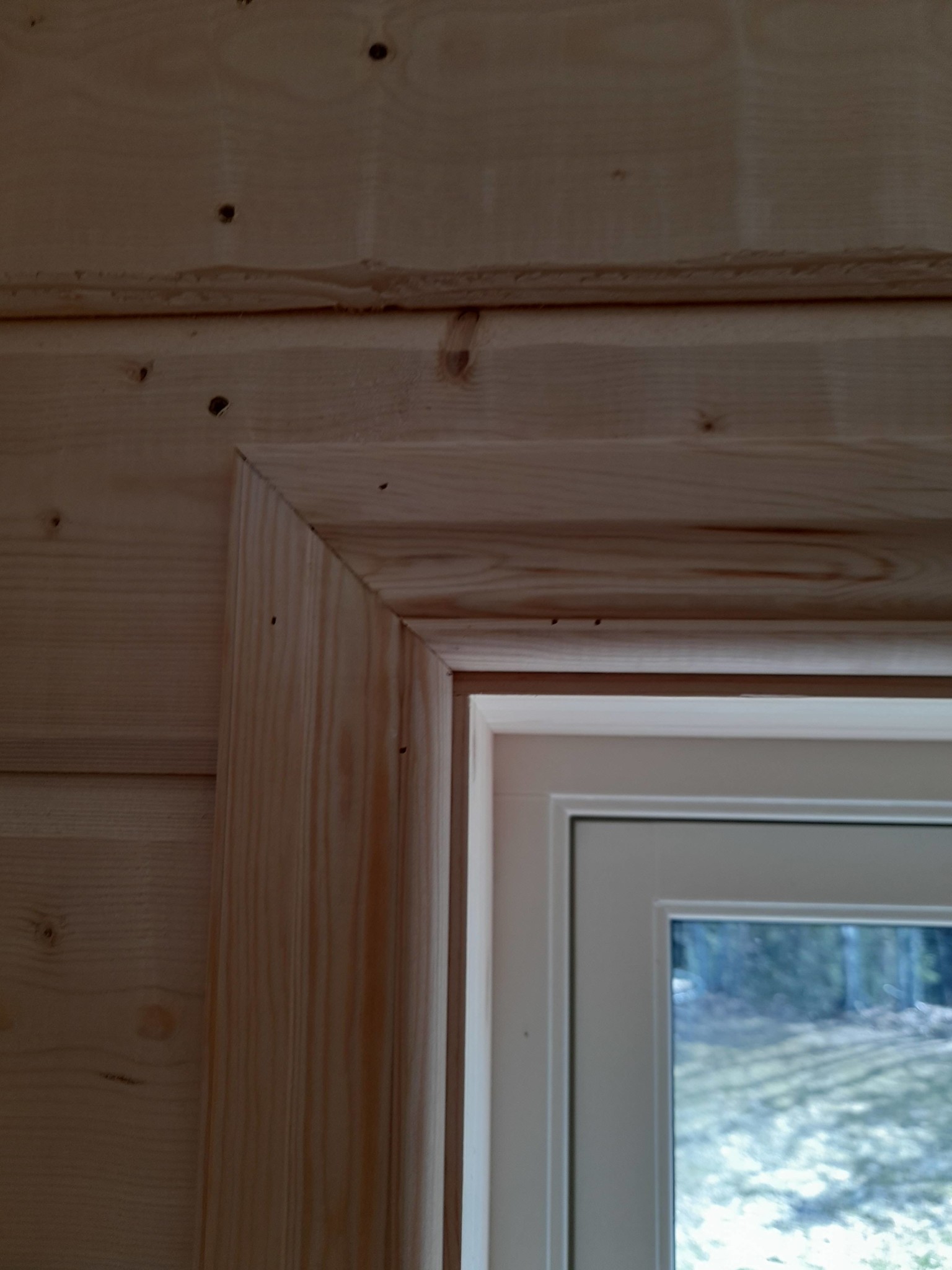
Close-up of wooden window trim with visible brads, showing method of attaching trim using small nails for flexibility, as mentioned in the discussion.
This is how I install. The thin nails can move slightly compared to list screws, and the glue that binds the miter is stronger than the attachment to the casing.
 
  • Like
Derbyboy
  • Laddar…
D
On the door frame, there is a sealing layer. I'm considering not using glue to make it easier to replace the trim if it gets moisture damaged against the floor in the future.

What do you think?
 
D Derbyboy said:
There is a waterproofing layer on the door frame. I'm considering not using glue to make it easier to replace the casing if it gets water damaged against the floor in the future.

What do you think?
If you only glue the miter, then there's no problem removing the casing.
 
Click here to reply
Vi vill skicka notiser för ämnen du bevakar och händelser som berör dig.