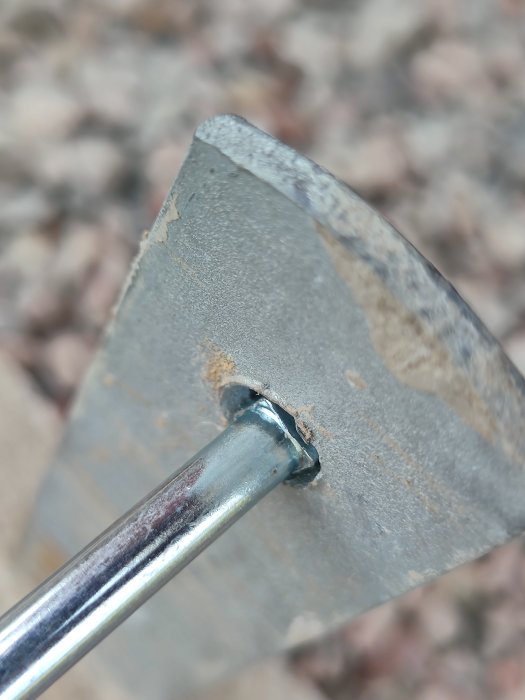
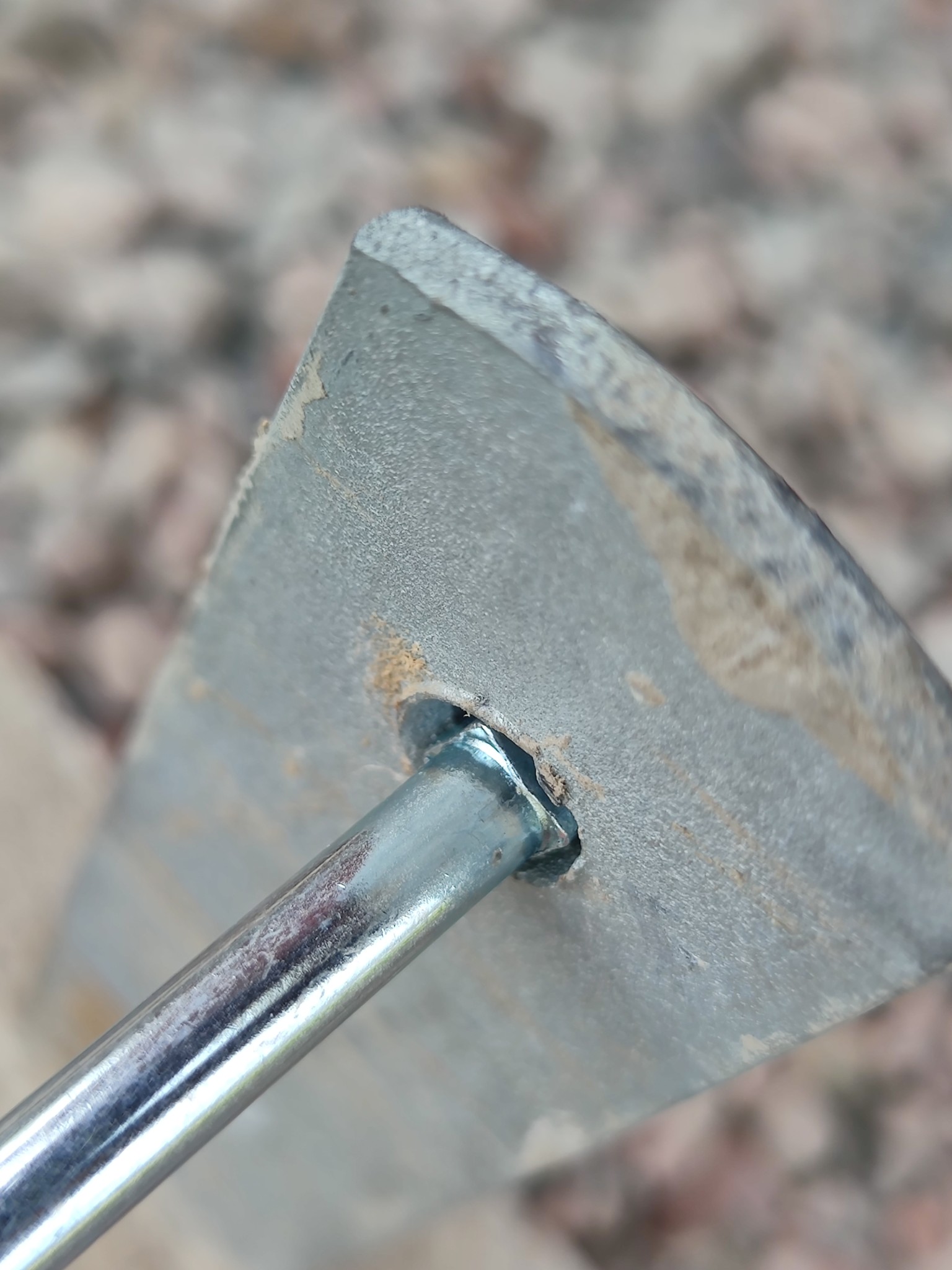
I am building a plank and thought to be thorough and use carriage bolts instead of French wood screws. But now I see that the bolts will just spin because the square on the head won't go down into the wood. What would you others have done? The carriage bolts are 8*120.
A bolt will be difficult to use as it lacks threads, a screw works much better.
And hot-dip galvanized or possibly stainless steel is the way to go. Galvanized will rust quite quickly.
Now you might have pre-drilled holes in the iron, but otherwise, the hole should be slightly smaller than the square part of the carriage bolt. Then you hammer the bolt into the iron so it doesn't spin.
But I see now that the bolts will just spin because the square on the head won't sink into the wood.
If you use regular nuts and a wrench, I find it very hard to see that it would be a problem.
Have you tried? It should be enough to hold your finger on the screw.
The carriage bolt in the picture, as someone mentioned, looks like it's just galvanized = it will start rusting quite quickly.
Switch to hot-dip galvanized!
Thanks for all the feedback! I will switch to hot-dip galvanized hex bolts 10x120 tomorrow. I'm a little "worried" about hitting the hole straight through the post, but I'm planning to give it a try. Partly encouraged by another post here in the forum. I'm also open to tips in that area
I find it a bit easier to achieve a good hole if you drill about 60% through from one side with a drill bit that has about half the diameter of the final hole and then from the other side. Then you have a "pilot" hole that hopefully meets in the middle. If it doesn't meet exactly, you have the opportunity to adjust when you drill all the way through with the next drill size, which I usually choose somewhere between the final diameter and the one used in the initial drilling. The smaller hole diameter then guides the next drill to some extent while allowing for adjustments if needed. Finally, I drill the final hole, which I usually make 0.5-1 mm larger than the screw diameter I intend to mount, the tighter the better. This is how I usually do it when I mount bolts with nuts in joist hangers, concrete shoes, or other metal parts. And most of the time, the hole turns out perfect when you "pre-drill" with different diameters before the final one. The times it has turned out a bit worse is when I've encountered a knot or similar in the post.
A bolt will be difficult to use as it lacks threads, a screw works much better.
And it's hot-dip galvanized or possibly stainless steel that applies. Galvanized will rust quite quickly.
What's the problem with it rusting?
If the material is thick enough, it will last a hundred years even if there's a little surface rust.
I find it a bit easier to get a good hole if you drill about 60% through from one side with a drill bit that is about half the diameter of the finished hole and then from the other side. Then you have a "pilot" hole that hopefully meets in the middle. If it doesn't meet exactly, you have the opportunity to adjust when you drill all the way through with the next drill size, which I usually choose somewhere between the finished diameter and the one that the script drilled with. The smaller hole diameter then guides the next drill to some extent, allowing for compensation if needed. Finally, you drill the final hole, which I usually make 0.5-1 mm larger than the screw diameter I am going to mount, the tighter the better. This is how I usually do it when mounting through screws with nuts in post shoes, plinth irons, or other metal parts. And most of the time, the hole is perfect when you "pre-drill" with different diameters before the final one. The times it has been a bit worse is when you encounter a knot or similar in the post.
Thanks for the detailed description! I will definitely use that technique.
I find it gets a bit easier to achieve a good hole if you drill about 60% through from one side with a drill bit that has about half the diameter of the finished hole and then from the other side. Then you have a "pilot" hole that hopefully meets in the middle. If it doesn't meet exactly, you have the opportunity to adjust when you drill all the way through with the next drill size, which I usually choose somewhere between the final diameter and the one the manual drilled with. The smaller hole diameter then guides the next drill to some extent while you can compensate if needed. Finally, you drill the final hole, which I usually make 0.5-1 mm larger than the screw diameter I will be mounting, the tighter the better. This is how I typically do it when mounting through bolts with nuts in joist hangers, post base brackets, or other metal parts. And for the most part, the hole comes out perfectly when "partial drilling" with different diameters before the final one. The times that haven't turned out as well are when encountering a knot or something similar in the post.
Just went out and tried the method on a test piece. It went sufficiently well (sufficiently not well) for me to dare to try the method in a live situation.
However, I wonder if you also have any good tips on how to get the posts straight? Should you first align one base bracket so it is completely vertical and then assume that the post will hold in place after that? Because it tends to pull the base bracket together since it is a few millimeters wider than the post.
Vi vill skicka notiser för ämnen du bevakar och händelser som berör dig.