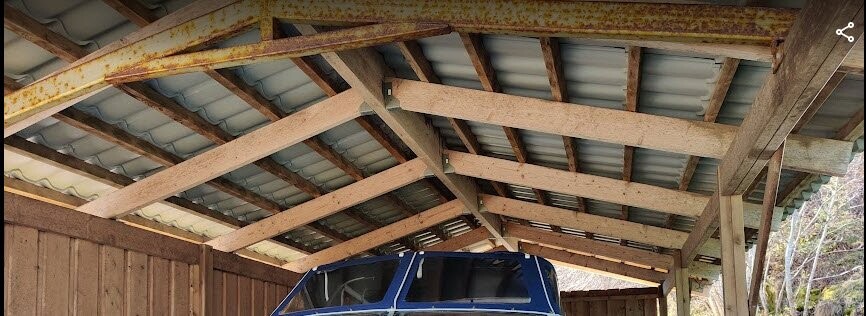
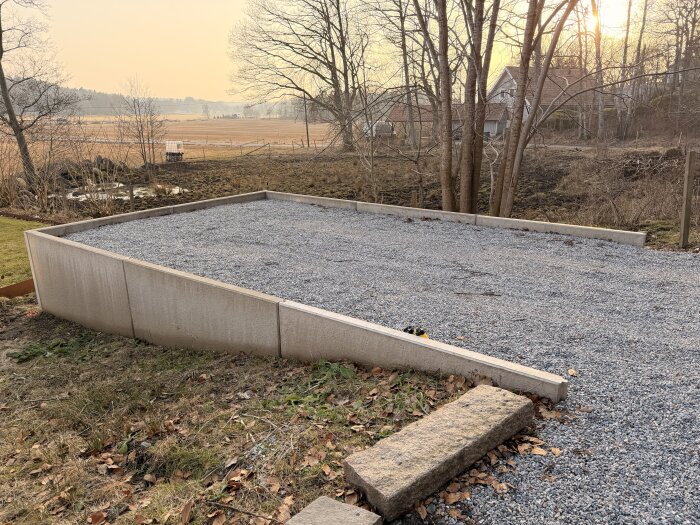
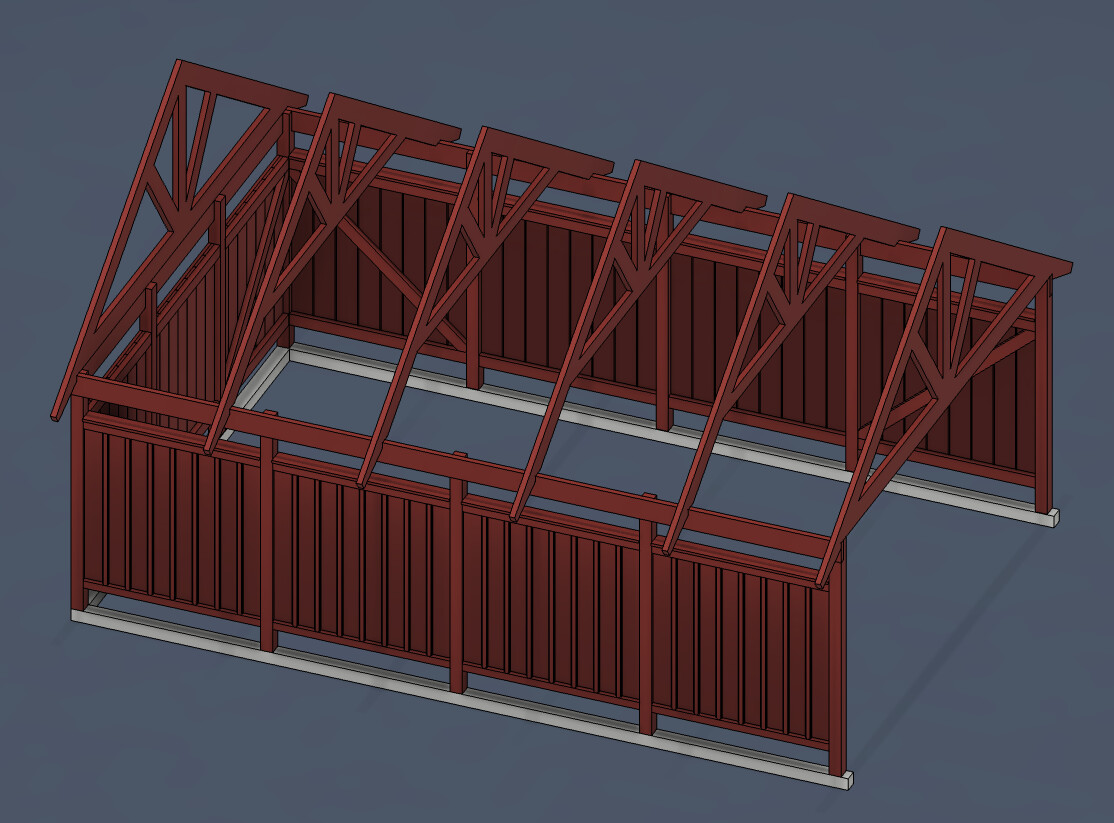
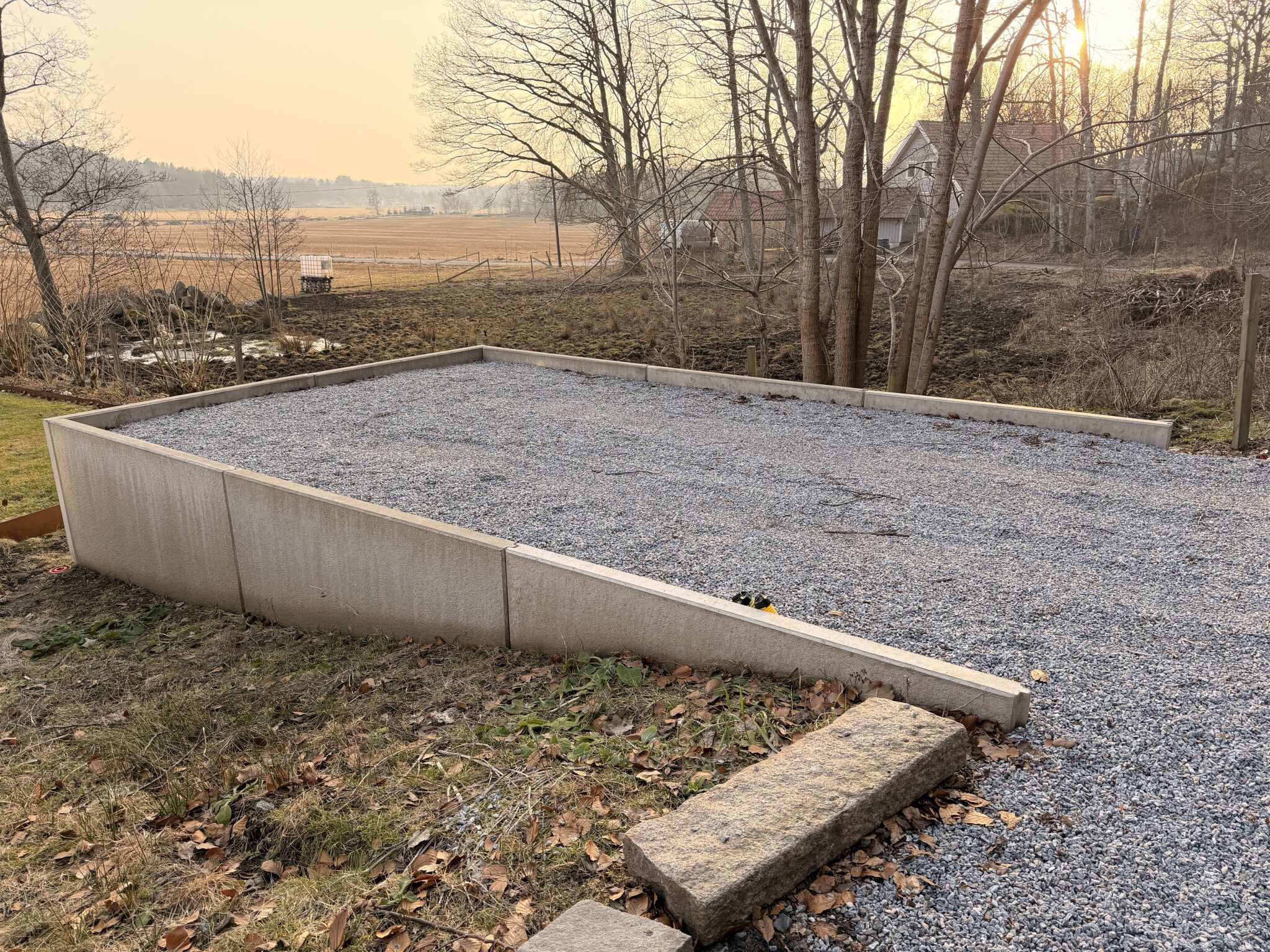
Last year, we had a 4m x 6m area with L-support constructed in the slope between our yard and our garden. This year, the plan is for us (me) to build a carport with a gable roof on top. See the rough sketch below (yes, it will have a roof too). Initially, we thought of using roof tiles, but we're now leaning towards shingles instead to keep the weight down. Snow zone 1.5 (Bohuslän).
The idea is for me to do everything myself. The construction itself and the actual carpentry should not be a problem - I've built decks, fences, and stairs and I have a black belt in YouTube - but I am extremely uncertain about the dimensions.
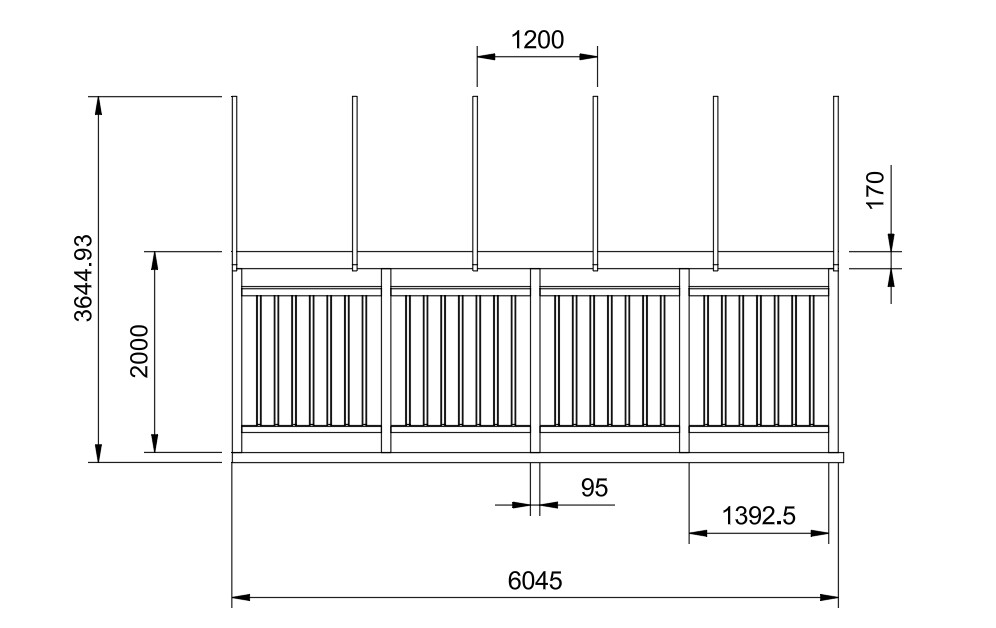
The plan is to use 95x95mm posts - 5 posts on each long side and then an additional 2 posts in between on the short side that will be closed.
The original plan was to attach the posts with post anchors directly on the tops of the L-supports but it feels a bit risky to attach them to the L-supports - is there a risk they might crack? - so the latest plan is to place substantial impregnated beams (95x95) on top of the L-supports. These will be screwed/bolted to the L-supports and then the posts will be attached to this "frame". Maybe with tenons in each post end that fit into the frame and then substantial bolts straight through. But I don't know what is "sufficient"...
Do you think this can work? How would you have done it?
And what do you think about the thickness of the posts? Is it stronger to use glulam beams at 90x90 instead of "regular" posts at 95x95? Or do I need to increase the thickness more than that so the carport doesn't collapse with the first strong gust of wind?
Two of the three sides will then be covered with plank-like walls, with board and batten, open at the top and bottom. Diagonal braces in the corners.
The wall plate that the rafters will rest on is drawn with dimensions of 45x170. Sufficient, or do I need to increase them further?
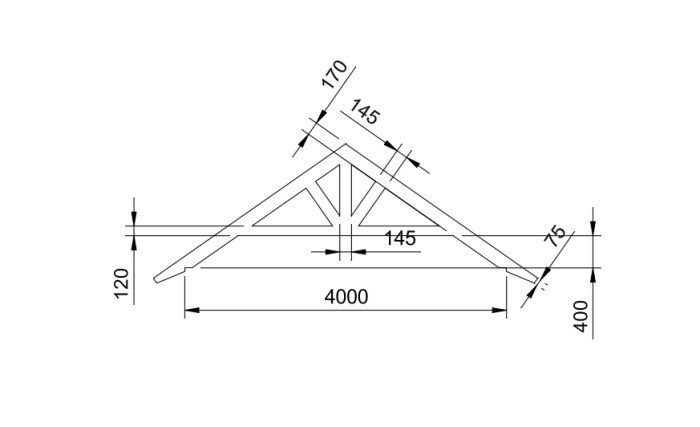
And speaking of the rafters... I've thought of using 45x170 for the upper chord and 120mm for the lower chord. We also want a slightly higher free roof height inside the carport, so that we can, for example, hoist up a couple of kayaks or a roof box, so I thought of moving the lower chord up 400mm. Will that work?
This project is keeping me awake at night...
So if anyone could provide some advice on this, perhaps I could get at least one night's full sleep. That would be nice!
I would have skipped the thoughts of post shoes and chosen to pour down footings with rebar.
95*95 probably works for posts, but it usually looks flimsy. I would rather choose regular sawn unplaned wood, for example, build a post that is assembled from 2 pieces of 50*150 with a 50*100 in between. This also makes it easy and convenient to attach and anchor the standing fascia. To make the carport withstand the wind, I think you should use diagonal bracing.
If you really need many posts on the long sides, you should make sure to get the posts directly under the rafters. Instead, I think 6 footings and posts are enough for your carport, placing 3 on each long side. On the short side, no additional post is needed.
I would skip the ideas of using post shoes and choose to cast piers with rebar.
95*95 surely works for posts, but it usually looks flimsy.
I would rather choose regular sawn timber, for example, build a post composed of 2 pieces of 50*150 with a 50*100 in between, making it also easy and convenient to attach and anchor the standing beam.
To ensure the carport withstands the wind, I think you should use diagonal bracing.
If you're really planning on having many posts on the long sides, you should ensure the posts are directly under the rafters, but I think 6 piers and posts should be enough for your carport, placing 3 on each long side. On the short side, no extra post is needed.
Thank you for the response!
The idea is to make use of as much space as possible, so I preferably don't want to cast piers inside the L-supports, but instead place the posts on top of the L-supports.
I was planning to place diagonal braces at the corners (see my illustration, though they might be a bit hard to see there). Or were you thinking of putting diagonal braces in other locations besides the corners?
Yeah, I'm somewhat inclined to build the posts in the manner you describe.
If I only go with three posts on the long sides, I'm afraid the walls/boards between the posts will sag/bend, since they are only meant to be anchored to the posts, with air above and below. Three posts on the long sides would mean about 3 meters between posts...
The plank between the posts can be easily reinforced with a proper diagonal brace to the middle post on the long side or with a sturdy cross of, for example, 50*100 on the short side.
The plank between the posts can be easily reinforced with a proper diagonal brace to the middle post on the long side or with a sturdy cross of, for example, 50*100 on the short side.
I will consider the number of posts. It doesn't really bother me if the rafters and posts don't align with each other. After all, gutters and such will be installed, so the rafters won't be very visible from the outside. On the inside, however...
Any thoughts on the dimensions of the wall plate and rafters? Wall plate: 45 x 170 and top chords in the same dimension. My wish to move the bottom chord up by 400mm is something that likely affects the choice of dimension?
I built a carport 20 years ago. Double pressure-treated 45*95 as posts, glued and screwed together. One 195 mm longer than the other. Mounted with the shorter one outward and then placed 45*195 lengthwise. 4 posts distributed over a 7.25 length. A wall on one side and the back, with braces on the other short side. It has remained stable ever since. Laminated wood beam at the ridge with a steel construction at the front edge supporting it, and then 45*145 as roof rafters.
Then I think you should skip planed timber, distemper adheres much better to sawn wood
Yes, I built a fence a couple of years ago, with planed posts and sawn outer panel, which was painted with distemper. The paint definitely adhered better to the sawn than the planed timber...
Yes, I built a fence a couple of years ago with planed posts and sawn outer panel, which was painted with linseed oil paint. The paint definitely adhered better on the sawn than the planed wood...
Falu rödfärg seems to sell a paint called Falu Rödfärg Träfasad that should work on planed wood. Not a genuine linseed paint, but linseed oil-based, and available in the same colors.
I built a carport 20 years ago.
Double pressure-treated 45*95 as posts, glued and screwed together. One 195 mm longer than the other.
Mounted with the short one outward and then laid 45*195 lengthwise. 4 posts distributed over a 7.25 length.
Wall on one side and the backside, and braces on the other short side. It has stood stable since then.
Glued laminated beam at the ridge with steel construction at the front holding it and then 45*145 as roof joists.
Yes, maybe it's an alternative to glue and screw your own posts together from two 45x95. They will only be 90x95 then, but that might be sufficient considering I have so many posts. If you used 4 posts over a 7.25m length, maybe it's fine for me to use 5 posts over 6 m?
And it would be easier to make room for the wall plate if done that way...
Falu rödfärg seems to be selling a paint called Falu Rödfärg Träfasad, which is supposed to work on planed wood. Not a true distemper, but linseed oil-based, and available in the same colors.
But why complicate things with something other than regular sawn wood and distemper, which are likely the best and cheapest both now and for future maintenance?
But why complicate things with anything other than regular sawn timber and wood stain, which are probably the best and cheapest both now and for future maintenance?
The majority of the timber in the building supply stores is planed, so I thought it would be easiest to get hold of... The roof trusses should also be painted, and the plan is to use planed timber there. However, I'm open to change my mind
The majority of the timber in the building trade is planed, so I thought it would be easiest to get hold of... Even the rafters will be painted, and the plan there is to use planed timber. However, I'm not set in my ways - I can change my mind
Have you considered how much more time and money it costs to maintain a board that is painted on both sides (with something other than natural paints or tar)
Vi vill skicka notiser för ämnen du bevakar och händelser som berör dig.

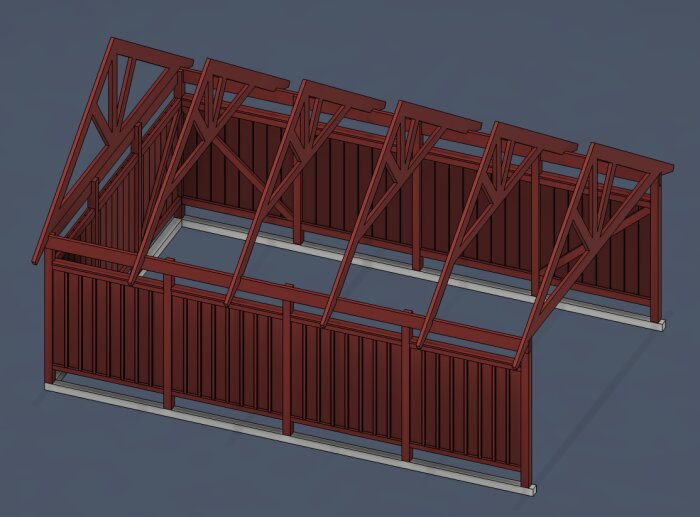
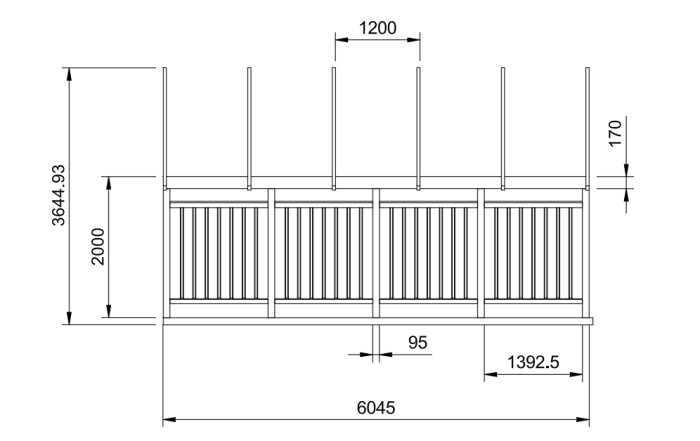
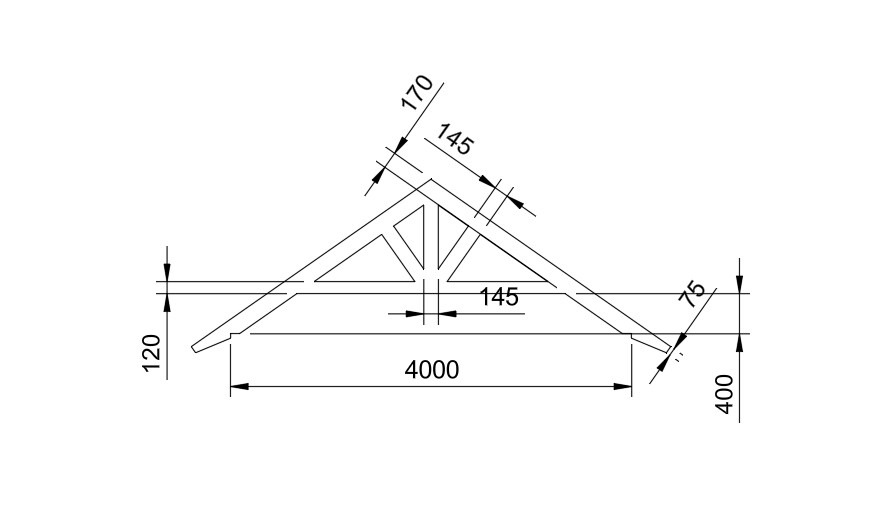
 Wall plate: 45 x 170 and top chords in the same dimension. My wish to move the bottom chord up by 400mm is something that likely affects the choice of dimension?