
1,606 views ·
18 replies
2k views
18 replies
Calculate interior ceiling height?
Hello, I have planned to build a house and have sketched an elevated wall life according to the building height we are allowed to have.
This would mean that internally I have 114cm to where the wall intersects with the 38-degree roof.
How can I easily reduce this to 70cm and then periodically see how much room area is lost with the reduced wall?
Is there a good visual way to do this?
This would mean that internally I have 114cm to where the wall intersects with the 38-degree roof.
How can I easily reduce this to 70cm and then periodically see how much room area is lost with the reduced wall?
Is there a good visual way to do this?
What is the measurement of the house and what is the maximum building height you are allowed?N Nygge72 said:Hello, I have planned to build a house and have sketched for a raised wall that goes with the building height we are allowed.
This would mean I internally have 114cm to where the wall intersects the 38-degree roof.
How can I easily lower this to 70cm and then regularly see how much room area disappears with the lowered wall?
Is there a good visual way to do that?
Max building height 4.20, so I keep all the outer measurements. However, the municipality says it can only be 1 floor, and if there are more than 70 cm interior walls on the upper floor, they say it counts as an additional floor. They then suggested raising the indoor joists or changing the roof angle...T ToreJ01 said:
But I don't really see the point of raising the joists (44 cm) as it should be the same as lowering the ceiling, i.e., the indoor space remains the same. I only elevate the wall life to maximize the area within the building height I can have.
I guess there's something I'm not getting, but I can't see any space for an upper floor.N Nygge72 said:Max building height 4.20, so I'm sticking to all external dimensions. However, the municipality says it can only be 1 floor, and if there are over 70cm interior walls on the upper floor, they say it counts as an additional floor. They then suggested raising the indoor joists or changing the roof angle...
But I don't see the point in raising the joists (44cm) as it should be the same as lowering the ceiling, i.e., the indoor space remains the same. I'm only setting the raised wall height to maximize the area based on the building height I'm allowed.
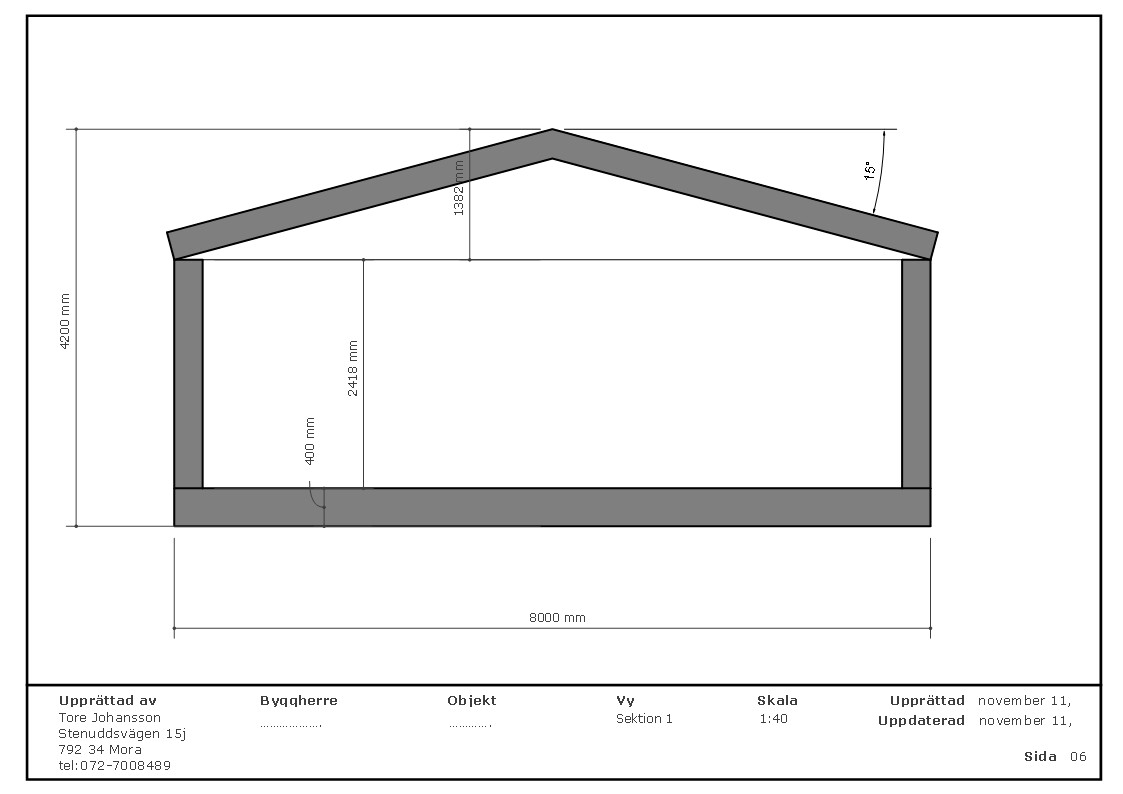
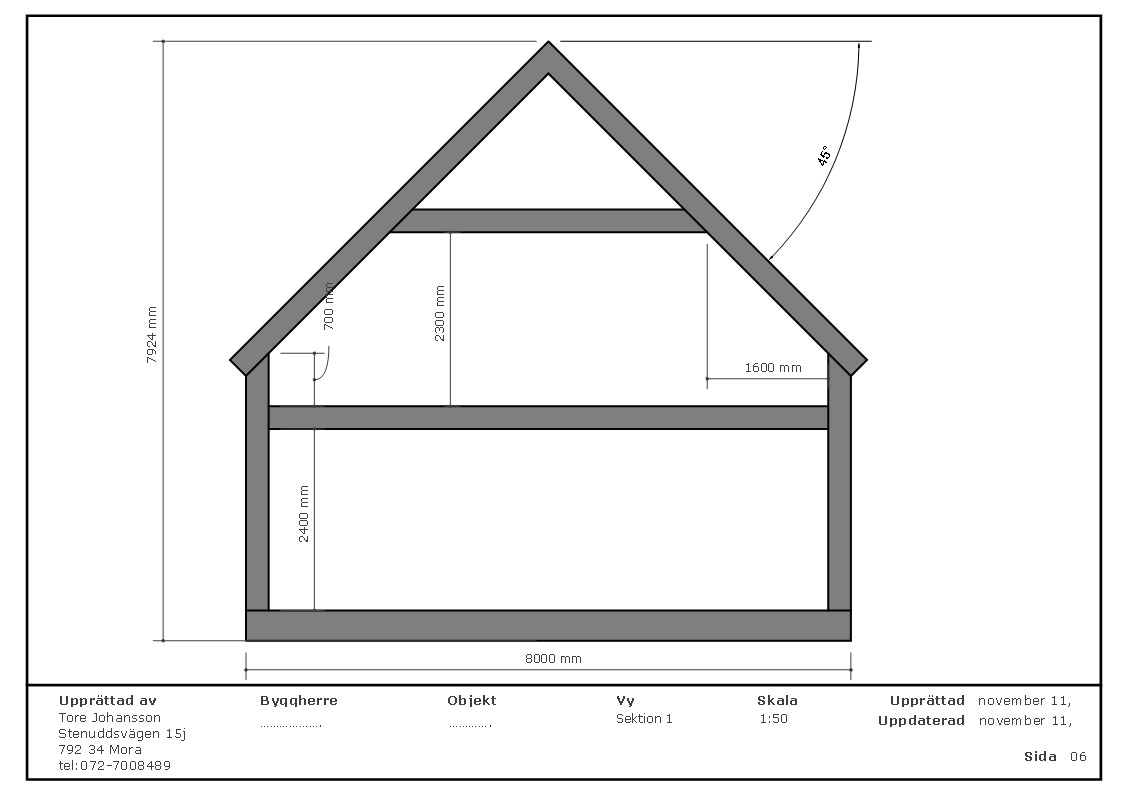
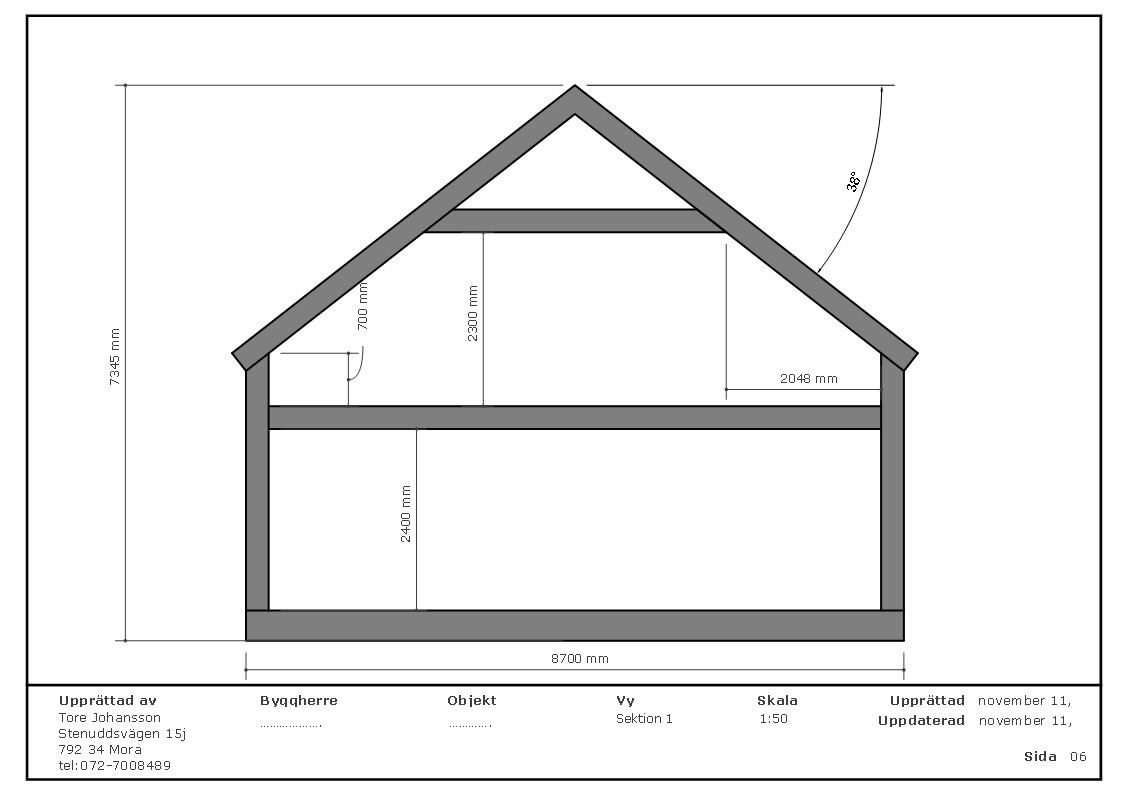
I have the house drawn with 1140mm today, where you put 700 (which the municipality says I can have). So I wanted to see the difference in the space at the top that results from the two different wall heights.T ToreJ01 said:
If you have a 1140 wall, then the floor/ceiling cuts closer to the outer wall at the dimensions 1500mm and 1900mm. But HOW much closer than if the wall is 700mm.
Hard to explain 😁
If you mark the ceiling height 1500 and 1900 in your drawing above and distance from the wall, and do the same in a drawing with wall 1140, TS can compare the upstairs area with standing height. That's how I interpret the question.