
7,742 views ·
33 replies
8k views
33 replies
Building houses like they used to
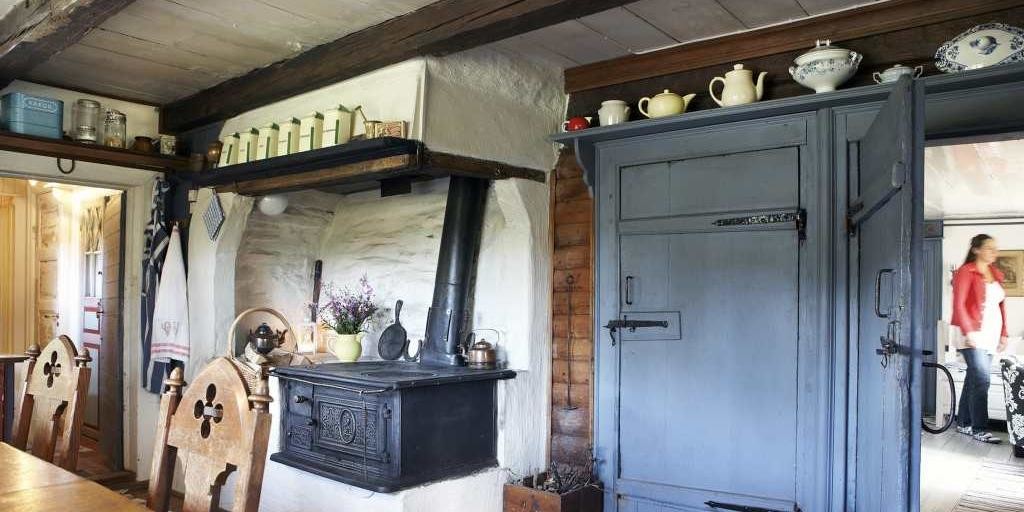



It will probably be enormously expensive if you don't do everything yourself.
Okay, yes of course there are building methods that were good. But they've probably changed construction techniques because they had shortcomings and were especially more expensive to implement. If you're looking to find literature on how to use different construction techniques, it's probably easier to find information on how to build today.

You cannot build as they did 100 years ago and get a building permit approved.
Mainly because the requirements for energy efficiency are significantly higher today.
The extra amount of insulation means that the walls do not dry outwards due to heat leakage.
So a vapor barrier/brake is needed to ensure that the wall is not damaged by moisture from the warm and humid indoor air.
Aesthetically, modern planning regulations can block the high ridge heights/steep roof slopes of the past.
Mainly because the requirements for energy efficiency are significantly higher today.
The extra amount of insulation means that the walls do not dry outwards due to heat leakage.
So a vapor barrier/brake is needed to ensure that the wall is not damaged by moisture from the warm and humid indoor air.
Aesthetically, modern planning regulations can block the high ridge heights/steep roof slopes of the past.
More expensive construction drawings (you can't use "standard templates"). More expensive materials. In the past, there weren't the energy requirements that there are today.D Dcaprio said:
In conclusion, it neither becomes cheaper nor easier, so why should one do it? If you're after the feeling and have the money, then you can attempt it. But expect that many will oppose it (municipality and such).
I assume that it is because of costs that basements are not built today, which was basically standard in the 20s and 30s. It takes too many man-hours to build a basement with bricks, much cheaper to level and place some L-elements and fill with some concrete.D Dcaprio said:

Which parts are difficult to understand? Modern energy consumption requirements mean that much more insulation is needed than was used before 1920. A lot of insulation comes with a much greater risk of moisture problems. Many people mistakenly believe that new materials or building methods lead to the problems. It is precisely the well-insulated wall that poses a greater risk for moisture regardless of the materials used.D Dcaprio said:
A lot happened between 1700 and 1920 in house building. Were you thinking of log houses or stud frames?
For a vacation home, there are probably no issues building as they did in the 1700s if you have enough time and money. But as a permanent residence, it will likely be difficult. And not very good.
I choose to continue focusing on this concept of "easier to understand." If you can calculate U-values in wall constructions, you can certainly figure it out just as easily whether the wall is made up of building plastic and mineral wool or cellulose and a vapor barrier.
Furthermore, I dare to promise that no house built in 1920 or earlier was insulated with cellulose and had a vapor barrier. Additionally, it was nowhere near as well-insulated as today's houses.
It is a contradiction from the start. If it is built like 100 years ago, it does not meet today's standards. If it meets today's standards, it is not built like 100 years ago.
Furthermore, I dare to promise that no house built in 1920 or earlier was insulated with cellulose and had a vapor barrier. Additionally, it was nowhere near as well-insulated as today's houses.
It is a contradiction from the start. If it is built like 100 years ago, it does not meet today's standards. If it meets today's standards, it is not built like 100 years ago.