
18,787 views ·
18 replies
19k views
18 replies
Building Basement Wall with Steel Studs and More?
Hi!
I want to build a real wall in the basement. I've bought steel studs, but should I use regular insulation or asfaboard? Both were included when I bought the house.
I've googled but haven't found any good construction tips. Basically, I just want to wallpaper it to make it look a bit nicer. I'm going to use it as a sewing room, so it doesn't have to be "habitable."
Anyway, in what order should I arrange the building materials? I have quite a bit of beadboard, so I probably want wainscoting at the bottom.
I don't have better pictures, but the basement is built of concrete blocks, and there is a garage above. I assume there is a concrete slab underneath.
Any tips would be greatly appreciated!
I want to build a real wall in the basement. I've bought steel studs, but should I use regular insulation or asfaboard? Both were included when I bought the house.
I've googled but haven't found any good construction tips. Basically, I just want to wallpaper it to make it look a bit nicer. I'm going to use it as a sewing room, so it doesn't have to be "habitable."
Anyway, in what order should I arrange the building materials? I have quite a bit of beadboard, so I probably want wainscoting at the bottom.
I don't have better pictures, but the basement is built of concrete blocks, and there is a garage above. I assume there is a concrete slab underneath.
Any tips would be greatly appreciated!
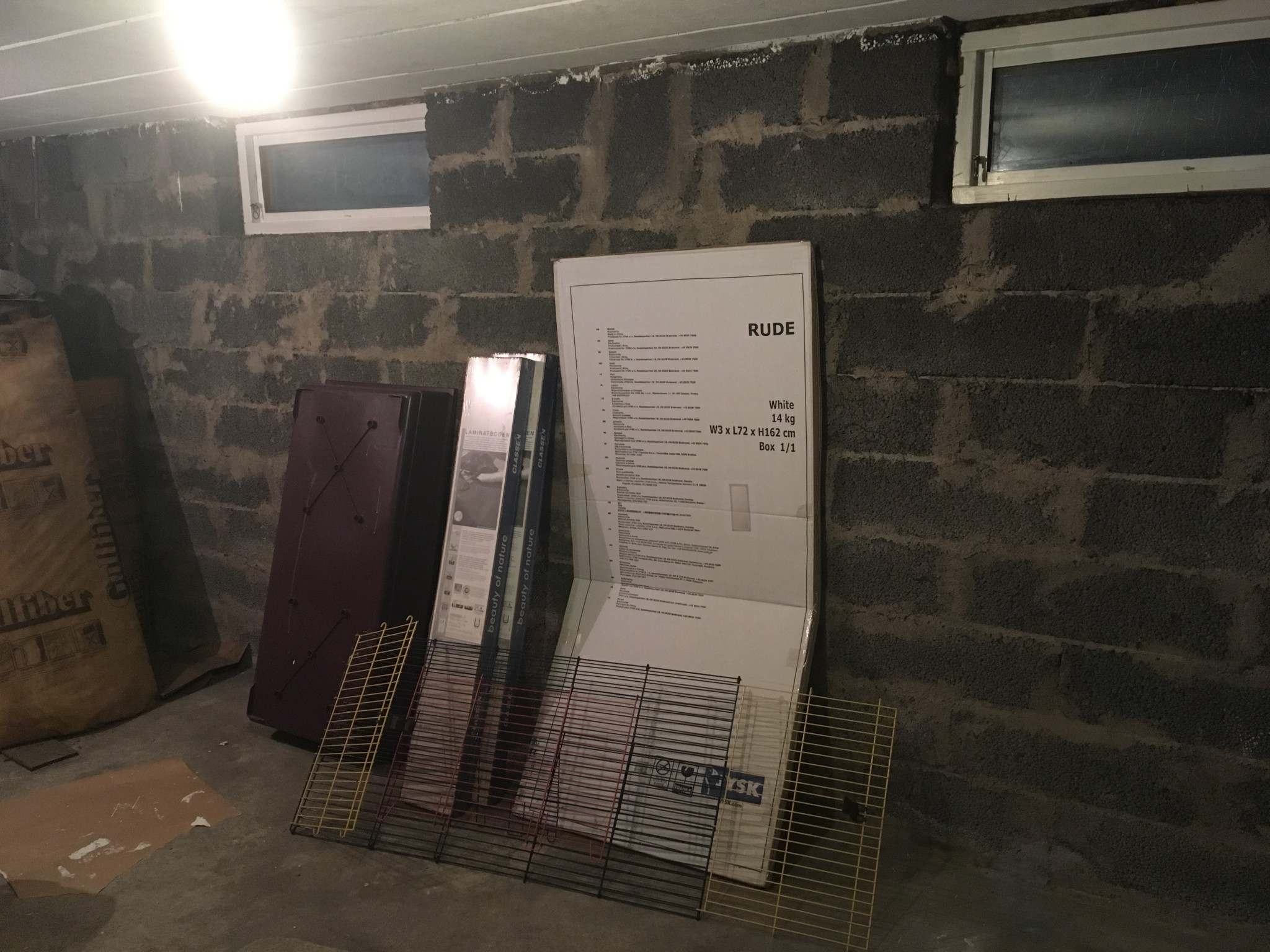
Hi, I assume it's the outer wall of Leca you want to wallpaper on?
In that case, I would plaster the wall and wallpaper directly on it. It's hard to know how it works otherwise with drainage, moisture, etc. Better to construct something directly where the moisture doesn't get trapped.
Don't forget ventilation if you're converting the basement into a workspace!
In that case, I would plaster the wall and wallpaper directly on it. It's hard to know how it works otherwise with drainage, moisture, etc. Better to construct something directly where the moisture doesn't get trapped.
Don't forget ventilation if you're converting the basement into a workspace!


Isover and Paroc write the following
https://www.isover.se/isolera-kallarvagg-inifran
https://www.paroc.se/~/media/Files/Brochures/Sweden/DIY-Nr6-SE.ashx
https://www.isover.se/isolera-kallarvagg-inifran
https://www.paroc.se/~/media/Files/Brochures/Sweden/DIY-Nr6-SE.ashx


Avoid insulation entirely. There is always a risk of insulating on the inside and you have particularly limited insight into the moisture situation => don't take chances.
Metal studs, reinforcement board, drywall, wallpaper/paint. Ideally, you should also ventilate the space behind the wall.
Metal studs, reinforcement board, drywall, wallpaper/paint. Ideally, you should also ventilate the space behind the wall.

Yep, avoid insulation and ventilate. If, against all odds, you still want to insulate, a better choice is to glue isodrän boards internally directly onto the basement wall. The book "få bukt med fukt" is good literature on the subject.


Listen to the wise ones above me. I saw you bought steel studs, but a tip is to use ceiling profiles (hat profiles); they are easy to attach directly to the wall, don't require anything on the floor or ceiling that obstructs airflow, and only take up 25mm instead of 45mm like a steel stud.
Apply any sheet material, leaving a gap for air against the floor and ceiling, and finish with ventilated baseboards and ceiling moldings. You can buy them or easily make your own depending on skill level and appearance requirements, with a drill, for example.
Apply any sheet material, leaving a gap for air against the floor and ceiling, and finish with ventilated baseboards and ceiling moldings. You can buy them or easily make your own depending on skill level and appearance requirements, with a drill, for example.
Yes, exactly, don't build anything on a basement wall, but plastering and painting with silicate paint or wallpapering is a good method that adds a few mm to each wall.A Ankan77 said:
Otherwise, I also agree that a 25 mm hat profile with some ventilation behind the strips is a good alternative as well.
The downside of wallpapering directly on the plaster is that if you have a worse moisture problem, you'll become aware of it pretty quickly. This can be an advantage too, but it won't save the wallpaper that time.
Hello!
Sounds interesting, 25 mm hat profile, suggestions on how to attach it to the wall? Do you screw the bottom of the hat to the wall or position the profile with the hat outwards?
Otherwise, ideas on how to ventilate? A grille through the wall or skirting board and one up towards the ceiling?
Sounds interesting, 25 mm hat profile, suggestions on how to attach it to the wall? Do you screw the bottom of the hat to the wall or position the profile with the hat outwards?
Otherwise, ideas on how to ventilate? A grille through the wall or skirting board and one up towards the ceiling?
You should set with the hat outward, it will probably be ridiculously difficult to attach the board otherwise  how you most easily attach the profile to the wall depends on what the wall is made of. A tip is that since they are attached to the wall, it's completely free to splice them however you want. This makes it a fairly affordable option.
how you most easily attach the profile to the wall depends on what the wall is made of. A tip is that since they are attached to the wall, it's completely free to splice them however you want. This makes it a fairly affordable option.
Last edited:

Hello! Borrowing the thread as I am facing a similar project and there seem to be many knowledgeable people here.
How do you handle window niches when framing a basement wall (hat profiles, OSB, drywall)? How do you handle the space around the window? I understand framing around the window, but what do I build the niche with? OSB + drywall + filler? I don't want to place wood against the basement wall, but I don't want a gap between the window frame and the window either?
How do you handle window niches when framing a basement wall (hat profiles, OSB, drywall)? How do you handle the space around the window? I understand framing around the window, but what do I build the niche with? OSB + drywall + filler? I don't want to place wood against the basement wall, but I don't want a gap between the window frame and the window either?