Fastening posts:
45mm material allows you to drill with a plug drill first and then fill the holes with wood plugs. If you use a 20mm plug, you can use a 6mm wood screw and have a washer for M8 in the holes to distribute the pressure and prevent the screw from going straight through.
Stair nose:
Your plan is good.
Balusters:
You need to experiment. Proportions change with conditions. Cut some strips of masonite, for example, and place them on site with some masking tape. Then walk around and look from different angles.
Handrail following the stringer:
The bends are weak. You can glue a block of suitable wood (poplar is nice for this. Pine also works well, but splinters a bit more easily than hardwood) and cut to shape with a bandsaw. If you don't have one, you can make templates and route with a hand router. The challenge lies in the thickness. A mortising cutter 16mm with a ball bearing above the cutter will go down a maximum of about 70mm. To achieve maximum depth, you need to remove the template when you can't go further with it. If the handrail is wider, you can turn it and clean the last part from the other side.
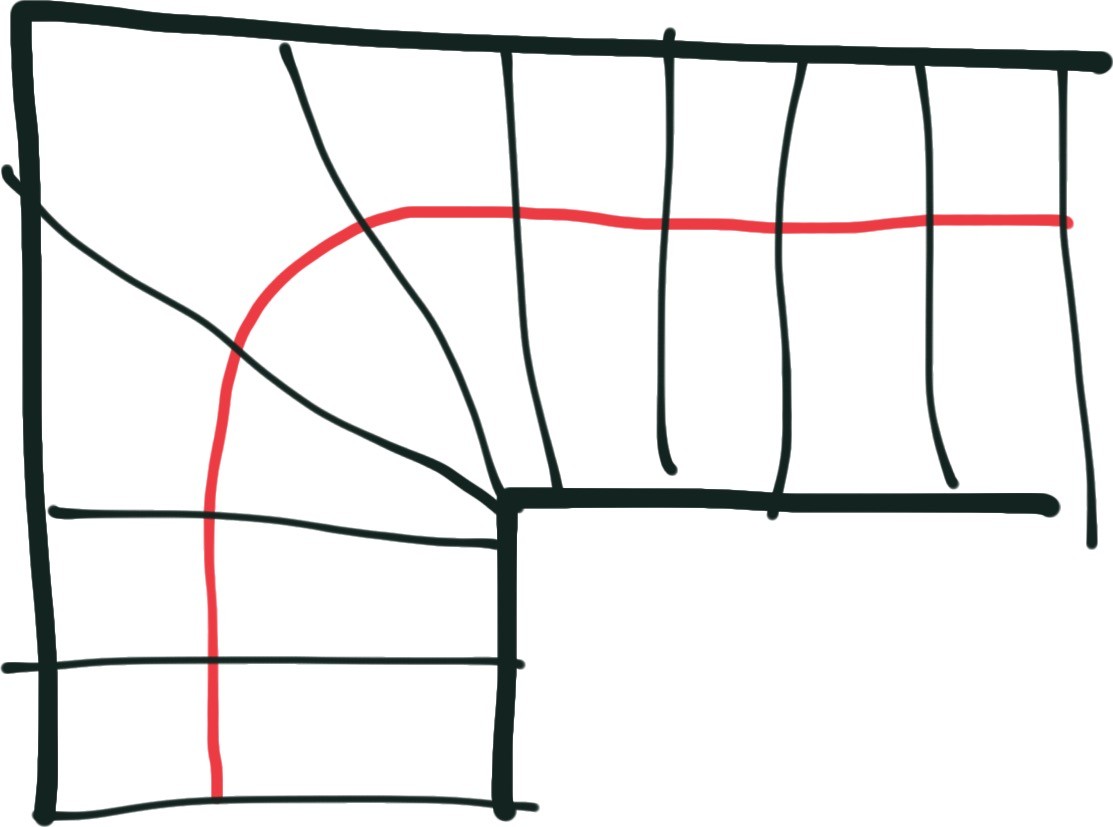
The stringers are curved because the treads are of different widths around the corner of the stairs. However, a line based on the stair noses is completely straight. If you want to optimize the function of the handrails as actual handrails, they should be straight.
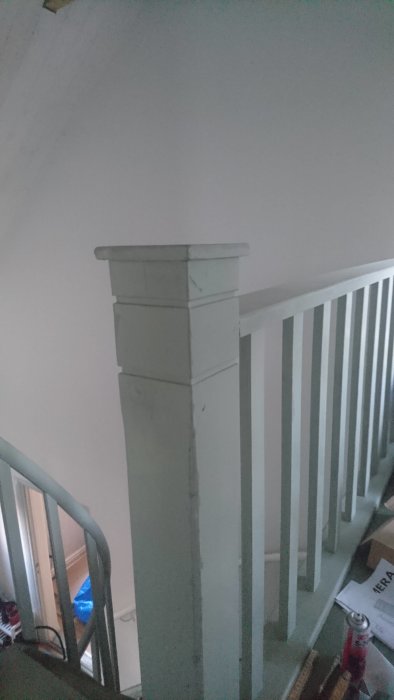
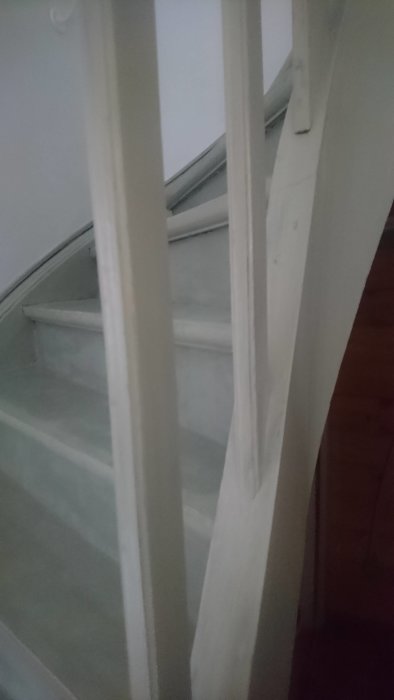
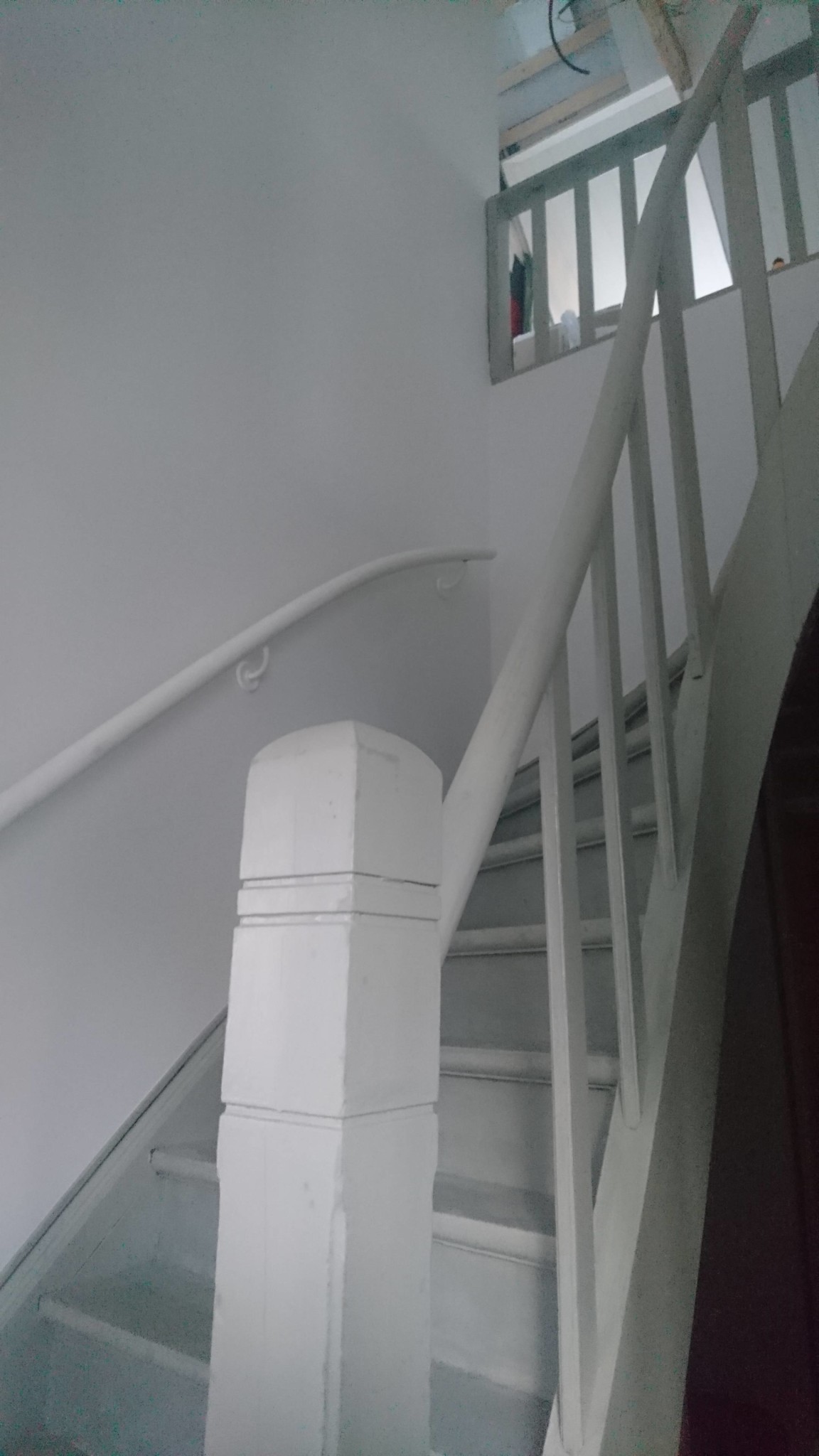
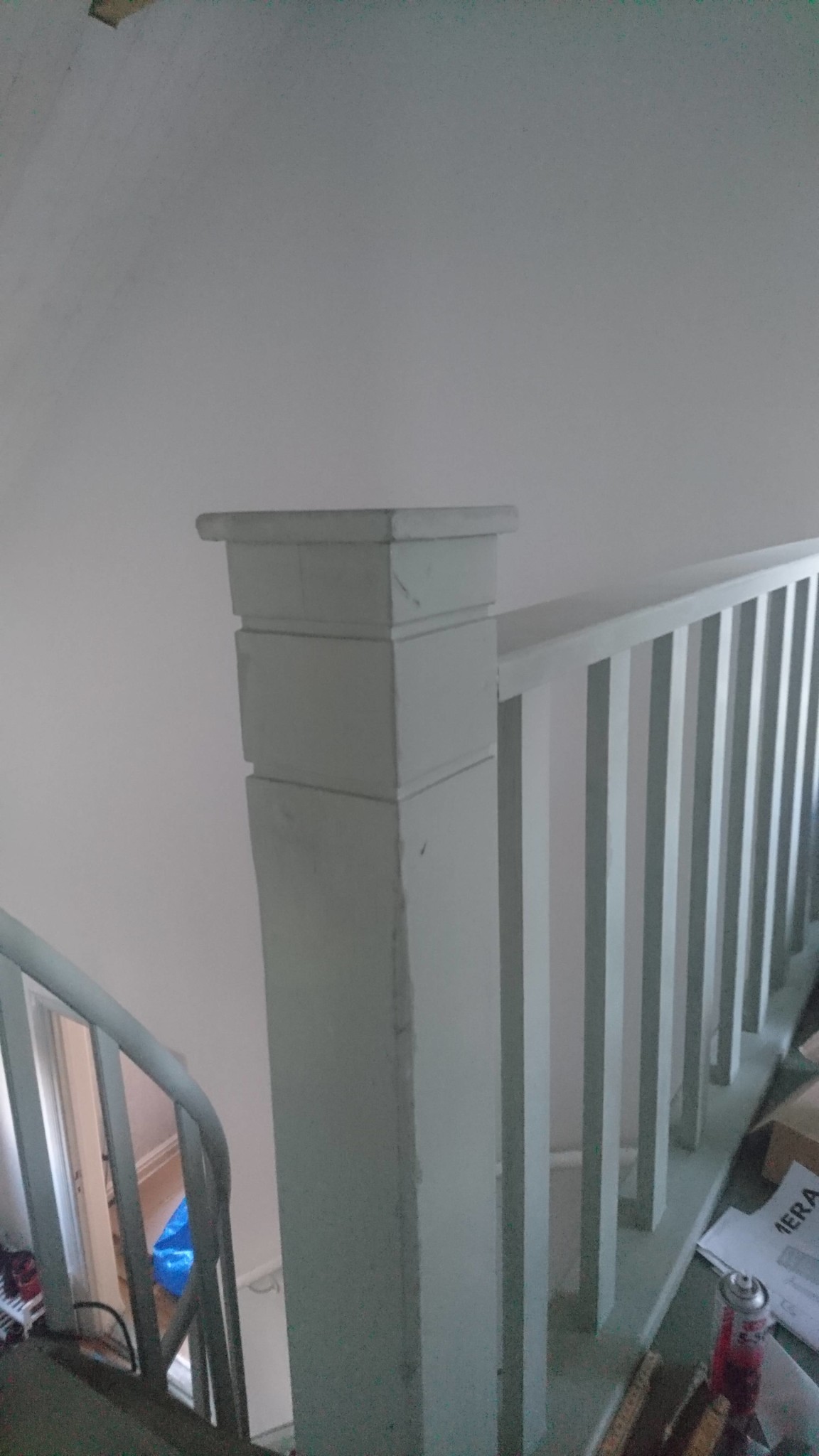
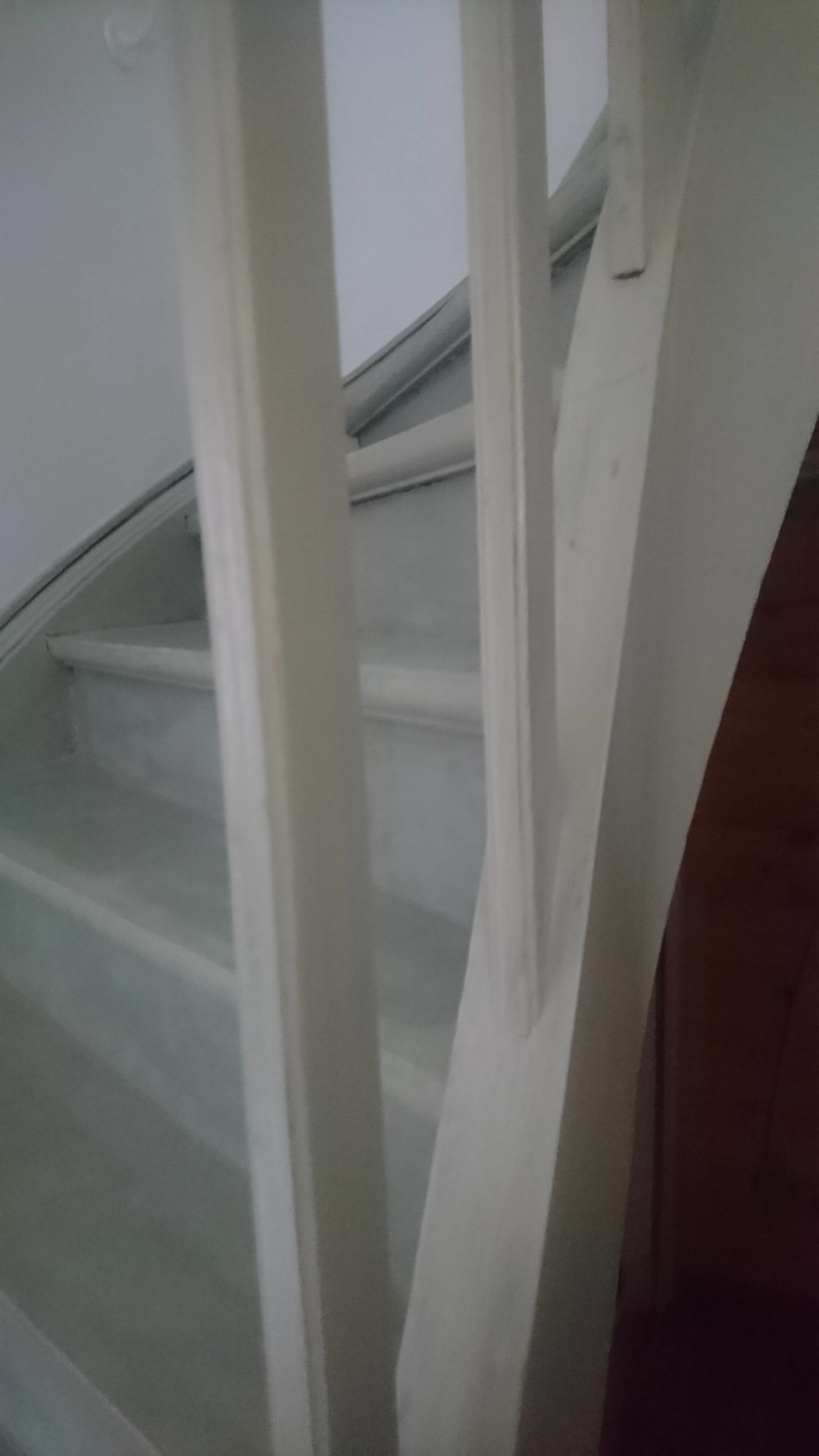
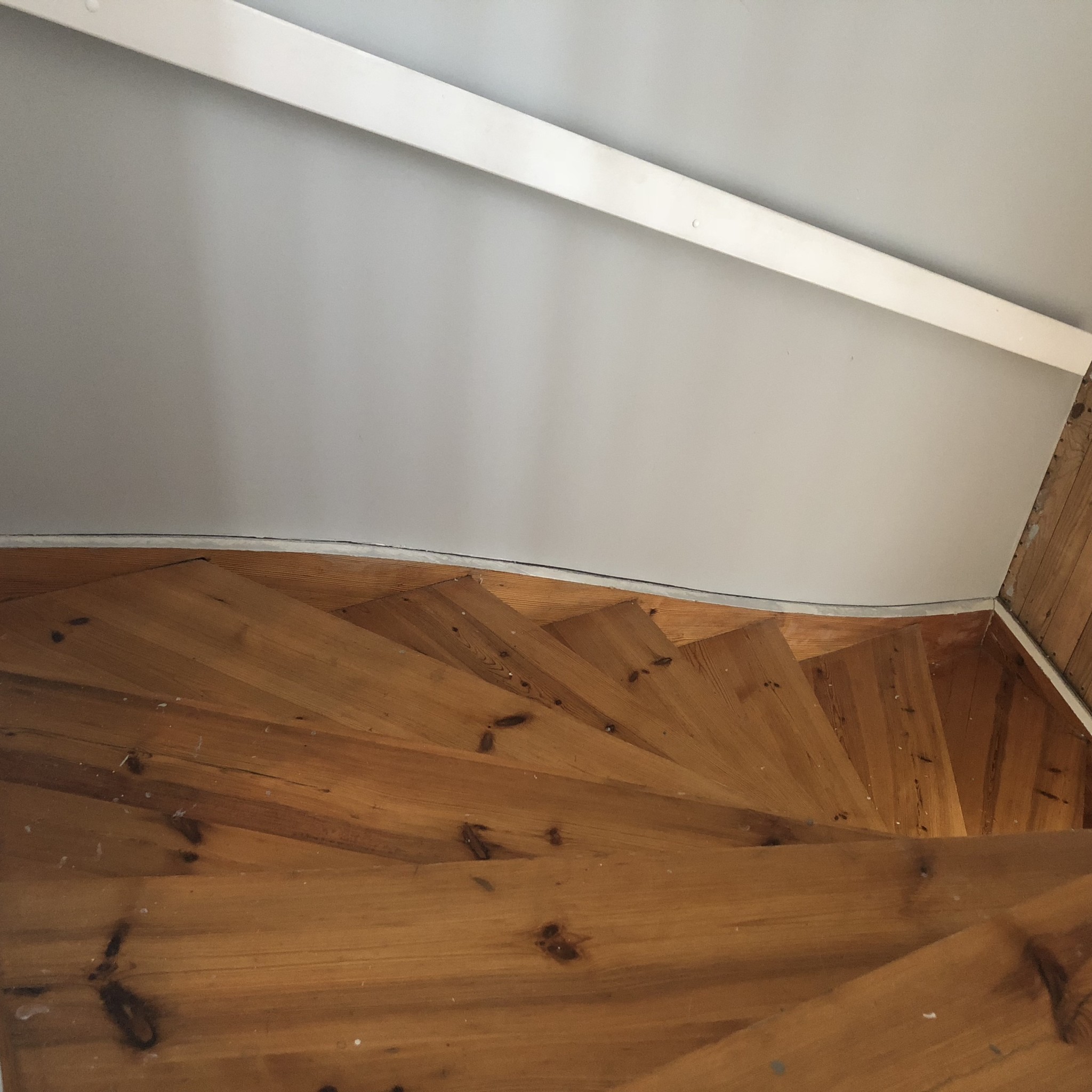
Some inspirational pictures (in terrible lighting and with a mobile camera) from our staircase that I guess fits well in style and period.
The spindles are spaced at CC 175, dimensions 22*50. The handrail diameter is 55, sits 900 above the stair nosing. The stair nosing protrudes 35mm and is about 40-45 high. The rounding has a radius of 15-20 mm.
Gives some hints about suitable dimensions, maybe!
@justusandersson
Now I'm not following. As far as I understand, any stair nose follows the step. In a curved staircase, the steps are made equal in length along the walking line. This is assumed to be about 3/5 of the staircase's width measured from the spindle. In the bend, the walking line is laid as a radius. When you then draw how the steps look, the length varies at the spindle and at the outer stringer.
The handrail is usually above the stringer. To have the correct height, the handrail follows the front edge of the step where it meets the stringer.
Please explain what you mean. I went completely blank when I tried to visualize how completely straight handrails become comfortable.
Basically, it is a geometric problem like so many others when it comes to houses. If the riser height and tread depth are constant, as they should be in the walking line, it results in a completely linear curve. Stringers that are adapted to a varied width of the treads become slightly curved. This can be incredibly beautiful but is an expression of a different relationship. Stairs are tricky. There are people who have earned a doctorate on this subject.
@justusandersson
What you're saying becomes nonsense on a curved staircase. Assume you're walking along the line of travel and twisting with each step so that the part of the handrail you're holding is directly aligned with the step you're on. Then the correct height is not a straight line. Straight lines not only look odd, but they are also terribly uncomfortable. Potentially dangerous if you let go of the handrail in the dark and fumble around at the wrong height to find it again around the corner.
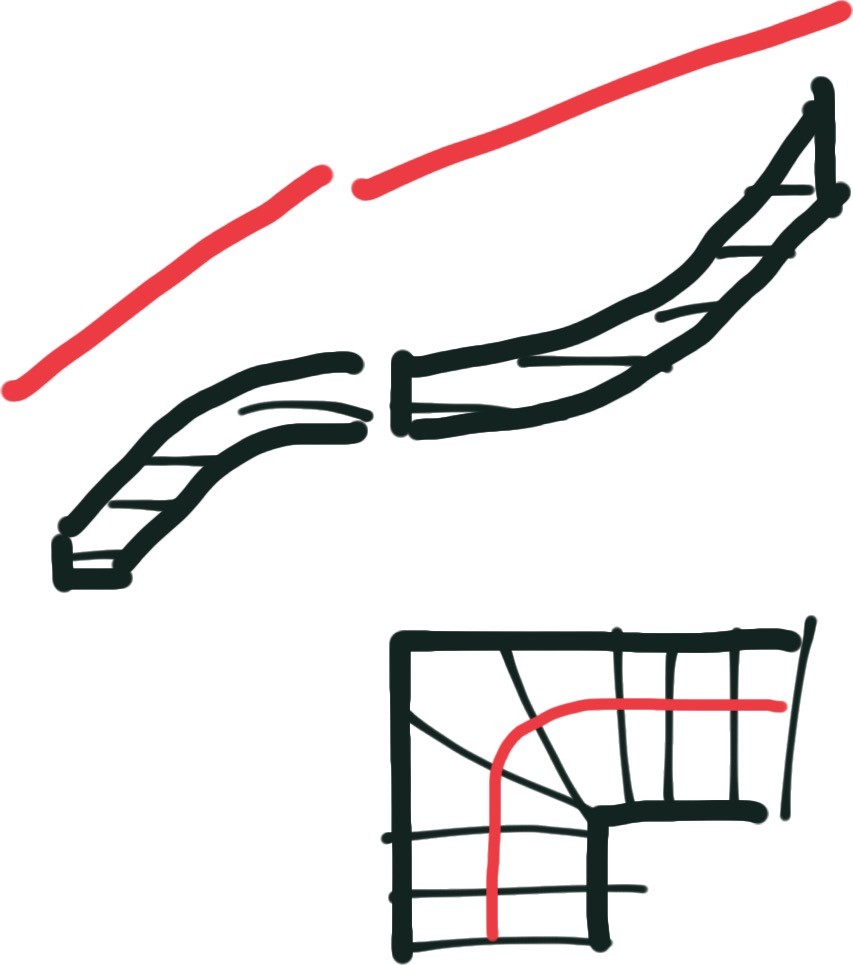
The only place where the slope is completely straight is along the line of travel. For me, it's not a difficult mathematical problem. If you unfold the stringers, it looks something like this. Straight handrails (red) won't have a sensible reference point anywhere.
But then again, I'm not a mathematician either.
For child safety reasons, the gap must not be more than 10 cm. This is to prevent children from getting stuck or passing through.
[link] section 8.2321
Or you can use a child gate. Babies should preferably not be alone on stairs.
I agree that the handrail should follow the shape of the vangstycke for the staircase to be comfortable to walk in. When walking on the straight part, it's simple, as you move a certain distance vertically and a certain distance horizontally, the hand does the same. Pure translational movements. In the curved part, you do the same translations (if you walk on the centerline as intended) but simultaneously a rotation. The hand's position in relation to the center of rotation provides a tangential movement due to the rotation that is added to the horizontal translation. The vertical translation is the same for all steps. This means that the slope of the handrail should decrease where the staircase curves to follow the natural movement of the hand, essentially the same shape that the vangstycke has. So mathematics, or rather kinematics, also supports the curved handrail if desired.
I have a two-year-old who sees it as a life adventure to walk in the staircase whenever he gets the chance. Temporarily during renovation, we only have some straight boards as handrails, and he has difficulty using them. In the corners, he barely reaches at all.
Or you can have a baby gate. Babies should preferably not be alone in stairs.
Then you'd have to place the gate at the top and block off the entire lower floor because they can manage to reach in and stick their head in from the outside too.
The rule only exists where there is a risk of falling, so from below, there is hardly any requirement/need. It's not forbidden to have a 10 cm gap in the rest of the house. Moreover, children at 4 months are relatively easy to keep away from dangerous places, as they can't crawl yet...
The rule only exists where there is a risk of falling, so there's hardly any requirement/need from below. It's not forbidden to have a 10 cm gap in the rest of the house. Additionally, children at 4 months old are quite easy to keep away from dangerous places, they can't crawl yet...
It's also about a child (or an adult) being able to fit their head through and get stuck.
Getting stuck by itself is hardly life-threatening; it's in combination with falling/hanging that one needs to worry. Btw 999/1000 children have heads larger than 12.5 cm by six months of age. But now I think this is getting a bit too OT...
Getting stuck alone is hardly life-threatening, it's in combination with falling/hanging that one needs to worry. Besides, 999/1000 children have heads larger than 12.5 cm at six months of age. But now I think it's getting a bit off-topic...
Yes, that’s why it is recommended to keep the opening somewhat less than 12.5 cm...
Building regulations are not only about risks to life but also about avoiding less serious issues.
The thread is about how TS should design their railing, so I don't think it's off-topic but highly relevant.
One can have their opinions about the regulations from Boverket that BirgitS linked to, but they are the ones that apply, one should be aware of that. Handrails should follow the stair nosings on straight stretches. In the curve, there should preferably be a 90-degree bend connecting the straight stretches. At least in the past, there was a Swedish standard regulating this. Handrails are always a compromise between different functional requirements that depend on differences in height and age. Sometimes parallel systems may be needed.
Vi vill skicka notiser för ämnen du bevakar och händelser som berör dig.