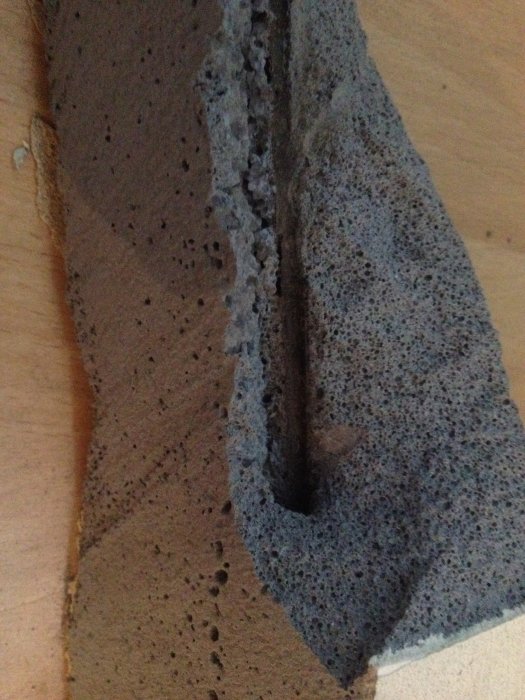
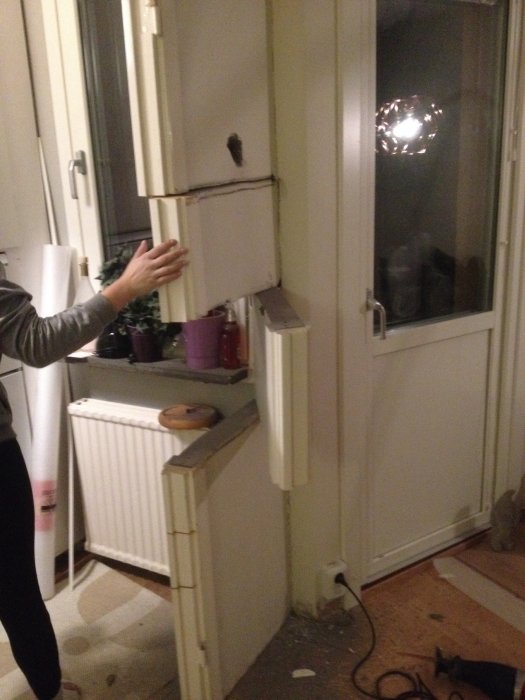
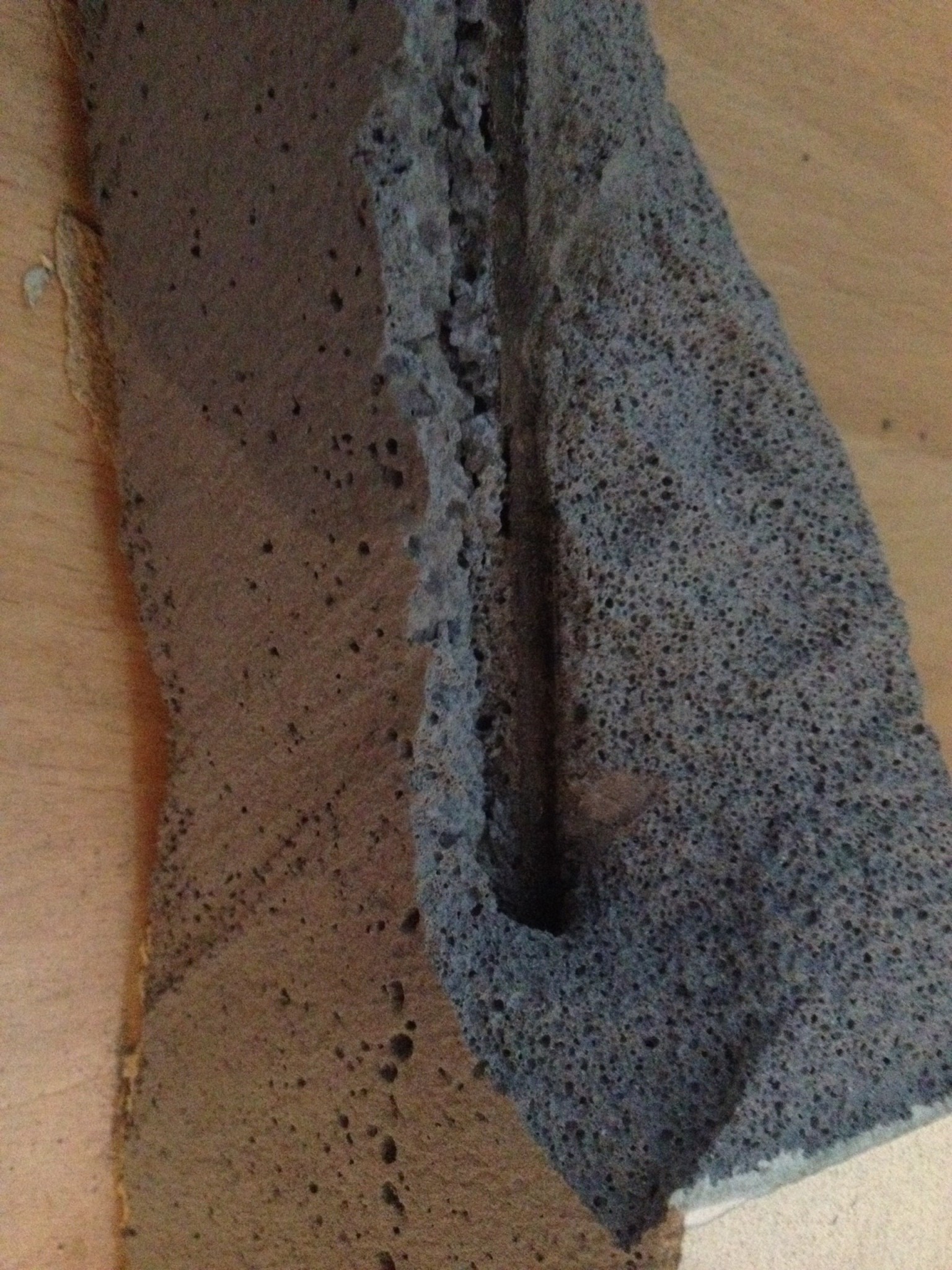
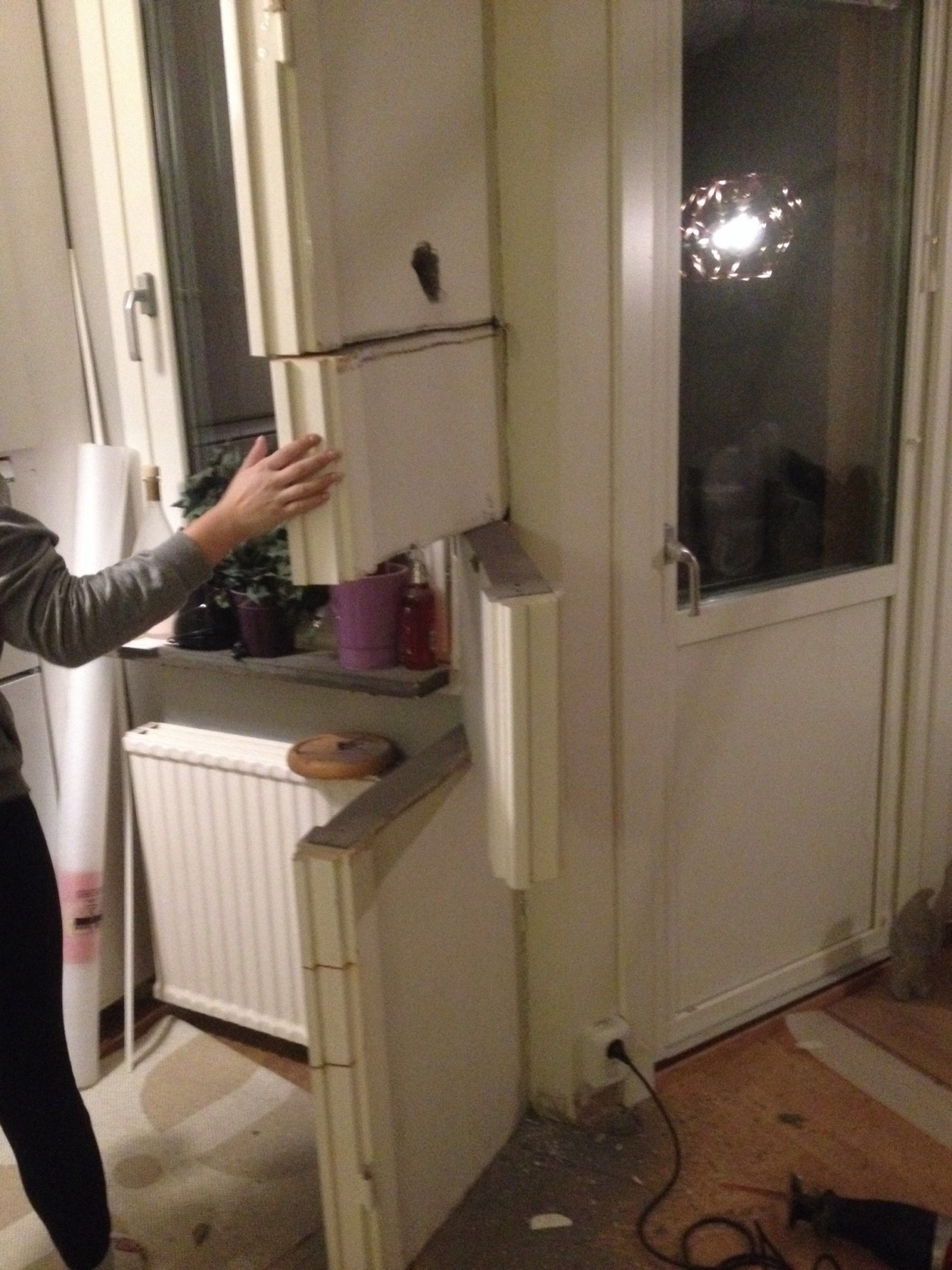
Hi! I'm in the process of renovating a bit in my apartment and yesterday I tore down part of the wall that's supposed to go, and the content looked like this (see picture!). It was pretty dusty, so I probably inhaled a few particles. But I'm wondering if the material is something I should be worried about? The wall is an internal wall, not load-bearing, between the kitchen and the living room. Grateful for any responses.
Yes, I was thinking that I should buy a mask for next time and regretted a bit that I hadn't done it earlier. Thank you so much for the quick response!
Yes, it is blåbetong; a mask would have been preferable. Likewise, removing items that become dusty before starting the demolition, like the flowers in the window.
Keep in mind that your regular vacuum cleaner will let through some of the dust if you use it. Sweep up as much of the dust as possible and wipe the rest with a damp cloth.
What's done is done; you won't die from this demolition. Don't worry about it, just do it right next time.
If there are more demolitions, rent a construction vacuum cleaner for an assistant to use while you saw.
How do you know if it's blåbetong or lättbetong? I thought since SBH mentions lättbetong?��
Blåbetong info from wiki.
Blåbetong is a type of lättbetong that gets its name from the blue-black color that characterizes the uranium-rich alum shale that constitutes the main ingredient. Using alum shale was advantageous as the shale is rich in carbon and could be used as fuel when firing the lime included in lättbetong. The product itself is also matte blue in color with a structure resembling solidified sponge. Blåbetong has been widely used as a building material, primarily for walls but also for floors. It has also sometimes been used as a fill material in floors.
The uranium content in blåbetong means that the lättbetong emits gamma radiation and the gas radon, which is formed when the uranium decays.
The production of alum shale-based lättbetong ceased in 1975, but as late as 1980, houses were still being built with blåbetong.
Blåbetong was manufactured, among others, by the company Yxhult under the brand Ytong, later Ytong came to be the name for regular lättbetong.
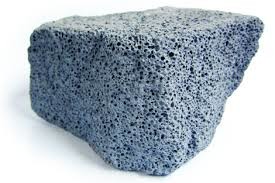
Picture of blåbetong
as you can see, it is bluish in color
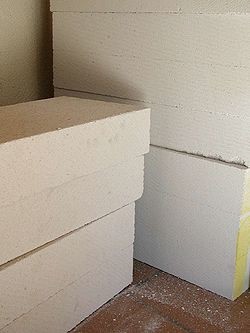
Picture of lättbetong
as you can see, it is white.
I have received confirmation that this was the case, that it was blåbetong. But I was told that the radon level was below the threshold in the house, which if I understand correctly should mean that the blåbetong does not contain sky-high levels of so-called hazards. Correct me if I'm wrong?
Concrete dust is never healthy, but radon is not dangerous in that way. So if you have inhaled a little dust, it's not the end of the world. Also, it doesn't seem to be any herrejössesblå blue concrete, so nothing to worry about in the long term either, in my opinion.
The "dangers" in blåbetong vary from batch to batch, but for it to become a problem, fairly large areas need to be built with those blocks. A small kitchen wall is marginal (but it's better now that it's gone ), there may be bigger problems if the entire house is built from this material, which has occurred.
Click here to reply
Vi vill skicka notiser för ämnen du bevakar och händelser som berör dig.



 ), there may be bigger problems if the entire house is built from this material, which has occurred.