
7,893 views ·
6 replies
8k views
6 replies
Bevel-cut pressure-treated timber for fence. Does it hold up worse because it's cut?
Considering the fence rule. They are not available for purchase near me. Thinking about whether one should cut a regular plank. Is it unwise to buy a regular treated plank and cut it at an angle? Wondering if it would be less durable because cutting might expose wood that isn't treated?
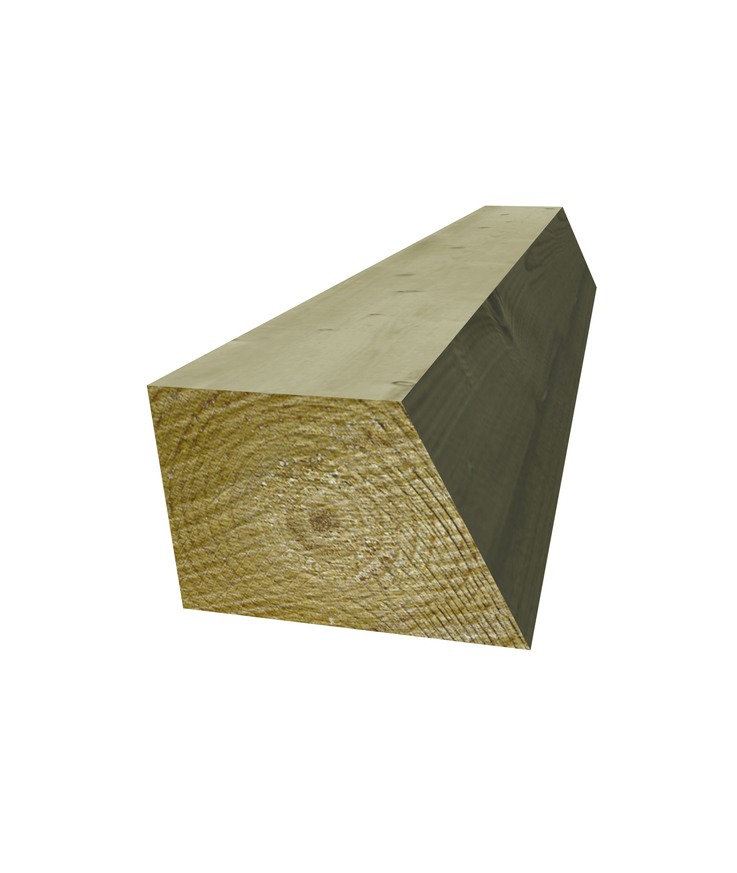
I would say.. I think "believe is something you do in church" that there are no problems with sawing.
You are placing the board in the picture in a way that gives the impression it should be on its side, but it should (probably?) be upright so that water does not stand on the top of the board.
This means that water runs off and reduces the risk of rot - and it also has free surfaces that dry easily, so even if you don't have pressure-treated wood, it should last a few decades before you need to replace it.
Untreated wood of decent quality has surprisingly good durability outdoors - what causes problems is when it is constantly damp - and it's only when you have flat horizontal surfaces that water stands on that it rots (or if you paint with a diffusion-tight paint that traps existing moisture).
I would, without hesitation, cut a board and use it.
This means that water runs off and reduces the risk of rot - and it also has free surfaces that dry easily, so even if you don't have pressure-treated wood, it should last a few decades before you need to replace it.
Untreated wood of decent quality has surprisingly good durability outdoors - what causes problems is when it is constantly damp - and it's only when you have flat horizontal surfaces that water stands on that it rots (or if you paint with a diffusion-tight paint that traps existing moisture).
I would, without hesitation, cut a board and use it.
I don't think it's a problem at all. However, it can become aesthetically unappealing. Often the green in the impregnation hasn't penetrated all the way through the beam, so if you split it, you might get a partially green and partially wood-colored surface. It fades over time, but it can be fully visible and maybe not so pretty at the start.
The best way is to cut from a wide plank, then you automatically get a sloped surface upwards and a drip edge downwards. Like a parallelogram.
Then if you don't paint it, but use linseed oil glaze, the fence will last a lifetime. Note. Screw with stainless A4! not C4 because then the fence boards will fall off after 3-7 years!
Then if you don't paint it, but use linseed oil glaze, the fence will last a lifetime. Note. Screw with stainless A4! not C4 because then the fence boards will fall off after 3-7 years!
Last edited:
Does linseed oil stain work well on smooth boards?L Leif i Skåne said:The best is to cut from a wide plank, then you automatically get both an angled surface upward and a drip edge downward. Like a parallelogram.
Then if you do not paint it, but use linseed oil stain, the fence will last a lifetime. Note. Screw with stainless A4! not C4 because then the fence boards will fall off after 3-7 years!
 My fence from 1961 was oiled by my father-in-law in 1982 and it still stands today! It just needs to sun dry between each time it gets wet.
Click here to reply