
3,906 views ·
7 replies
4k views
7 replies
Beam Support 4 Meter Single Brick Wall

I need to create a 3.8 meter wide opening in a load-bearing single-brick wall. The wall above is 4 meters high, total amount of stone to support is 3.8x4 meters. Additionally, it is a heart wall supporting a joist and roof trusses in a house from 1926. I am not very knowledgeable about calculations regarding load-bearing capacity and deflection. I would be satisfied if someone could tell me if an IPE, HEB, or HEA 220 would suffice. In my view, there should be standard tables on what to replace a single-brick wall with per meter of opening, thicker of course if it is wider.

Unfortunately, it does not work with standard tables as long as houses are not built according to templates. In addition to the information you have provided, one needs to know the house's width measurements and the construction of the trusses, as well as information about the snow zone. An HEA 220 with a 3.8 m span as a replacement for a load-bearing wall can handle about 25 kN/m load, which is likely a significant over-dimensioning, but you can't know that until it has been calculated.
J justusandersson said:Unfortunately, it doesn't work with standard tables as long as houses are not built according to templates. In addition to the information you have provided, one needs to know the house's width measurements and the construction of the trusses, as well as information about the snow zone. An HEA 220 with a 3.8 m span as a replacement for a load-bearing wall can handle about 25 kN/m load, which is likely a substantial overdimensioning, but you can't know until you've calculated it.
J justusandersson said:Unfortunately, it doesn't work with standard tables as long as houses are not built according to templates. In addition to the information you have provided, one needs to know the house's width measurements and the construction of the trusses, as well as information about the snow zone. An HEA 220 with a 3.8 m span as a replacement for a load-bearing wall can handle about 25 kN/m load, which is likely a substantial overdimensioning, but you can't know until you've calculated it.
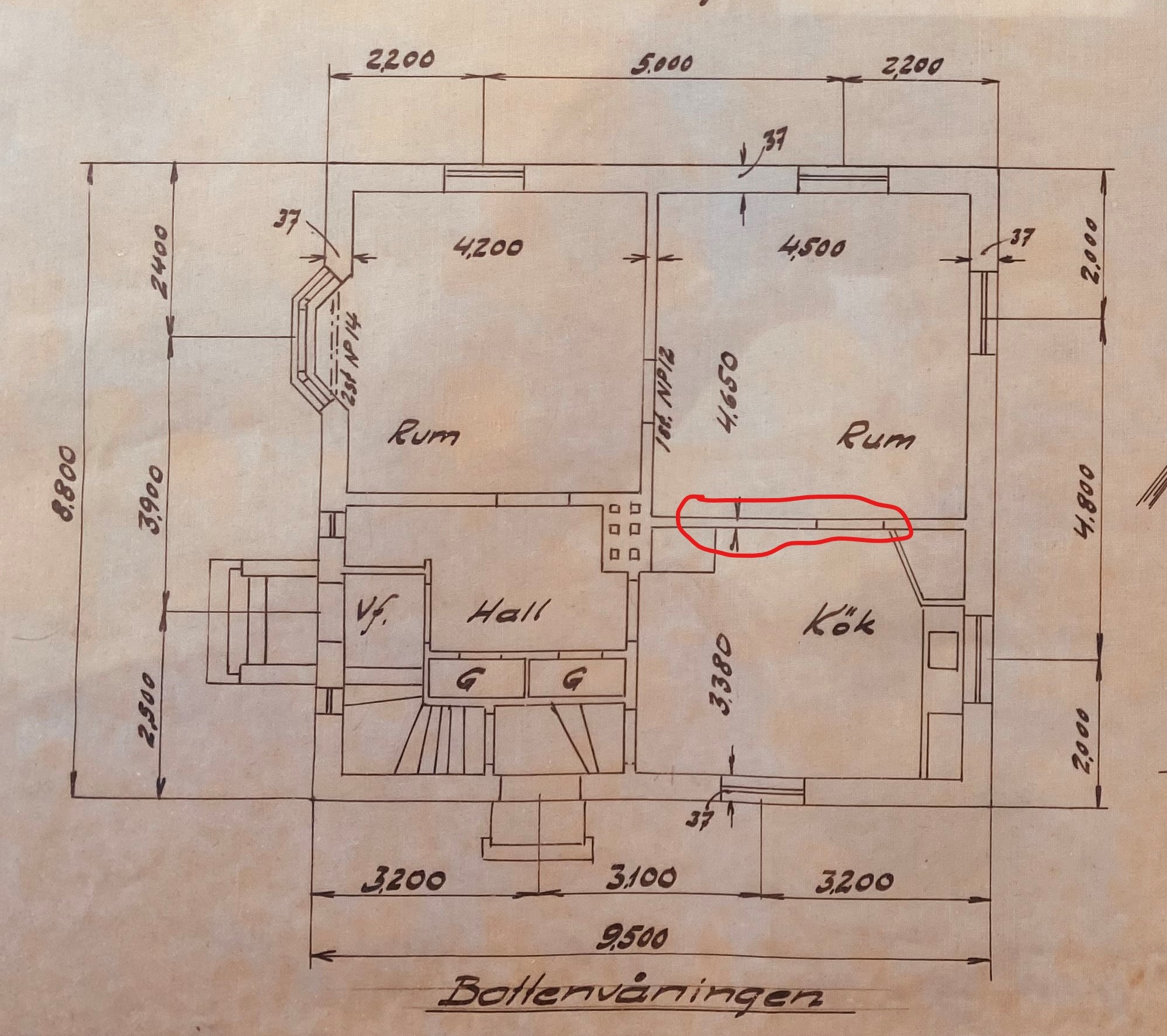
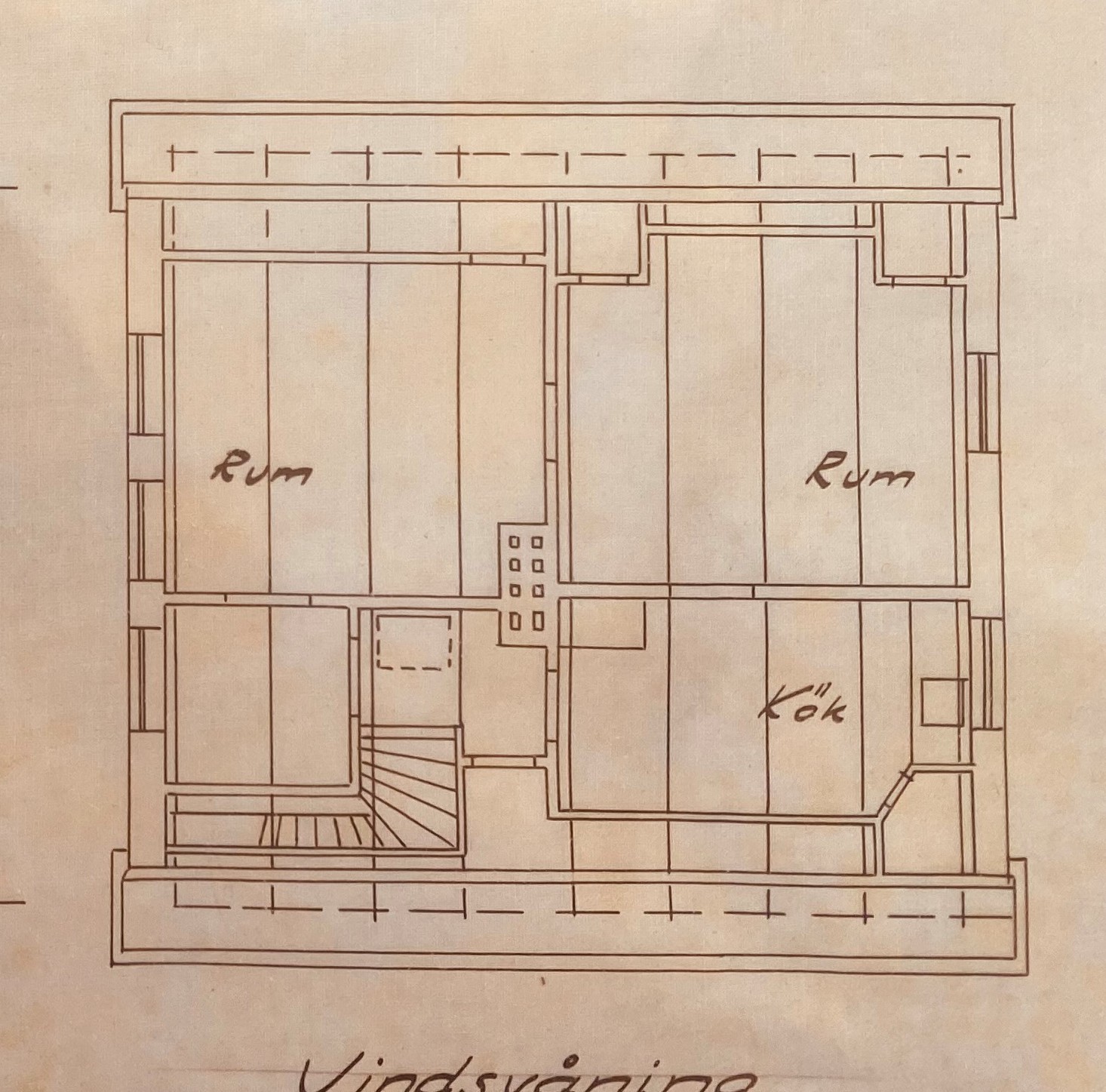
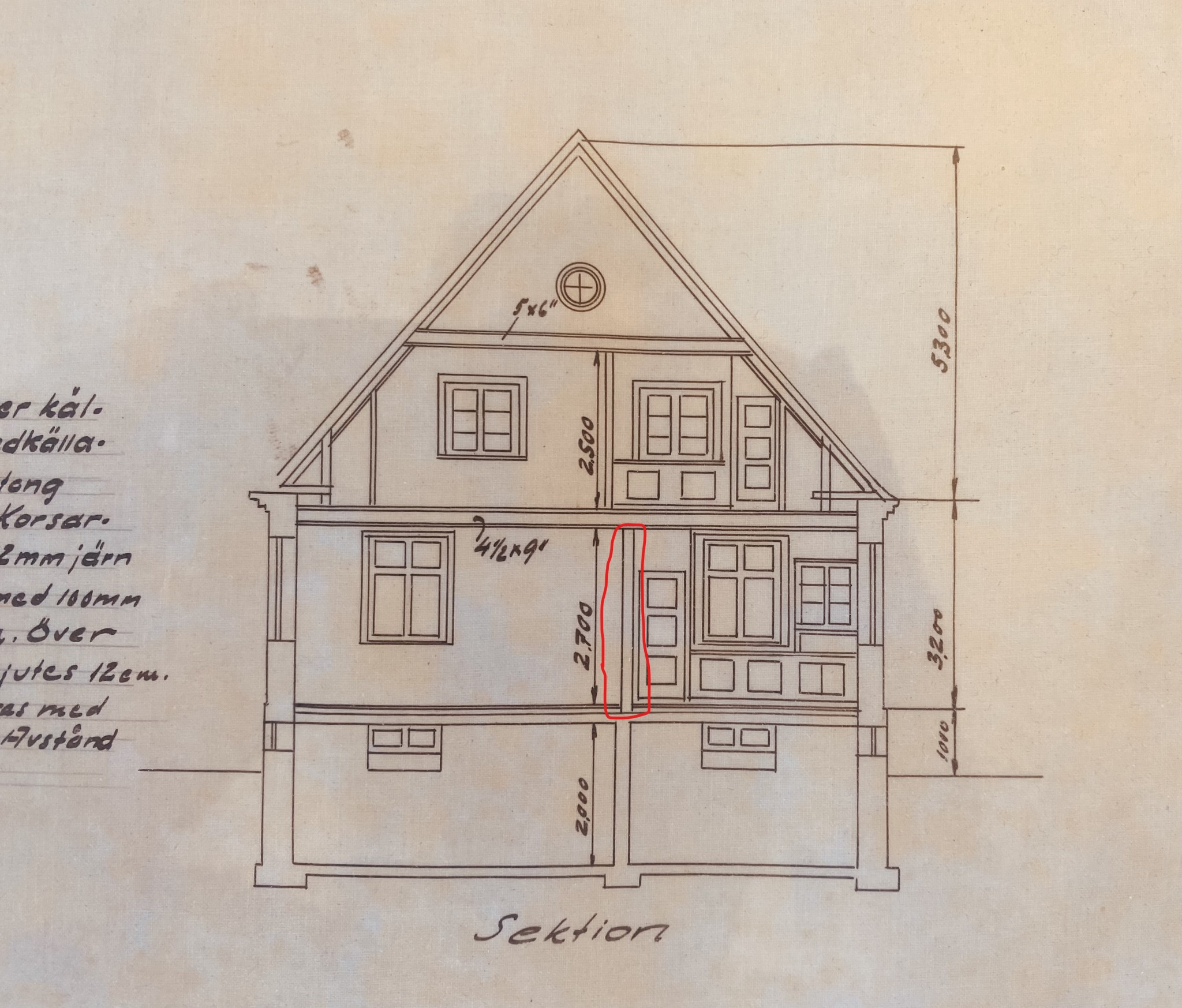
Can the information below give you a better picture of the dimensioning?J justusandersson said:Unfortunately, it doesn't work with template tables as long as houses are not built according to templates. In addition to the information you have provided, one needs to know the house's width measurements and the truss construction as well as information about the snow zone. An HEA 220 with a 3.8 m span as a replacement for a heart wall can handle about 25 kN/m load, which is likely a significant over-dimensioning, but you can't know that until it's calculated.
Original drawings are always best! As far as I can see, it's a half-brick wall. With plaster on both sides, it should be about 150 mm thick. Placing an HEA beam on top of the brick wall (preliminarily HEA 180) doesn't feel quite right. Why not use a glulam beam instead. 140x360 is sufficient.
I've mostly used steel beams previously and have no experience with glulam, but it's never too late to learn. Thanks for the advice!J justusandersson said:
Click here to reply