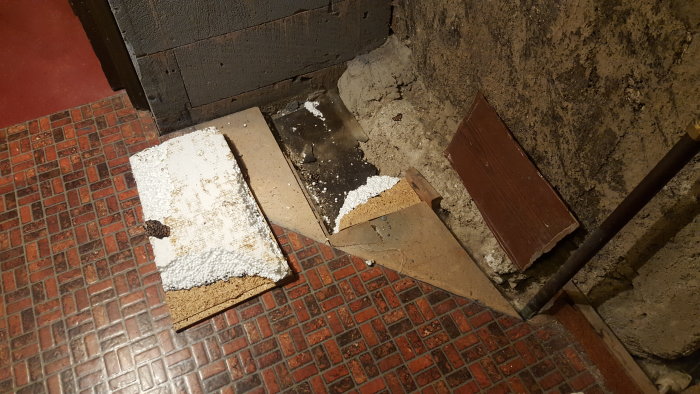
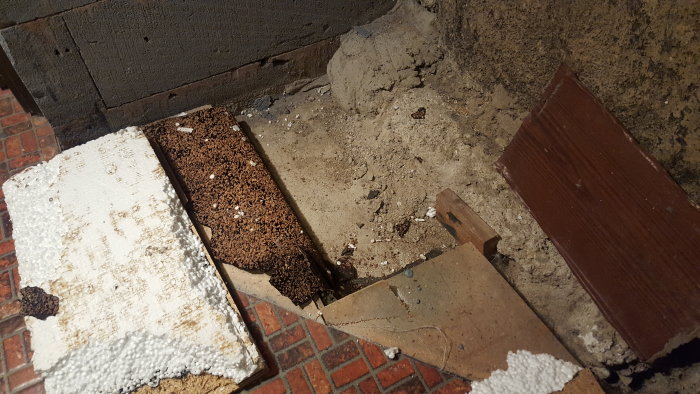
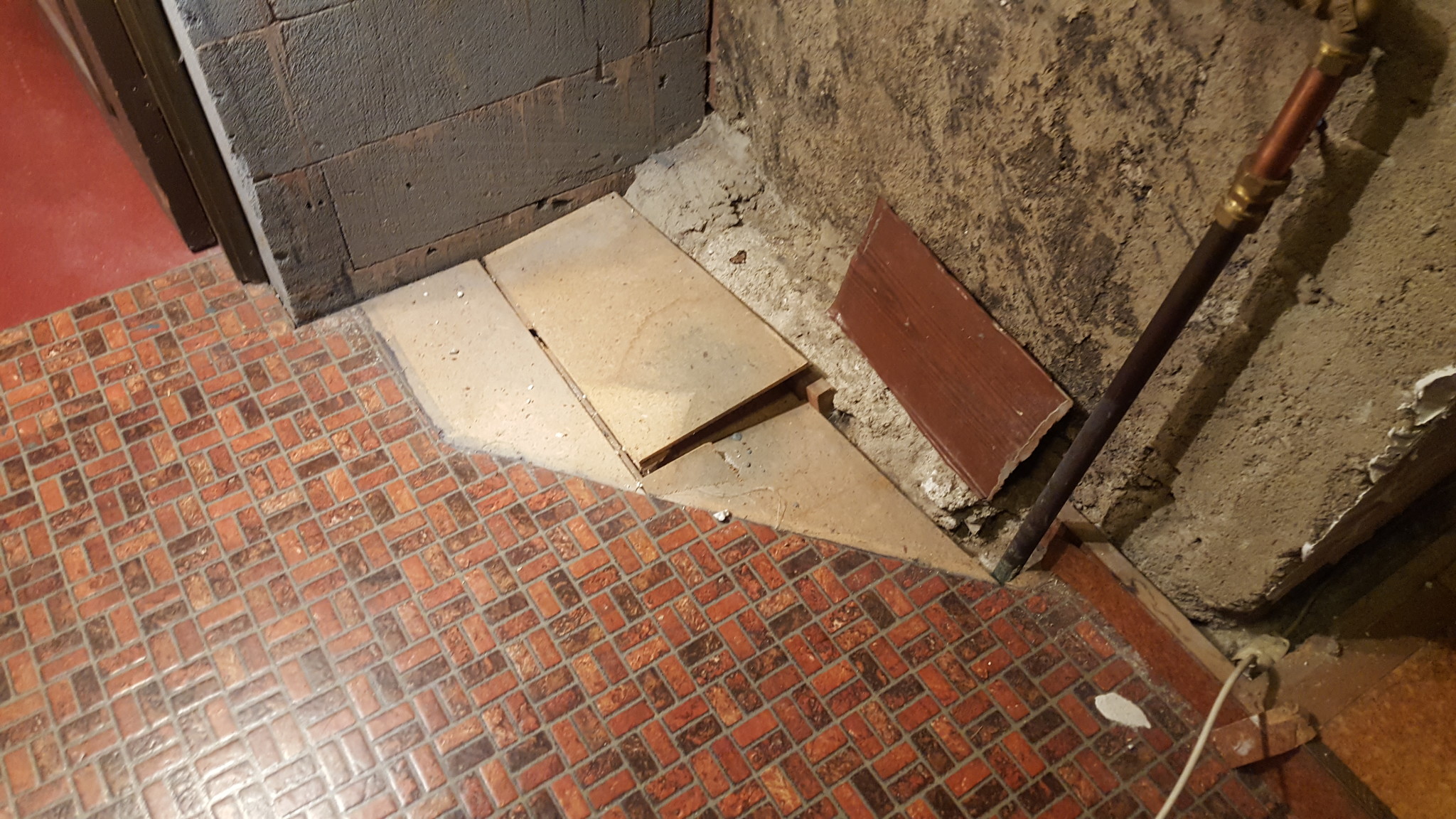
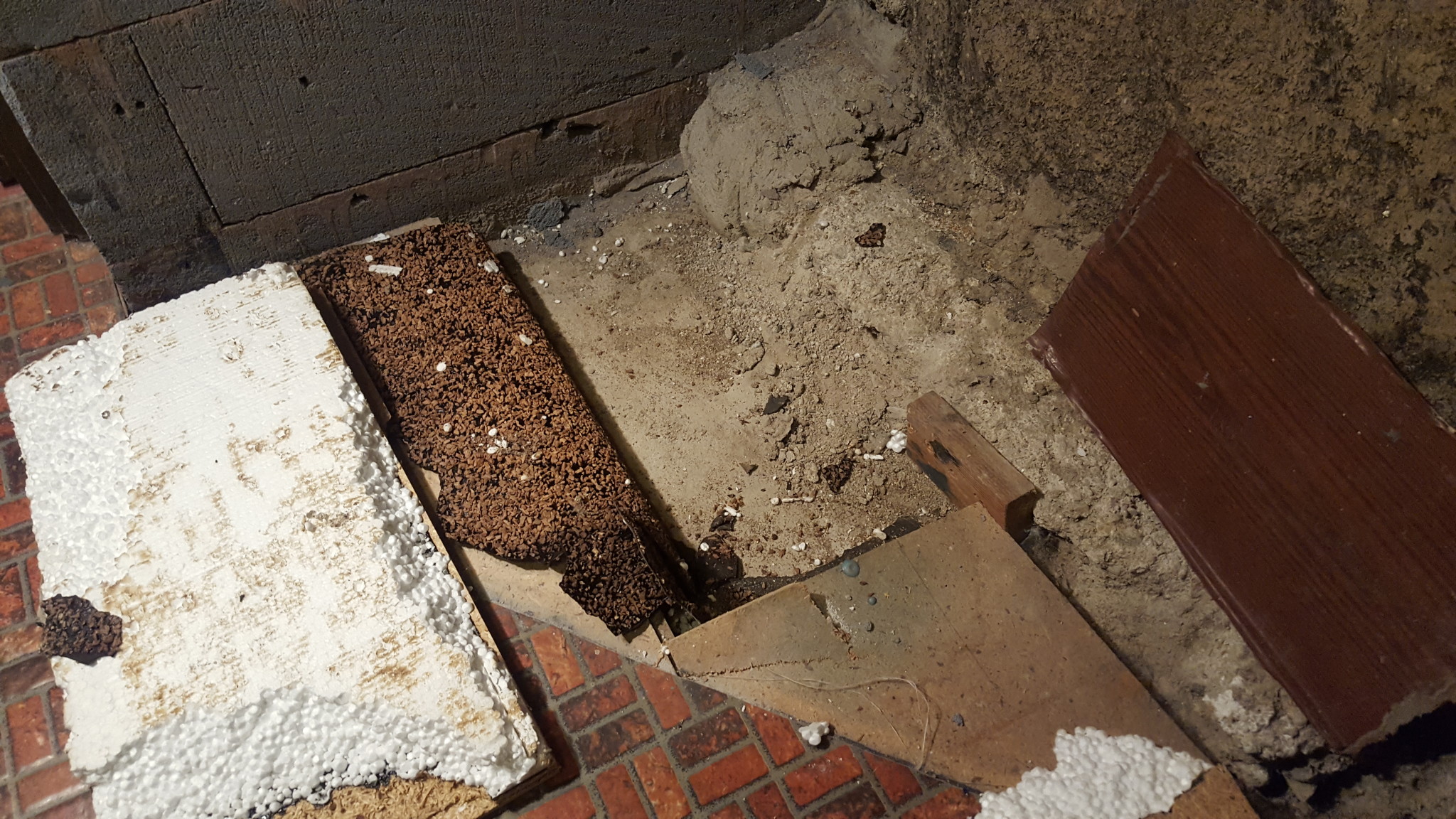
We are planning to renovate the basement and among other things, redo the floors. The part we want to renovate was added in the 70s. As it is done now, there is some asphalt mat? + styrofoam glued to particle board then a plastic mat on top. See picture:
Was this a common construction then? I assume that moisture migrating through the slab is stopped. It doesn't smell like mold and we don't see any moisture, but is it bad for the slab?
Can this construction remain in place and we just lay a new floor on top? Or should we tear everything out and lay, for example, a Platon mat, insulation board on top, then the new floor and ventilated baseboards?
I assume there is little or no insulation under the slab. We want laminate or parquet, not tile because it gets too cold, and we don't want underfloor heating. How would you do it?
It is probably a relatively normal 70s construction. However, it's not a good construction.
You should tear it out and redo it. What is good is that the floor miraculously seems to have done reasonably well, despite the plastic mat. This indicates that the slab is probably not particularly heavily moisture-laden, and a similar construction can hold up. The best would probably be a raised plank floor, like untreated scrubbed floor, or possibly oiled, but no lacquer or anything that stops moisture movement. A floating floor with overlay stops much of the moisture movement, though not quite as bad as a plastic mat. A plank floor might also be cheaper.
In the past, different variants of asphalt felt were used. Today I don't think it's used; instead, it's probably regular building plastic or Platon mat.
With a relatively dry slab like yours seems to be, it's possible to go moisture-open without plastic, but this requires the moisture to migrate through the materials and be absorbed by the room air and then ventilated away. Another alternative is to lay plastic against the concrete to prevent moisture from rising. I interpret this as being done if there is a relatively high moisture pressure from the concrete where the natural moisture migration through an overlying floor cannot keep the moisture levels (RH) sufficiently low (to avoid mold and rot). Another option then is Platon mat and ventilated baseboards.
A very important thing, regardless of which floor construction is used, is to make the concrete clinically clean from organic material/particles before the new floor is laid. This is to reduce the risk of mold.
I can also mention that untreated, soaped, and/or oiled solid wood feels warmer and more pleasant to walk on than plasticized (=laminate or lacquered parquet).
We are planning to renovate the basement and among other things redo the floors. The part we want to renovate was added in the 70s. As it's done now, there's some kind of asphalt mat? + styrofoam glued to chipboard and then a plastic mat on top of that. See picture:
Was this a common construction back then? I assume that moisture migrating through the slab is stopped. It doesn't smell like mold and we don't see any moisture, but is it bad for the slab?
Can this construction stay, and can we just lay a new floor on top? Or should we rip everything out and lay, for example, platon mat, insulation board on top, then the new floor, and ventilated skirting boards?
I assume there's no or thin insulation under the slab. We want laminate or parquet, not tiles because it will be too cold, and we don't want underfloor heating. What would you do?
[image] [image] [image]
You have the answer!
Rip out!
Then platon mat ventilation in skirting boards, EPS insulation, and plastic foil then the floor, e.g., oil wax parquet... I would have installed water-borne underfloor heating in the insulation?
The warmer the concrete becomes, and especially the ground beneath, the higher the vapor pressure in the ground and moisture in the concrete.
Therefore, underfloor heating should be avoided in houses with uninsulated slabs on the ground.
The warmer the concrete becomes, especially the ground underneath, the higher the vapor pressure in the ground and moisture in the concrete.
Therefore, underfloor heating should be avoided in houses with uninsulated slabs on the ground.
Correct heat should not be applied directly against the uninsulated concrete slab, but with a platon mat and air gap as well as insulation in between, it works...
Click here to reply
Vi vill skicka notiser för ämnen du bevakar och händelser som berör dig.



MCG said:
We are planning to renovate the basement and among other things redo the floors. The part we want to renovate was added in the 70s. As it's done now, there's some kind of asphalt mat? + styrofoam glued to chipboard and then a plastic mat on top of that. See picture:Oldboy said: