
2,646 views ·
16 replies
3k views
16 replies
Basement ceiling - the gym machine is 5 cm too tall!

Hope everyone is having as nice a Saturday as we are!
Well, the specification for the new gym machine didn't match by 5 cm in height.
Not giving up, so I'm considering whether it's possible to scoop out the basement ceiling, which is the poured concrete floor of the level above. It's a single-story brick house with a finished basement from the 70s.
Ceiling height is 209 cm, the machine is 213-214 cm.
It's the top component of the machine that has an angle of 10-20 degrees up towards the ceiling and is made of square steel. So the dimension affecting the ceiling is 4 x 20 cm, which shouldn't really affect the structure at all.
So the idea is to mill a channel of 4 x 5 x 20 cm (WxDxL).
Groove milling and chipping/breaking away. Mask the area with construction plastic and a construction vacuum to minimize dust.
But when do you hit the reinforcement, and what tools are best suited for the job? I assume I'll need to rent.
Well, the specification for the new gym machine didn't match by 5 cm in height.
Not giving up, so I'm considering whether it's possible to scoop out the basement ceiling, which is the poured concrete floor of the level above. It's a single-story brick house with a finished basement from the 70s.
Ceiling height is 209 cm, the machine is 213-214 cm.
It's the top component of the machine that has an angle of 10-20 degrees up towards the ceiling and is made of square steel. So the dimension affecting the ceiling is 4 x 20 cm, which shouldn't really affect the structure at all.
So the idea is to mill a channel of 4 x 5 x 20 cm (WxDxL).
Groove milling and chipping/breaking away. Mask the area with construction plastic and a construction vacuum to minimize dust.
But when do you hit the reinforcement, and what tools are best suited for the job? I assume I'll need to rent.
Last edited:


The machine might be standing on small feet that can be removed or cut off?
I wouldn't attempt to mill/chop away material from the underside of this arch.
I wouldn't attempt to mill/chop away material from the underside of this arch.
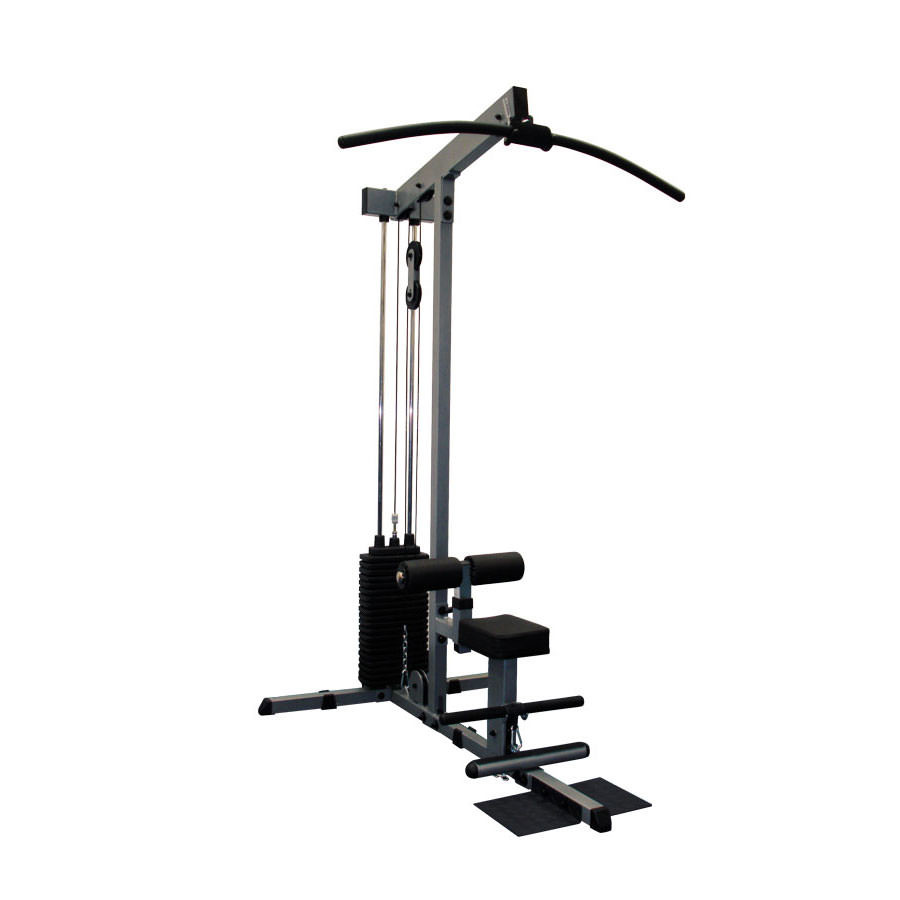
It simply cannot be changed in the construction in an easy way. If it is to be cut, all of them must be cut, and that is not possible since the chrome rods that the weights move on have a thread at the top.
It simply becomes too large an intervention that can affect too many variables.
It simply becomes too large an intervention that can affect too many variables.


I think I can see quite clearly that it should be possible to reduce the height of the "machine" by a few centimeters.
And sawing with a hacksaw is good training for the arm muscles
And sawing with a hacksaw is good training for the arm muscles
If you are going to cut anything at all, then everyone must get an equally precise cut. Which involves a lot of work, but it can be done.KnockOnWood said:
Is it really that bad to mill that little groove in the basement ceiling?
I guess that the vault is under-reinforced, and in that case, I wouldn't dare to chisel in it just any way without consulting a structural engineer. However, you are likely to have a floating concrete floor without any load-bearing function if it's an older house (which it sounds like, considering the height), then maybe you can chisel into the floor and make a cutout for the machine in the floor instead?

Have I understood you correctly that it's the beam running from the weight stack to the bar that points slightly upwards? Is the entire height of the beam used for the cable/wire or similar, or is there air at the top? If so, can the top edge of the beam be cut off? The corner in front of the cable wheel's attachment has no significance for the beam's strength, and a small bit behind the cable wheel could probably be taken too, since the beam must be dimensioned for the highest moment which is at the post. It might even be possible to move the cable wheel down a bit if needed as it seems.
I would extend the threads in the weight stack rods and cut the standing post. It’s not that critical – there are threads in the rods so it must somehow be adjustable.
Consider how you will set up the machine too if you can't assemble it while standing. The travel dimension is the measure from the top of the beam directly to an imaginary line between the foot by the seat and the foot under the weight stack. It won't be much longer than the machine's height when upright, but there will be some difference.
If you're planning to modify the building, it’s likely not a problem as long as you don’t interfere with the reinforcement. The underside of a slab has tensile stress, which concrete doesn't handle very well unless it's reinforced. Up to the reinforcement, the concrete mostly serves as protection for the reinforcement. However, I don't have knowledge of how much concrete is usually outside the reinforcement in a house. On quays, they typically have 50mm to protect the concrete from water, so in a house, I guess it's considerably less...
I would extend the threads in the weight stack rods and cut the standing post. It’s not that critical – there are threads in the rods so it must somehow be adjustable.
Consider how you will set up the machine too if you can't assemble it while standing. The travel dimension is the measure from the top of the beam directly to an imaginary line between the foot by the seat and the foot under the weight stack. It won't be much longer than the machine's height when upright, but there will be some difference.
If you're planning to modify the building, it’s likely not a problem as long as you don’t interfere with the reinforcement. The underside of a slab has tensile stress, which concrete doesn't handle very well unless it's reinforced. Up to the reinforcement, the concrete mostly serves as protection for the reinforcement. However, I don't have knowledge of how much concrete is usually outside the reinforcement in a house. On quays, they typically have 50mm to protect the concrete from water, so in a house, I guess it's considerably less...
Absolutely agree. Leave the ceiling alone, there's probably reinforcement 3-5 cm in.KjellTimell said:I guess the vault is reinforced at the lower edge and in that case, I wouldn't dare to drill into it without consulting an engineer. However, you likely have a floating concrete floor without any load-bearing function if it's an older house (which it sounds like, considering the height), so maybe you could drill into the floor and make a recess for the machine instead?
By the way, I think the machine looks fully editable.