
2,166 views ·
14 replies
2k views
14 replies
Basement and moisture on plaster/wall
Hello! We have plaster that is coming off the wall in the basement. I'm a bit of a novice with this, and what could be causing it. Of course, there is some moisture in the basement, and maybe a less than ideal plaster used? I am grateful for any suggestions/tips on how to handle this/improve it.
Hard to get a good picture, but it's plaster on the outside and brick inside.
Hard to get a good picture, but it's plaster on the outside and brick inside.
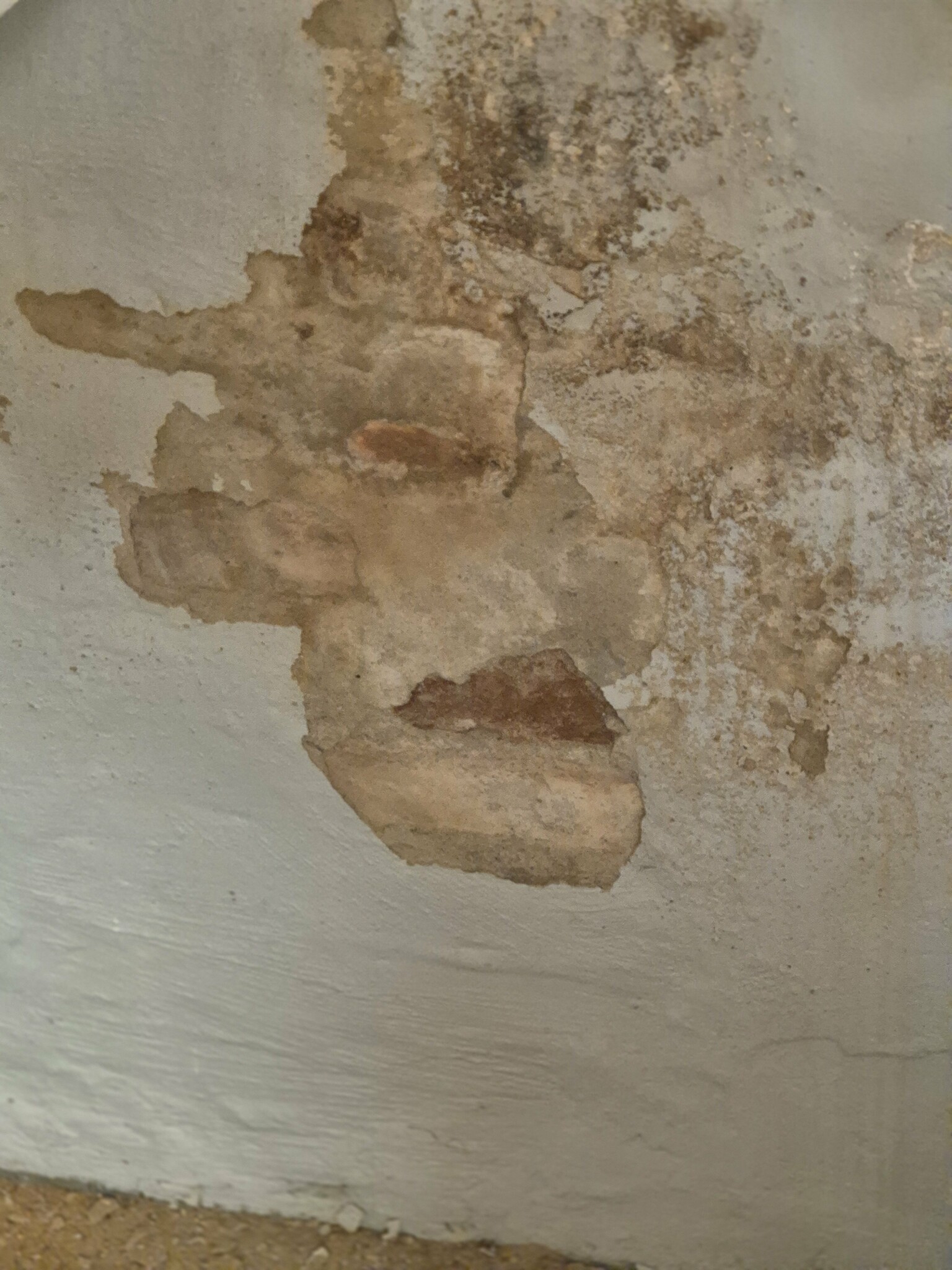



The ground under the cellar floor, like a concrete slab, is never completely dry. It contains ground moisture that can travel through brick and concrete up into walls via capillary action. This cannot be remedied by drainage. However, one can replaster with suitable plaster that was originally used and paint with a paint that allows moisture to evaporate inward. This helps against common moderate moisture migration.
It looks like something dense has been used as spackling compound along the floor, causing the migration to continue upwards. If that is the case, the dense patch or crust along the floor should be removed and replastered with the original type of plaster (lime plaster?) and painted with breathable paint like silicate or lime paint.
It looks like something dense has been used as spackling compound along the floor, causing the migration to continue upwards. If that is the case, the dense patch or crust along the floor should be removed and replastered with the original type of plaster (lime plaster?) and painted with breathable paint like silicate or lime paint.
Scrape/chip away loose plaster.
Buy 3 mm c mortar, thoroughly pre-wet and apply 3 mm.
The day after, pre-wet again and apply, so you reach the existing wall.
And brush the plaster after 20 minutes.
Buy 3 mm c mortar, thoroughly pre-wet and apply 3 mm.
The day after, pre-wet again and apply, so you reach the existing wall.
And brush the plaster after 20 minutes.
Aha, thanks for the great input!!G gaia said:The ground under the cellar floor, like a concrete slab, is never bone dry. It contains ground moisture that can travel through brick, concrete up into the wall with capillary force. You can't drain away from that. However, you can replaster with suitable plaster that was originally there and paint with a paint that allows the moisture that evaporates inward. This helps against a common moderate moisture migration.
It looks like something dense was used to fill near the floor so the migration continued upward. If that's the case, then the dense repair layer or crust near the floor should be removed and replastered with the original type of plaster (lime plaster?) and painted with a breathable paint like silicate or lime paint.

Yes, I can do that, good tip! I don't think it should be any other water/that water would be getting into this particular wall, but good to be able to rule out of course.Bart said:
Click here to reply
Similar threads
-
Plaster in basement, damp or skim coat the wall?
Building Materials and Construction Technology -
Plaster basement moisture
Building Materials and Construction Technology -
Moisture in plastered interior of an exterior wall in the basement
Building Materials and Construction Technology -
Fukt i källaren? Hur återgärda? Puts? Dynamit?
Grund & Markarbeten -
Fråga om gammal träullit, fukt & puts i källare
Grund & Markarbeten