
2,320 views ·
2 replies
2k views
2 replies
Attic apartment - tearing down side wall to expose wooden beams TIPS PLEASE!
Hello all home improvement enthusiasts!
I live in an old attic apartment from the 1900s that has hidden wooden beams (knees) behind the plaster walls. My neighbor has exposed their knees by tearing down the walls and it turned out very nice while gaining some extra floor space.
Unlike my neighbor, I don't have the budget to hire contractors and will need to do all the work myself. I'm average with the hammer (built decks and laid some flooring) but have little experience with insulation and reconstruction.
The work will consist of:
- Demolishing existing walls to expose wooden beams under the sloping ceiling.
- Insulating and building new walls closer to the sloping ceiling. (this is where I have the least idea of what to do)
- Patching and painting
Please share your best tips!
Best regards
I live in an old attic apartment from the 1900s that has hidden wooden beams (knees) behind the plaster walls. My neighbor has exposed their knees by tearing down the walls and it turned out very nice while gaining some extra floor space.
Unlike my neighbor, I don't have the budget to hire contractors and will need to do all the work myself. I'm average with the hammer (built decks and laid some flooring) but have little experience with insulation and reconstruction.
The work will consist of:
- Demolishing existing walls to expose wooden beams under the sloping ceiling.
- Insulating and building new walls closer to the sloping ceiling. (this is where I have the least idea of what to do)
- Patching and painting
I welcome any tips on what to consider regarding the work. Maybe you have good links to share?
Attached are pictures of how it looks today and how it looks at the neighbor's who has done something similar.
Please share your best tips!
Best regards
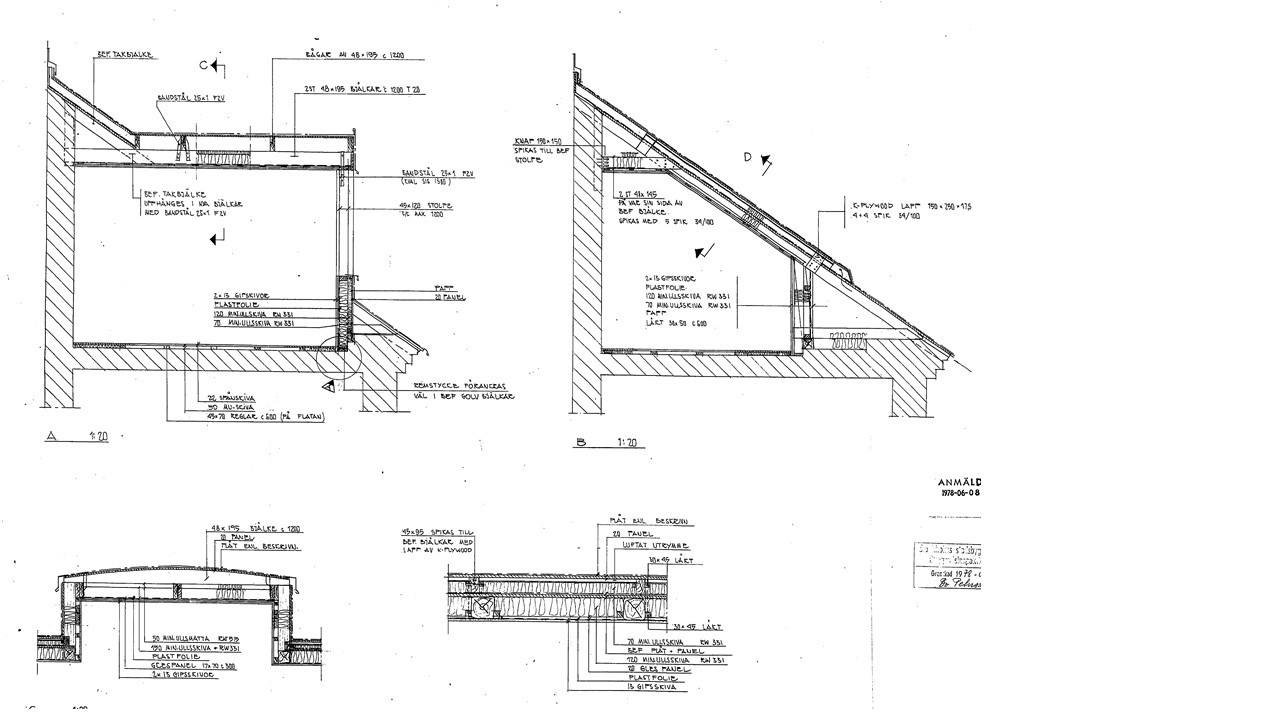
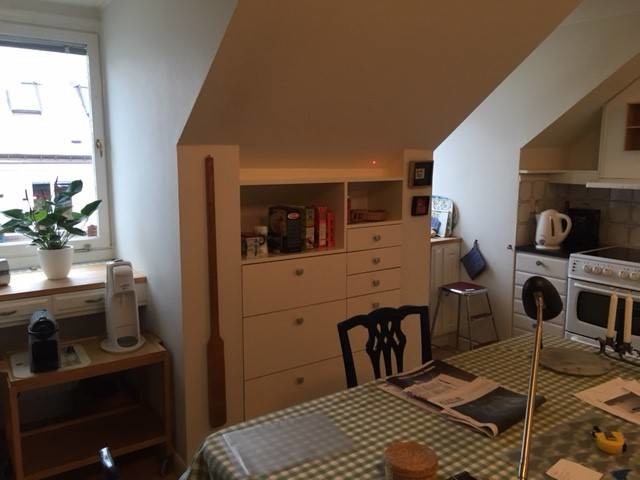
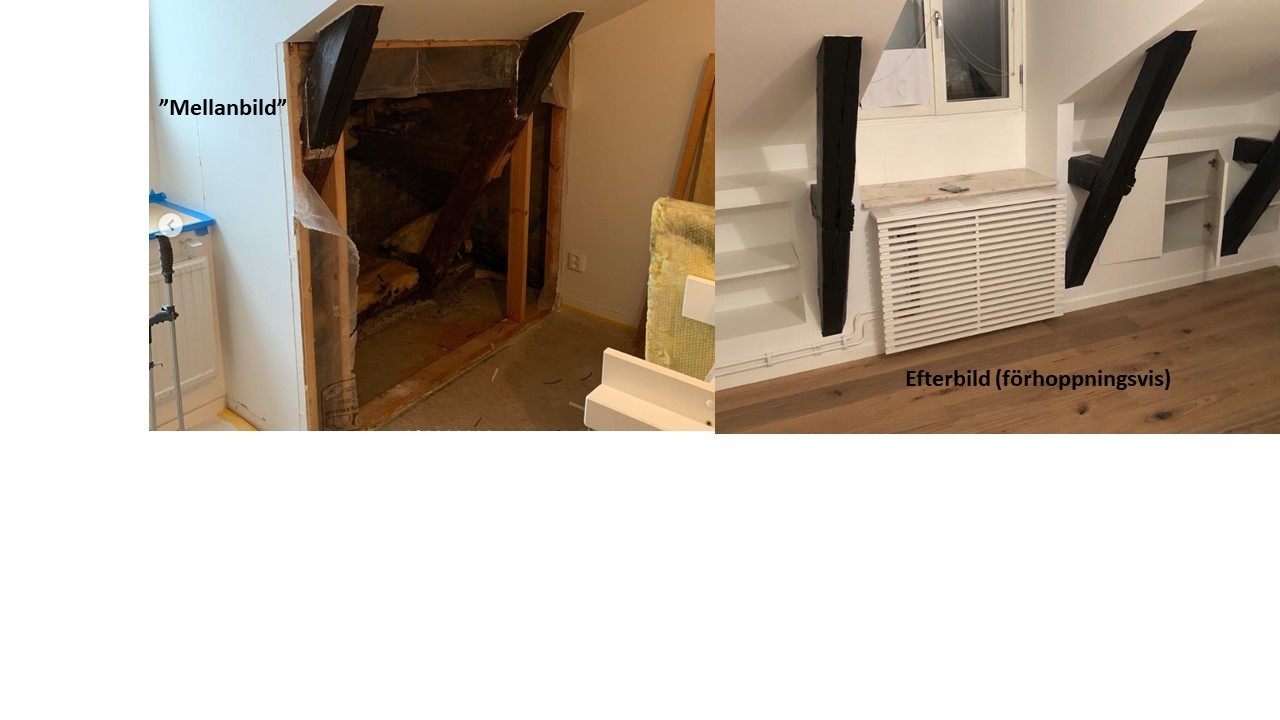

I have no tangible tips. But what can go very wrong (if not done correctly) is that one risks "sealing" too much under the outer roof. There must be a space between the outer roof and the insulation for ventilation; otherwise, moist air from inside will condense on the underside of the cold roof. This leads to mold and rot damage.
You likely need approval from the association for this. And they should require construction drawings from a professional to approve it.
One potential objection to such a measure is that if you remove the gypsum, you also remove the fire protection. So, a fire in your apartment could cause the roof to collapse. I don't know if that's a level that needs to be considered. Moreover, relatively little of the load-bearing capacity of the trusses would be affected if the visible beams burn up. The roof would probably start to "sag a little" but likely not collapse entirely.
You likely need approval from the association for this. And they should require construction drawings from a professional to approve it.
One potential objection to such a measure is that if you remove the gypsum, you also remove the fire protection. So, a fire in your apartment could cause the roof to collapse. I don't know if that's a level that needs to be considered. Moreover, relatively little of the load-bearing capacity of the trusses would be affected if the visible beams burn up. The roof would probably start to "sag a little" but likely not collapse entirely.
Thanks for the quick response! As mentioned, all tips are welcome!H hempularen said:I have no tangible tips. But what can go very wrong (if not done right), is that you risk "sealing" too much under the outer roof. There must be a space between the outer roof and the insulation for ventilation, otherwise, moist air from inside will condense on the underside of the cold roof. This causes mold and rot damage.
You probably need approval from the association for this. And they should require construction drawings from a professional to approve.
A possible objection to such a measure is that if you remove drywall, you also remove the fire protection. So a fire in your apartment could cause the roof to collapse. I don't know if that is a level that needs consideration. It is also relatively little of the load-bearing capacity in the roof trusses that would be affected if the exposed beams burn up. The roof would probably start to "sag a little" but probably not collapse completely.
Click here to reply