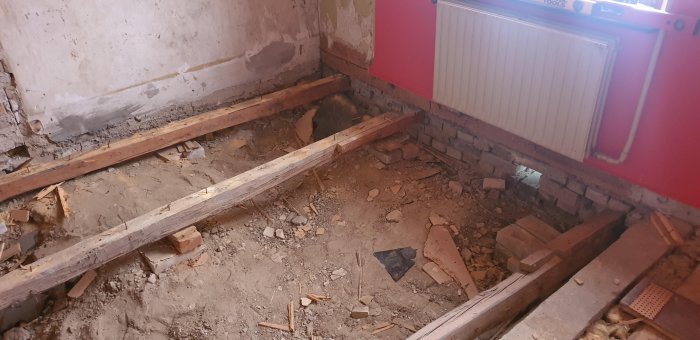
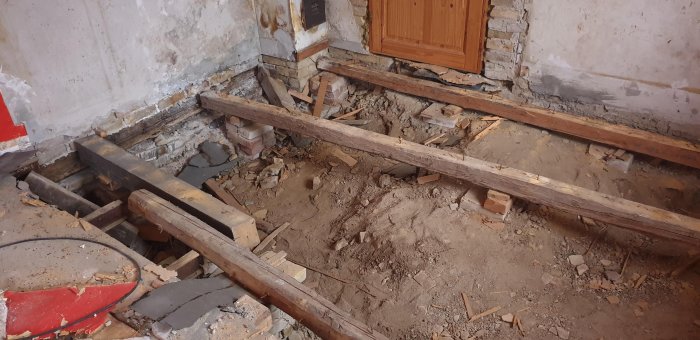
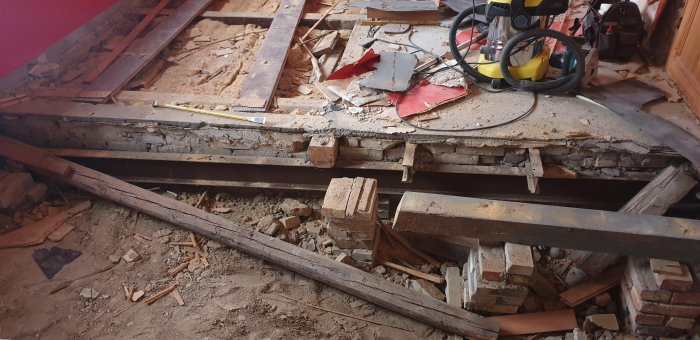
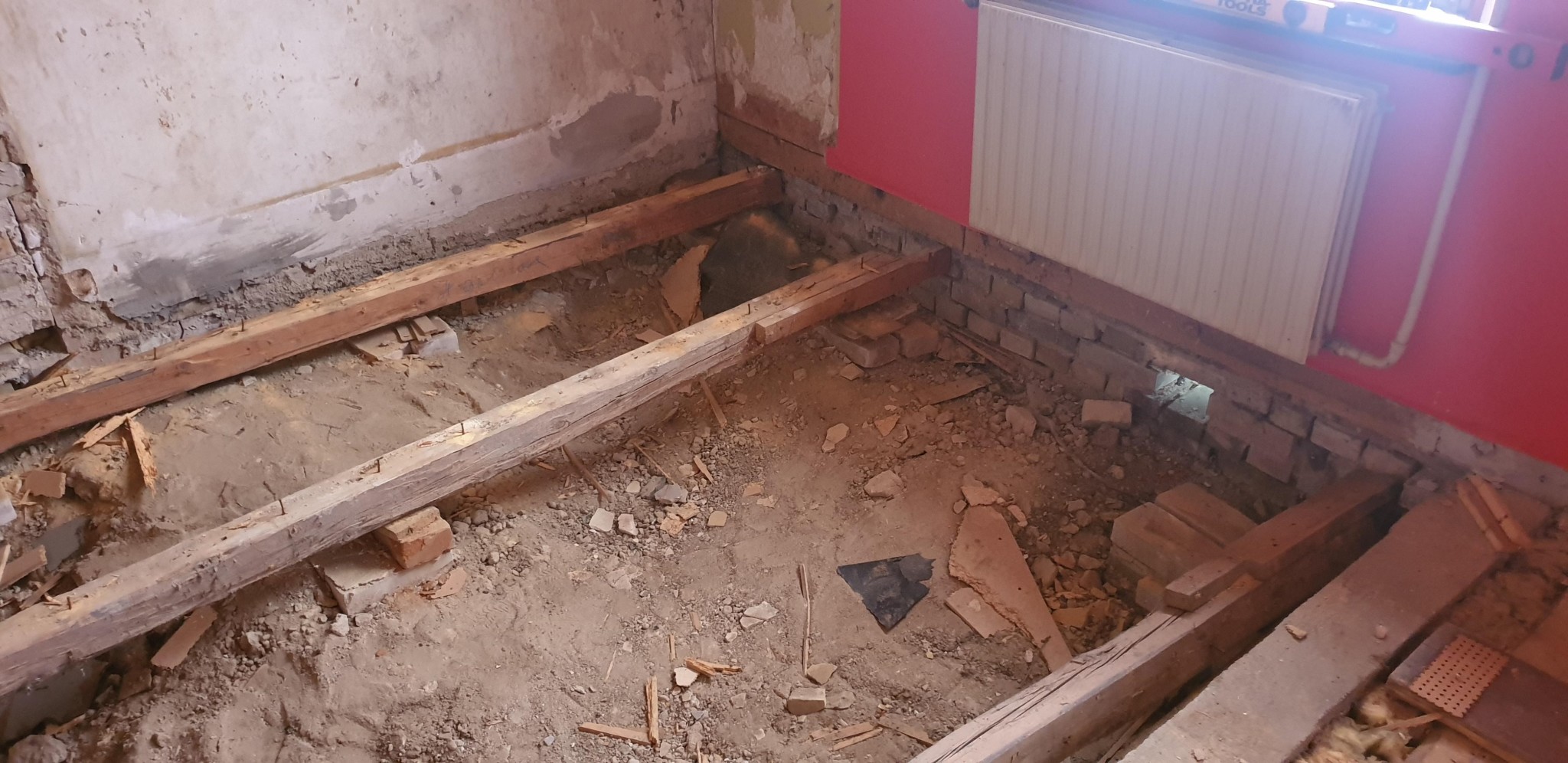
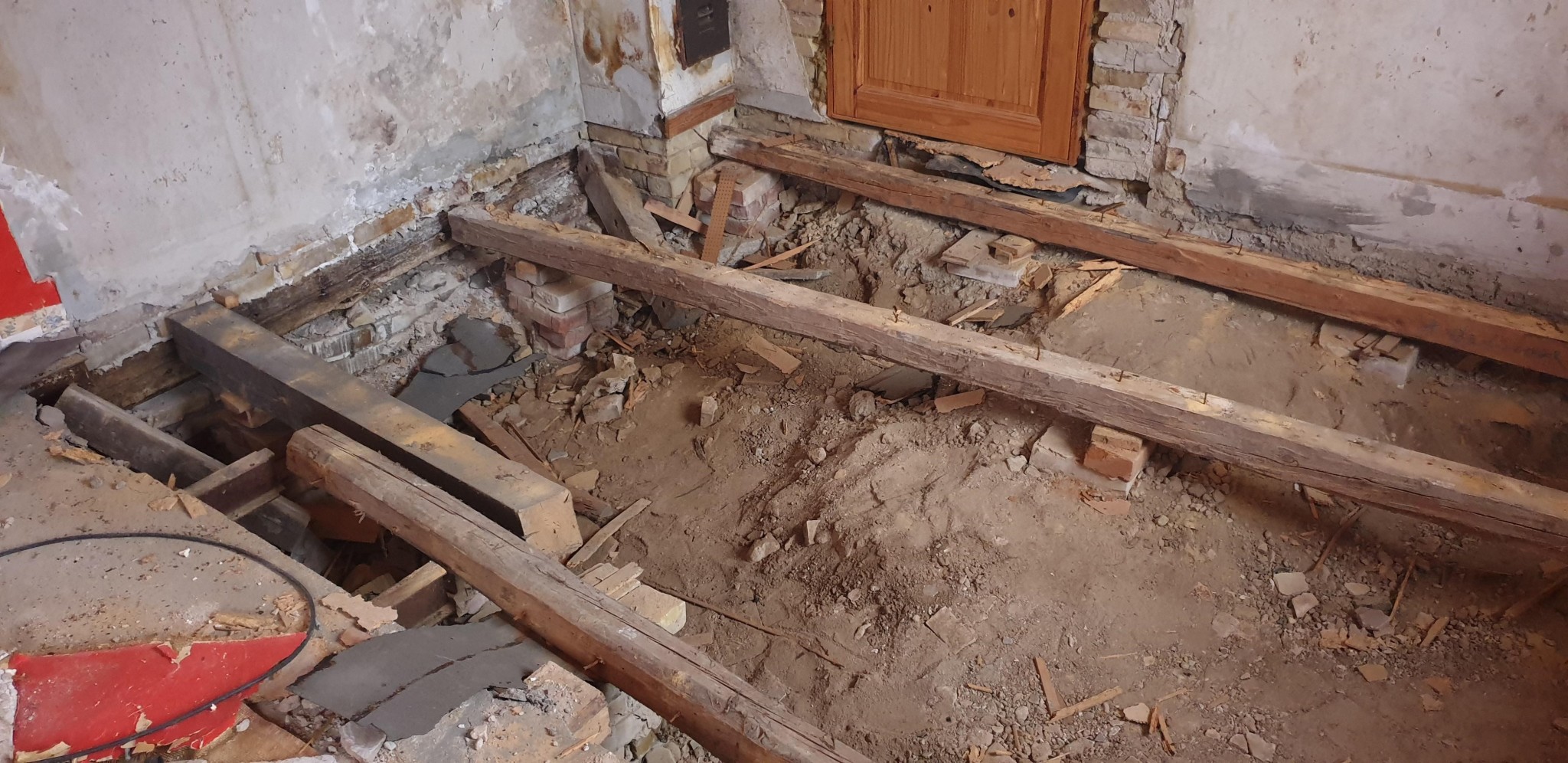
We have bought an older house in Denmark that we have started renovating. Already in the first room, I made some less fun discoveries... When I tore up the old floor, it turned out that half of the room was completely uninsulated (less of a problem), and the floor joists were just laid on stones that are loosely stacked on each other! I need to make a completely new floor structure, and I need to attach a sturdy beam against at least two walls to the brick wall to "hang" the support beams from. The brick wall seems stable, but I'm a bit unsure of how best to attach a sturdy beam to the walls without damaging the brick wall. I have a feeling that if I drill for a large anchor, I'll crack the brick when I screw it in. In the first picture, there is a wooden beam under the brick wall that can partially be used for attachment, but on the wall in the second picture, it's only the brick wall.
The plan then is to attach EPS boards as the subfloor to improve the upcoming insulation, and then regular fiberglass between the joists. Do I need wind paper? Plastic?? The space is dry and nice, I will try to shovel out the soil/sand to make it a bit more even (and hope that it's not rock or stone).
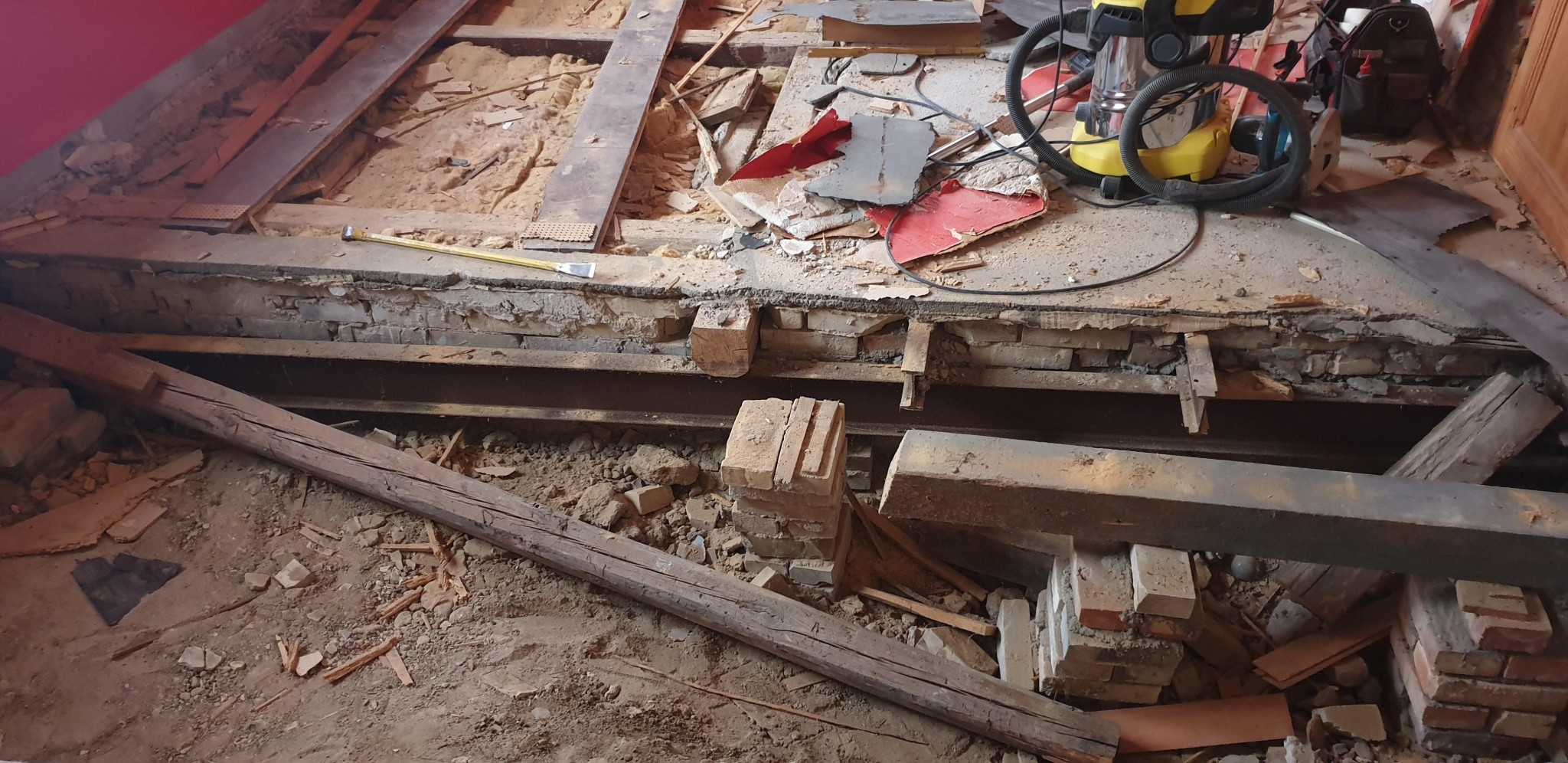
The next oddity is the other half, the same room, where part of it was insulated (about 10-12 cm but space for a total of 15-16 cm) and the other part was concrete floor! What the heck, I don't get what they were doing, both floor parts are "ceilings" over the basement! Why the concrete?? I will raise the floor 3-4 cm (there's only one door that's easy to raise if necessary), and can then lay at least a few cm of insulation, maybe 4-5 cm, like EPS on the concrete, but that surely won't make much difference! It will have underfloor heating and a Kährs parquet floor. If I frame the concrete floor with 5cm and floor particle board 22 or 28 mm on it, how close do I need the joists? What do I put under the joists so they don't come in direct contact with the concrete? And can I lay some kind of foil or something that makes the floor heating direct upward and not just disappear down into the concrete?
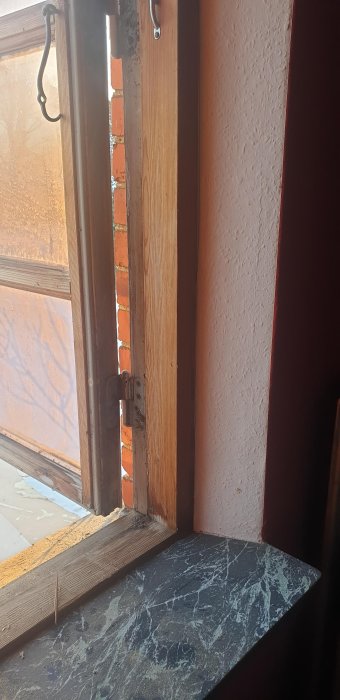
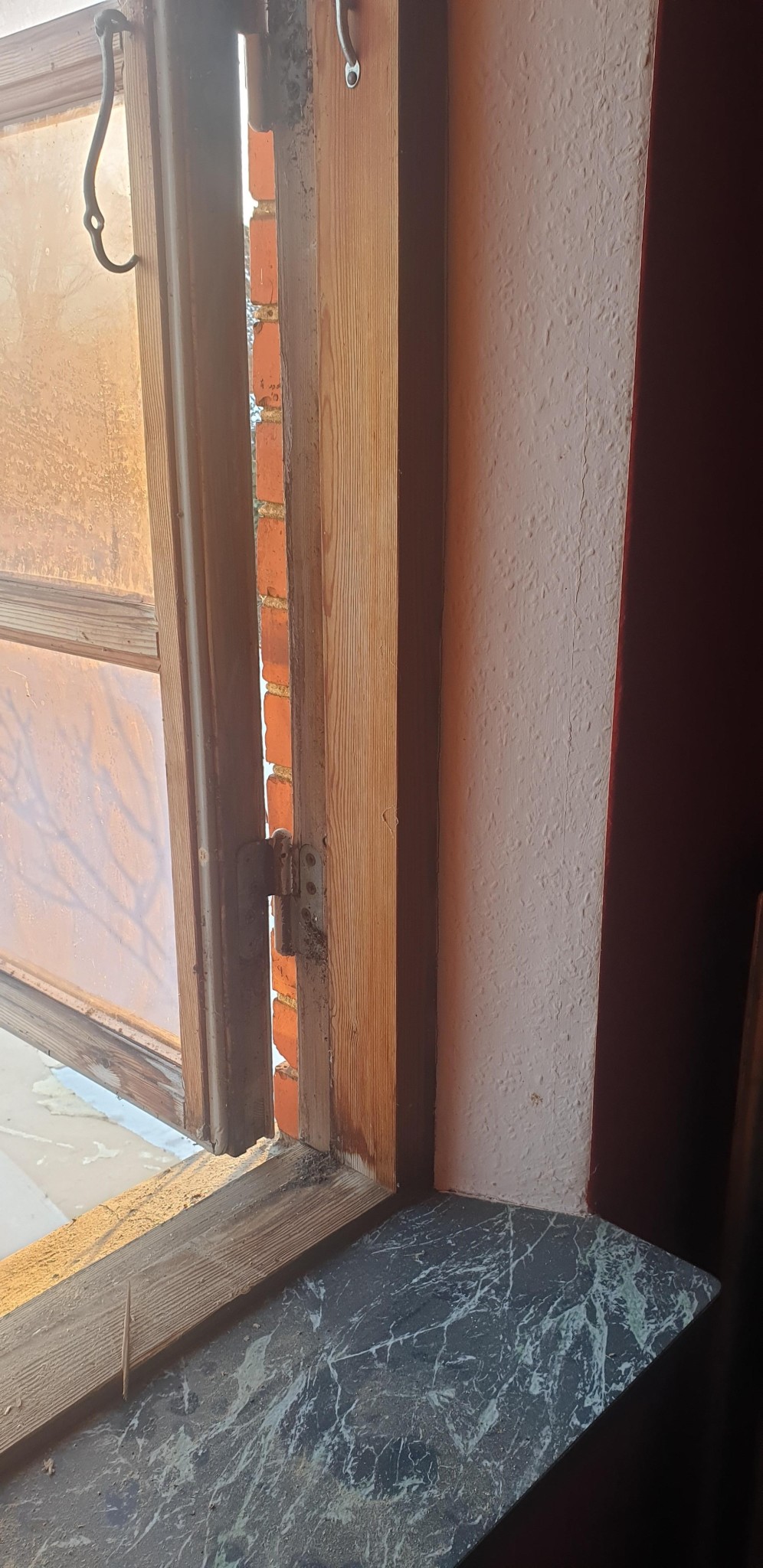
Then the last question (sorry for the loooong post). The walls aren't insulated either, I think. Possible that there's something between the outer and inner brick walls, but I doubt it. Here, I'm also considering building out the wall for 5 or 10 cm EPS (I'm thinking EPS because it has a slightly higher K-value). What do you think about that???
Grateful for all tips and answers ;-)
Ps. Denmark is nice... but they don't have the same mindset as we other Nordics when it comes to construction.
Recommending fastening in brick based on an image is tricky, if not impossible, unfortunately. The quality of bricks varies immensely and there's likely a reason why they haven't attached the joist to the brick wall but stabilized it from below. However, if you want to attach something to the brick wall, you should test first, and the options include anchor compound and threaded rod, with the advantage that it does not expand but adheres to all the cavities in the brick. Then you can also use facade plugs for brick and lightweight concrete, or alternatively expanders, but you must be sure that the expander is intended for brick and not concrete.