
59,641 views ·
15 replies
60k views
15 replies
Attach drywall to concrete wall. How?
Hi. Bought my first house. The previous owner has applied some kind of coating on the concrete, and it's really bumpy. I was thinking of putting up renovation plasterboard. What's the easiest way to attach this? Glue? Screws? Are there simpler methods? Do I have to use plasterboard? Is it okay to wallpaper directly on concrete and get it looking nice? And that it lasts? Grateful for answers 
note my "nog"
if it's a basement, it's due to penetrating moisture (paper in the drywall that risks molding)
if it's flat under the wallpaper, I would first tear it down and see what it looks like underneath.
Sounds like a quick fix to put up drywall to cover without further investigation.
That's how I think!
if it's a basement, it's due to penetrating moisture (paper in the drywall that risks molding)
if it's flat under the wallpaper, I would first tear it down and see what it looks like underneath.
Sounds like a quick fix to put up drywall to cover without further investigation.
That's how I think!

We have both concrete and lightweight concrete walls in our house. Below-ground exterior walls should not be covered unless you are 100% sure that the drainage/insulation is top-notch and no moisture is coming through. It is perfectly fine to cover other walls. I have "glued" drywall (13 mm) with gypsum plaster. Cover the entire drywall sheet with gypsum plaster, spread with a 6 or 8 mm comb, and press firmly. Drill in 6-8 nail plugs (6 mm is enough) and tap them in so the panel remains flat against the wall. Check with a long level to ensure it’s completely flat and "adjust" with the nail plugs.
It becomes very difficult to get 6 mm drywall to be flat if the wall itself is not completely flat...
It becomes very difficult to get 6 mm drywall to be flat if the wall itself is not completely flat...
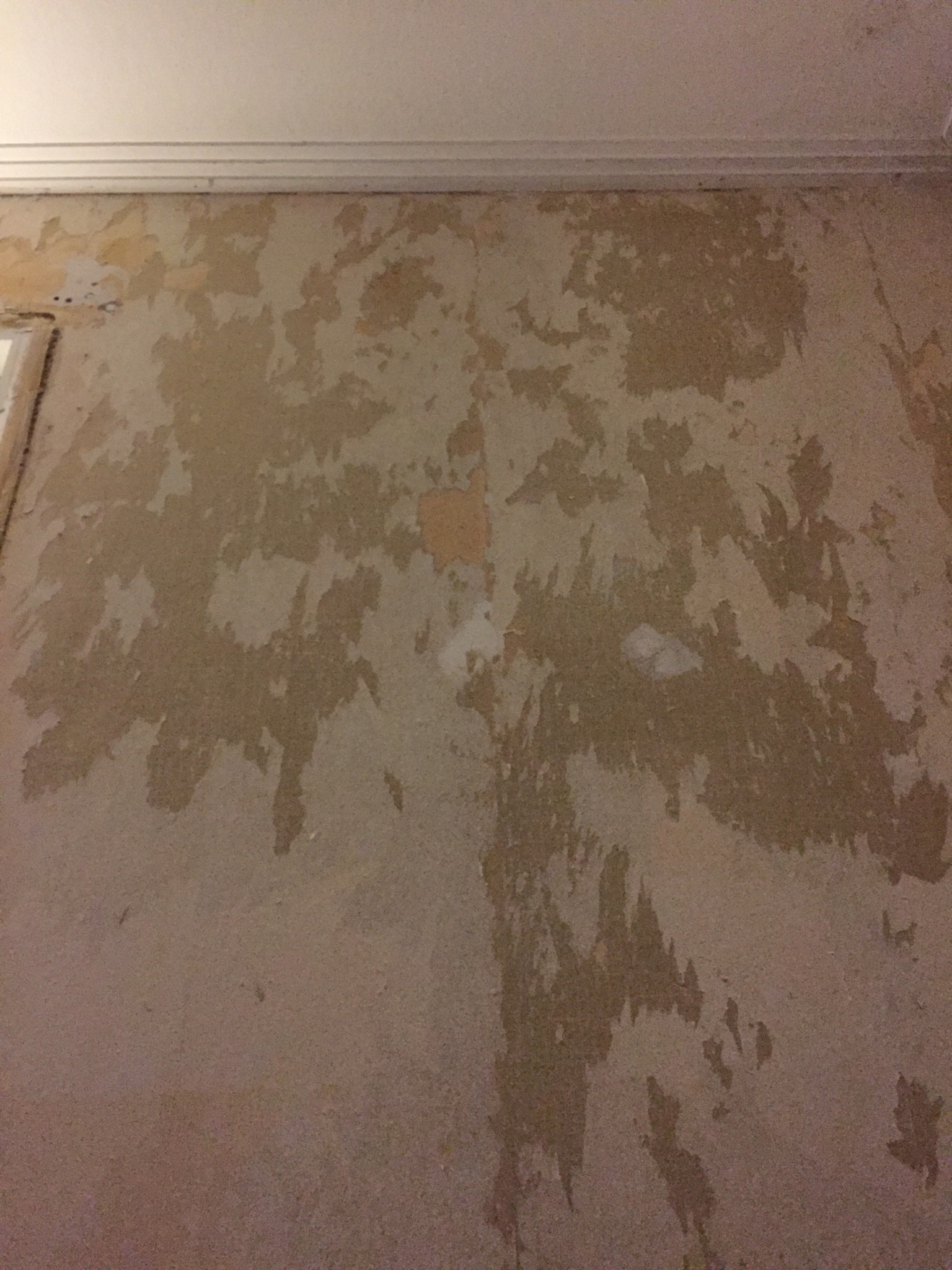
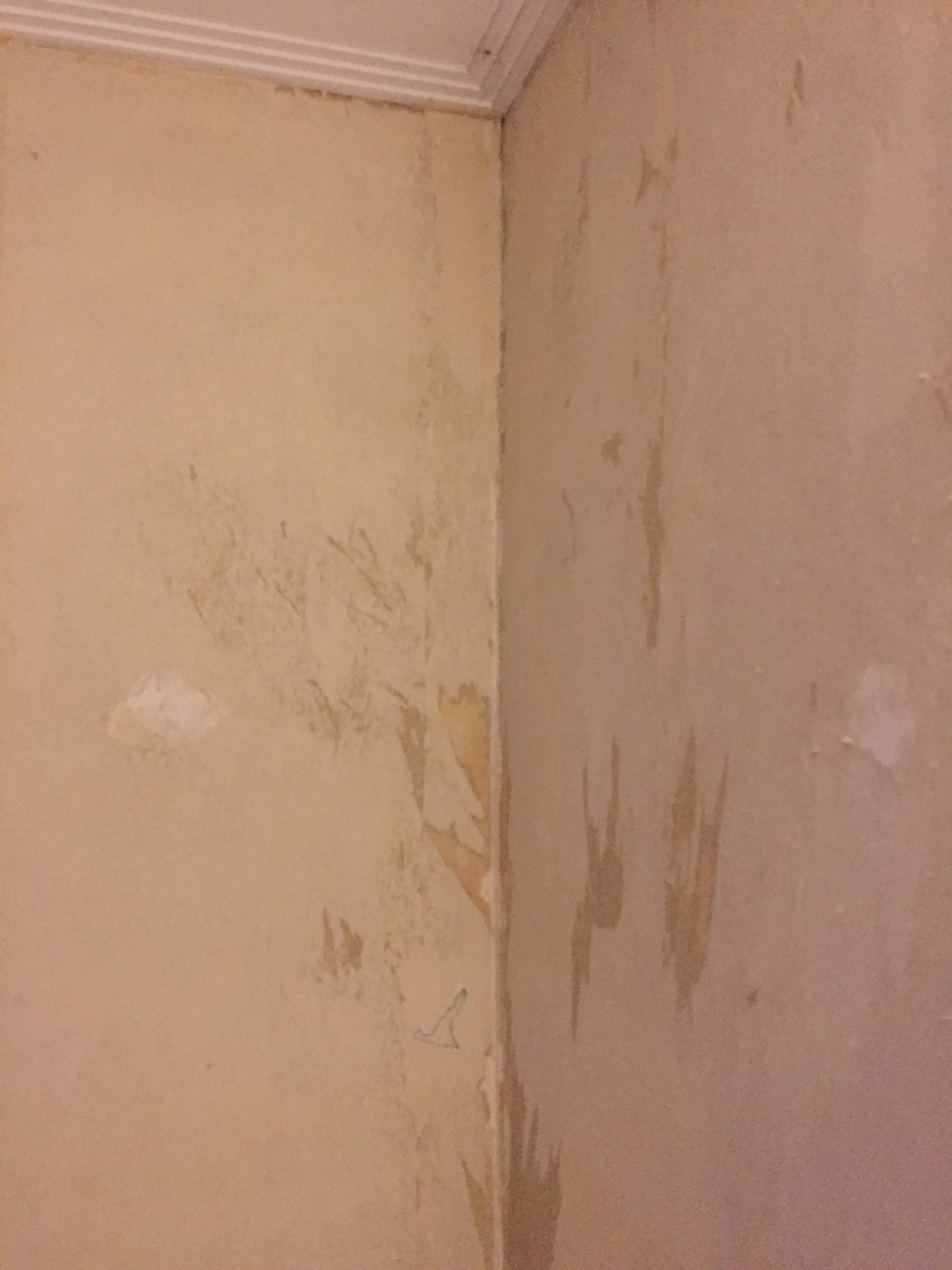

I have installed renovation gypsum on some plastered light concrete walls at home by gluing with inexpensive adhesive and using nail plugs. Initially, I considered using gypsum mortar, but the amount of adhesive used was so small that the minimal cost was worth avoiding the mess.
Restorers (easy cover and whatever the various ones are called) cover differences over small areas, but a depression of, for example, 15x15cm 1mm deep will be visible. So, that option was ruled out at home.
Restorers (easy cover and whatever the various ones are called) cover differences over small areas, but a depression of, for example, 15x15cm 1mm deep will be visible. So, that option was ruled out at home.

There is probably a reason why the old wallpapers became bubbly, and it is most likely moisture penetration if it is against an outer wall. If it’s an inner wall, they just did a sloppy job putting them up, or there was some kind of water leak or just very humid in the basement (could also have been dirt/dust on the wall where they put up the wallpaper).Killix said:
Anyway, you should be careful with the outer wall so you don't cover any potential moisture. If you do, your new wallpaper will also become bubbly after a while.
The best for the outer wall below ground level is plaster and silicate or plaster-paint on. Metal studs and drywall with air intakes at the top and bottom also work.
As most people say:
Avoid plaster or wallpaper directly against the exterior wall. Either paint the raw concrete with a plaster or silicate paint, or use steel studs to create a framework and install ventilation in the wall both at the top and bottom.
In a basement space, especially one you're not very familiar with (considering you're new to the property), be very careful about "sealing" the walls (exterior). Let them breathe and ensure good ventilation throughout the entire basement; the house will benefit the most from this.
Avoid plaster or wallpaper directly against the exterior wall. Either paint the raw concrete with a plaster or silicate paint, or use steel studs to create a framework and install ventilation in the wall both at the top and bottom.
In a basement space, especially one you're not very familiar with (considering you're new to the property), be very careful about "sealing" the walls (exterior). Let them breathe and ensure good ventilation throughout the entire basement; the house will benefit the most from this.

If the walls aren't wet for some reason, can't you just skim coat? It feels like it's 10 times faster and easier than plasterboarding the walls. I had some "curvy" walls at home, even though they were properly skim-coated, you can still see them when you look closely from the side, but who cares?