
6,793 views ·
4 replies
7k views
4 replies
Are 9 cm thick aerated concrete walls load-bearing?
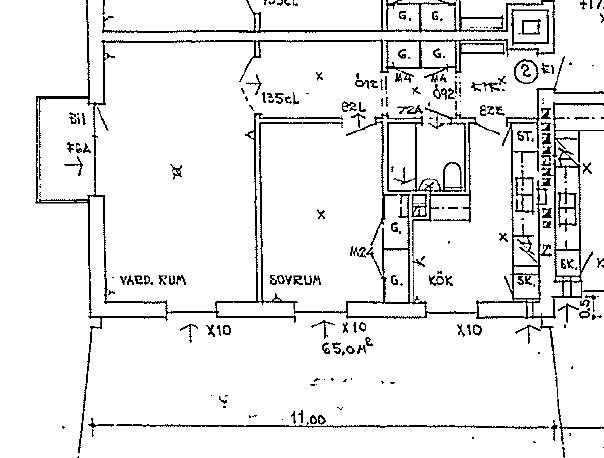
I have purchased a cooperative apartment in a 3-story brick building from 1953 and plan to change the layout. All interior walls are of blåbetong/lightweight concrete and about 9 cm thick. Outer walls and apartment-separating walls are likely made of brick or concrete. The floor slabs are probably concrete. The span between the outer wall and the apartment-separating wall is about 6 meters.
What do you think, are the relatively thin interior walls load-bearing? Could it be that these were built after the floor slab above was cast?
What do you think, are the relatively thin interior walls load-bearing? Could it be that these were built after the floor slab above was cast?
Last edited:
By tearing down a small part of the wall, can I discover if the wall is load-bearing, e.g., look for seams in the ceiling or check the connection of the lättbetongvägg against the ceiling?
In our house built in 61, all the interior walls, 9 cm thick, are non-load-bearing. We have removed several, for example, to remediate blåbetong, completely without problems. Load-bearing interior walls are about 20 cm and constructed of concrete hollow blocks.
Started tearing down a bit cautiously today and discovered that the actual blåbetong was only 70 mm thick. 10 mm plaster on each side gives a total of 90 mm.
According to a structural engineer who has worked a lot with aerated concrete, load-bearing aerated concrete walls are ALWAYS at least 100 mm thick. Is there anyone else who can agree with that?
According to a structural engineer who has worked a lot with aerated concrete, load-bearing aerated concrete walls are ALWAYS at least 100 mm thick. Is there anyone else who can agree with that?
Click here to reply