
16,523 views ·
18 replies
17k views
18 replies
Anchor adhesive for beginners?
I am going to attach a hook (hook on a metal plate with screw holes) to a concrete ceiling for various training equipment, punching bag, pull-up bar, etc. So it should support the weight of an adult man but also lateral forces due to the bag.
1. Anchor resin seems like the right way to go?
2. Reading up on anchor resin and what I can't figure out is if there is a specific type of threaded rod to use? Can someone link to a suitable value-for-money threaded rod or whatever it might be called?
3. Is one ceiling mount with two screws enough or are 4 preferred? You want to achieve a tensile strength of a few hundred kilos ideally to be properly over-dimensioned. What can be expected in terms of forces per hole (anchor resin + rod)?
4. Is it easier to use Tox chemical anchors, if I understand correctly, it is the same injection resin but in a capsule so you avoid dosing and mess? Probably cheaper for me as I only need to set 2-4 pieces.
5. Has anyone tried Biltema's anchor resin? Pure junk or good enough indoors?
Very grateful if someone can help me a bit as it is an unexpectedly confusing subject.
1. Anchor resin seems like the right way to go?
2. Reading up on anchor resin and what I can't figure out is if there is a specific type of threaded rod to use? Can someone link to a suitable value-for-money threaded rod or whatever it might be called?
3. Is one ceiling mount with two screws enough or are 4 preferred? You want to achieve a tensile strength of a few hundred kilos ideally to be properly over-dimensioned. What can be expected in terms of forces per hole (anchor resin + rod)?
4. Is it easier to use Tox chemical anchors, if I understand correctly, it is the same injection resin but in a capsule so you avoid dosing and mess? Probably cheaper for me as I only need to set 2-4 pieces.
5. Has anyone tried Biltema's anchor resin? Pure junk or good enough indoors?
Very grateful if someone can help me a bit as it is an unexpectedly confusing subject.



Smart alek
· Västra Götalands
· 11 475 posts
OK then. Based on my own experience with houses from '47 with the lack of cement in the concrete at the time.P Pettttter said:
Biltema's anchor mass in a tube works perfectly fine for this. But you only have one shot. Once you open the tube, it needs to be used. It also uses (possibly) more than you think.
Any threaded rod will do, but a stainless one won't hurt. It will become permanent, and you'll have to saw it off when you need to restore it.
Vertical mounting is, of course, a bit trickier. You need to arrange something to hold the threaded rod while the mass dries. And make sure not to get the mass on the threads. They'll be hard/impossible to use (tape+grease and checking is good here). Trying to get the hole a bit pear-shaped is naturally a good idea, but not critical.
So, in summary. If the concrete is of questionable quality, then anchor mass is the only right choice. But if it's just a bit better, it's more convenient with an expansion bolt or similar. So drill a test hole first and see how it looks. (Drill with a size smaller bit first; bad concrete tends to expand).
And put four in a square for what you have in mind. That's best.
Thanks for the reply! What I'm worried about, due to uncertain concrete quality, is that 4 bolts together with a large lump of concrete will fall down more than an expansion screw slipping out. And I think that anchor compound, which distributes more even forces on the concrete, might reduce the risk of that. Or is it an entirely unreasonable risk?OK then. Based on my own experience with houses from 47 with the period's shortage of cement in the concrete.
Biltema's anchor compound in a tube works perfectly for this. But you have only one chance. Once you open the tube, it must be used. You may also end up using (possibly) more than you think.
Any threaded rod will do, but a stainless one won't be out of place. It becomes permanent, of course, and must be cut off when you need to undo it.
Vertical mounting is a bit trickier, naturally. You must arrange something to hold the threaded rod while the compound dries. And make sure the compound doesn't get on the threads. Then they become difficult/impossible to use (tape+grease and checking are good here). Trying to get the hole a bit pear-shaped is naturally a good idea, but not critical.
So all in all, if the concrete is of questionable quality, then the anchor compound is the only correct solution. But if it's just a bit better, it's more convenient with an expansion bolt or similar. So first drill a test hole and check how it seems (drill with a size smaller bit first; in poor concrete, they tend to expand).
And set four in a square for what you're planning. That's best.
What distances should there be between the screw holes to minimize the risk of the above?
Regarding the threaded rods, I wonder where to find short cut lengths most cheaply? Or do you buy a 1-meter one and cut it yourself? Cutting in threads tends to ruin the threads, making it difficult to get the nuts on the first turns?
I like Essve's anchor adhesive; if you buy extra nozzles, you can use it multiple times as the adhesive is mixed first in the nozzle. Additionally, it doesn't matter if it gets messy outside or on the threads, you just tap it with a hammer once everything has set.
You can buy threaded rod in 1-meter lengths without any problem. Just make sure to screw a nut on before cutting the rod so you can screw it back and "repair the thread."
You can buy threaded rod in 1-meter lengths without any problem. Just make sure to screw a nut on before cutting the rod so you can screw it back and "repair the thread."

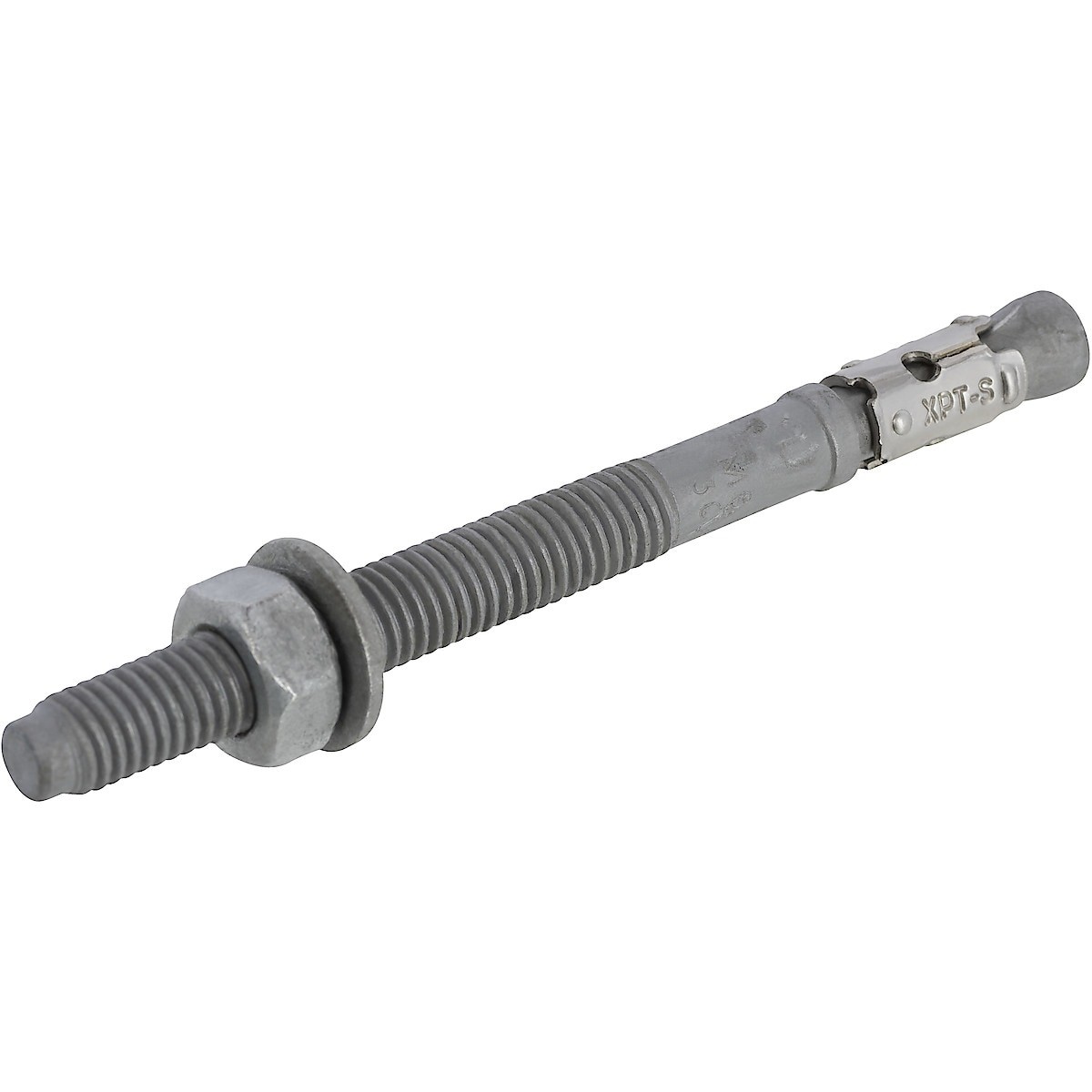
At Hornbach, there are ready-made lengths of threaded rod available, with nuts to purchase. It is a bit more expensive than cutting it yourself. But if you factor in the cost of used hacksaw blades (stainless steel seems to eat blades), it might even out.

This is actually not true. The anchor compound is of a two-component type that mixes in the nozzle, so the tube can be used multiple times, but with a new nozzle.
Another important thing is to clean the hole properly; I can't see if anyone has already pointed this out. Get the cleaning tool used to brush the walls of the drilled hole.
Ok, so the same solution as the others? Biltema's costs 99 versus several hundred from competitors, so if you say it works, I'll try that one.MathiasS said:
This is actually not true? The anchor compound is of the two-component type mixed in the nozzle, so you can use the tube multiple times, but with a new nozzle.
An important thing is also to clean the hole properly, I can't see if anyone has already pointed that out. Get the cleaning tool used to brush the walls of the drilled hole.
When it comes to cleaning, it's annoying to spend a couple of hundred kronor on a brush and an air blower. Any narrow brush should work, right? And blowing with a straw? Or won't that work well?