
Currently decorating a part of our attic in a brick house from 1957. On the gable side, we will need to insulate against the brick wall. The existing setup on the lower floor is, as far as I can understand, brick-air gap-some form of corrugated-paper insulation approximately 70-80mm-thereafter something like a 20mm trätex board.
My plan was to maintain an air gap of about 20mm against the brick wall using perforated tape and 20mm VP pipes (for lack of something else), then staple windproof paper, 145mm insulation, and then a plastic film, plywood, and gypsum.
It will be relatively open towards the ridge, which is ventilated.
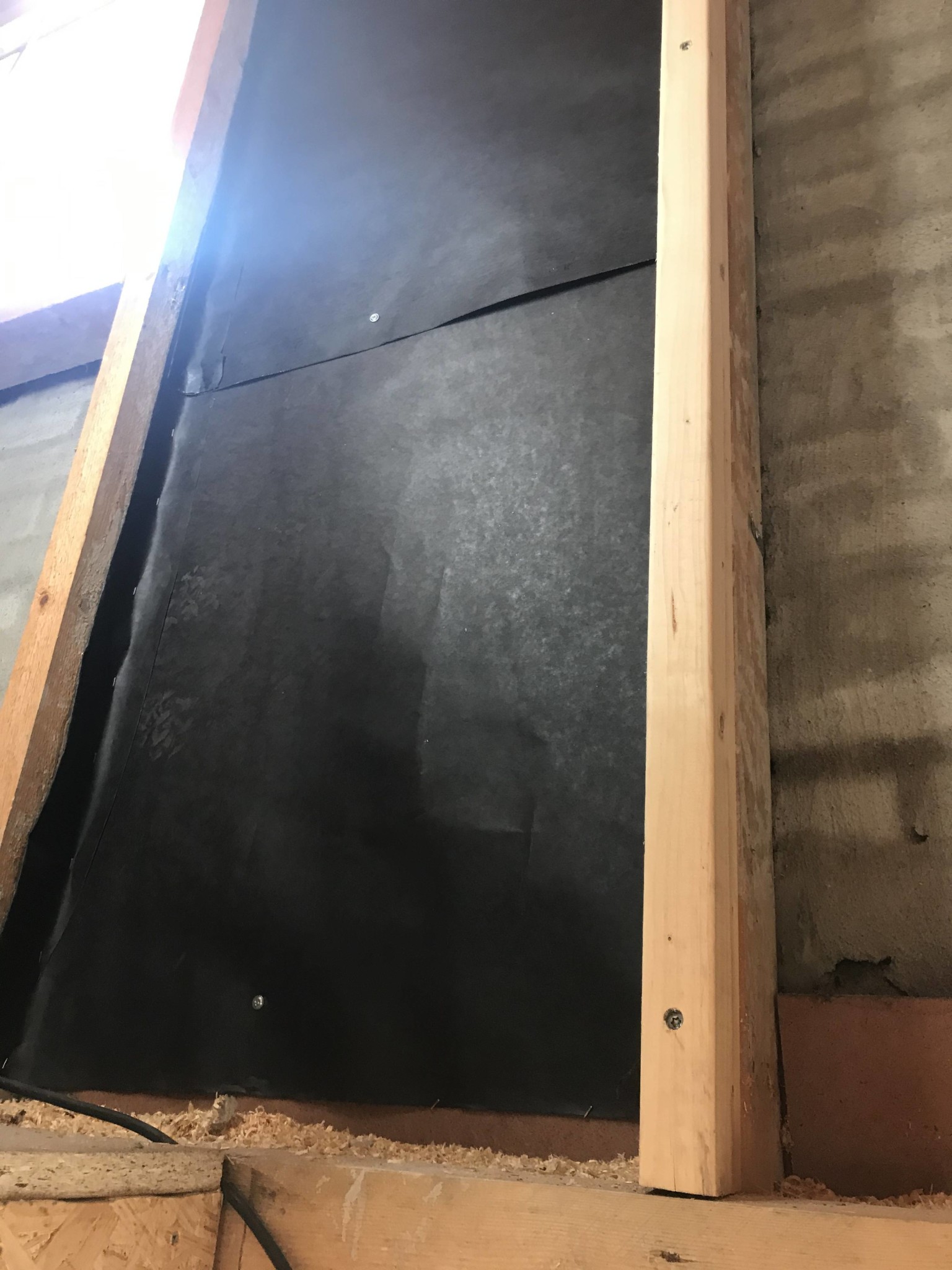
Should one place the windproof paper on the outside of the studs, or is it enough to place it on the inside?
It’s really tricky to get the paper in between the stud and the brick wall because there are nails from the brick wall into the stud at regular intervals, but at the same time, it (probably) vents somewhat less now than before, so there’s a risk that the stud might get too moist.
My plan was to maintain an air gap of about 20mm against the brick wall using perforated tape and 20mm VP pipes (for lack of something else), then staple windproof paper, 145mm insulation, and then a plastic film, plywood, and gypsum.
It will be relatively open towards the ridge, which is ventilated.
Should one place the windproof paper on the outside of the studs, or is it enough to place it on the inside?
It’s really tricky to get the paper in between the stud and the brick wall because there are nails from the brick wall into the stud at regular intervals, but at the same time, it (probably) vents somewhat less now than before, so there’s a risk that the stud might get too moist.
Anyone who has a good idea or has tried doing something similar?

It is sufficient to place the wind barrier between the studs.
However, you should ensure good ventilation of the gap since brick walls become quite damp inside when it rains on them. There is thus a high risk that the wooden studs will deteriorate over time.
However, you should ensure good ventilation of the gap since brick walls become quite damp inside when it rains on them. There is thus a high risk that the wooden studs will deteriorate over time.
Thank you! Would one need to do something more active, like a fan that sucks out through the ridge ventilation, or how can one ensure that there is sufficient air circulation?
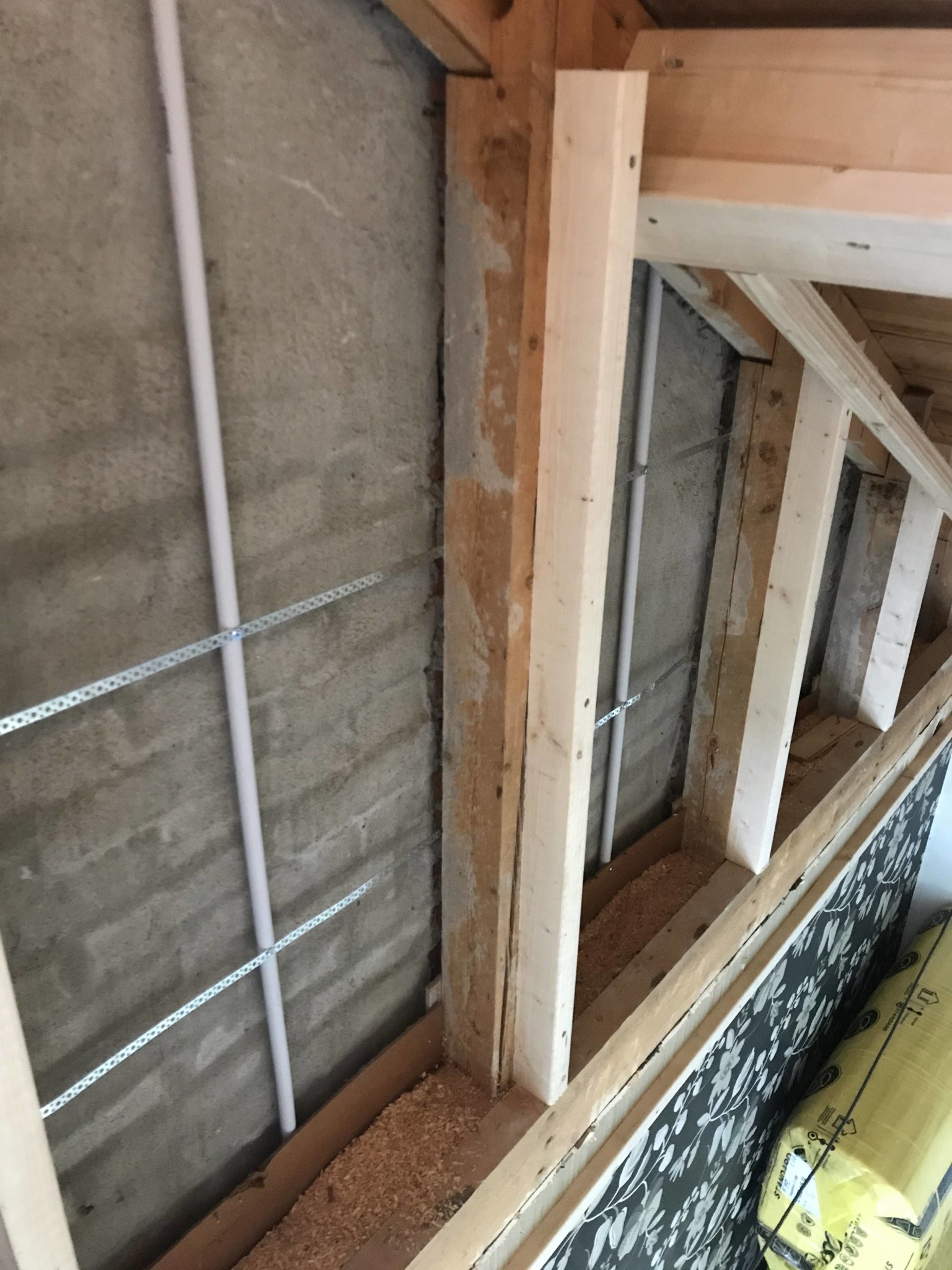
Squeezed in a 20mm vp pipe and tightened perforated tape between the studs to maintain the gap, maybe not building code, but I think it should work.
As always with existing houses, you have to make the best of what you can.
Don't forget to rodent-proof the air gap.
A common construction for timber-framed houses with brick facades is frame-air gap-brick. Often, but perhaps not always, the air gap is equipped with insulation. I recall reading somewhere that my air gap was a "murartumme" because the mason needed some finger space to be able to hold and place the bricks when the facade was being built. A "murartumme" should probably be roughly equivalent to 20 mm. These facades have ventilation gaps at the bottom between bricks here and there, as well as the entire upper part up to the eaves.
Don't forget to rodent-proof the air gap.
A common construction for timber-framed houses with brick facades is frame-air gap-brick. Often, but perhaps not always, the air gap is equipped with insulation. I recall reading somewhere that my air gap was a "murartumme" because the mason needed some finger space to be able to hold and place the bricks when the facade was being built. A "murartumme" should probably be roughly equivalent to 20 mm. These facades have ventilation gaps at the bottom between bricks here and there, as well as the entire upper part up to the eaves.
Click here to reply