
5,950 views ·
16 replies
6k views
16 replies
Advice on Tretex walls, demolish or not?
Hello hello!
I am planning a renovation in a room that has Tretex walls, the house is from '59, I don't know what's behind the walls as I haven't dared to tear anything down yet.
I've read quite a bit that many prefer to replace all Tretex with drywall while some don't, the room's acoustics and character seem to change significantly with a "drywall update" from what I've read.
Does anyone have any tips or thoughts? I want to add that I am a complete beginner!
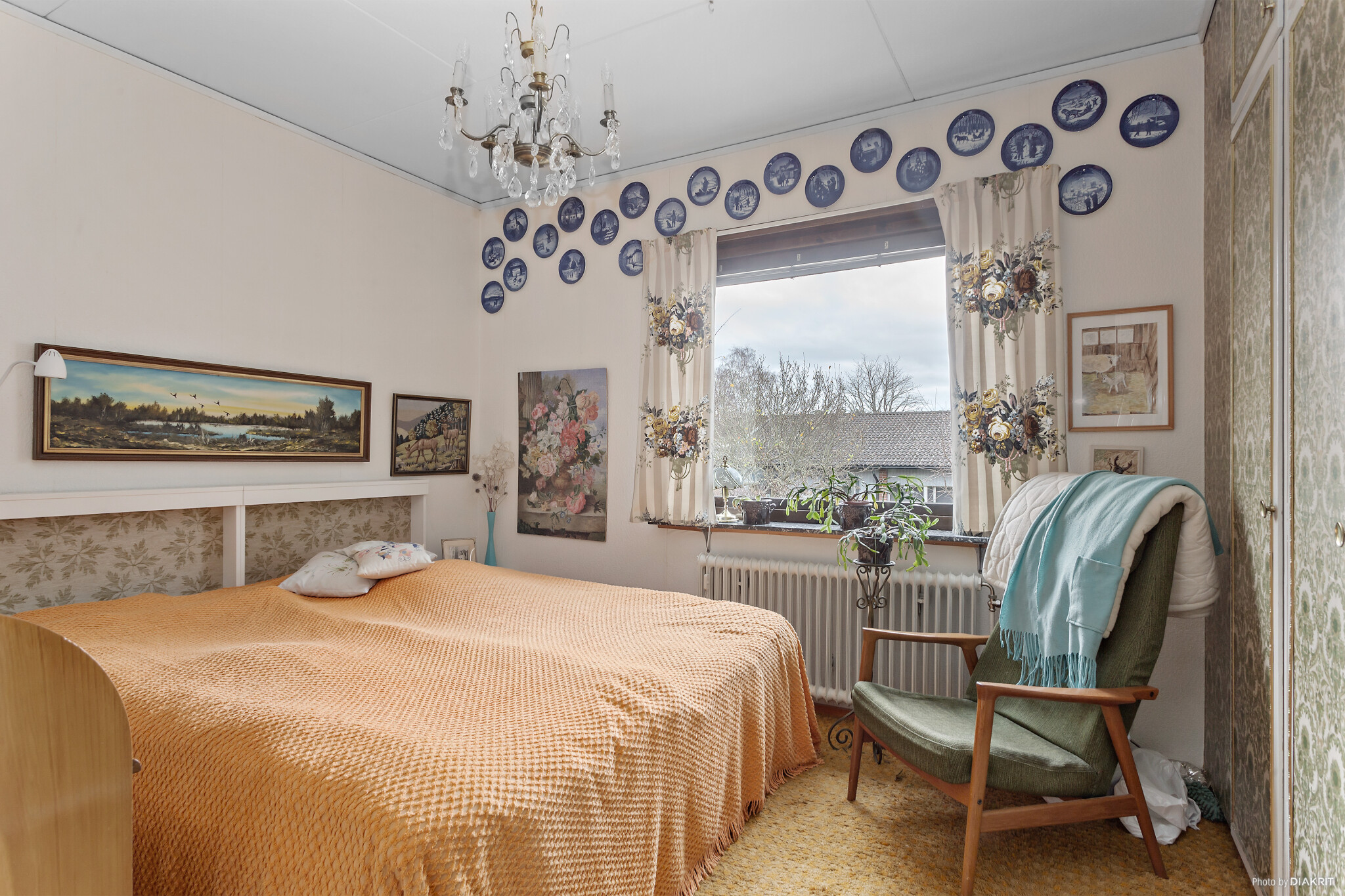
Attached is an old real estate photo of the room as it looked before, quite a bit to freshen up😅
I am planning a renovation in a room that has Tretex walls, the house is from '59, I don't know what's behind the walls as I haven't dared to tear anything down yet.
I've read quite a bit that many prefer to replace all Tretex with drywall while some don't, the room's acoustics and character seem to change significantly with a "drywall update" from what I've read.
Does anyone have any tips or thoughts? I want to add that I am a complete beginner!
Attached is an old real estate photo of the room as it looked before, quite a bit to freshen up😅
If you don't have to tear out the Tretex, then I wouldn't do it just for the sake of it.Schentleman said:Hello hello!
I'm planning a renovation in a room that has Tretex walls; the house is from '59, and I don't know what's behind the walls as I haven't dared to tear anything down yet.
I've read quite a bit that many prefer to replace all Tretex with drywall, while some don't. The room's acoustics and character seem to change significantly with a "drywall update" from what I've read.
Anyone have any tips or thoughts? I want to add that I'm a complete beginner!
Attached an old realtor photo of the room as it looked before, a bit to freshen up 😅
Put on a layer of renovation drywall, and you're good if the surface isn't good enough now.
The difference in insulation value between the Tretex and a "modern" wall won't pay off in terms of labor and materials, so for economic reasons, it's not something to invest in.
You probably have much better places to put your energy and money in that house.
What do you mean now?Schentleman said:
Surely you don't have the tretex exposed today?
Edit:
Do you mean attaching the renovation plaster to tretex or attaching things to renovation plaster?
Renovation plaster is just a thin surface layer to smooth things out, so it doesn't affect the load-bearing capacity too much.
Nothing to attach shelves to, etc. You should still look for studs as usual.
If you want to be able to attach whatever you want anywhere, you can always apply a layer of plywood first and then plaster on top of it, but that feels very over-ambitious.
Regarding attaching plaster to tretex, there shouldn't be any problem, as long as you haven't exposed all the tretex and created a very porous surface. Then you might need a few screws per sheet to hold them in place until all the adhesive/grout/spackle has cured properly.
I have renovated several rooms in the house with tretex and I haven't torn down a single board, both for the small insulation value it has and also since I've routed new electrical wiring in it. I have tongue-and-groove boards behind the tretex, so fastening renovation plasterboard and other things has not been a problem.
Yes, he's absolutely right, but there's a lot in old houses that you don't use when building new ones, so it doesn't really matter?Schentleman said:
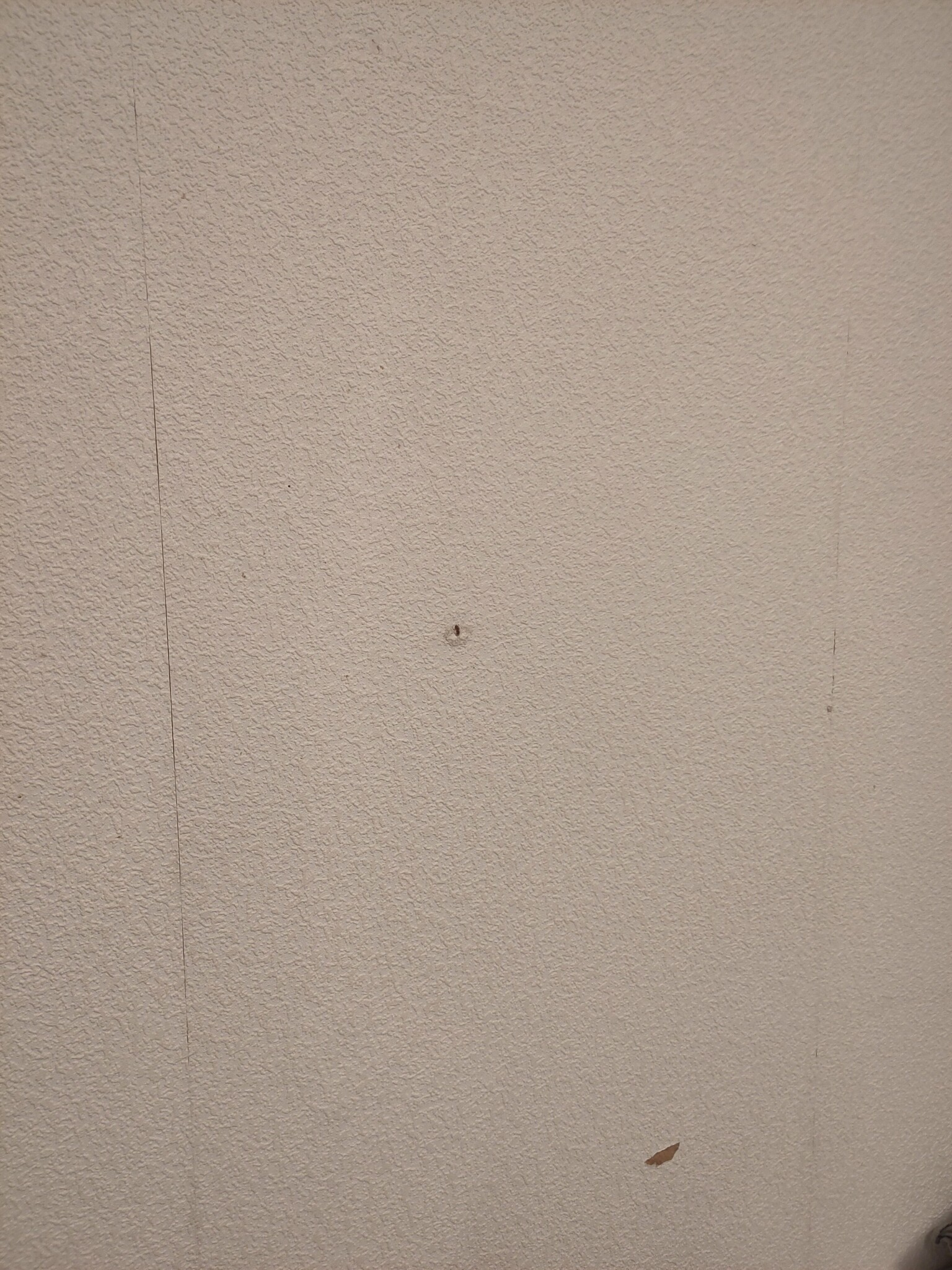
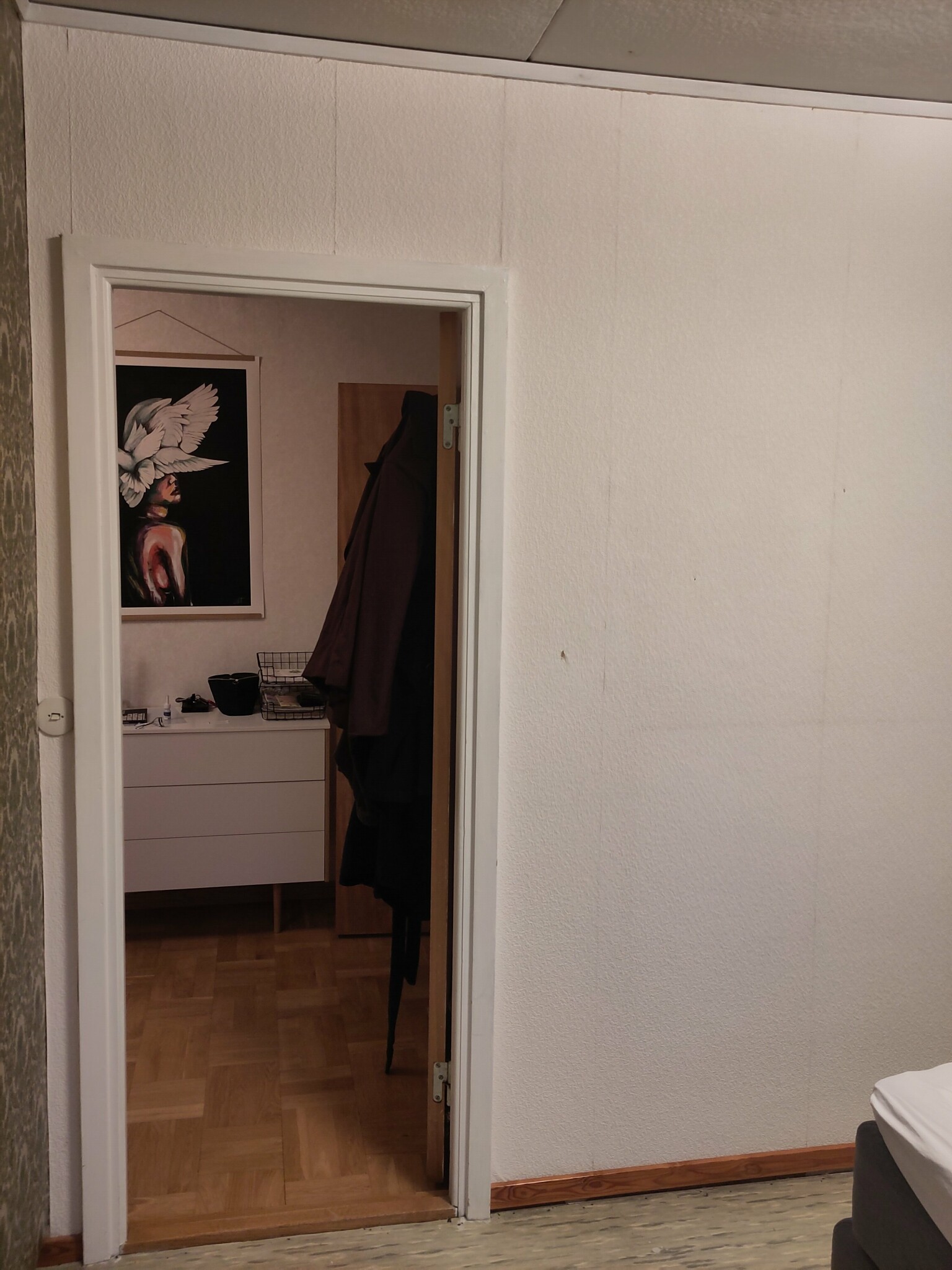
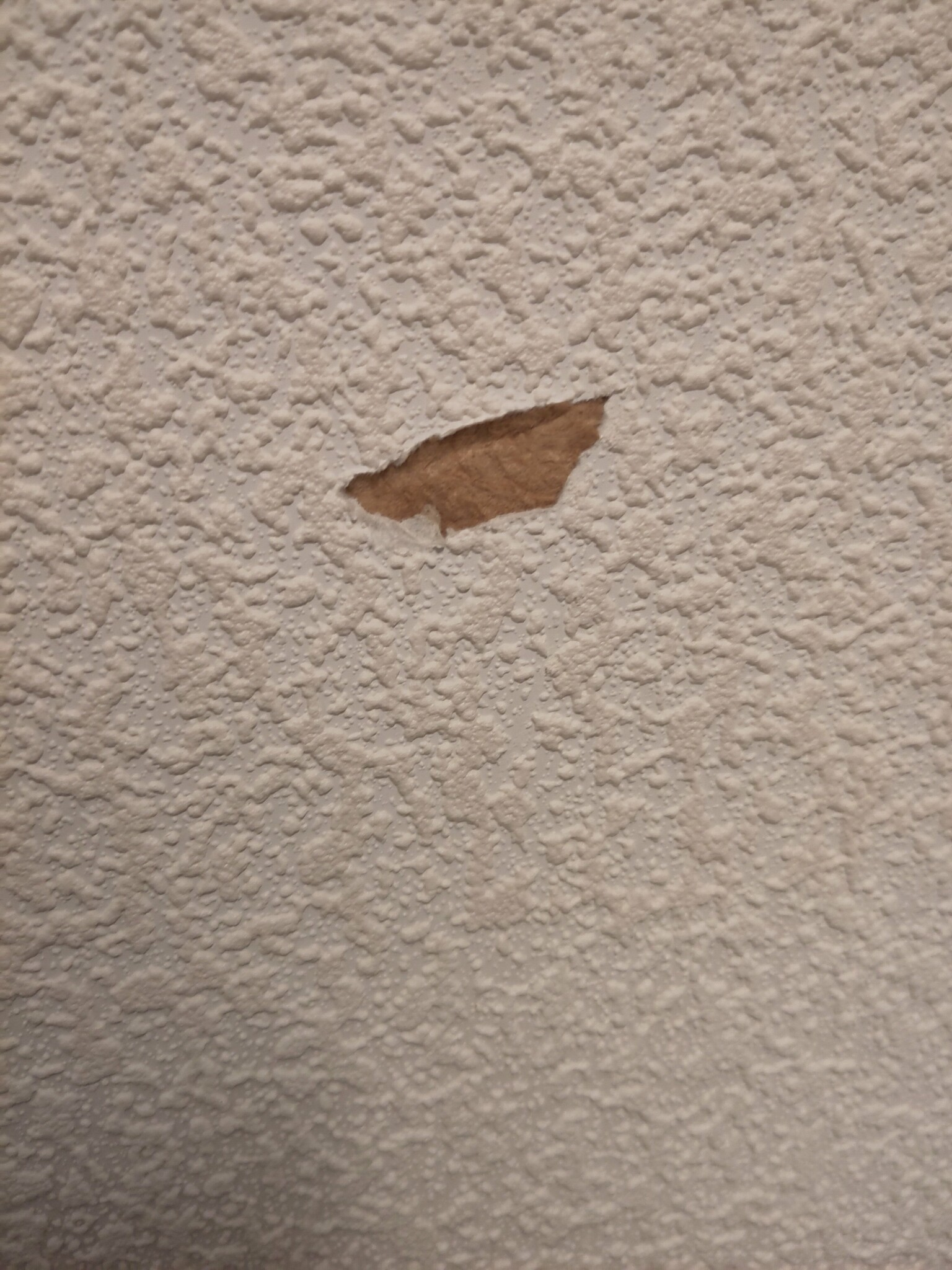
Textured wallpapers, for example.
A quick fix is to skim coat the wall, that way you get rid of both the textured wallpaper and small damages. Alternatively, as mentioned, renovation plasterboard or renovation wallpaper.
That it's tretex instead of fiberglass in the wall is nothing you need to worry about.
We have never removed tretex and have also never installed renovation plasterboard. Tearing it down is just a lot of work, and renovation plasterboard adds thickness, so you might need to replace door and window frames. We've only done plastering. It's advisable to prime the tretex before plastering if you've reached "bare" tretex since it absorbs moisture quickly.
The downside of just plastering on tretex is that the wall won't be completely straight. If you plan to wallpaper with nonwoven wallpaper that requires edge-to-edge placement, you might end up with small gaps in some places and overlaps in others. If you're just painting, there are no problems, and paper wallpaper with overlaps works well. To achieve a perfectly straight wall, you almost have to tear down and reframe it because nothing is straight in these old houses, and it feels like a lot of work.
In the last house (50s style), there was a framed structure, so paintings and such were usually hung directly on the tretex. It worked fine.
The downside of just plastering on tretex is that the wall won't be completely straight. If you plan to wallpaper with nonwoven wallpaper that requires edge-to-edge placement, you might end up with small gaps in some places and overlaps in others. If you're just painting, there are no problems, and paper wallpaper with overlaps works well. To achieve a perfectly straight wall, you almost have to tear down and reframe it because nothing is straight in these old houses, and it feels like a lot of work.
In the last house (50s style), there was a framed structure, so paintings and such were usually hung directly on the tretex. It worked fine.
mrsnhp said:
We have never torn down tretex nor installed renovation plasterboard. It’s just a lot of work to tear down, and renovation plasterboard builds up so you might need to replace door and window frames. We've only done plastering. You may want to prime the tretex before plastering if you've reached "bare" tretex since it absorbs moisture quickly.
The downside of only plastering over tretex is that the wall doesn’t become completely straight. If you're wallpapering with nonwoven wallpaper, which needs to be applied edge to edge, there might be small gaps in some places and overlaps in others. If you're only painting, it's no problem, and paper wallpaper with overlaps works well. To get a completely straight wall, you almost have to tear down and reframe it because nothing is straight in these old houses, and it feels like a lot of work.
In our previous house (from the 50s), it had a framed structure, so pictures and such would often just hang directly in the tretex. It worked fine.
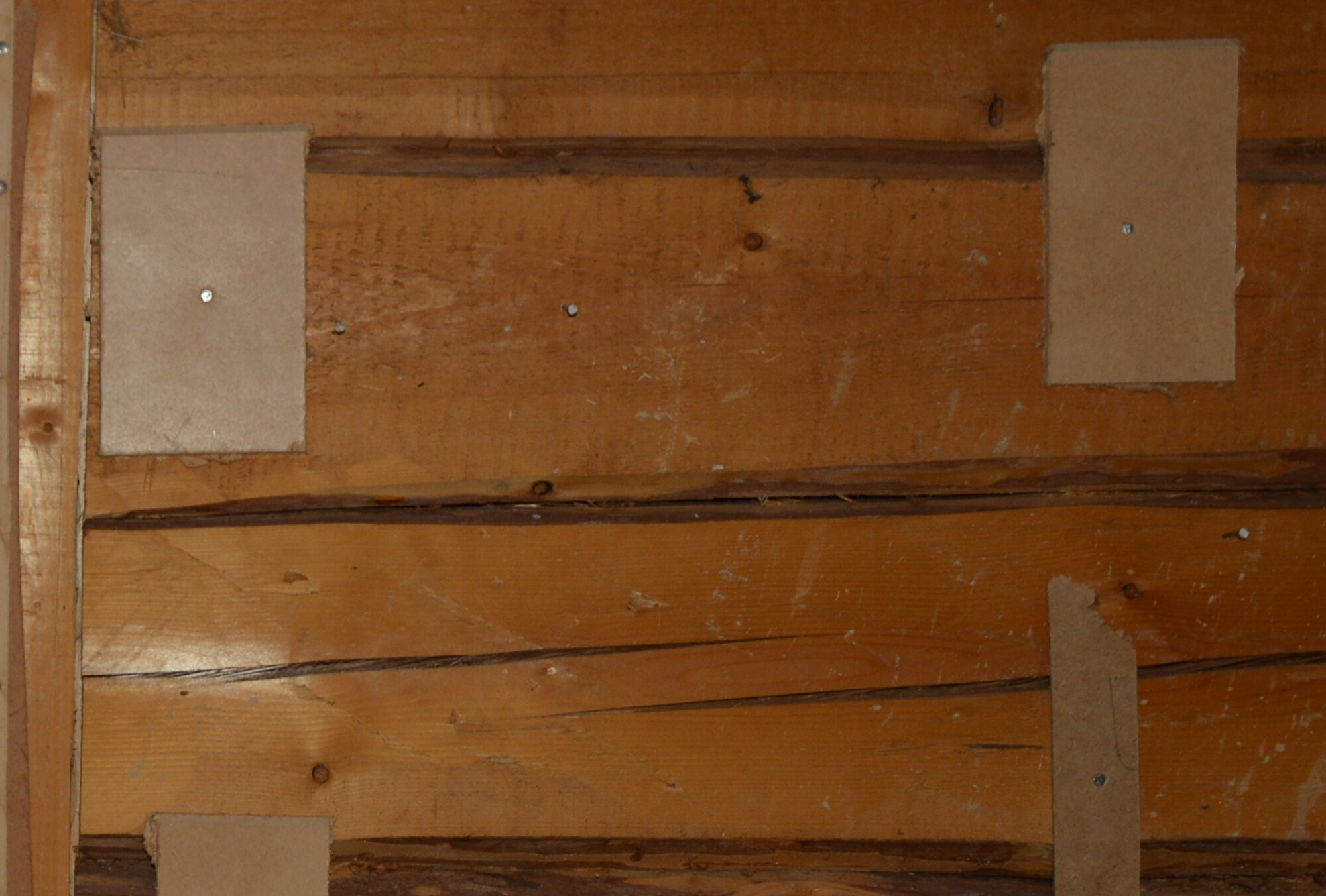
I have/had tretex walls in the large room of my house from 1902. The walls are soft, with large bumps in several places. Out of sheer curiosity, I opened the wall in the fall of 2021 to check the material and saw that there was timber directly behind it. Then the boards went down behind a low panel, maybe 40 cm high. That didn't stop me from tearing away the boards. Now the walls are naked with timber insulated in recesses with some sort of wool or flax. There are no frames; they put up small paper strips to have something to nail into and chiseled away protruding parts of the timber to get as flat a surface as possible. During dismantling, I removed all nails that remained when the soft boards were taken down, but not the so-called frames; they are all still there.Schentleman said:Hello hello!
I am planning a renovation in a room with Tretex walls, the house is from 1959, I don’t know what’s behind the walls as I haven’t dared to tear anything down yet.
I’ve read that many prefer to replace all Tretex with plasterboard while some don’t do it, and apparently, the room's acoustics and character change significantly with a "plasterboard update" from what I've read.
Does anyone have any tips or thoughts? I am a complete beginner I should add!
Attached an old realtor photo of the room as it looked before, a bit to freshen up😅
I might have messed up by doing this, not knowing how to get new (plasterboard) panels up if it's even possible without real frames. Can you screw plasterboard to the very thin paper strips? It's timber behind, so it should work, right? Then the panel needs to be loosened to let the boards go behind it. Or should the panel be removed completely and only simple skirting boards be used? Oh, my negative attitude towards tretex seems like an expensive affair. Then everything needs to be wallpapered too.
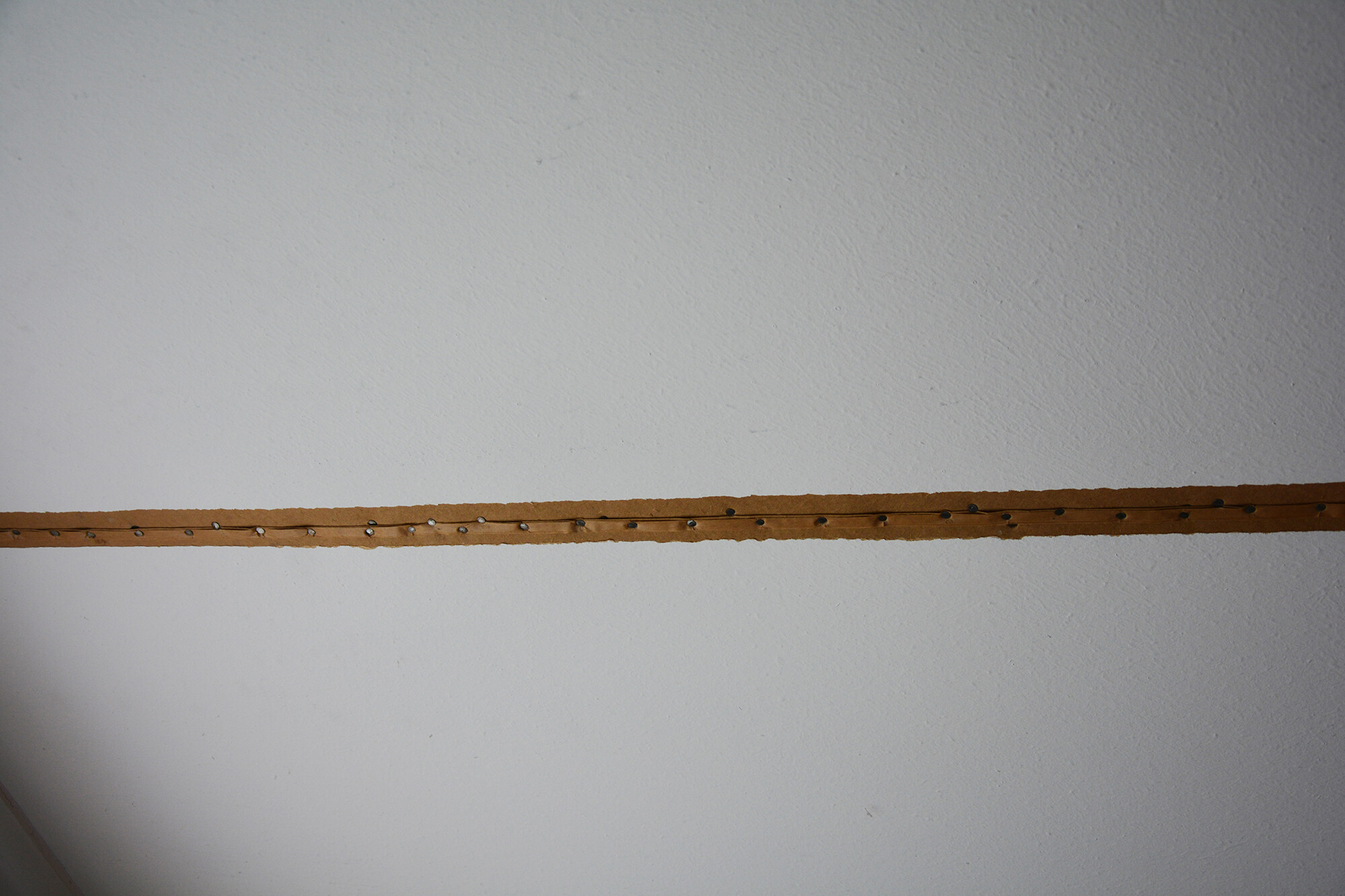
The ceiling consists of stretched paper, which I also consider a poor solution. In one spot, a seam has come loose in a crack. I checked it and immediately got a strip of paper in my hand. The whole room would need renovation, including the ceiling, but that would probably cost upwards of 50 grand, I believe, and I can't afford that.
Difficult to understand what you mean by the paper strips, but if you want plaster on the walls, you need some form of straight surface to attach it to. Whether that means wooden studs, metal studs, or something else creative doesn't make much difference. But framing with something is probably a good idea, if for no other reason than you might want new insulation instead of the tretex you removed.
Tensioned paper is a matter of taste; it can definitely be suitable in the right type of house. A big advantage, even if it looks quite shabby, is that it's relatively simple and cheap to repair yourself and achieve a really nice result. So if you don't *really* want to get rid of it, I would recommend looking up some instructions on how to repair them, try it, and see if you're satisfied. I've seen really shabby stretch ceilings become like new by amateurs doing it for the first time.
Tensioned paper is a matter of taste; it can definitely be suitable in the right type of house. A big advantage, even if it looks quite shabby, is that it's relatively simple and cheap to repair yourself and achieve a really nice result. So if you don't *really* want to get rid of it, I would recommend looking up some instructions on how to repair them, try it, and see if you're satisfied. I've seen really shabby stretch ceilings become like new by amateurs doing it for the first time.
Had the same situation in our house. Removed the tretex, incredibly dusty job, so thankful for the face mask then.P Pär Nordqvist said:I have/had tretrex walls in the main room of my house from 1902. The walls are soft, large bulges in several places. Out of sheer curiosity, after opening the wall to check the material in the fall of 2021, I saw that there was timber directly behind. The boards then went down behind a low panel, maybe 40 cm high. This didn't stop me from tearing away the boards. Now the walls are bare with timber insulated in grooves with some sort of wool or flax. There are no studs; small paper strips have been put up to have something to nail into, and the protruding parts of the timber have been chopped away to get as flat a surface as possible. During dismantling, I have removed all the nails left when the soft boards were taken down, but not the so-called studs, they are all still there.
Maybe I messed up by doing this, I don't know how to put up new (drywall) boards, if it's even possible without real studs. Can one screw drywall onto the very thin paper strips? There is, after all, timber behind, it should work, right? Then, I suppose the panel has to be loosened so that the boards can go down behind it. Or should the panel be abandoned entirely and just have simpler baseboards? Oh, my aversion to tretex feels like an expensive story. Then everything also needs to be wallpapered.
The ceiling consists of stretch paper, which I also consider a dreadful solution. In one place, a seam has come loose in a crack. I checked it and immediately came away with a paper strip in hand. The whole room was going to be renovated, including the ceiling, but that would probably end up costing around 50 grand, and I can't afford that.
The walls behind were rough planks, not straight. There were strips for the tretex horizontally, removed these. Then everything is crooked in old houses, so I put plywood directly on the planks and then drywall on them, then painted. The walls are nice now but definitely not 100% straight.
Then I'll show it instead. Here is a picture of these paper or wood strips, which likely helped create air between the timber and the tretex boards and perhaps made them straighter. Also attaching a picture of the stretch paper and how it looks after the seam has come loose in part of the room, a couple of meters.Dowser4711 said:
Hard to understand what you mean by the paper strips, but if you want to get plaster on the walls, you need some form of straight substrate to attach it to.
Whether that means wooden studs, metal studs, or something else creative doesn't really matter.
But putting up some kind of framework is probably a good idea, if nothing else, you probably want some new insulation instead of the tretex you've removed?
Stretch paper is a matter of taste, it can certainly be suitable in the right type of house.
A big advantage, even if it looks pretty rough, is that it's relatively easy and cheap to repair yourself and achieve a really nice result. So unless you *really* want to get rid of it, I would recommend looking up some instructions on how to repair them, trying it out, and seeing if you're satisfied.
I've seen really poor stretch ceilings that have turned out like new from amateurs who did it for the first time.
I might have hijacked this thread now with my own concerns. I didn't think it through. I apologize.Schentleman said:Hello hello!
I'm planning a renovation in a room that has Tretex walls, the house is from '59, and I don't know what's behind the walls as I haven't dared to tear down anything yet.
I've read that many prefer to replace all Tretex with plasterboard while some don't do it, the room's acoustics and character seem to change significantly with a "plasterboard update" from what I've read.
Anyone have any tips or thoughts? I want to add that I'm a total beginner!
Attached is an old realtor photo of the room as it looked before, quite a bit to freshen up😅