
12,850 views ·
26 replies
13k views
26 replies
Advice on plaster in basement
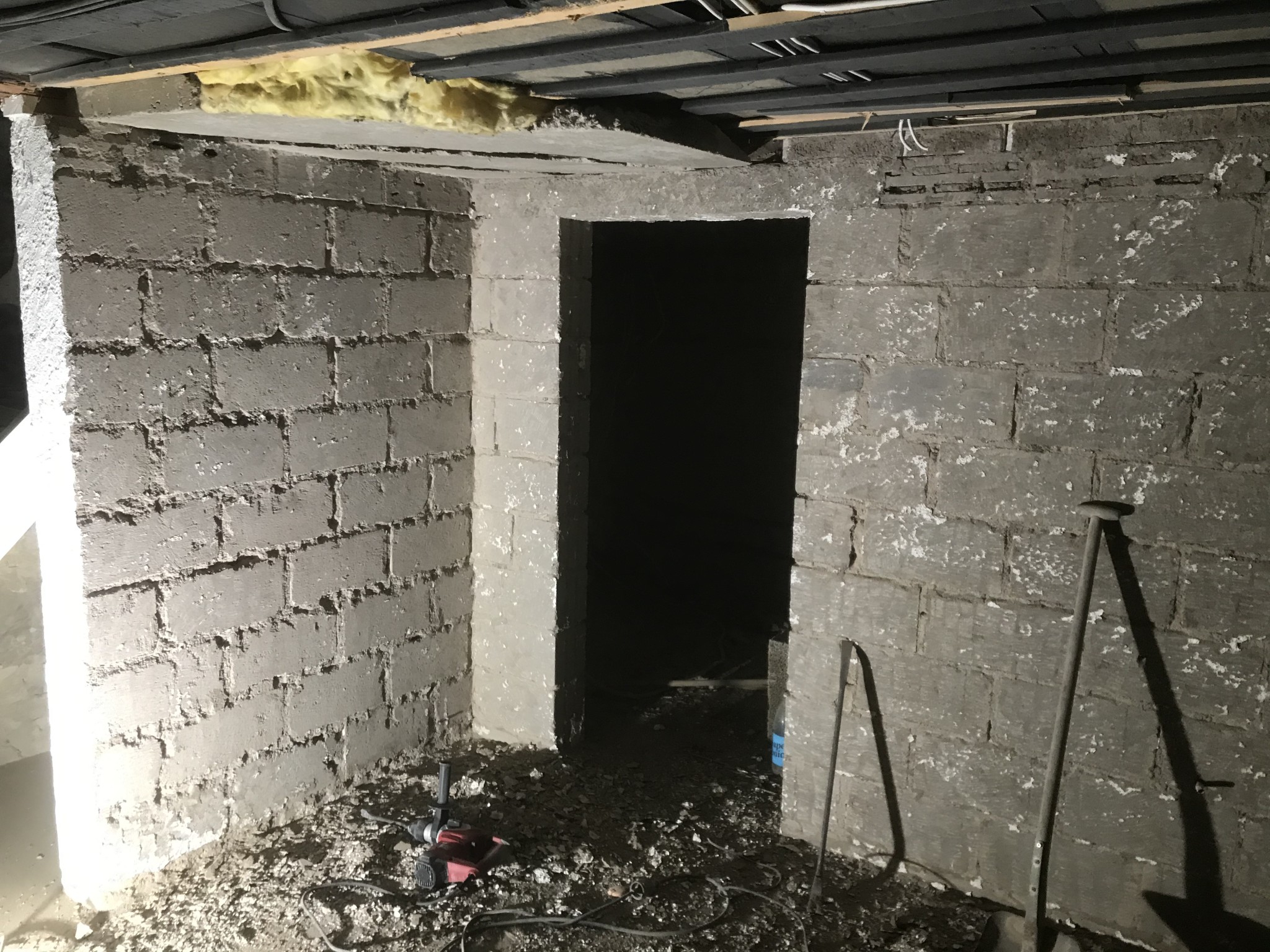
I'm renovating my basement and currently chipping away paint/plaster from the walls. I plan to re-plaster these walls but wish to keep them in the plaster's natural color. What should be used to treat the surface to bind the dust?
Regarding the plaster, I have been advised to first wash the walls with plaster and a lot of water, then mesh, and afterwards apply the plaster. Is this correct?
What type of plaster would you recommend? There are 1.5m thick granite walls outside the brick walls. Thank you in advance.
Regarding the plaster, I have been advised to first wash the walls with plaster and a lot of water, then mesh, and afterwards apply the plaster. Is this correct?
What type of plaster would you recommend? There are 1.5m thick granite walls outside the brick walls. Thank you in advance.
was a long time ago but I'm in the same starting position. How did it go for you? Any tips?T Tagg said:I am renovating my basement and currently chipping away paint/plaster from the walls.
I plan to replaster these walls but wish to have them in the color of the plaster. What should I treat the surface with to bind the dust?
Regarding the plaster.
I have been recommended to first coat the walls with plaster and plenty of water, then mesh, and after that apply the plaster. Is this correct?
What type of plaster would you recommend?
There are 1.5m thick granite walls outside the plastered walls.
Thanks in advance
I was planning to prime with primer mortar then plaster with C mortar.
//Andreas
It is difficult to assess, but should it be a furnished basement?
Full heating and inhabited?
Anyway, start with weber https://www.se.weber/fasad-puts-och-murbruk/putsbruk/weber-grundningsbruk-kc
And coat with 3 mm webers plaster mortar c 134, and finish with weber 135 1mm mortar.
If it's a raw basement, use b mortar instead of c.
Full heating and inhabited?
Anyway, start with weber https://www.se.weber/fasad-puts-och-murbruk/putsbruk/weber-grundningsbruk-kc
And coat with 3 mm webers plaster mortar c 134, and finish with weber 135 1mm mortar.
If it's a raw basement, use b mortar instead of c.
N neo11 said:
Ok. Tested today to fill in the tracks for the electrical wires, got the snap in the mortar right but I think I mixed it a bit too loose.
What should the consistency of the finished mortar be?
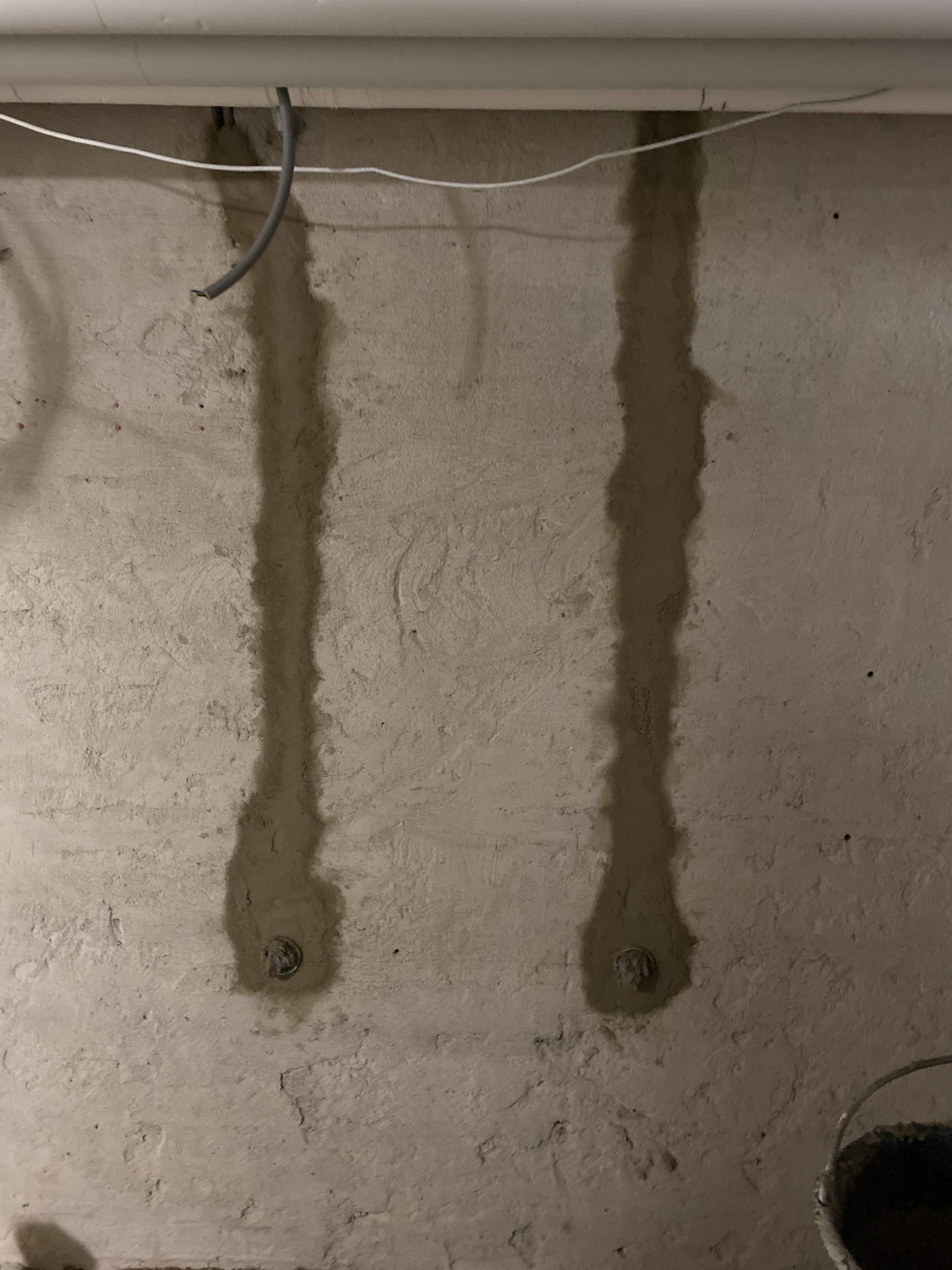
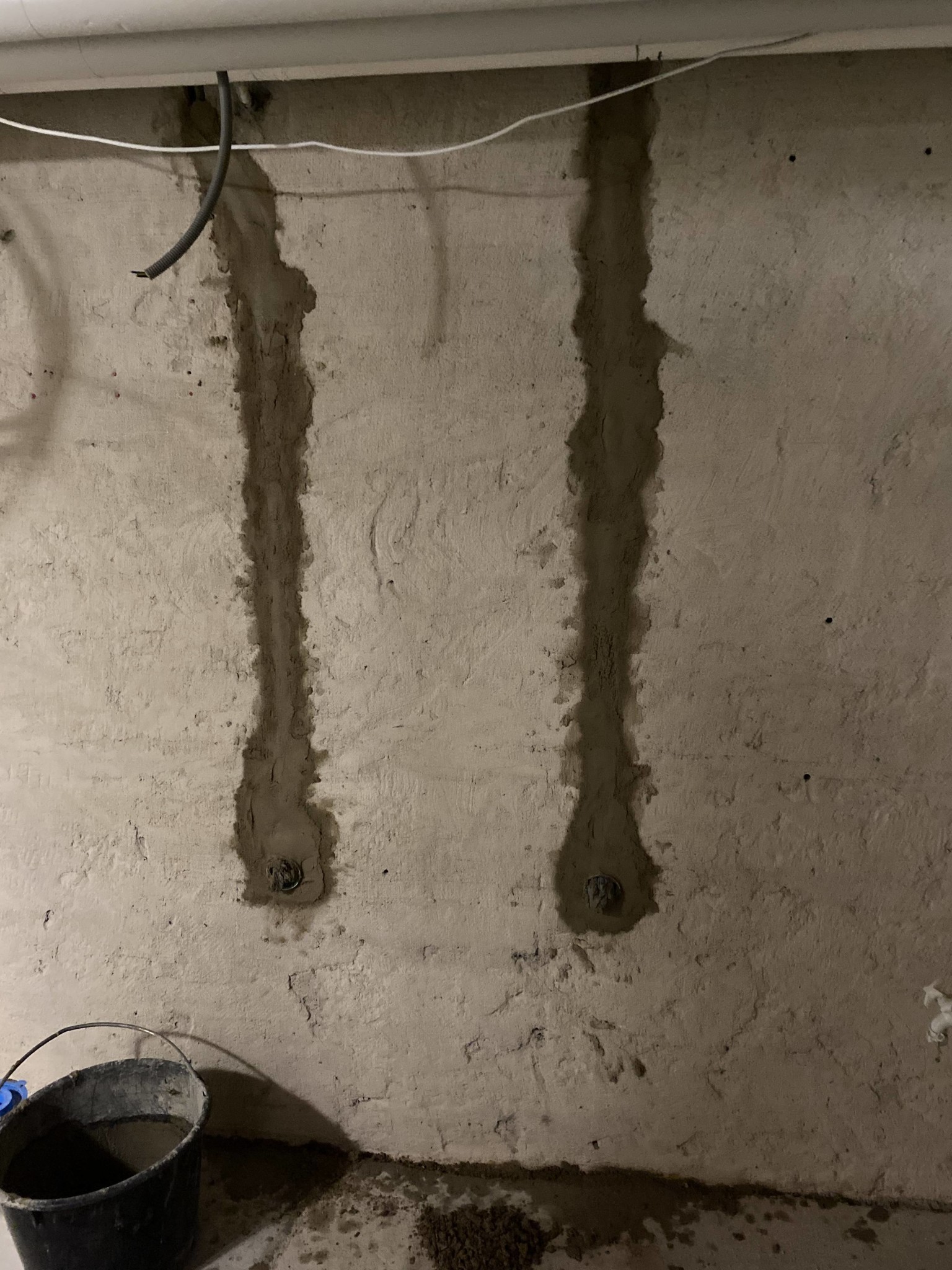
Difficult to answer regarding the consistency as it varies so much within plaster, but in your case with covering electrical cables, it should be like oatmeal, a bit thick like that.
But very dark plaster, you should buy something else.
What type of mortar have you used?
But very dark plaster, you should buy something else.
What type of mortar have you used?
N neo11 said:
It will become a laundry room/bathroom here with tiles on the walls.
I mixed a little too much water yesterday I noticed. It is Finja plaster/mortar C
//Andreas
Ok, yes, you should use plaster mortar C. It doesn't need to say mortar on the bag (less convenient).
Looks good, just remember to always pre-water all surfaces you apply lime-based mortar on.
Looks good, just remember to always pre-water all surfaces you apply lime-based mortar on.
Last edited:
Yes. I have done this. I have received different advice regarding netting from the masons I've spoken to, so it's not needed.N neo11 said:
//Andreas
Sorry, was a bit unclear. Yes, it should have been a question.N neo11 said:
When priming with priming mortar A. Should it be spread on the wall? Or mixed even thinner and applied with a broom?
What is the wall for mortar?
I don't quite understand how A mortar came into the context in the bathroom.
But the answer to the question is loose mortar, not like water, but not very far from it.
And apply with a trowel, it should be so loose that it almost starts to run down the wall after the application.
But it doesn't need to be completely covering.
Next time, you apply with a stiffer mortar and spread it on the wall with a skånska or similar.
But pre-water for adhesion.
I don't quite understand how A mortar came into the context in the bathroom.
But the answer to the question is loose mortar, not like water, but not very far from it.
And apply with a trowel, it should be so loose that it almost starts to run down the wall after the application.
But it doesn't need to be completely covering.
Next time, you apply with a stiffer mortar and spread it on the wall with a skånska or similar.
But pre-water for adhesion.
thanks I have tried to find battens to use as plaster battens. How many mm is it usually? Finja says 10-12 mm. I have found battens that are 8 or 12. I would like to plaster as thinly as possibleN neo11 said:
//Andreas
https://www.bauhaus.se/avdragsbana-6x2500mm
Set them with a level, then you can go as thin as you want, as long as it's straight.
Apply a narrow line (10cm wide) of plaster from floor to ceiling, press the strip almost to the bottom.
Then a pole and level to check that it is straight.
With 1.5 meters apart. Then swipe the pole on the tracks when you plaster.
Set them with a level, then you can go as thin as you want, as long as it's straight.
Apply a narrow line (10cm wide) of plaster from floor to ceiling, press the strip almost to the bottom.
Then a pole and level to check that it is straight.
With 1.5 meters apart. Then swipe the pole on the tracks when you plaster.