
We are renovating our bedroom and have removed an attic storage space in the bedroom. The attic space previously covered most of the sloped ceiling. It had a simple, unsealed door.
I've started to wonder if we need to do something to prevent mold growth on our roof, as I think warm air might seep through the interior ceiling to the exterior roof. Previously, this could happen too, as the door to the attic storage was often left open.
What is seen in the picture is the interior ceiling nailed to the roof joists, with some form of straw along with some kind of cover before the plywood. It's probably not very sealed. It's been this way since the 1940s. The roof was replaced some time ago, and at that time, we checked the interior of the plywood, which looked fine.
I've started to wonder if we need to do something to prevent mold growth on our roof, as I think warm air might seep through the interior ceiling to the exterior roof. Previously, this could happen too, as the door to the attic storage was often left open.
What is seen in the picture is the interior ceiling nailed to the roof joists, with some form of straw along with some kind of cover before the plywood. It's probably not very sealed. It's been this way since the 1940s. The roof was replaced some time ago, and at that time, we checked the interior of the plywood, which looked fine.
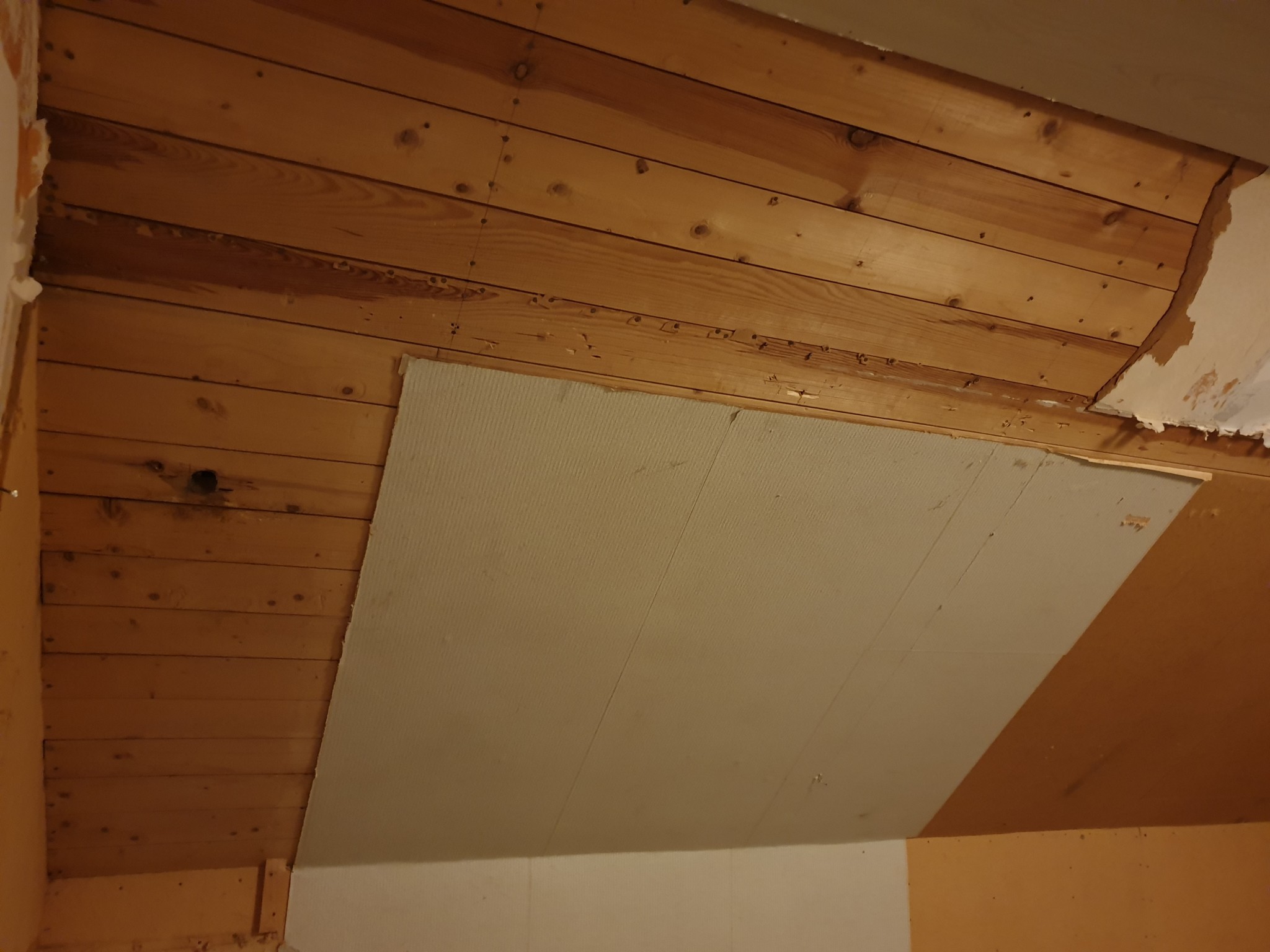
Ok, in other words directly on the wall in the picture?slaskman said:
We plan to frame up the wall in the picture and install Moelven's wood panel. But I guess it's best to put the construction foil on the wall and then frame up?
What about insulation? Should all insulation be done from the outside of the house?
I can't damage anything by putting up construction foil? I mean, the cold attic has existed for about 75 years, with leakage from the warm room. I can't mess up something that's been working by putting construction foil there, right?
The problems arise if warm moisture meets cold in the insulation, as this is where moisture forms. When I opened up my attic areas, I created an air gap against the tongue-and-groove inner ceiling made of Masonite and battens, insulated in the compartments, then construction plastic, and finally gypsum against the room. It is when one insulates drafty (well-ventilated) spaces that problems can occur.
Yes, that could be a variant, to ensure there is an air gap right at the ceiling.The problems arise if humid warmth meets cold in the insulation, which causes moisture there. When I opened up my attic spaces, I built an air gap against the tongue-and-groove ceiling of Masonite and battens, insulated in the compartments, then building wrap and lastly gypsum against the room. It's when insulating drafty (well-ventilated) spaces that you can encounter problems.
However, I would say the roof and the attic are well-ventilated. Despite the house lacking vents, it blows quite a lot in the attic when it's very windy.
Click here to reply