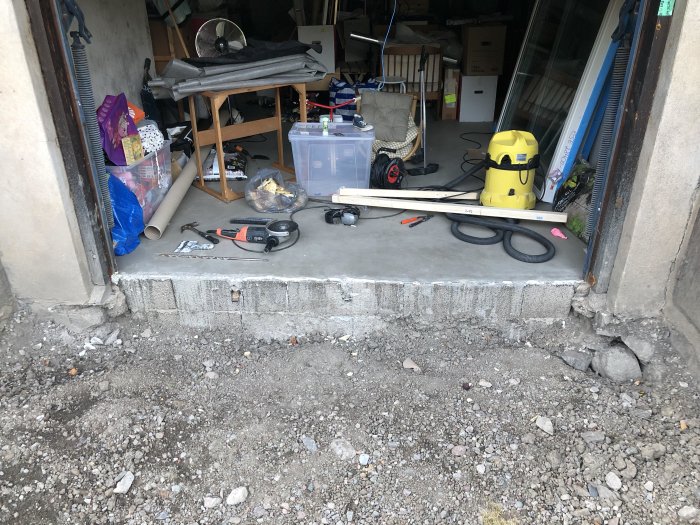
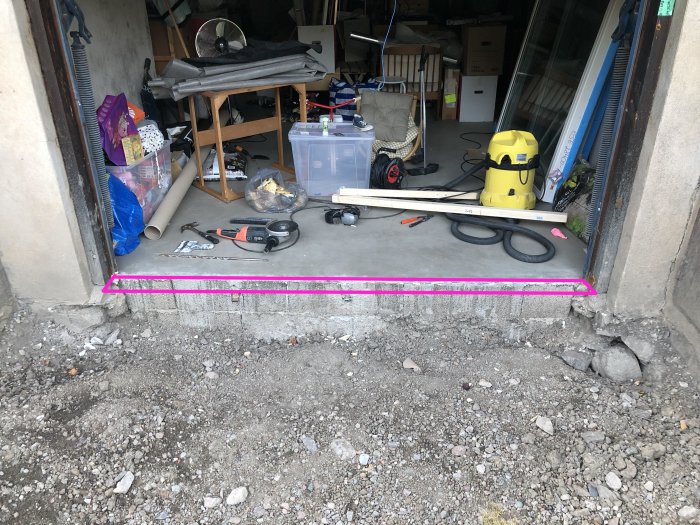
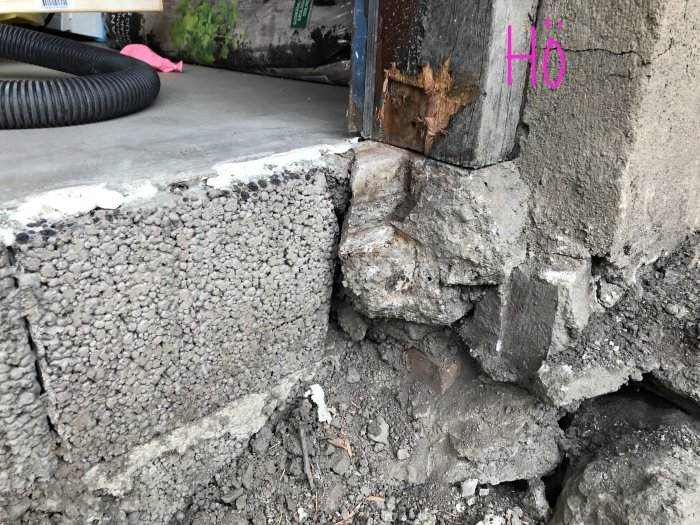
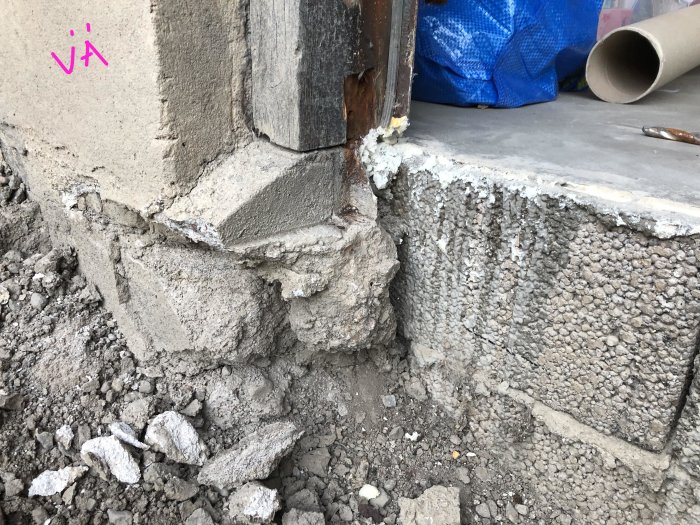
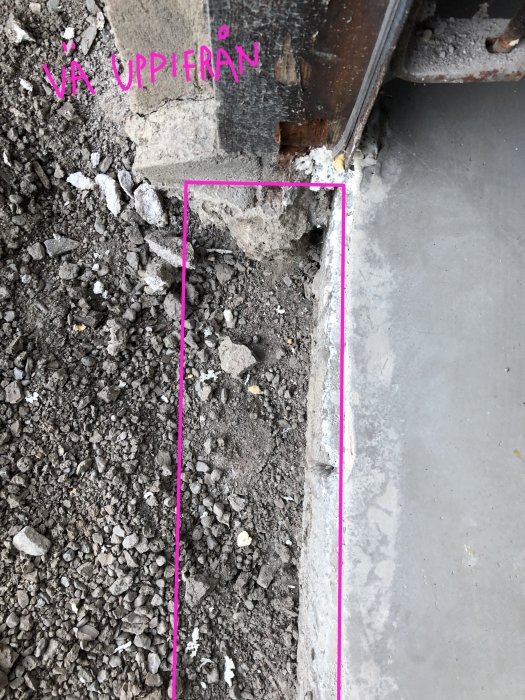
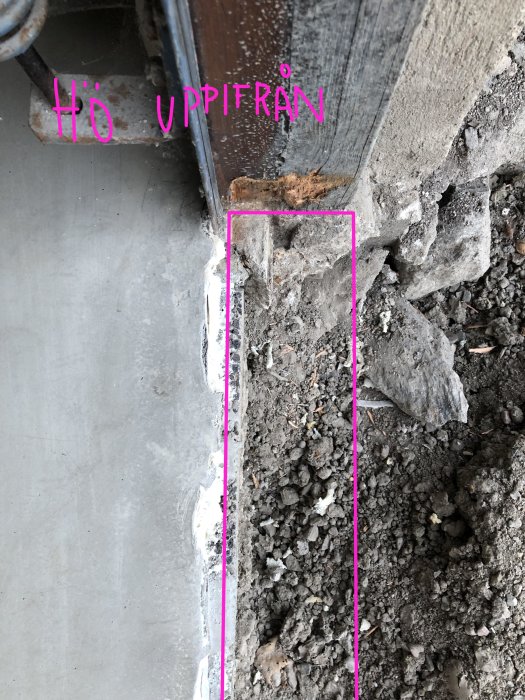
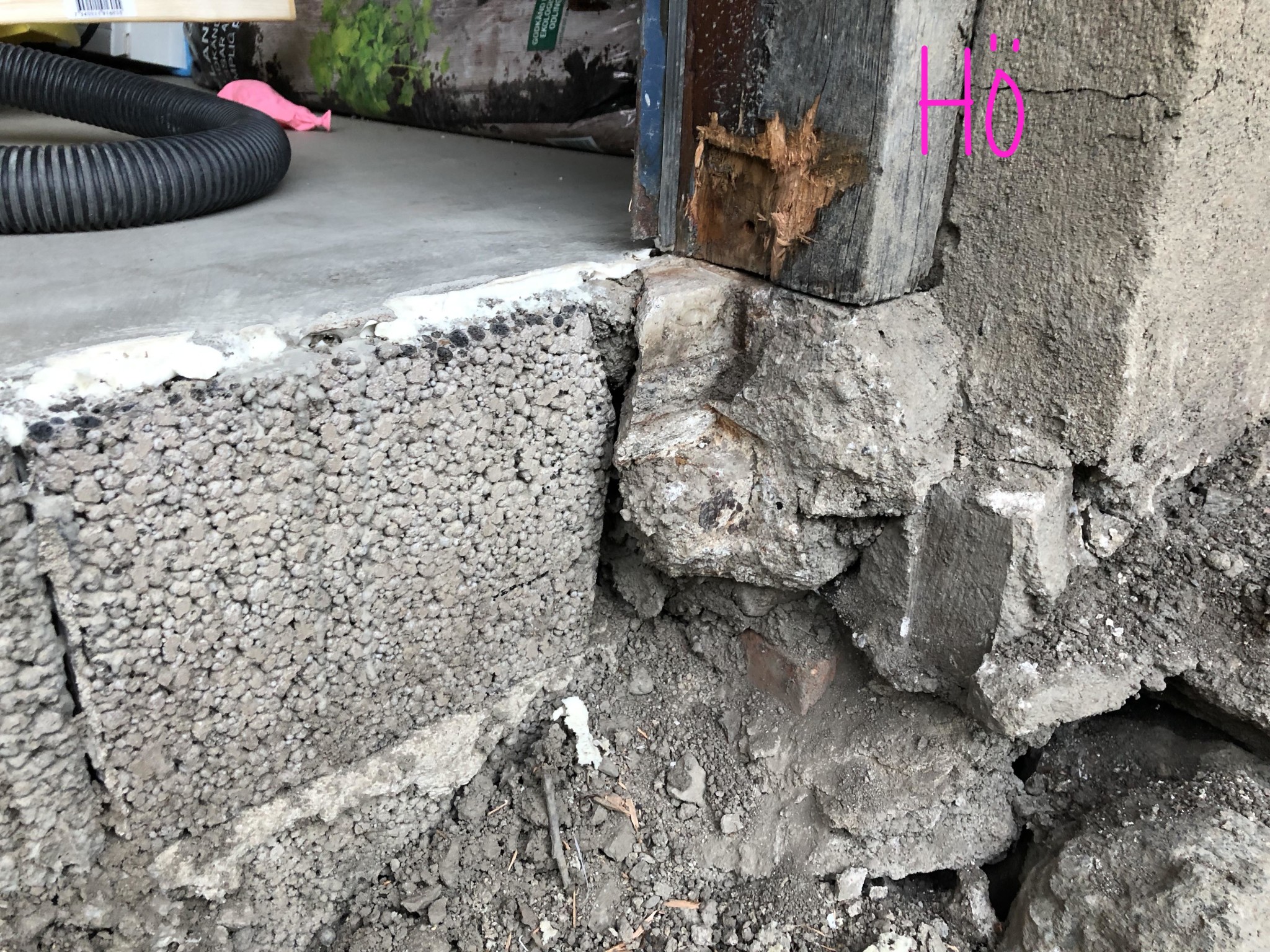
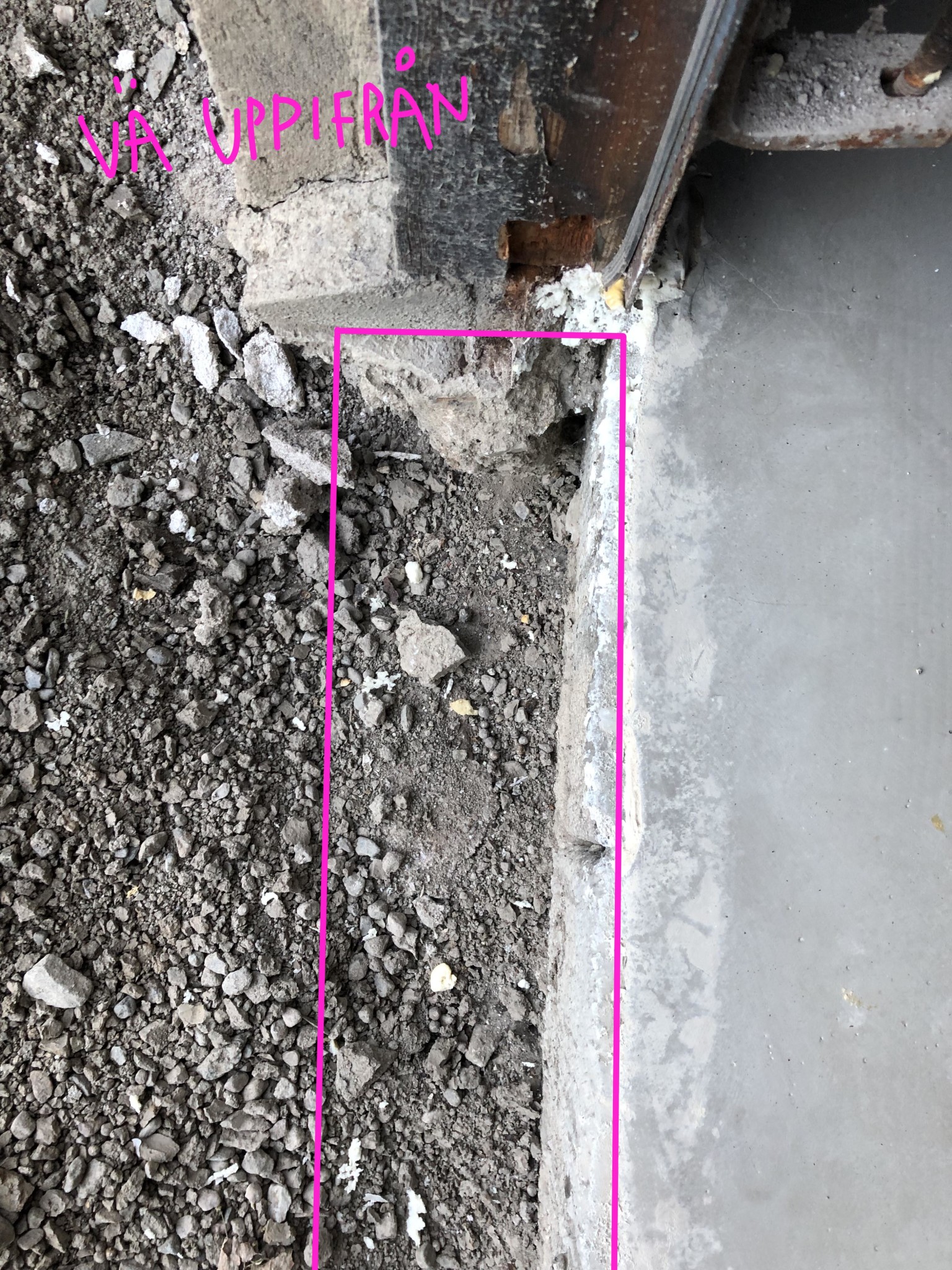
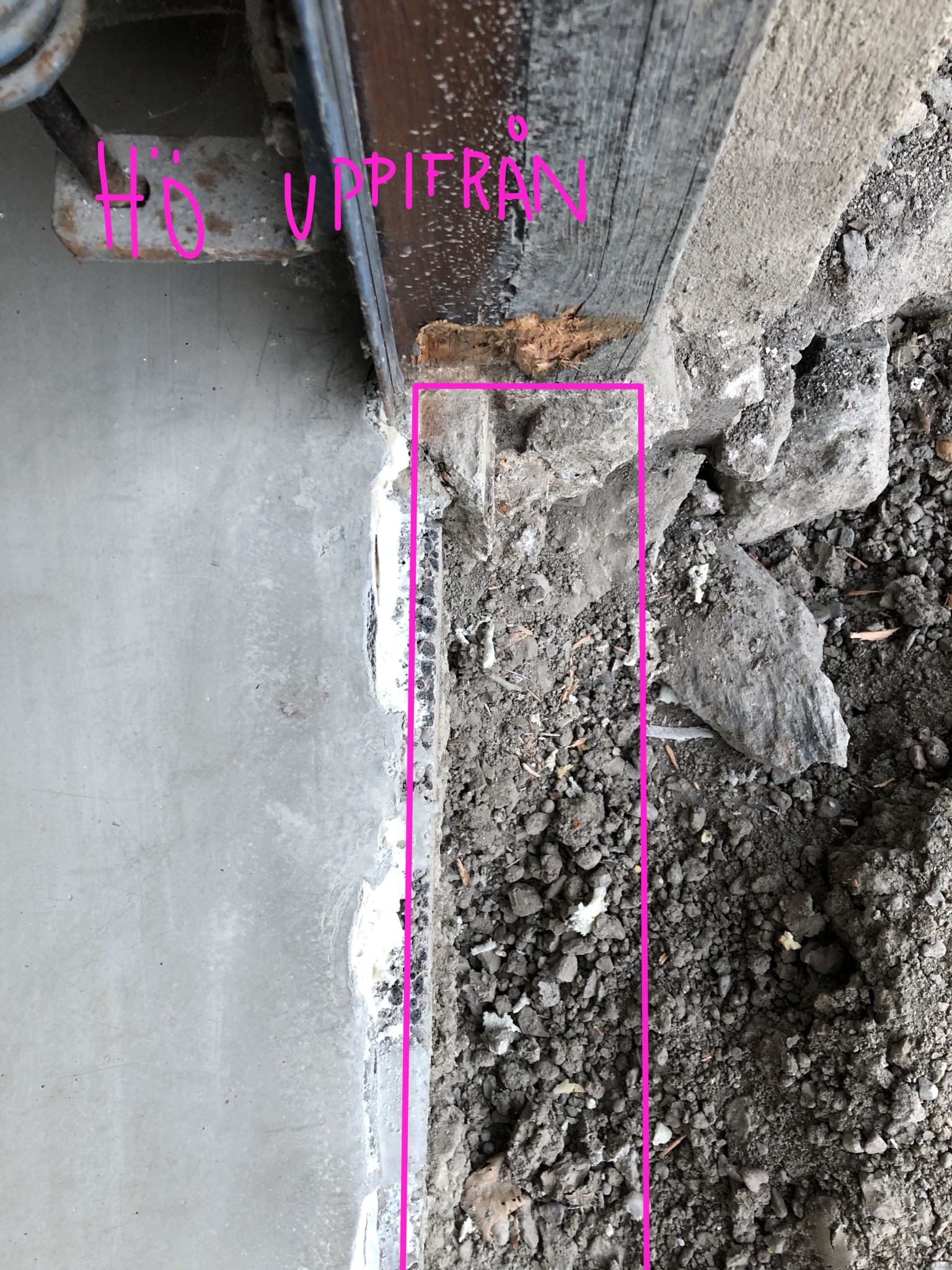
I am going to "extend" the cellar floor to be able to place part of a (non-load-bearing) wall on it. See image 2 for placement of the beam. 20% will be able to stand on the existing floor.
My idea was to cast a concrete beam (15x15cm) that goes from foundation wall to foundation wall on each side of the garage door, but then I have many questions. Should rebar be placed 5cm from the bottom of the beam? How do I attach the beam to the "sides"? Do you cut out a "shelf" with the angle grinder to place the beam on? How deep must it be? Is 15x15cm reasonable for a non-load-bearing wall?
One does not want the wall to collapse and cause chaos eventually. Preferably.
Drill horizontal holes in the concrete on each side, about 10cm deep. Fasten rebar there with anchor compound. You could make similar fixtures in the lecablocks as well.
I would probably make the beam 20cm high, but that's probably unnecessarily strong. At least 4 thick rebar, about 10mm. 2 at the lower edge, about 5cm from the bottom, and two at the upper edge.
If you're going to wall up the hole, you shouldn't use narrower blocks than 12cm. 15cm or 18cm is more suitable.
Interesting! So basically the irons will support the beam then? Is that enough? You don't need to make a shelf for the actual beam? I'm thinking the beam itself will weigh quite a bit too.
Why should the beam hang? Can't you cast it against the ground?
Steel close to the ground I would advise against.
And yes, a bottom reinforcement is what holds a beam together.
It's hard to go wrong with that. Anchor reinforcement into existing concrete and lecablock, reinforce, build a form at the front, and fill with concrete. Done.
Ideally it should hang straight because somewhere there are drain blocks and either I have to drain that part of the house again or cast it kind of sloping downwards?
If it is to be truly supporting, there must also be vertical reinforcement; otherwise, the beam cracks horizontally, creating a top and bottom half. Now I think this is becoming an exaggeration; it will probably be built upon, and that construction supports itself, so the beam is almost only needed during the masonry work.
Protte
Click here to reply
Vi vill skicka notiser för ämnen du bevakar och händelser som berör dig.