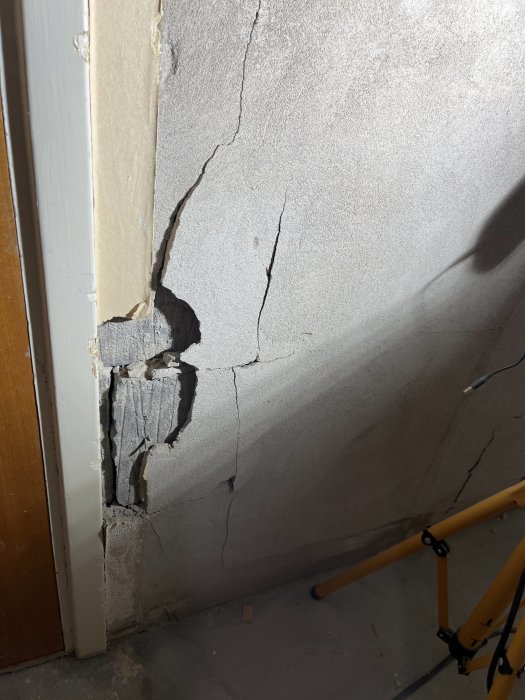
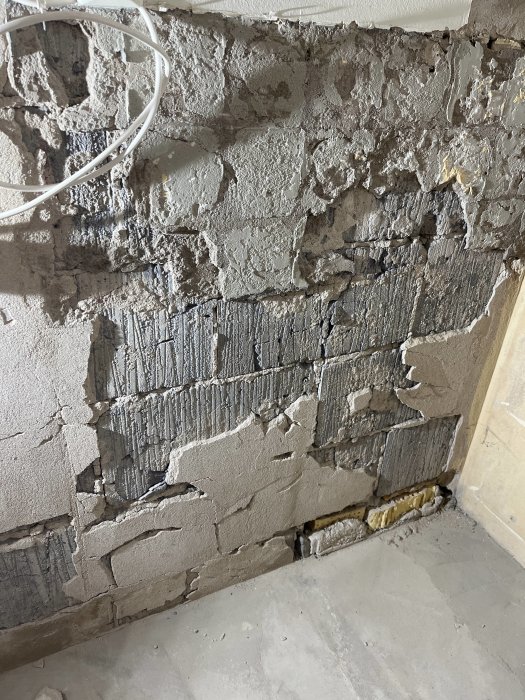
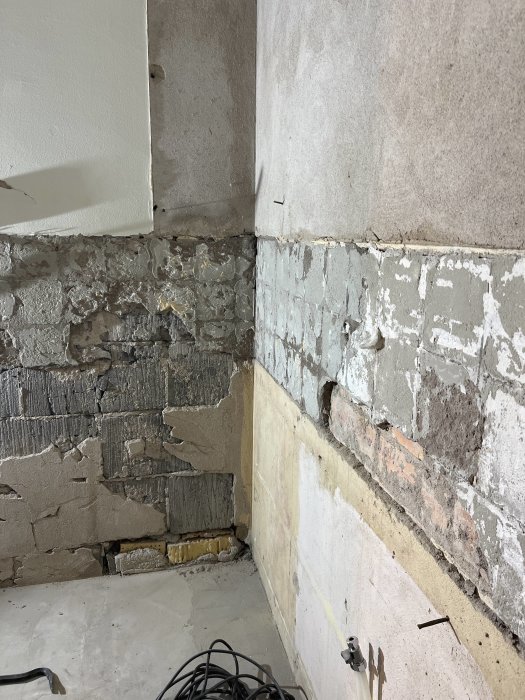
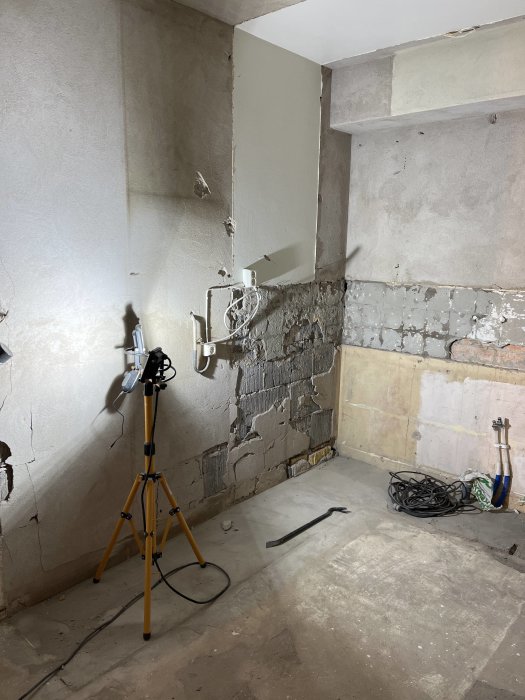
Hello, we've torn out a 1950s kitchen that was secured with proper iron nails, and the cabinets and tiles were really stuck. As a result, the wall has come loose in several places, and what I believe is gypsum plaster has come off in large sheets. I’m attaching pictures in hopes you'll understand.
What do we do now? We're new to the renovation business but want to learn as we find this fun (until these issues). Is it just about swallowing your pride and handing this over to the pros and hiring someone? Or can we fix it ourselves? How? How do we proceed?
Rendered aerated concrete, if you are installing a new kitchen in the same spot, all imperfections will end up behind. Smooth it out so it becomes even with plaster (knock down anything loose) to achieve a smooth and even surface. Screw on 13 mm plasterboards. What kind of kitchen will it be, IKEA with hanging rails or?
Thank you so much for the quick and good response, maybe it's just a matter of daring to start polishing tomorrow. Yes, it will be an IKEA kitchen. However, only doors on one wall.
Didn't get a response on the type of kitchen, but to hang something on a lightweight concrete wall, it's necessary to use fasteners that hold in the wall. This requires long screws and plugs.
Edit: Kitchen IKEA, nowadays it's hung on a rail. Just remember that it requires about 3-4 cm at the top edge to hang the cabinets, so don't place the rail at a height that makes the cabinets flush with the ceiling.
Okay, we'll keep that in mind when assembling the kitchen. Thanks for the tips. So just remove the loose parts, lightly sand to a smooth surface, then drywall?
Yep then you get a smooth surface. Just make sure there are no bumps or things sticking out after sanding, as the board can become bulging. The boards are attached with long screws and plugs in the wall. They will stay in place better when the cabinets are in place.
Click here to reply
Vi vill skicka notiser för ämnen du bevakar och händelser som berör dig.