
2,170 views ·
8 replies
2k views
8 replies
Renovating concrete stairs without formwork
Hello!
I'll be tackling the renovation of the old concrete stairs this spring.
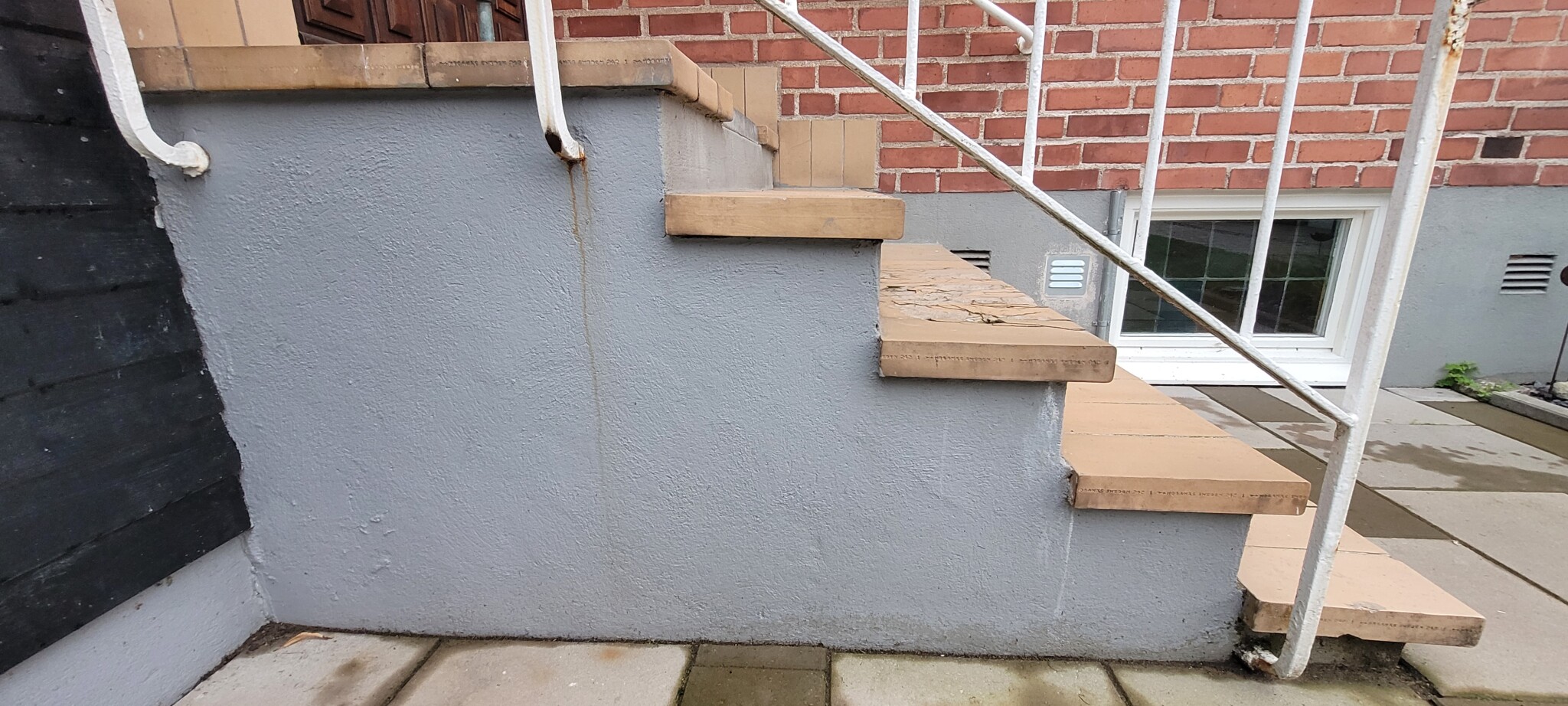
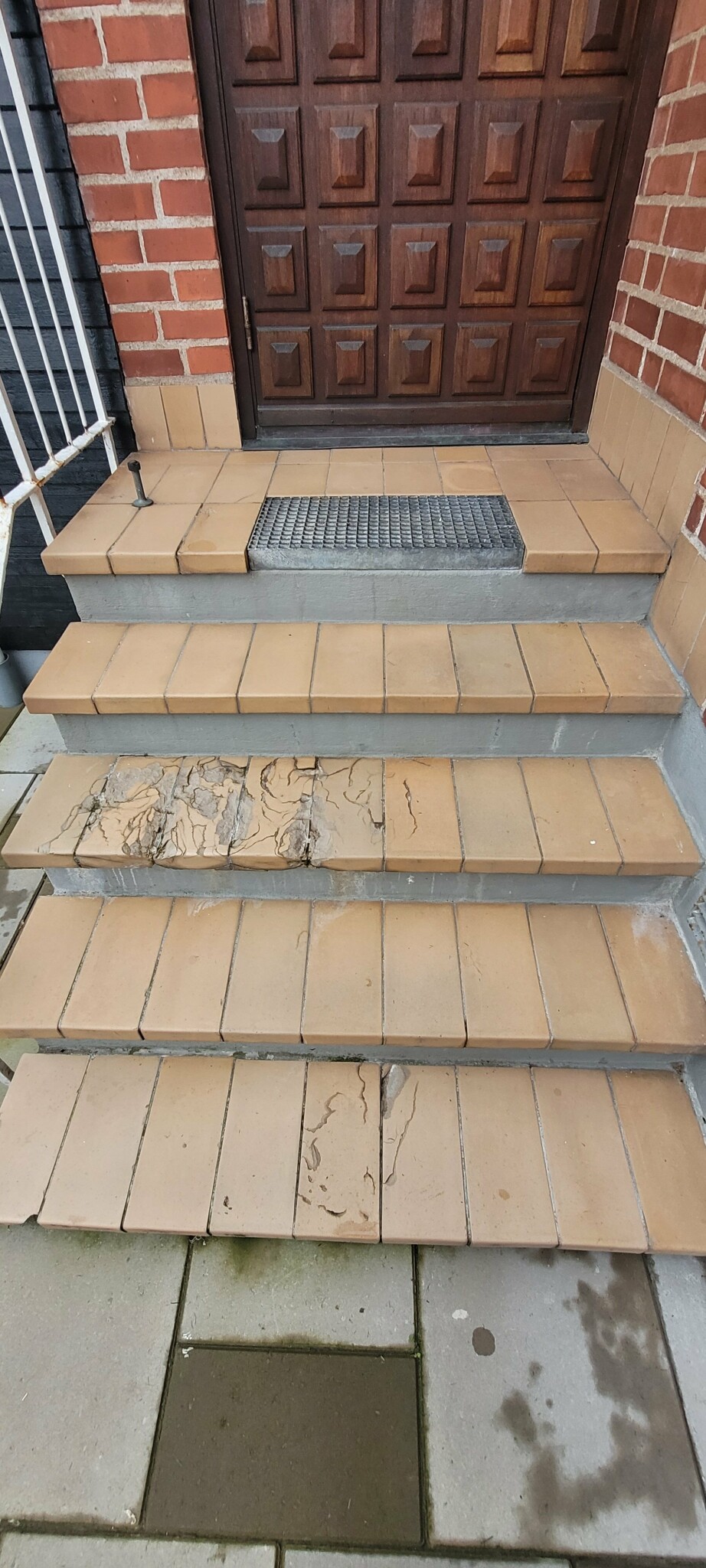
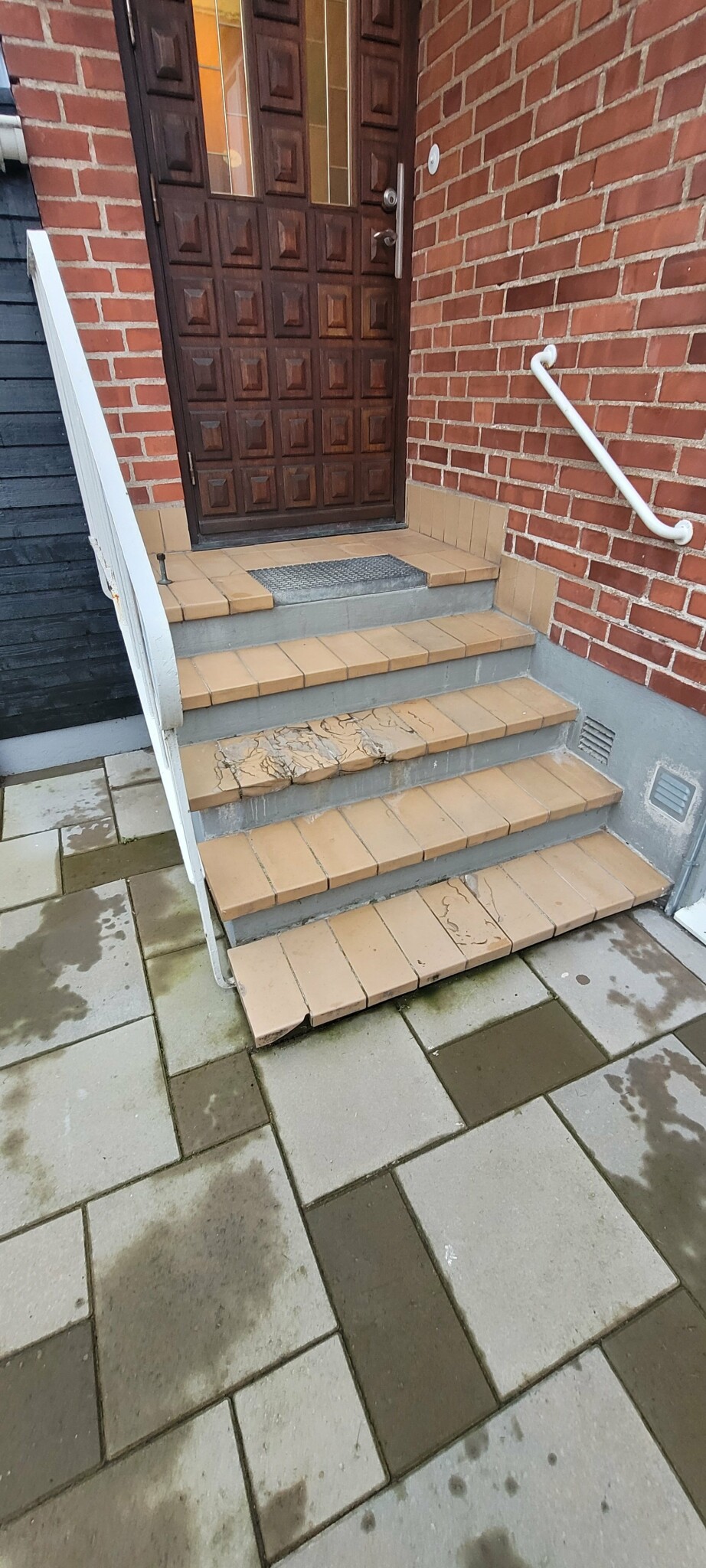
I'm thinking of removing the old tiles, then I want to repair the damages after using the chipping machine and raise it about 3cm to then lay outdoor tiles that are 2cm, whole pieces over at least the steps to reduce the number of joints.
I'm having difficulty finding a concrete that can be cast without using a form. Many types of fiber concrete still seem to require formwork. What I've seen otherwise is mainly repair concrete like Weber Rep 45, but this seems not easy for a layman to get hold of, is expensive, and it's unclear if it can actually be cast higher than just filling cavities.
Does anyone have tips on concrete that can be used for this purpose without formwork?
Attached are pictures for clarity! The tiles currently in place are 5cm in height.
Thanks in advance!
/David
I'll be tackling the renovation of the old concrete stairs this spring.
I'm thinking of removing the old tiles, then I want to repair the damages after using the chipping machine and raise it about 3cm to then lay outdoor tiles that are 2cm, whole pieces over at least the steps to reduce the number of joints.
I'm having difficulty finding a concrete that can be cast without using a form. Many types of fiber concrete still seem to require formwork. What I've seen otherwise is mainly repair concrete like Weber Rep 45, but this seems not easy for a layman to get hold of, is expensive, and it's unclear if it can actually be cast higher than just filling cavities.
Does anyone have tips on concrete that can be used for this purpose without formwork?
Attached are pictures for clarity! The tiles currently in place are 5cm in height.
Thanks in advance!
/David
Rep 45 is a repair mortar that is applied like plaster, can be used for repairs from about 5-50mm in one application, contains only aggregate of 0-2mm.D David Andreas said:Hello!
I'm going to start renovating the old concrete stairs this spring.
I plan to chisel away the old tiles, then I want to repair the damage after I've gone at it with the chisel machine and pour about 3cm to then lay outdoor tiles that are 2cm, whole pieces at least over the steps to reduce the number of joints.
I'm having trouble finding a concrete that can be poured without using a form. Most types of fiber concrete seem to still require formwork. What I've seen otherwise is mainly repair concrete like weber rep 45, but this seems not entirely easy to obtain for a layperson, is expensive, and unclear whether you can really pour more than just cavities.
Does anyone have tips on concrete that can be used for this purpose without formwork?
Attaching pictures for clarity! The tiles currently in place are 5cm in height.
Thanks in advance!
/David
There is no casting concrete that can be poured without having a form or something else to stop the concrete from flowing.
Simply due to lack of competence. It might be simple in itself, but my thought is that any steps that can be eliminated when you're a novice that can simplify are good. How on earth do you attach the form well when the staircase is constructed as it is?K Kimpaann said:
I'm fully aware that shortcuts are rarely the solution to a good and sustainable end result, so if that's what's required, one just has to learn!
Best answer
There's always a first time!☺️D David Andreas said:Simply a lack of competence. It might be simple in itself, but my thought is that any steps that can be removed when you're a novice to simplify are good. How on earth do you secure the form well when the staircase is constructed the way it is?
I'm fully aware that shortcuts rarely lead to a good and lasting end result, so if that's what's required, I'll just have to learn!
Despite it being the first time, I'm fairly convinced that the end result and durability will be much better if you shape.
To cast your centimeters with a mold, you should start by cleaning the surface as best as you can. Sweep or vacuum up debris and dust. Then purchase primer and roll/brush it on the surfaces to be cast.
Since you're not changing the depth of the steps, you can place form plywood on the front of each step and, of course, along the short side that is outward.
Drill down some dowels/screws on each step so the concrete has something to adhere to, preventing it from potentially separating due to frost heave or similar.
The question is whether to play it safe and lay in a thin reinforcement mesh. If I were doing it at my place, I would include it just because it would be very disappointing to realize it was needed afterward.
To fasten the plywood boards, I recommend:
https://www.bauhaus.se/spikplugg-6x...RG-iD4MGxiUhocjxCb-juHu_vIQwVT40aAoFlEALw_wcB
You can easily fill the holes created by the plugs with concrete filler from any brand. (Ardex is very good, but more expensive than many other manufacturers)
Last edited:
I attempted to edit too long afterward so it will be an additional post. The gap that remains when you remove the front molds can advantageously be filled with filler or let the side form stay and cast the gap the next day since you are going to cover the steps anyway.K Kimpaann said:At some point, there is always a first time!☺️
Despite it being the first time, I'm fairly convinced that the final result and durability will be much better if you shape.
To cast up your centimeters with form, you should start by cleaning the surface as well as possible. Sweep off/vacuum up debris and dust. Then purchase primer and roll/brush it on the surfaces to be cast.
Since you are not changing the depth of the steps, you can place form plywood at the front edge of each step and of course along the short side that is outermost.
Drill down some rods/screws on each step so the concrete has something to adhere to, so you avoid it potentially separating due to frost heave or similar.
The question is whether you should play it safe and insert a thin reinforcing mesh. If I were doing it at my own home, I would include it just because it's very annoying to realize afterward that it was needed.
To fasten the plywood boards, I recommend:
[link]
The holes left after the plugs can easily be filled with concrete filler from any brand. (Ardex is very good but more expensive than many other manufacturers)
Alternatively, place the form 35 mm above the surface you want to raise (the step), then you avoid gaps and all the extras that come from it.
Last edited:
Great! Thanks for an incredibly detailed response! I will go with your plan straight away!K Kimpaann said:Tried editing too late, so there will be another post. The gap that occurs when you remove the front molds can be conveniently filled or let the side form remain and cast the gap the next day since you're going to cover the steps anyway.
Alternatively, set the form 35 mm above the surface you want to raise (the step), then you avoid the gap and all the extra work that comes from it.
Just write if any questions or thoughts come up! Best of luck with the stairway and admire your masterpiece with a quote from Lotta on Troublemaker Street "I can do so much, I can probably do everything when I think about it" ☺️
Click here to reply