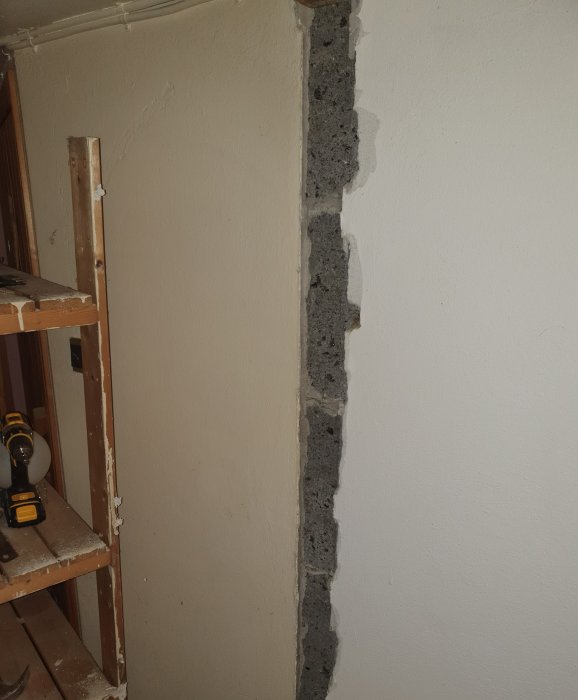
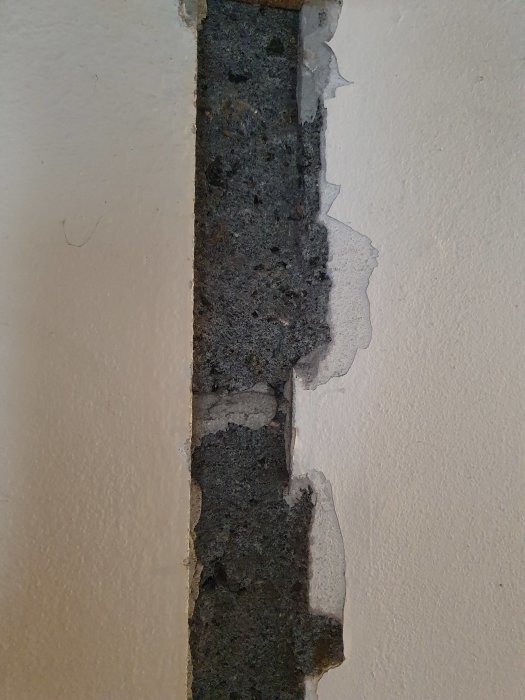
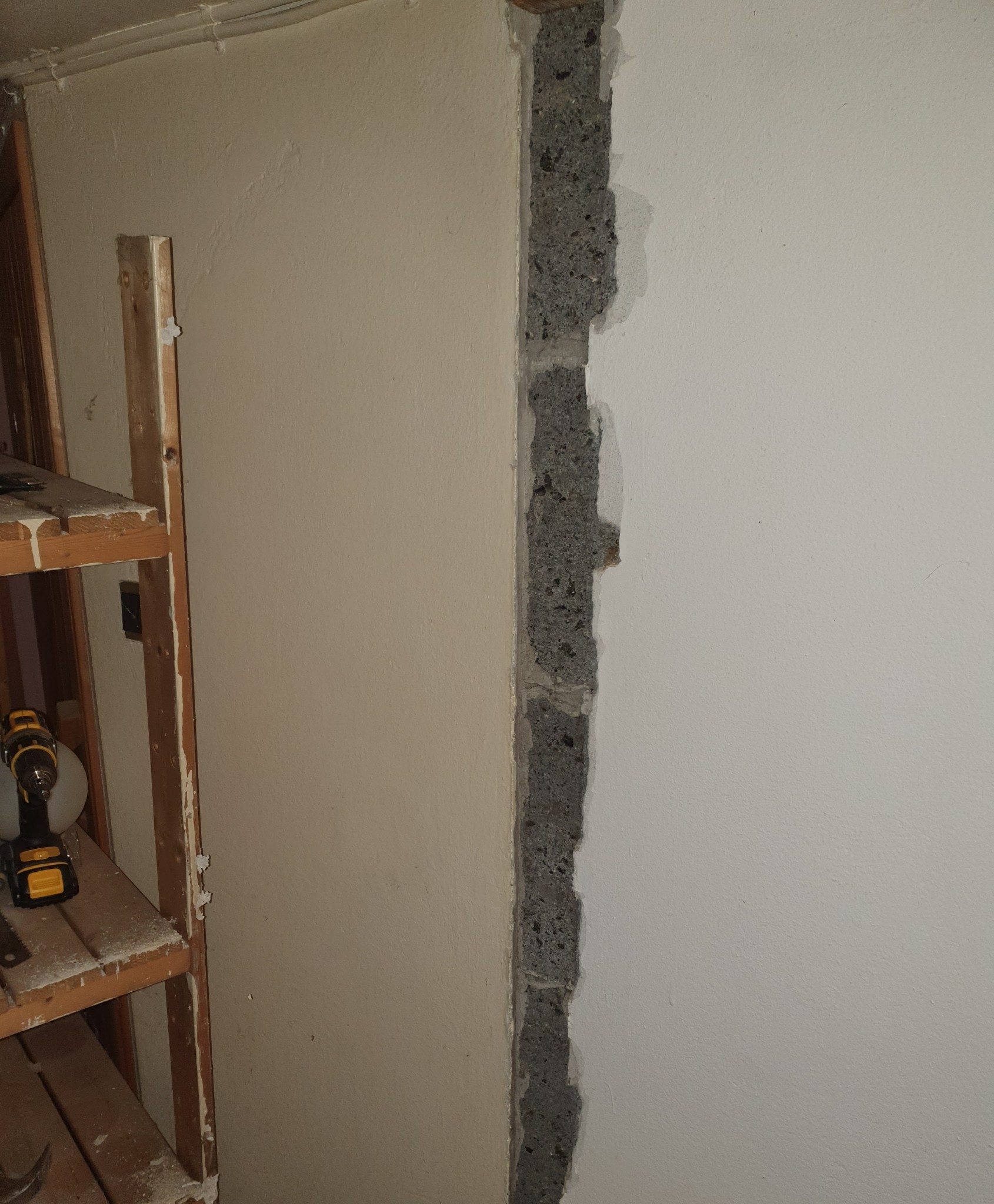
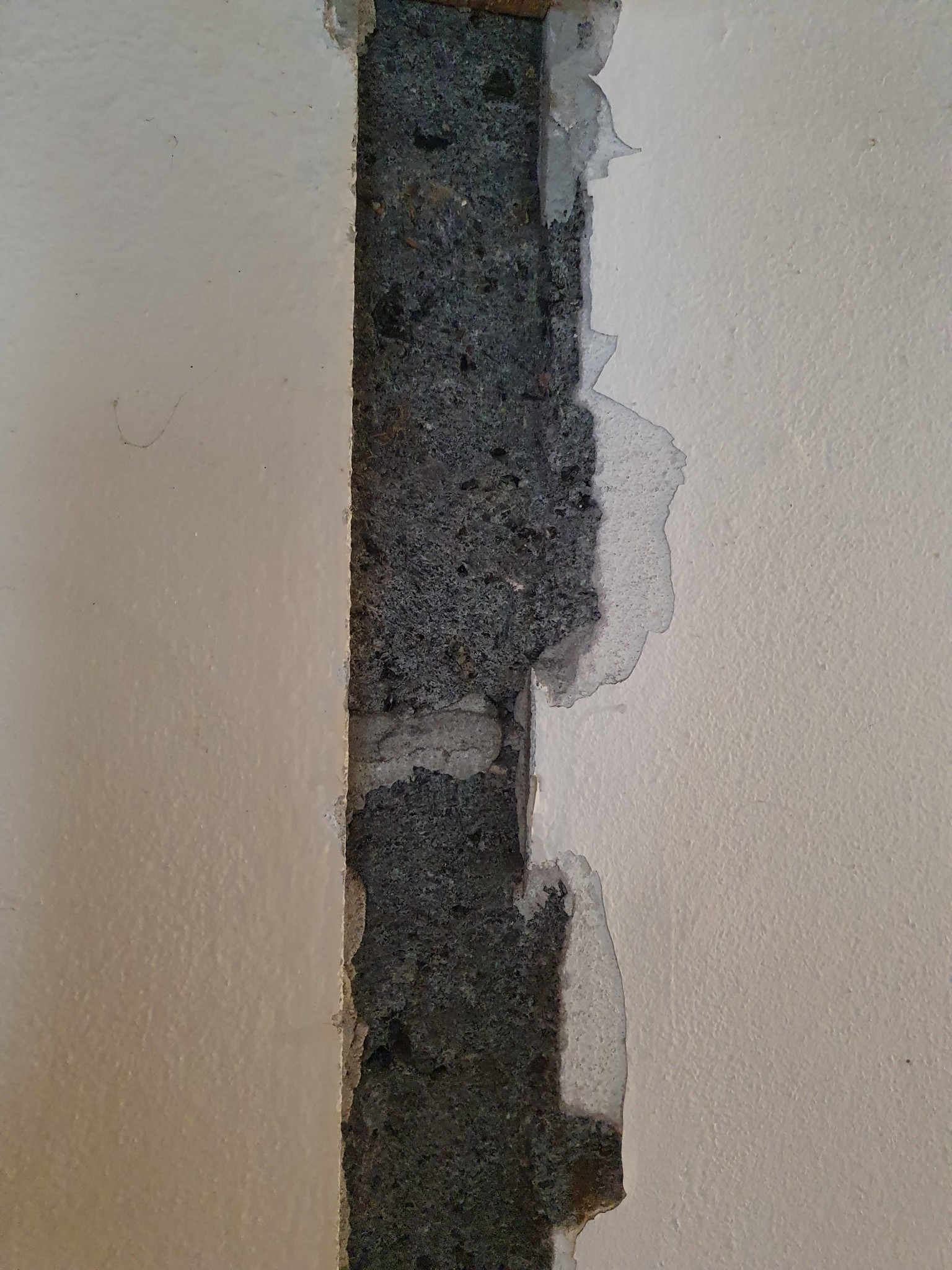
I tore down a wall in the basement and when I removed a door frame, the concrete shown in the picture was revealed. Is it blåbetong or something else dangerous? There is a sauna on the other side of the wall that is no longer used. The house is from 1928. I have no idea when the wall was built.
It's not blue concrete, it's slag blocks that were common in the 20-40s.
Sounds reasonable. It's porous and seems to have some mixed stones in it. However, the bluish color made me suspect blue concrete. Maybe I'll do a radon measurement just to be safe...
Sounds reasonable. It is porous and seems to have some mixed stones in it. However, the bluish color made me suspect blue concrete. Maybe I'll do a radon measurement just to be safe...
If you do a radon measurement and it shows radon, the radon will not come from the slag boards.
It is not blåbetong, it is slaggblock which were common in the 20-40s.
Hi, I wonder what are slaggplattor? We live in an apartment built in 1950/60 that has walls completely impossible to hammer a nail into. Always have to drill & plug, nothing else works. Black dust often comes out, and suddenly it can still be porous, making the hole bigger than intended, requiring building permission before plugging. So it's quite troublesome.
What material could it be? Is the black stuff risky to inhale when drilling?
Thanks in advance
Marie
Hello, I wonder what slaggplattor are? We live in an apartment built in 1950/60 that has walls that are completely impossible to hammer a nail into. Always have to drill & plug, nothing else works. Black dust often comes out, and then suddenly it can be porous anyway, and the hole gets bigger than intended, requiring a building permit before plugging. So it's quite troublesome.
What material could it be? Is the black dust risky to inhale while drilling?
Thanks in advance
Marie