
Hello!
I am currently in the process of a relatively extensive renovation of a house built in '52, 1.5 stories with a basement.
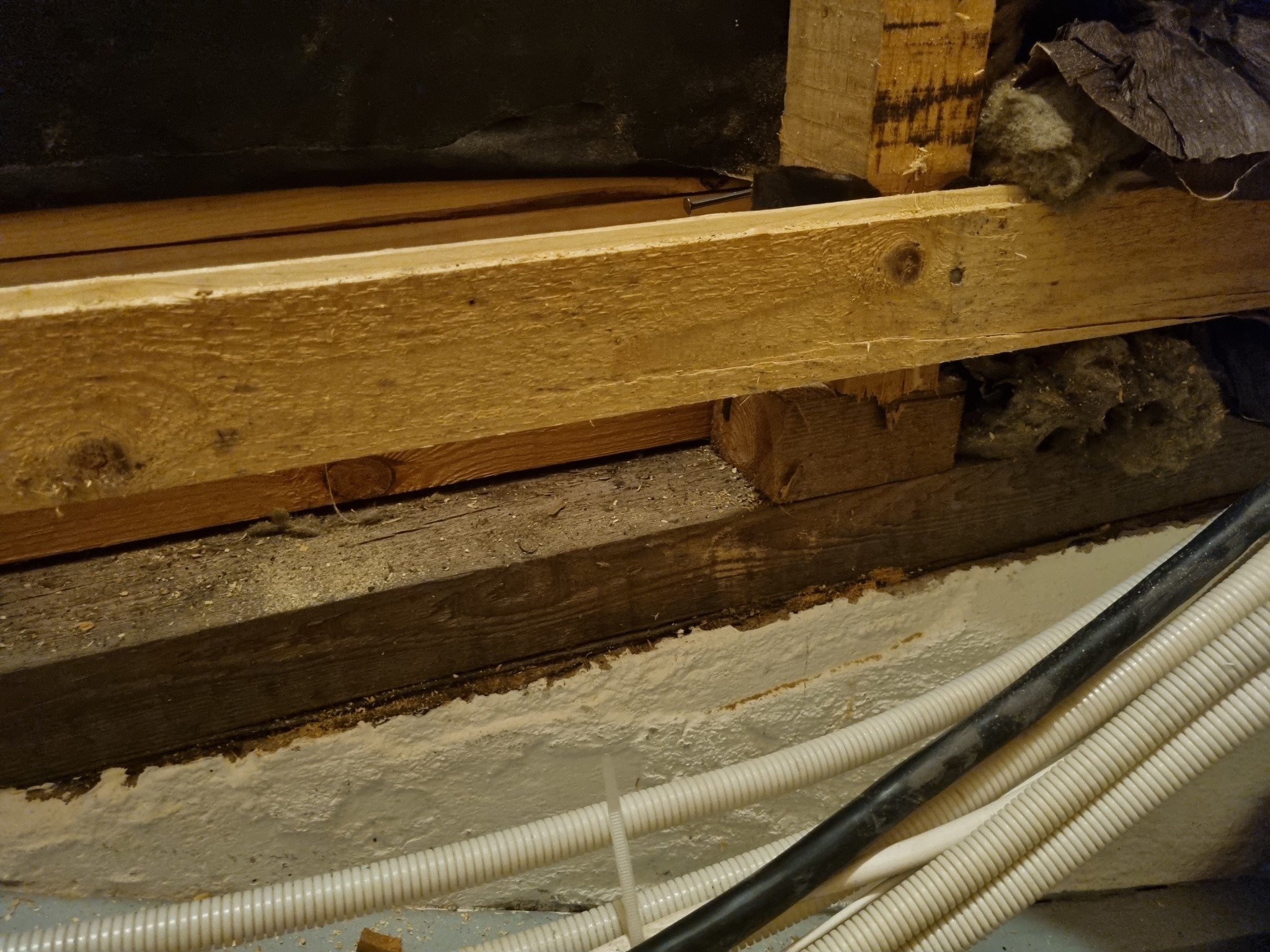
To install a distribution cabinet for underfloor heating, I have opened up the wall in the basement stairwell. We have often thought about a smell when we have gone up and down the basement stairs, and when I removed the masonite from the wall, I found a rotten panel board. This was directly against the masonry basement wall without any tar paper or anything else between the wood and the concrete, so I assume this is the cause of the rot.
Upon closer inspection, I see that the horizontal wooden beam (which I assume is the sill) is significantly grayer than the other beams. I am aware of the issues with treated sills in houses from the '70s, but did they use the same method in the '50s? There is paper between the sill and the concrete, but should I be concerned about this?
I am currently in the process of a relatively extensive renovation of a house built in '52, 1.5 stories with a basement.
To install a distribution cabinet for underfloor heating, I have opened up the wall in the basement stairwell. We have often thought about a smell when we have gone up and down the basement stairs, and when I removed the masonite from the wall, I found a rotten panel board. This was directly against the masonry basement wall without any tar paper or anything else between the wood and the concrete, so I assume this is the cause of the rot.
Upon closer inspection, I see that the horizontal wooden beam (which I assume is the sill) is significantly grayer than the other beams. I am aware of the issues with treated sills in houses from the '70s, but did they use the same method in the '50s? There is paper between the sill and the concrete, but should I be concerned about this?
Best answer
No, but some type of wood stain. Smell it! Probably some linseed oil/turpentine mixture.

Click here to reply