
32,186 views ·
34 replies
32k views
34 replies
Norrland wagon - a hellish renovation
Hello everyone!
I don't know if there's any interest in this, but perhaps it can provide some enjoyment or a good laugh to someone out there, and with a bit of luck, maybe I'll get some answers to questions that arise along the way.
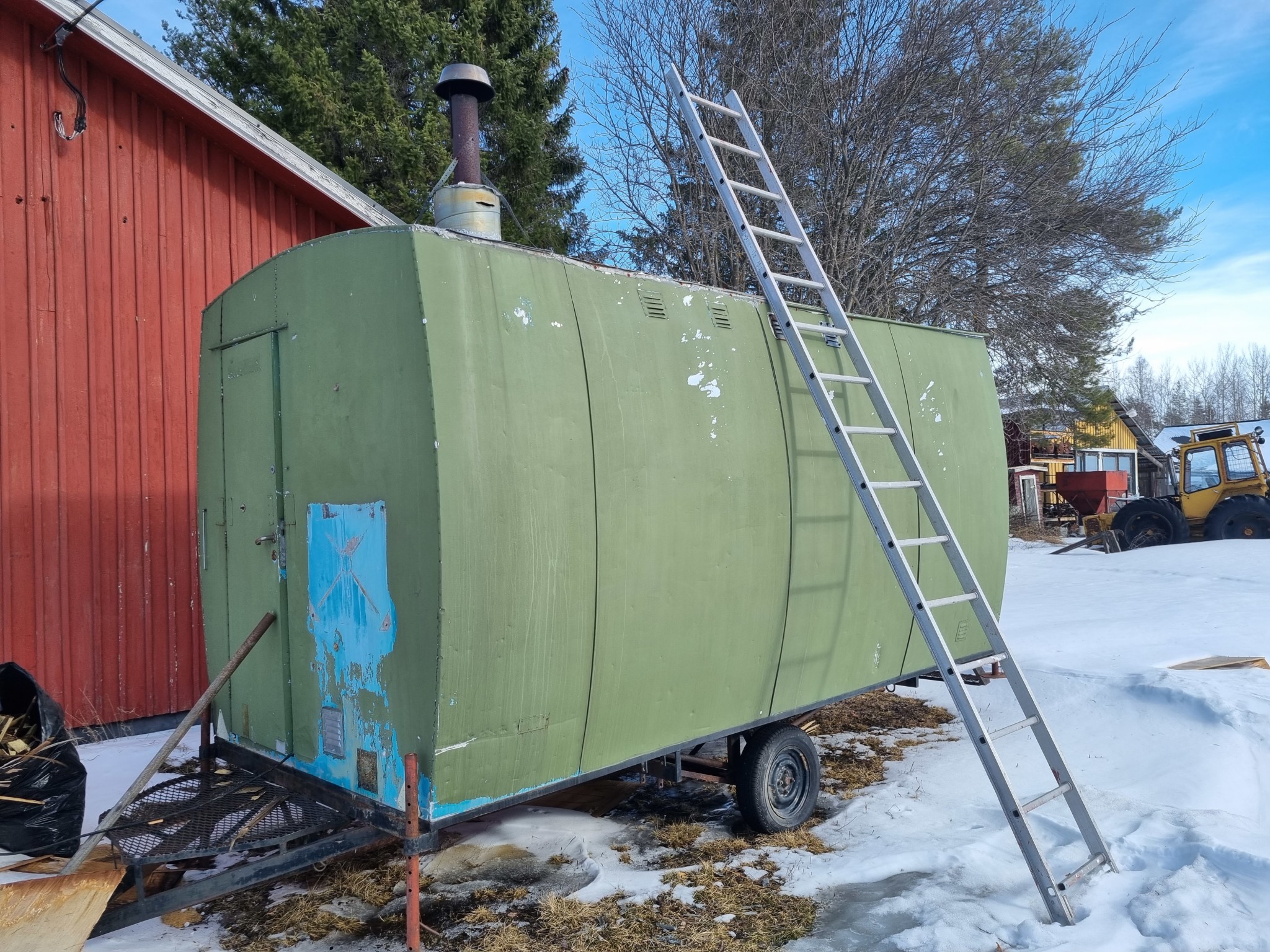
So, it's no better than this: I've developed a minor 30-year-old crisis, so last fall, I spontaneously bought an old Norrland trailer in the neighboring municipality. It was somewhat rundown, but it didn't smell bad and seemed to have a fairly limited moisture damage, so I went for it. A risk, absolutely, but trust me - it was CHEAP! (warning sign, I know, but want-need was stronger) and honestly, who wouldn't want to sit in the middle of the woods, stoking the stove in silence?
Anyway, I got it home and started tinkering with the contraption, and it didn't take long before I realized the extent of the moisture damage. This trailer has a wooden frame clad with a shell of aluminum sheets, which were riveted together in 1976. After years of rough handling by forestry workers and various more or less intoxicated hunters, the shell wasn't particularly tight anymore, and water had gotten in around the entire roof so that the wooden frame in the ceiling was just tinder, as were the supports in all the corners, so that it survived the transport home behind a tractor on 20 kilometers of gravel road was a bit of a miracle, even if the shell itself is load-bearing.
Since then, I have cut away the wall panels along the entire cabin at the floor and ceiling, as well as the corners (in other words, I have exposed the old wooden frame) and removed the rotten wood. In other words, all the wood has been removed. Moreover, the old wall that separated the "living area" and the mechanical room has been torn down to make a bit more space. To my great delight, most of the insulation seems salvageable, so over the past few days, I've started building a new frame with 45×95 timber that is screwed from the outside with self-drilling roof screws.
This finally brings us to my first 2 questions!
1. The walls are curved to create a bit more space, so what sheet material do you think is reasonable to use?
It should be "soft" enough to follow the curvature of the wall and durable for the temperature differences, etc., that arise in a trailer used sporadically, meaning it goes from warm to cold often; it shouldn't cost a fortune either.
2. When the construction's load-bearing capacity is as it should be, a TP 20 metal roof will be placed on top of the existing roof. I plan to have a 20 cm overhang all around to give the trailer a little extra protection from the weather. This is a measure I've taken from nowhere, so do you have any thoughts or suggestions that might be better?
I don't know if there's any interest in this, but perhaps it can provide some enjoyment or a good laugh to someone out there, and with a bit of luck, maybe I'll get some answers to questions that arise along the way.
So, it's no better than this: I've developed a minor 30-year-old crisis, so last fall, I spontaneously bought an old Norrland trailer in the neighboring municipality. It was somewhat rundown, but it didn't smell bad and seemed to have a fairly limited moisture damage, so I went for it. A risk, absolutely, but trust me - it was CHEAP! (warning sign, I know, but want-need was stronger) and honestly, who wouldn't want to sit in the middle of the woods, stoking the stove in silence?
Anyway, I got it home and started tinkering with the contraption, and it didn't take long before I realized the extent of the moisture damage. This trailer has a wooden frame clad with a shell of aluminum sheets, which were riveted together in 1976. After years of rough handling by forestry workers and various more or less intoxicated hunters, the shell wasn't particularly tight anymore, and water had gotten in around the entire roof so that the wooden frame in the ceiling was just tinder, as were the supports in all the corners, so that it survived the transport home behind a tractor on 20 kilometers of gravel road was a bit of a miracle, even if the shell itself is load-bearing.
Since then, I have cut away the wall panels along the entire cabin at the floor and ceiling, as well as the corners (in other words, I have exposed the old wooden frame) and removed the rotten wood. In other words, all the wood has been removed. Moreover, the old wall that separated the "living area" and the mechanical room has been torn down to make a bit more space. To my great delight, most of the insulation seems salvageable, so over the past few days, I've started building a new frame with 45×95 timber that is screwed from the outside with self-drilling roof screws.
This finally brings us to my first 2 questions!
1. The walls are curved to create a bit more space, so what sheet material do you think is reasonable to use?
It should be "soft" enough to follow the curvature of the wall and durable for the temperature differences, etc., that arise in a trailer used sporadically, meaning it goes from warm to cold often; it shouldn't cost a fortune either.
2. When the construction's load-bearing capacity is as it should be, a TP 20 metal roof will be placed on top of the existing roof. I plan to have a 20 cm overhang all around to give the trailer a little extra protection from the weather. This is a measure I've taken from nowhere, so do you have any thoughts or suggestions that might be better?


Best answer
Cool project, I've repaired a few old caravans and a little water damage is often more than just local. Thankfully with a wooden frame, it's easy to replace.
For the interior cladding, I would choose lauan plywood/mahogany plywood... the same as found in caravans. It is not "waterproof," but it also does not swell if it gets wet. And it looks nice oiled or stained.
https://www.bygghemma.se/hus-och-by...plywood-lauan-meranti-36-9-mm/p-164570-164572
For the interior cladding, I would choose lauan plywood/mahogany plywood... the same as found in caravans. It is not "waterproof," but it also does not swell if it gets wet. And it looks nice oiled or stained.
https://www.bygghemma.se/hus-och-by...plywood-lauan-meranti-36-9-mm/p-164570-164572
Yes, it's quite fun to tinker with, even if it became bigger than what was planned. Thanks for the tip! It will immediately be added to the list of things to check out.Mazen said:
Cool project, I've restored a few old caravans and a little water damage is often more than just local. Thankfully, with a wood frame, it's easy to replace.
As interior cladding, I would choose lauan plywood/mahogany plywood.. same as what is found in a caravan. It is not "waterproof", but it also doesn't swell if it gets wet. And it looks nice oiled, stained.
[link]
lovely project and description
for the wall I would try wall/ceiling panels from brands like baseco/norrlandsträ. should be possible to screw in curves with countersunk screws and plugs
but plywood as mentioned above is a smart solution
for the wall I would try wall/ceiling panels from brands like baseco/norrlandsträ. should be possible to screw in curves with countersunk screws and plugs
but plywood as mentioned above is a smart solution
Thanks for the tips! I'll take a look and see what thicknesses can be found. There are wooden studs in the wall where I thought the attachment combined glue and screwPeterFalun said:
Yes, if you can get hold of thinner panels like sauna or kaross, it should work laying down... nice! The advantage of the plywood is otherwise to cut it to size and staple it in place (for the seams, you can advantageously use a t-list)
Feels spontaneously like plywood is more durable but a panel gives a different feel in some way, I'll have to think about this.


I know two people who converted a slightly smaller version that the old Televerket used into a mobile sauna.J Jolofssson said:
They weren't allowed to build a beachfront building on their own land because of complaining neighbors.
But rolling down a temporary mobile sauna on wheels was approved by the county administrative board.
Neighbors complained so much that it had to be moved a couple of times over the season, but it works and is still in place.
I have an old caravan I plan to convert, a ramp at the back so you can drive in the snowmobile, then a "fully" equipped caravan when the snowmobile is out. Perfect for, for example, Easter when you want to get away but don't have accommodation. Unfortunately, it keeps slipping further and further down the to-do list.
such ready-made ones were sold for a while and were popular among motocross ridersnino said:
I have an old camper trailer I plan to convert, ramp at the back so you can drive in the snowmobile, then a "fully" equipped camper when the snowmobile is out. Perfect for, for example, Easter when you want to get away but don't have accommodation. Unfortunately, it keeps slipping further and further down the to-do list