
5,030 views ·
20 replies
5k views
20 replies
Load-bearing walls on the upper floor
In our house built in the 1800s, an additional upper floor was constructed in 1900. There was previously an attic crawlspace (we think only on one side) that was removed at some point long ago by previous owners. We are now wondering if that wall was load-bearing? Should it be restored? The rafters have been reinforced recently in conjunction with changing the interior walls and ceiling.
Additionally, we removed a wall about 1 m on the ground floor that was between the chimney and the exterior wall. That wall was made of upright boards and tretex. Is there any risk with having removed that wall?
Additionally, we removed a wall about 1 m on the ground floor that was between the chimney and the exterior wall. That wall was made of upright boards and tretex. Is there any risk with having removed that wall?

Difficult to assess without more info. One cannot assume that the superstructure is done in a certain way. One needs to understand how the roof structure is constructed. Additionally, information about the building's main dimensions and snow load zone (=where the house is located) is needed. Pictures might as well replace drawings. An exterior image can explain a lot.
I understand it was a difficult question to answer with such insufficient information. Here are a couple of pictures of the house's exterior. Note that one gable (picture 2) has a hipped roof. The two interior pictures were taken during the renovation of the upper floor due to pest invasion.J justusandersson said:Difficult to assess without more info. You cannot assume that the extension is built in a certain way. You need to understand how the roof structure is constructed. In addition, information about the building's main dimensions and snow zone (=where the house is located) is needed. Pictures can replace drawings. An exterior picture can explain a lot.
J justusandersson said:Difficult to assess without more info. You cannot assume that the extension is built in a certain way. You need to understand how the roof structure is constructed. In addition, information about the building's main dimensions and snow zone (=where the house is located) is needed. Pictures can replace drawings. An exterior picture can explain a lot.
J justusandersson said:Difficult to assess without more info. You cannot assume that the extension is built in a certain way. You need to understand how the roof structure is constructed. In addition, information about the building's main dimensions and snow zone (=where the house is located) is needed. Pictures can replace drawings. An exterior picture can explain a lot.
J justusandersson said:Difficult to assess without more info. You cannot assume that the extension is built in a certain way. You need to understand how the roof structure is constructed. In addition, information about the building's main dimensions and snow zone (=where the house is located) is needed. Pictures can replace drawings. An exterior picture can explain a lot.
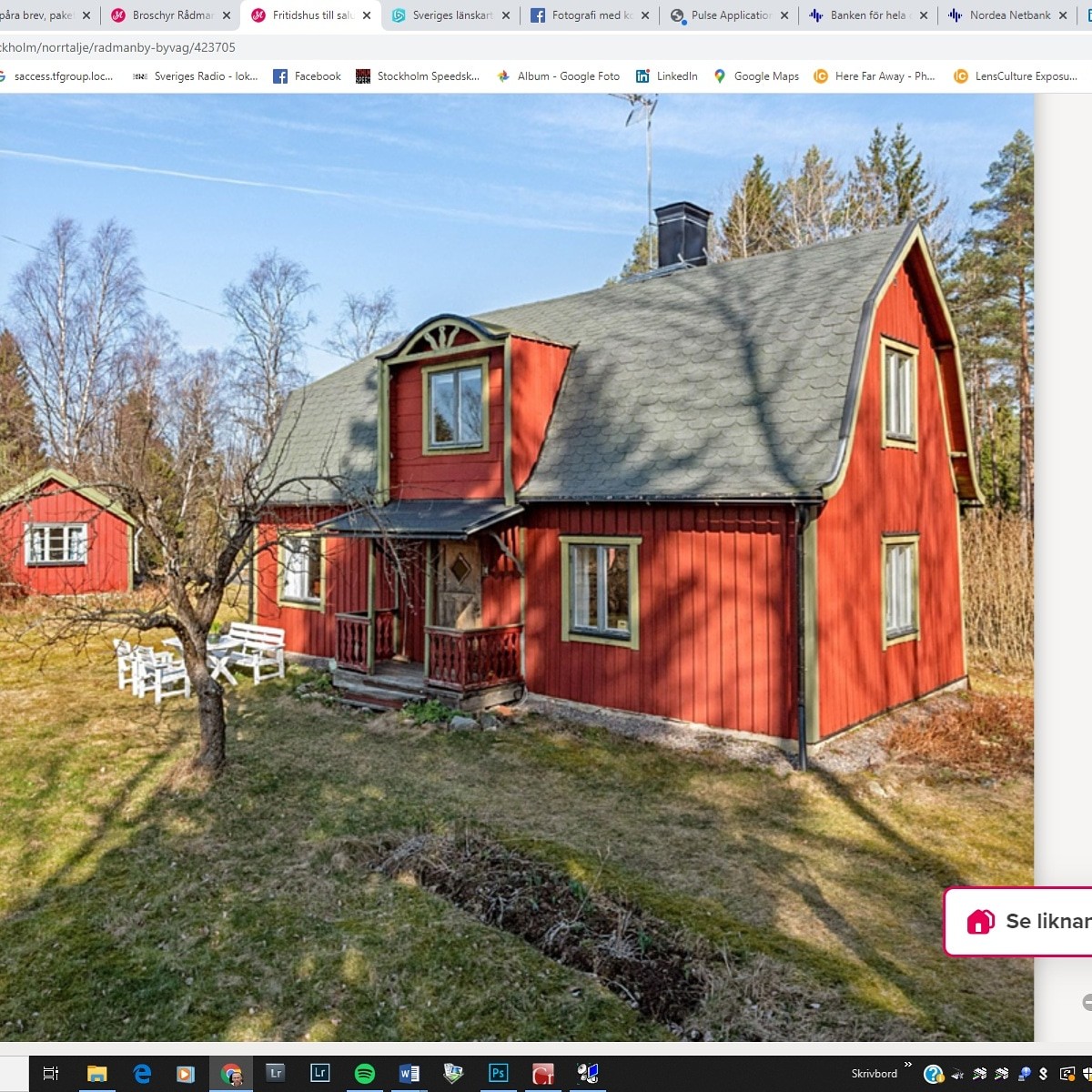
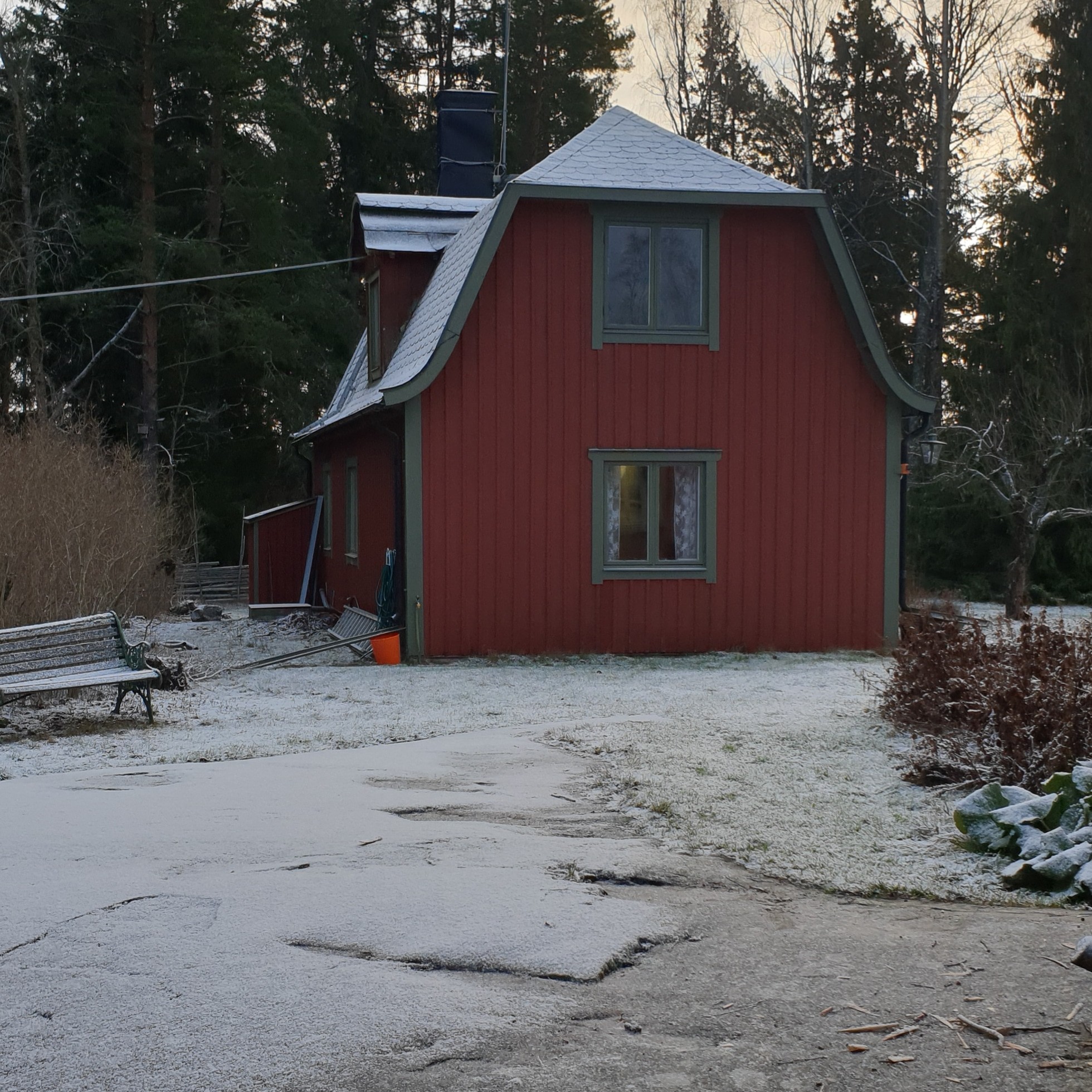
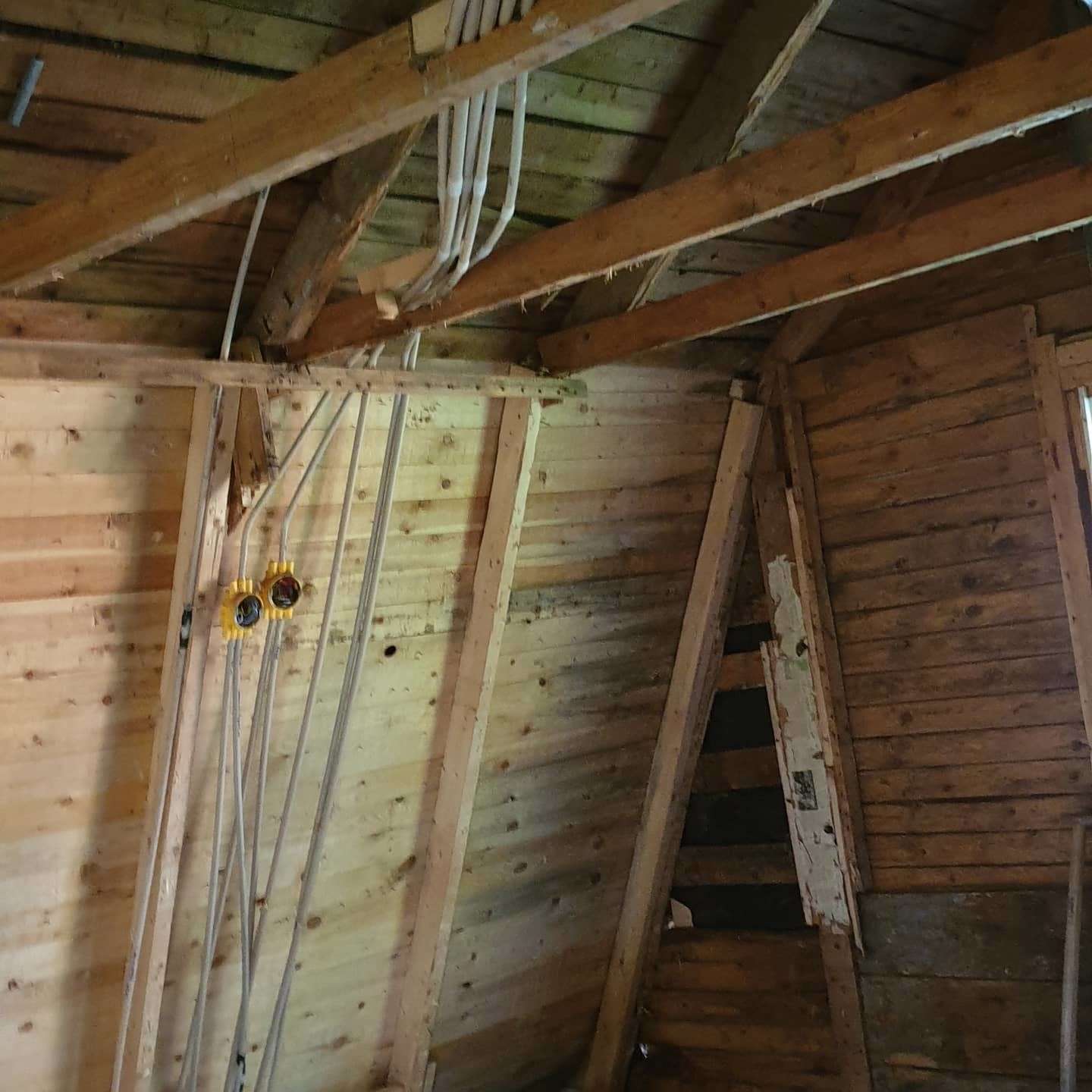
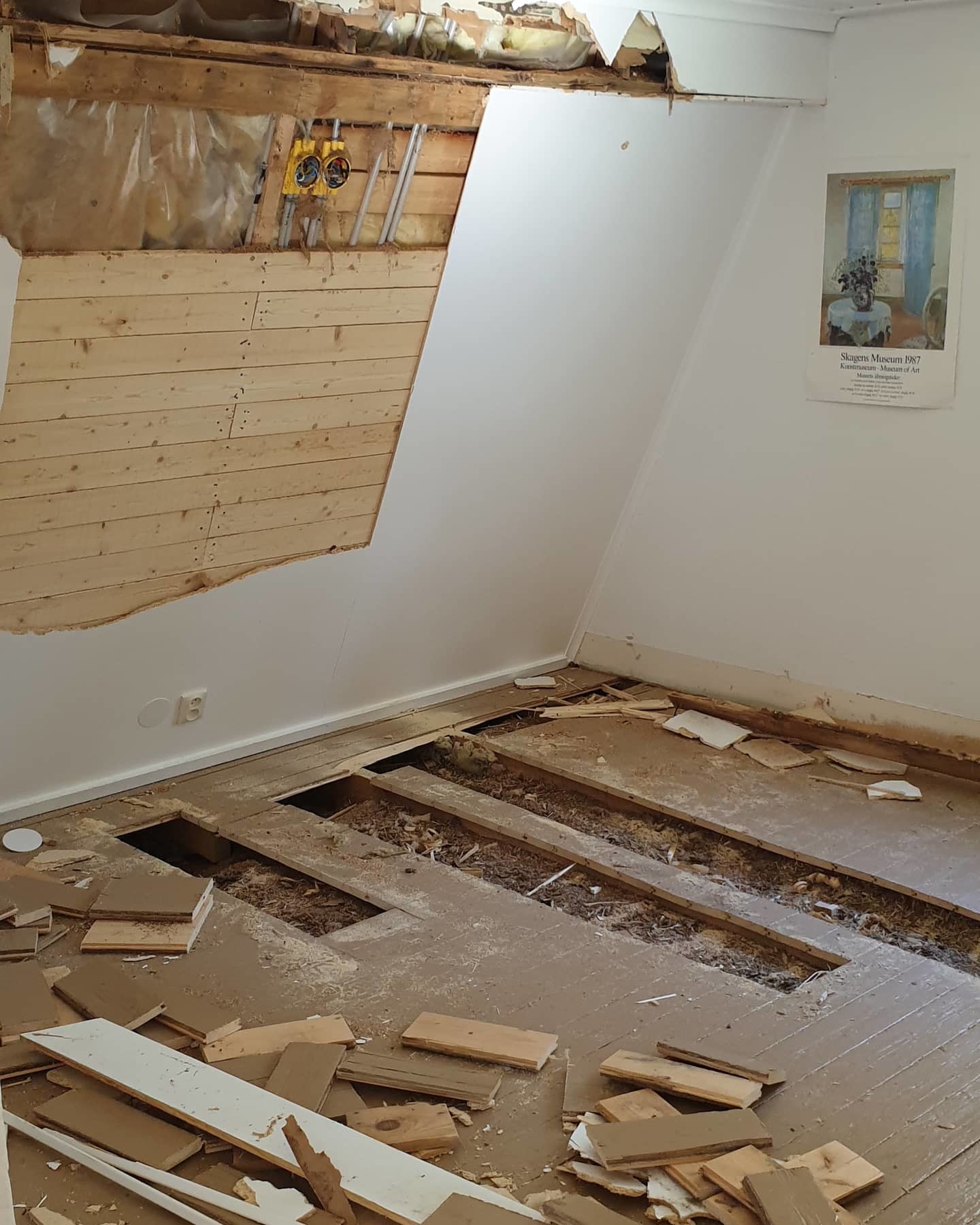
Yes, it doesn't look good. The house has a broken roof where the upper part of the roof truss should rest on vertical posts on both sides, which now seem to be removed. These posts must be replaced either with new posts or with a longitudinal beam. Furthermore, I get a bit upset when I see how the "electrician" has cut off large parts of some tie beams. These need to be replaced. They don't have to be made of wood; steel rods will also work. It is a beautiful house that is well worth preserving. I wonder why the roof is only hipped on one side?
J justusandersson said:Yes, it doesn't look very good. The house has a broken roof where the upper part of the rafter is supposed to rest on vertical posts on both sides, which now seem to be removed. These posts must be replaced either with new posts or with a longitudinal beam. Additionally, I get a bit upset when I see how the "electrician" has cut off large parts of some ceiling joists. These must be replaced. They don't have to be made of wood; steel rods are fine too. It's a beautiful house that is well worth preserving. Wonder why the roof is only hipped on one side?
The vertical posts you're referring to have never existed, at least not since the last (i.e., before our) renovation possibly in the 50s. When the damage was addressed, the rafters were somewhat reinforced, as you can see in the attached film. However, the construction company has done an equally poor job (holes in the beams for electrical wires) as earlier. Unfortunately, I can't see if they've placed any reinforcing beam horizontally. It would be hidden behind plywood if so. According to the construction company, it was a poorly built house, which is why we asked them to reinforce the rafters when they restored it due to pests (martens). But it didn't get much better. What can be done about this now? Put up vertical posts?J justusandersson said:Yes, it doesn't look very good. The house has a broken roof where the upper part of the rafter is supposed to rest on vertical posts on both sides, which now seem to be removed. These posts must be replaced either with new posts or with a longitudinal beam. Additionally, I get a bit upset when I see how the "electrician" has cut off large parts of some ceiling joists. These must be replaced. They don't have to be made of wood; steel rods are fine too. It's a beautiful house that is well worth preserving. Wonder why the roof is only hipped on one side?
Evakarin54 said:
The vertical posts you are asking for have never existed, at least not since the last (i.e. before ours) renovation possibly in the 50s. When the damages were repaired, the roof trusses were somewhat reinforced. As you can see in the attached film. However, the construction company did a similarly poor job (holes in the beams for electrical wires) as before. Unfortunately, I cannot see if they have placed any reinforcing beam horizontally. It is, in that case, obscured behind plywood. According to the construction company, it was a poorly built house, therefore we asked them to reinforce the roof trusses when they restored it due to pests (martens). But it didn't get much better. What can be done about this now? Put up vertical posts?
The vertical posts you are asking for have never existed, at least not since the last (i.e. before ours) renovation possibly in the 50s. When the damages were repaired, the roof trusses were somewhat reinforced. As you can see in the attached film. However, the construction company did a similarly poor job (holes in the beams for electrical wires) as before. Unfortunately, I cannot see if they have placed any reinforcing beam horizontally. It is, in that case, obscured behind plywood. According to the construction company, it was a poorly built house, therefore we asked them to reinforce the roof trusses when they restored it due to pests (martens). But it didn't get much better. What can be done about this now? Put up vertical posts?
The vertical posts you are asking for have never existed, at least not since the last (i.e. before ours) renovation possibly in the 50s. When the damages were repaired, the roof trusses were somewhat reinforced. As you can see in the attached film. However, the construction company did a similarly poor job (holes in the beams for electrical wires) as before. Unfortunately, I cannot see if they have placed any reinforcing beam horizontally. It is, in that case, obscured behind plywood. According to the construction company, it was a poorly built house, therefore we asked them to reinforce the roof trusses when they restored it due to pests (martens). But it didn't get much better. What can be done about this now? Put up vertical posts?
I’m almost 100 sure that there have been posts. They were better at building houses in 1900 than today. It can't look like it does. It won't hold in the long run. The third picture clearly shows how poorly the new roof rafters support the old ones. You must at least put in a horizontal beam that can handle the load from the trusses. Don’t hire the same company. They know nothing about building construction.
Unfortunately, the ceiling has already been laid. The pictures were taken a year ago. Difficult to tear it up now. But what if you build walls (kattvindsvägg) or posts? Yes, we were dissatisfied with the construction company, but they were hired by the insurance company.J justusandersson said:I am almost 100% sure that there have been posts. They were better at building houses in 1900 than today. It can't look the way it does. It won't hold in the long term. The third picture clearly shows how poorly the new rafters support the old ones. You must at least put in a horizontal beam that can handle the load from the roof trusses. Do not hire the same company. They know nothing about construction.
Moreover, I wonder if a load-bearing wall is needed on the lower floor. We removed it to strengthen the outer log wall on the lower floor. Is it necessary? Picture 1.
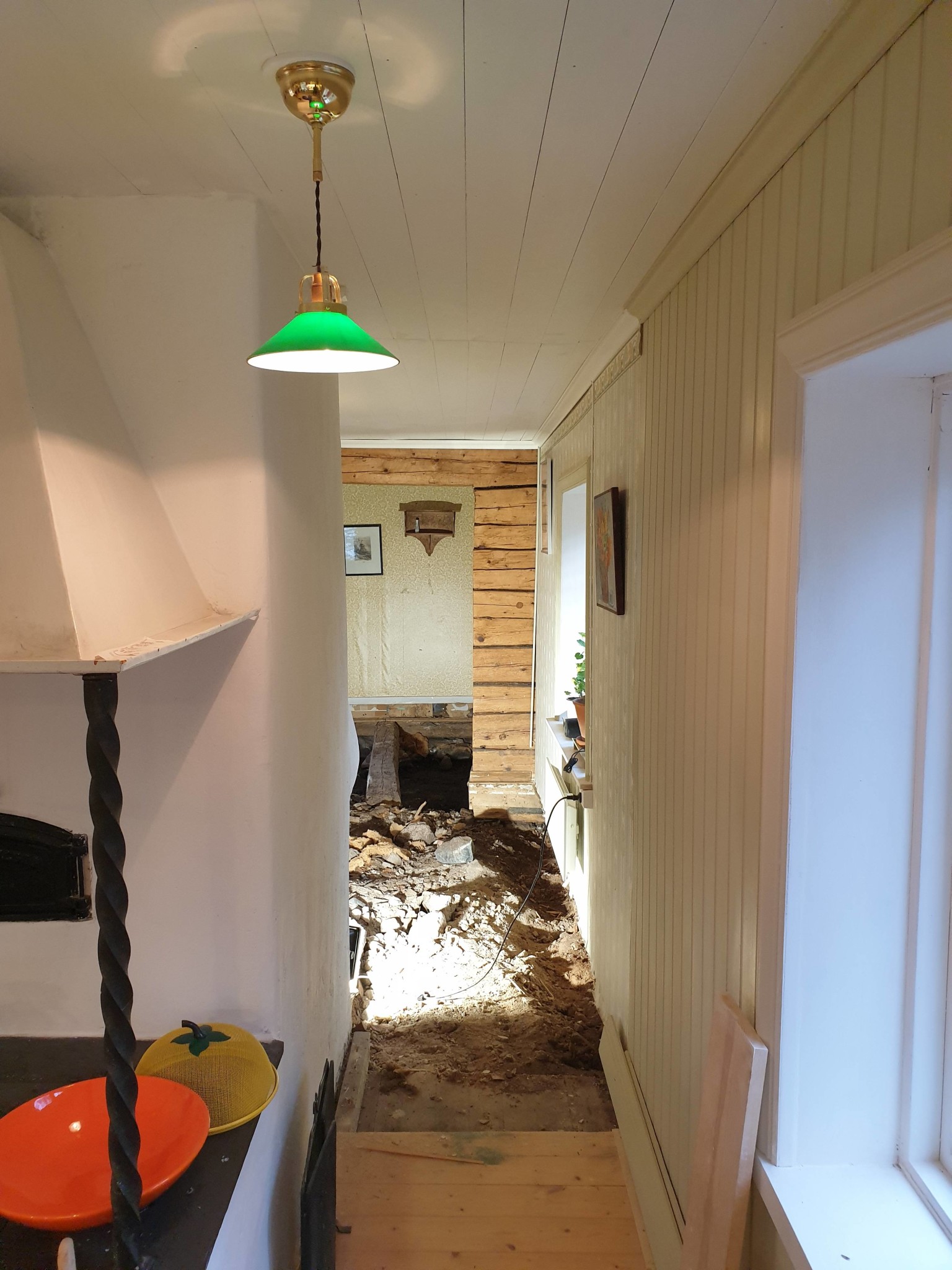
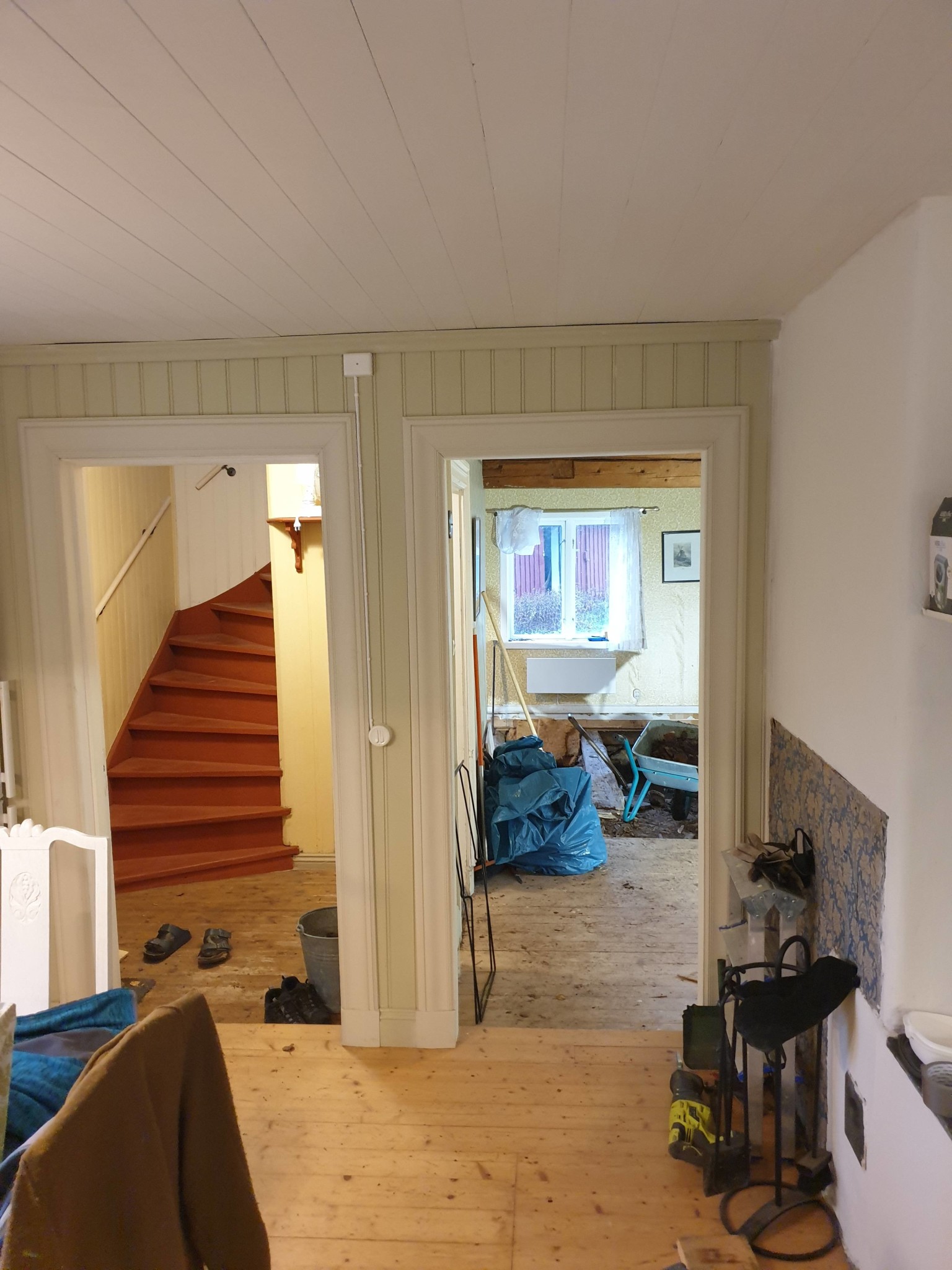
Which window is visible in the last image? Where is the house located = snow zone?
Best answer
In a log frame, all walls are more or less load-bearing or important for stability. Therefore, one should avoid removing log walls. I'm not sure that there have been walls that are load-bearing in the sense that they take up loads from overlying floors. The house is quite narrow. If there are such walls, they run parallel to the ridge. From what I can assess from the pictures, the house's load-bearing frame needs to be reviewed. However, it is difficult to give correct advice remotely. I think you must bring in an experienced structural engineer, not a carpenter, to see the house and also your pictures from the renovation. As it stands, it seems that the ceiling panel is holding up parts of the roof. It is incomprehensible that the insurance company could bring in such an obviously incompetent firm. I think you must point this out.
Thank you very much for your opinions. We think the roof has held for at least 50 years, it's not that heavy since it now has shingles on it. Originally, it was metal. See photo from 1910.J justusandersson said:In a log structure, all walls are more or less load-bearing or have significance for stability. Therefore, one should avoid taking down log walls. I'm not sure if there have been walls that are load-bearing in the sense that they take loads from the floor above. The house is quite narrow. If there are such walls, they run parallel to the ridge. From what I can assess from the pictures, the house's load-bearing structure needs to be reviewed. However, it's difficult to give the right advice remotely. I think you need to bring in an experienced structural engineer, not a carpenter, who can see the house but also your photos from the renovation. As it stands, it seems the roof panel is holding up parts of the roof. It's incomprehensible that the insurance company can bring in such an obviously incompetent firm. I think you need to point that out.
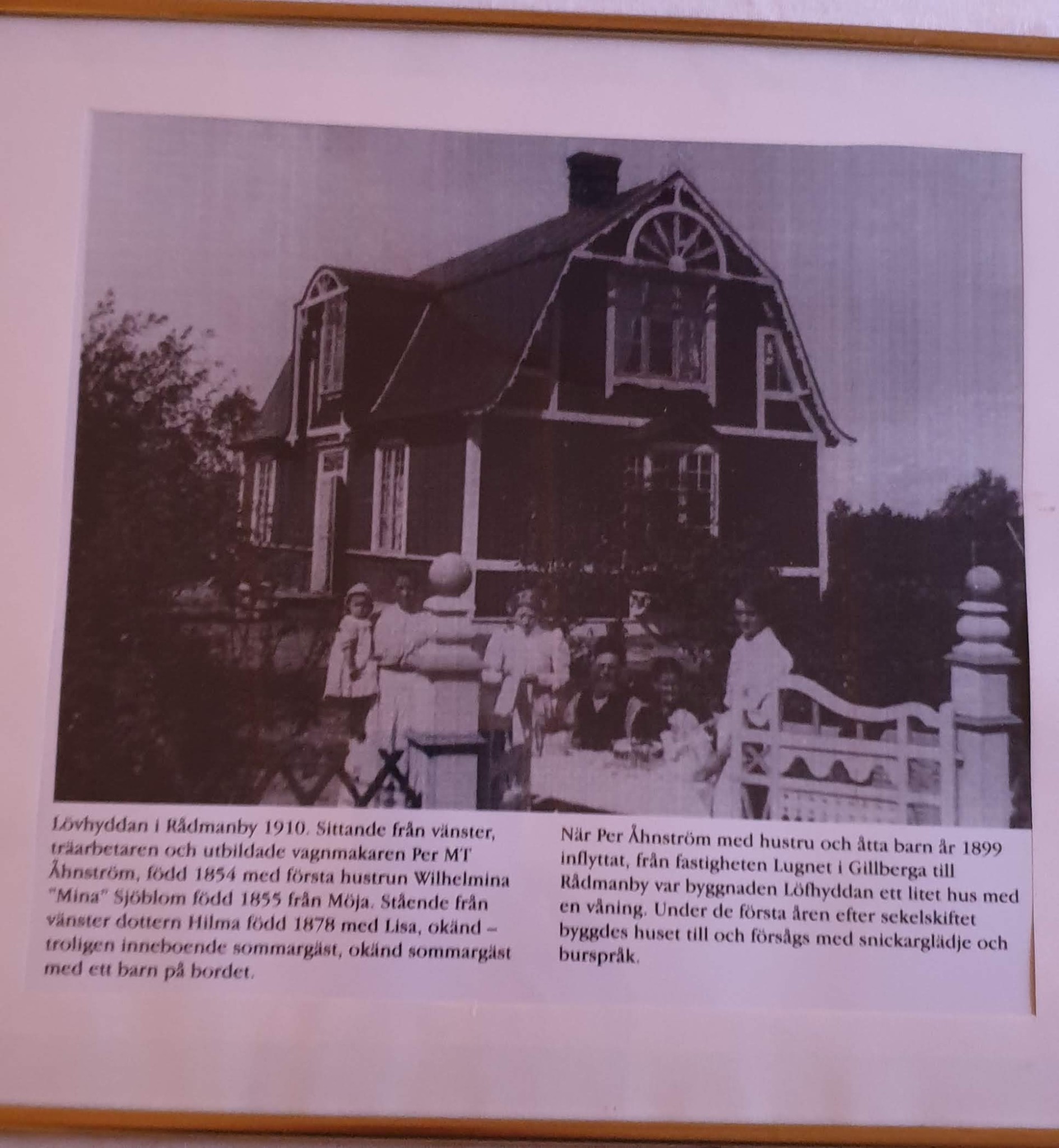
It is a very good construction type, the broken roof, as only the middle part needs to support the snow. But snow must be seen in a 50-year perspective. Several of the weaknesses have arisen recently. If something happens, it will have extensive consequences. I suggest that you bring in a competent person to assess how urgent it is.