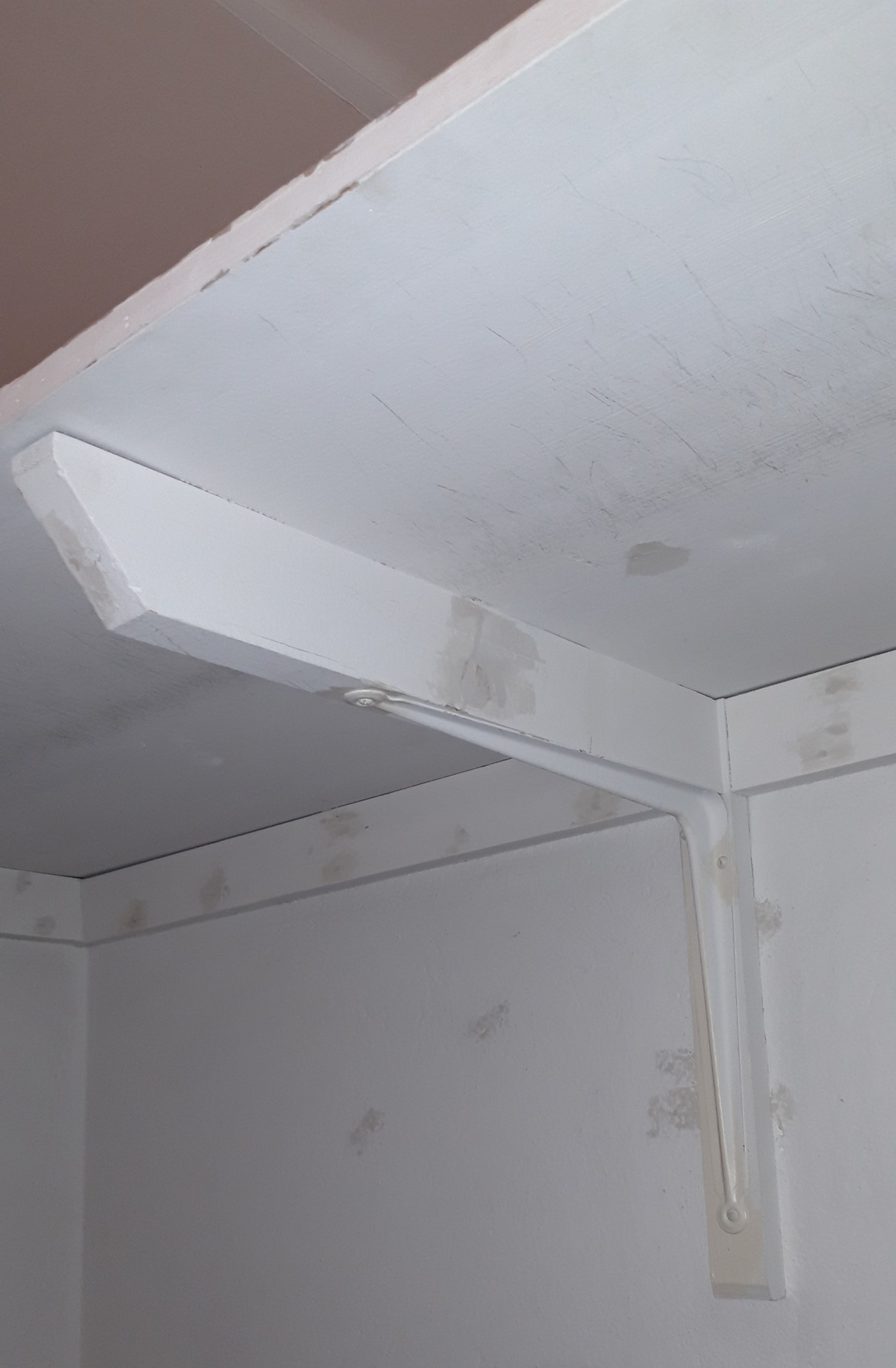
Hi! I removed two built-in wardrobes that a 2.70 m long shelf partially rested on and plan to replace them with brackets. One part where the wardrobe wasn't has wooden backing with a metal shelf bracket on it (see picture to understand my poor explanation), and I thought to do the same again for consistency. The shelf is about 60 cm deep and needs to support quite a bit (boxes with clothes, binders, etc.). The wall is brick with a lot of plaster, house from the 40s. I plan to drill with a hammer drill, but wonder which plug and screw are best? I figured the screw needs to be about 7 cm long. At Bauhaus, they advised a mega screw with a hex head, but I would prefer a countersunk head, thinking it looks best(?).
So, can anyone suggest the exact plug+screw, brand, preferably a link, etc., not just "universal plug" or so. I find it a jungle and too much to choose from! Grateful for help.
If it's brick, you don't need a percussion drill. The hole will just crumble. The best option is probably plug and screw of the "spikplugg" type. That is, long ones, maybe a decimeter. Then you get into the wall, and it provides good support, and the character of the hole isn't as crucial.
If it's brick, you can use regular plugs, but keep in mind that the plug should be in the brick, not the rendering. And the screw should go through the plug.
A hammer drill works excellently in brick, it doesn't break anything like a rotary hammer.
okay, maybe I was unclear, but what I meant was that the best thing really is a regular drill with regular bits. It wears a bit on the bit but you don't need anything that strikes at all in brick, and with a regular metal bit the holes are better.
I have always lived in old houses/apartments with brick+plaster+various surprises almost every time you drill. The secret to success is definitely long plugs. I’ve personally become fond of these because you can get a 70mm long plug without having to make a monster hole. You can use any 5mm screw you like, just ensure it reaches just a little longer than the plug (so the screw is about 75mm plus the thickness of what you’re mounting). https://www.hornbach.se/shop/TOX-Expansionsplugg-Bizeps-6-70-50-styck/8229584/artikel-detaljer.html
When it comes to drilling in brick+plaster, you almost have to start with a narrower drill bit and then move up to what you need. I always use a hammer drill, but it might work without. Personally, I just feel that the hammer drill handles it better when you hit a stone or brick edge instead of sliding to the side.
Have often chosen to use a wood/metal drill instead of concrete when working with lightweight concrete and brick to get a neater hole, as it easily becomes too large with the concrete drill. Also drill without hammer action.
PPettttter said:
When it comes to drilling in brick+plaster, you almost have to start with a narrower drill and then move up to what you need. I always use a hammer drill but maybe it works without. Personally, I just think the hammer drill handles better when you hit a stone or the edge of a brick instead of sliding to the side.
+1 on that. If it's very crumbly, then drilling one size smaller than the plug usually gives an adequately sized hole.
A real concrete drill bit with hardened soets must be better than a metal drill bit?
One might think so, but the holes turn out better with a regular metal drill bit. Brick is so porous that it drills well anyway. They do wear out, though. That's the downside with hammer drilling and porous materials. If the drill is 8mm, the hole is typically 9mm before you're finished just because it crumbles apart. A metal drill bit only removes material with the edges, so to speak, making the hole more precise.
I've always lived in old houses/apartments with brick+plaster+various surprises almost every time you drill. The secret to success is definitely loooong plugs. I've personally taken a liking to these because you can get a 70mm long plug without needing to make a monster hole. With it, you can use any 5mm screw you want, just make sure it reaches just a bit further than the plug (so about 75mm screw plus the thickness of what you're attaching).
[link]
When it comes to drilling in brick+plaster, you almost have to start with a narrower drill bit and then size up to what you need. I always use a hammer drill but it might work without it. Personally, I just find that the hammer drill handles better when you hit a stone or brick edge instead of sliding to the side.
Smart! I've always been annoyed that the plugs have been too short for plastered walls.
Thanks for all the answers! I've still decided on a hammer drill; I've heard from many that it works best. I've borrowed a Dewalt, so it will do. As someone mentioned, you can at least turn off the hammer function. So a twist bit with a hardened edge intended for concrete works? Do you need to put any glue or something in the plug hole?
Living in a house from 1903 with render and bricks in the wall...now wanting to change the curtain rod...Have drilled with a hammer drill but it doesn't go in very far, maybe 4 cm, so the plug won't fit...can you put cement in the hole to make it steady?
Vi vill skicka notiser för ämnen du bevakar och händelser som berör dig.