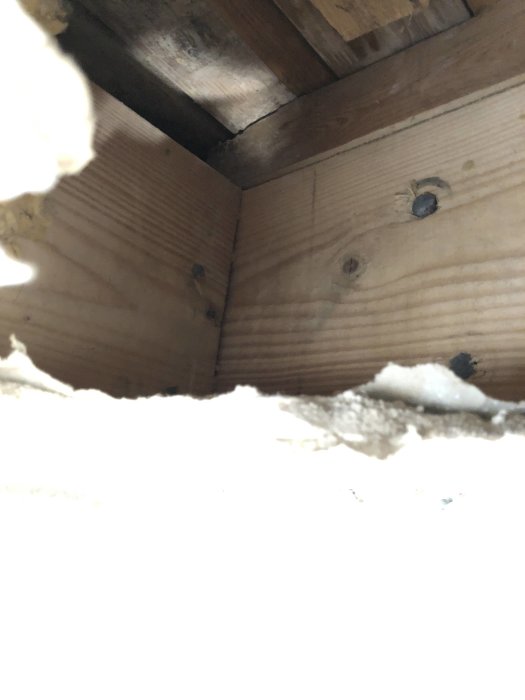
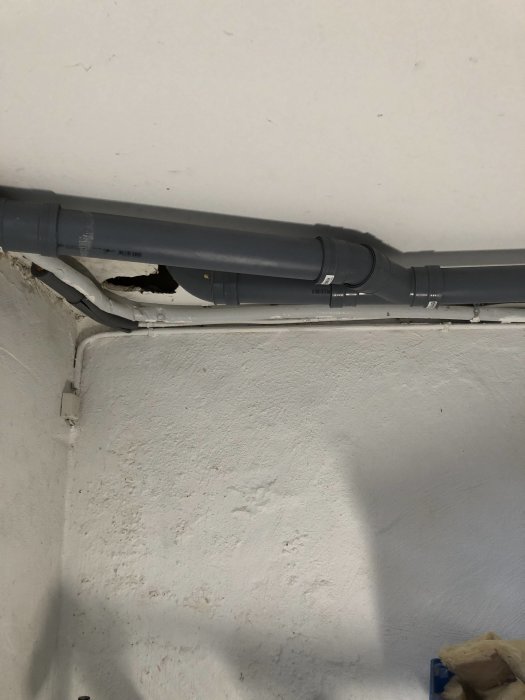
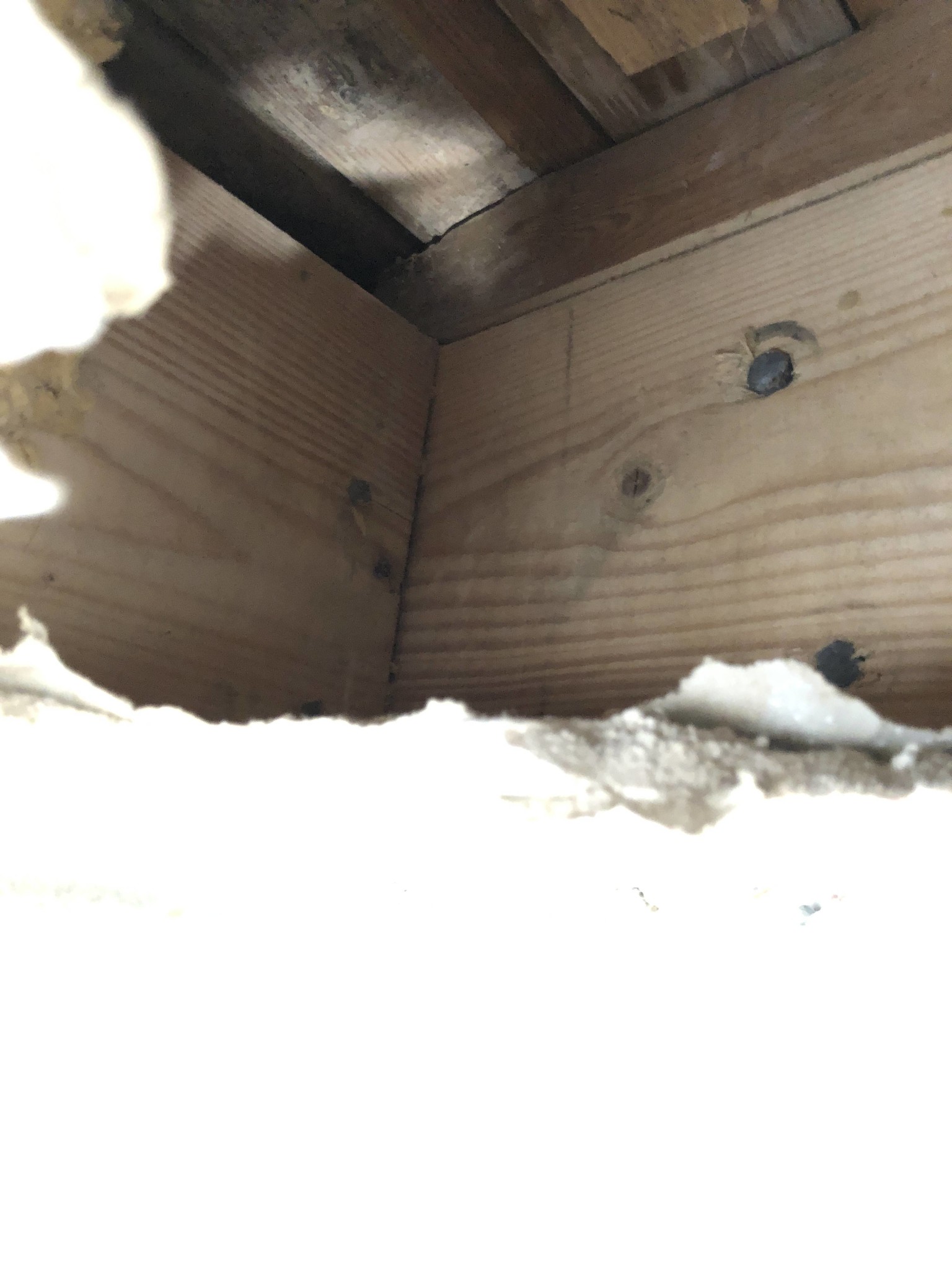
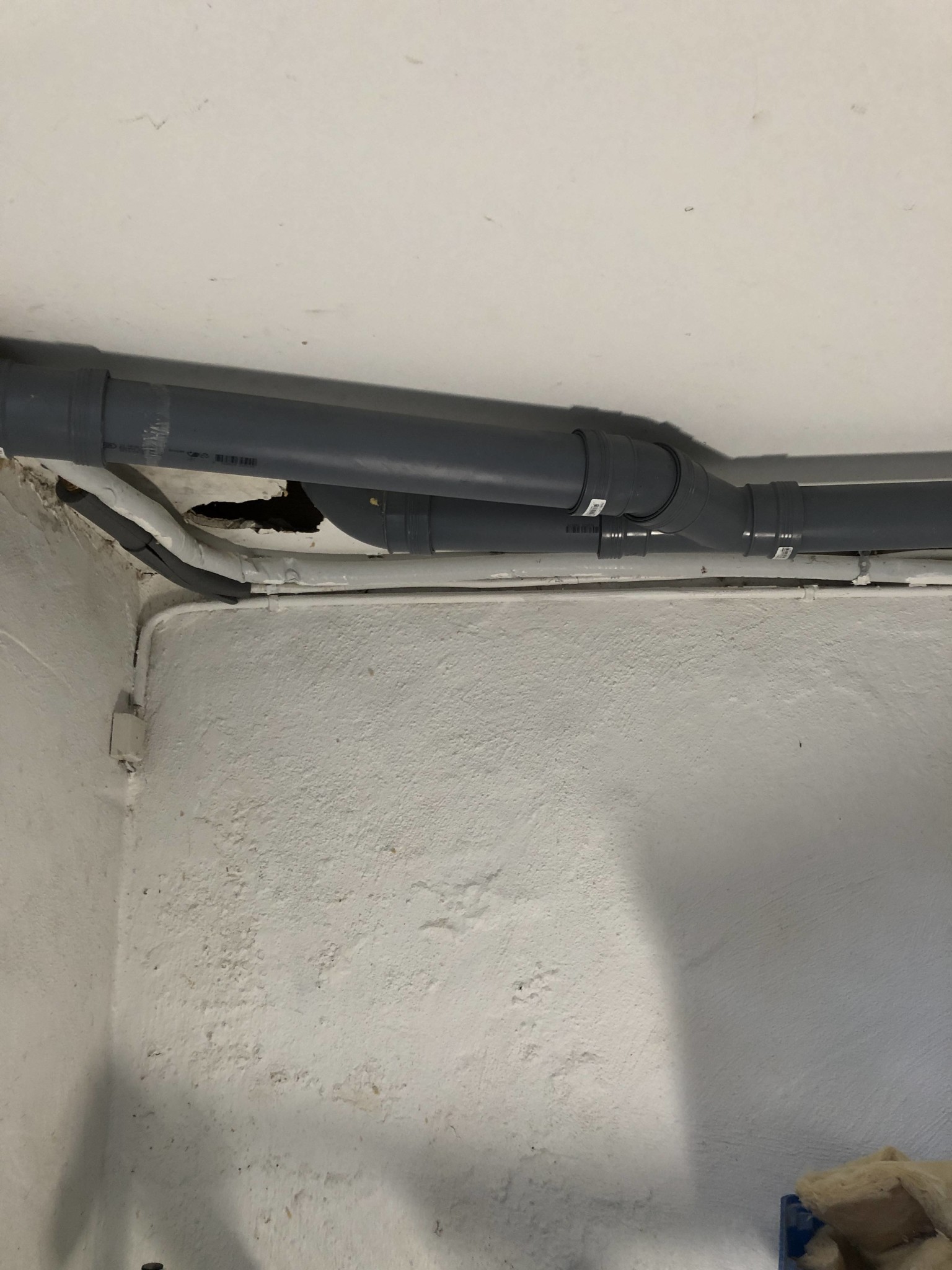
We live in an old house with a basement where the basement is cast concrete and the floor structure above is wooden. Since a previous bathroom renovation (yes, the bathroom is above the basement space), the floor structure is visible in a corner from below. Here you can see that the outermost floor joist in the floor structure above is screwed directly into the wall. It seems like the floor structure was built with a frame along the wall. Although this is above ground, the drainage and house are old. I can't see that there is any air gap or capillary-breaking layer between the joist and the wall. If there is an air gap, it's only 1-2 mm and clogged with sand/concrete that has fallen from the wall over time.
The bathroom has electric underfloor heating (turned off during summer) and loose fiberglass insulation under the floor. Everything is sealed by two dense plasterboards against the walls.
My concern is, of course, that the joists in the floor structure are enclosed directly against the wall, and any moisture through the outer wall has nowhere to go if there are any significant amounts. There is a concrete stair extension outside another corner against the outer wall, and right here, there is no drainage or ventilation of the outer wall at all.
I would like to keep an eye on if water/moisture should find its way in, and the question is what I can do. Should I cut out 10-20 cm of the ceiling (the plasterboard) along the outer wall so that the outermost joist can be ventilated and inspected? Then, some insulation just there will be lost. Is there any risk with this considering the underfloor heating? The inspection space is dehumidified by a substantial dehumidifier 24/7, but it won't make any difference if moisture gets trapped in the insulation at the joist. However, if you open it, you lose some underfloor heating but can let the air circulate a bit by the joist.
We live in an old house with a basement where the basement is poured and the joists above are wooden. Since a previous bathroom renovation (yes, the bathroom is over the basement space), the joists are visible in a corner from below. Here you can see that the outermost floor joist is screwed directly into the wall. It seems that the joist was built with a frame around along the wall. This is admittedly above ground, but the drainage and house are old. I can't see that there is any air gap or capillary-breaking layer between the joist and the wall. If there is an air gap, it is only 1-2 mm and clogged with sand/concrete falling from the wall over time.
The bathroom has electric underfloor heating (turned off in summer) and loose fiberglass insulation under the floor. Everything is sealed with two - against the walls - tight drywall sheets.
My concern is, of course, that the beams in the joists are trapped directly against the wall and any moisture through the outer wall has nowhere to go if there is any amount. There is a concrete stairwell outside another corner against the outer wall, and here there is no drainage or ventilation of the outer wall at all.
I would like to be able to monitor if water/moisture would find its way in and the question is what I can do. Should I cut out 10-20 cm of the ceiling (the drywall) along the outer wall so that the outermost joist can be aired and inspected? Then a little of the insulation just there will be lost. Is there any risk with this considering the underfloor heating? The crawl space is dehumidified by a powerful dehumidifier around the clock, but it won't make any difference if moisture gets caught in the insulation at the joist. On the other hand, if you open it, you'll lose some underfloor heating but can let the air circulate a bit at the joist.
[image] [image]
What do you think?
Is it a concrete wall or a wooden wall that the floor joist is screwed/nailed into?
It is a concrete wall, as the title says. That's the whole core of the question, that the batten is against the concrete wall.
I might have been unclear in the description but at least I included it in the title.
Sorry, I thought I read it, but missed that it was in the title!
In the picture, it looks like it is nailed, is that side against concrete? How long ago was this done?
I would probably have done more or less as you write, and then waited a few years and kept it under observation. In your case, maybe you can put up a batten/divider 10 cm from the batten against the wall, and leave the small compartment without insulation. It would consume a bit more energy when using underfloor heating then, of course, but it should still be quite okay. If the bathroom was done long ago and it doesn't feel damp or smell strange now, then that seems promising at least.
I cut 30 cm along the outer walls (two of four sides). It turns out that the beam screwed along the wall has a one-centimeter air gap - better than nothing, that is. Moreover, this framework with "modern" studs is only present in part of the floor structure. The rest of the floor structure is original and of the old style. The reason for this is hardly previous moisture damage, but rather that a staircase has been removed. It has looked like this since the mid-90s.
Fortunately, everything looks dry, but I'm leaving it open and uninsulated along the outer walls and continuing to run the dehumidifier 24/7.
Thanks again!
Last edited:
Click here to reply
Vi vill skicka notiser för ämnen du bevakar och händelser som berör dig.