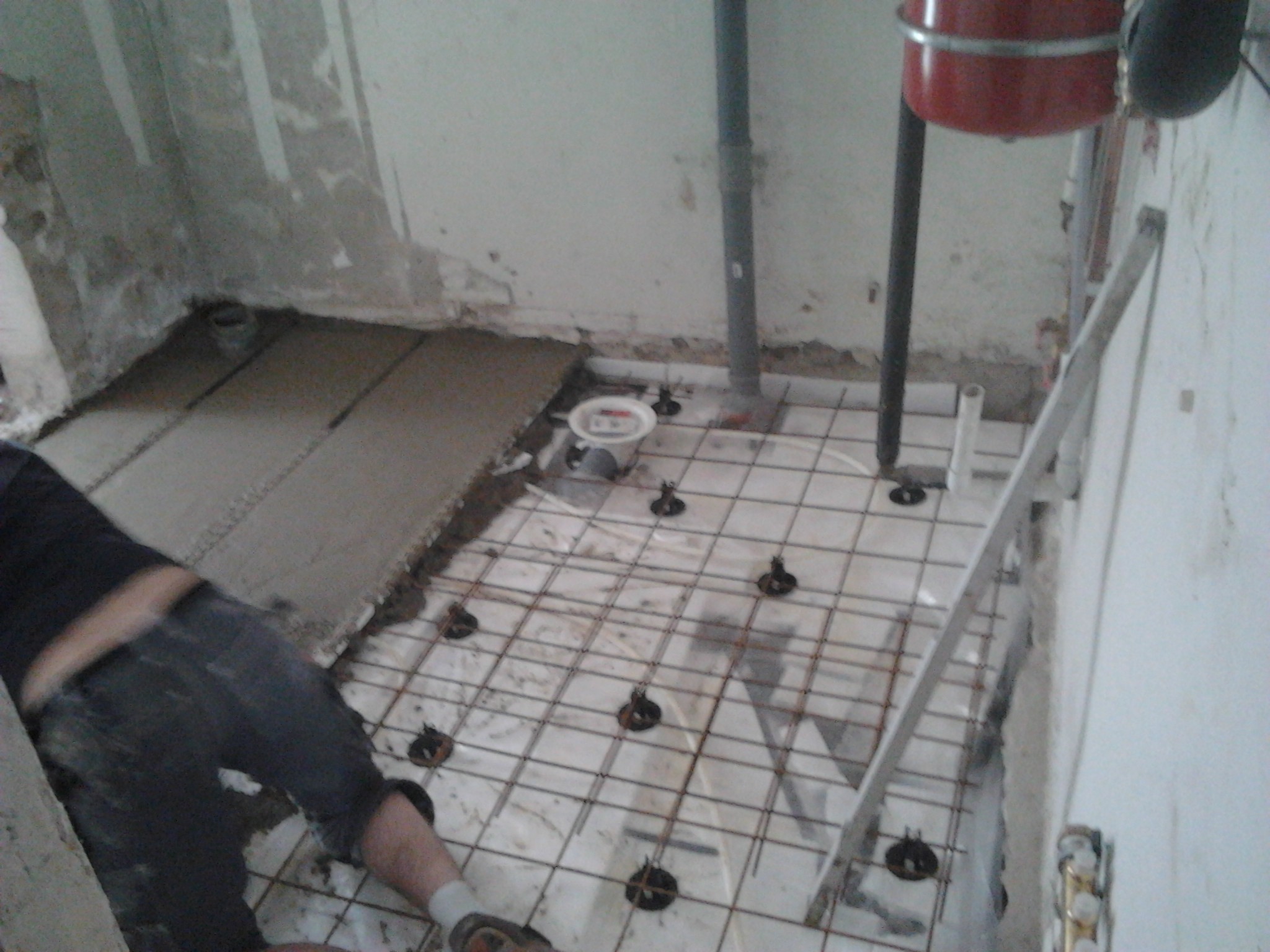
Hello, I've started my basement project and thought I'd continue here instead of starting a new thread.
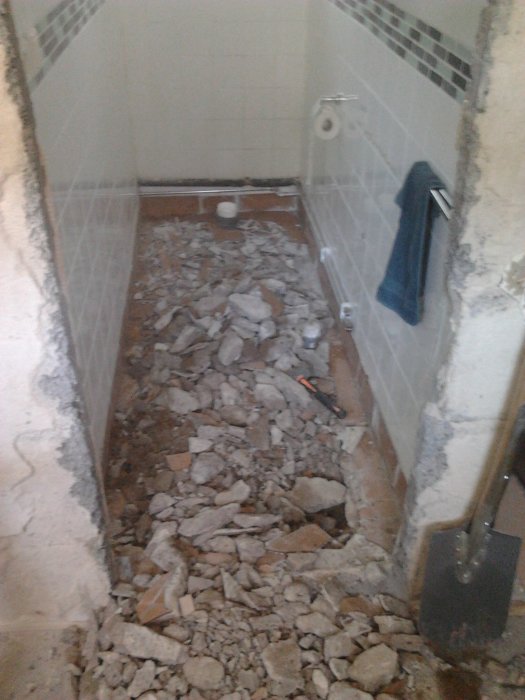
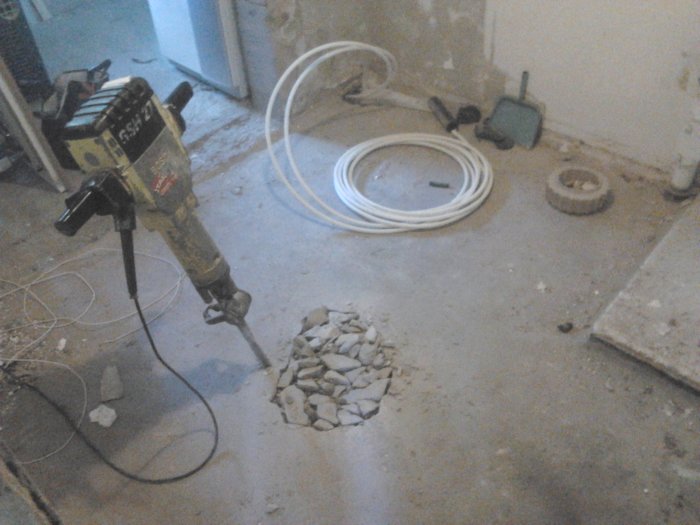
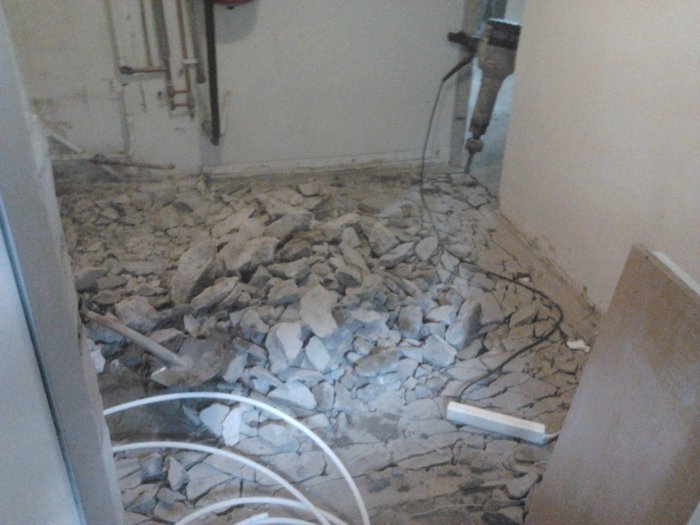
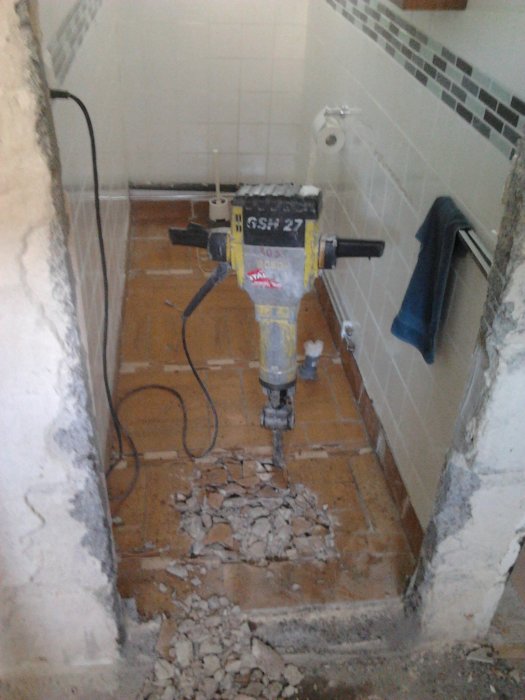
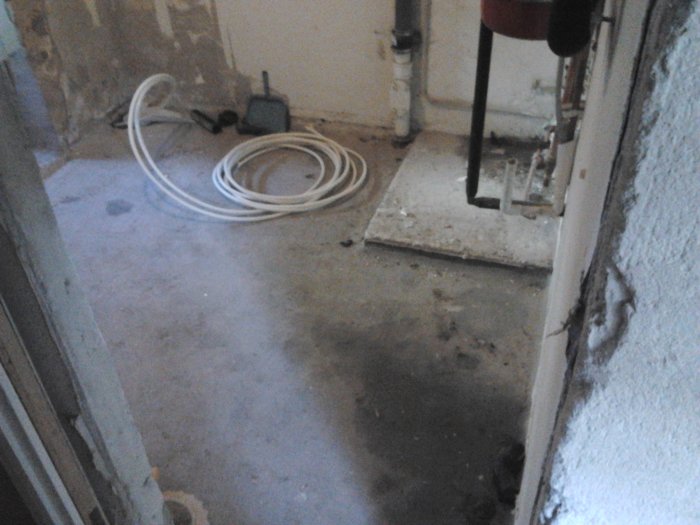
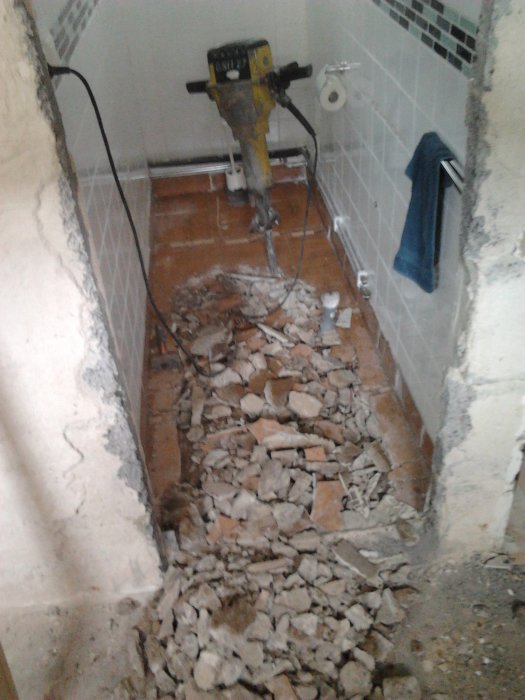
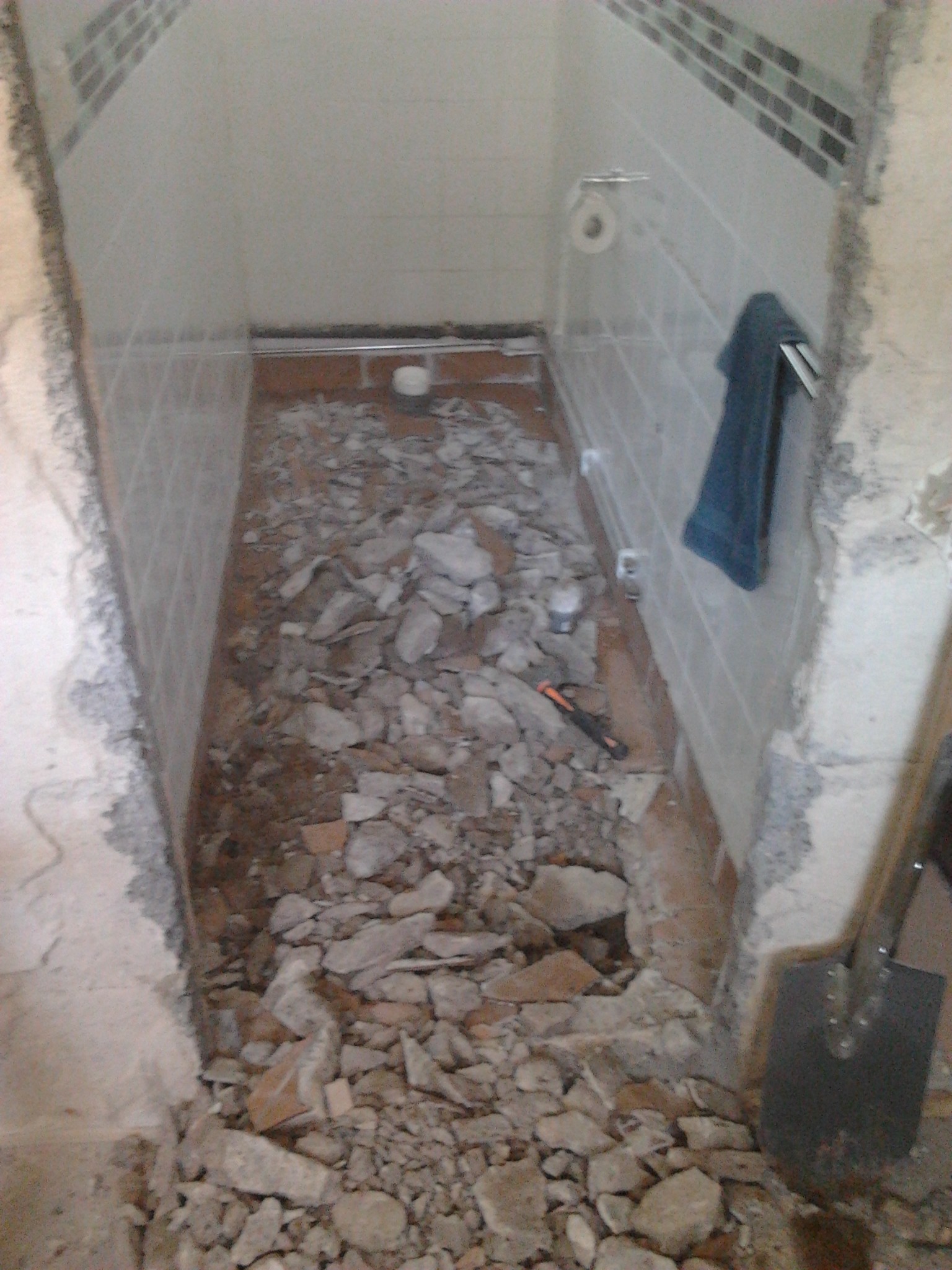
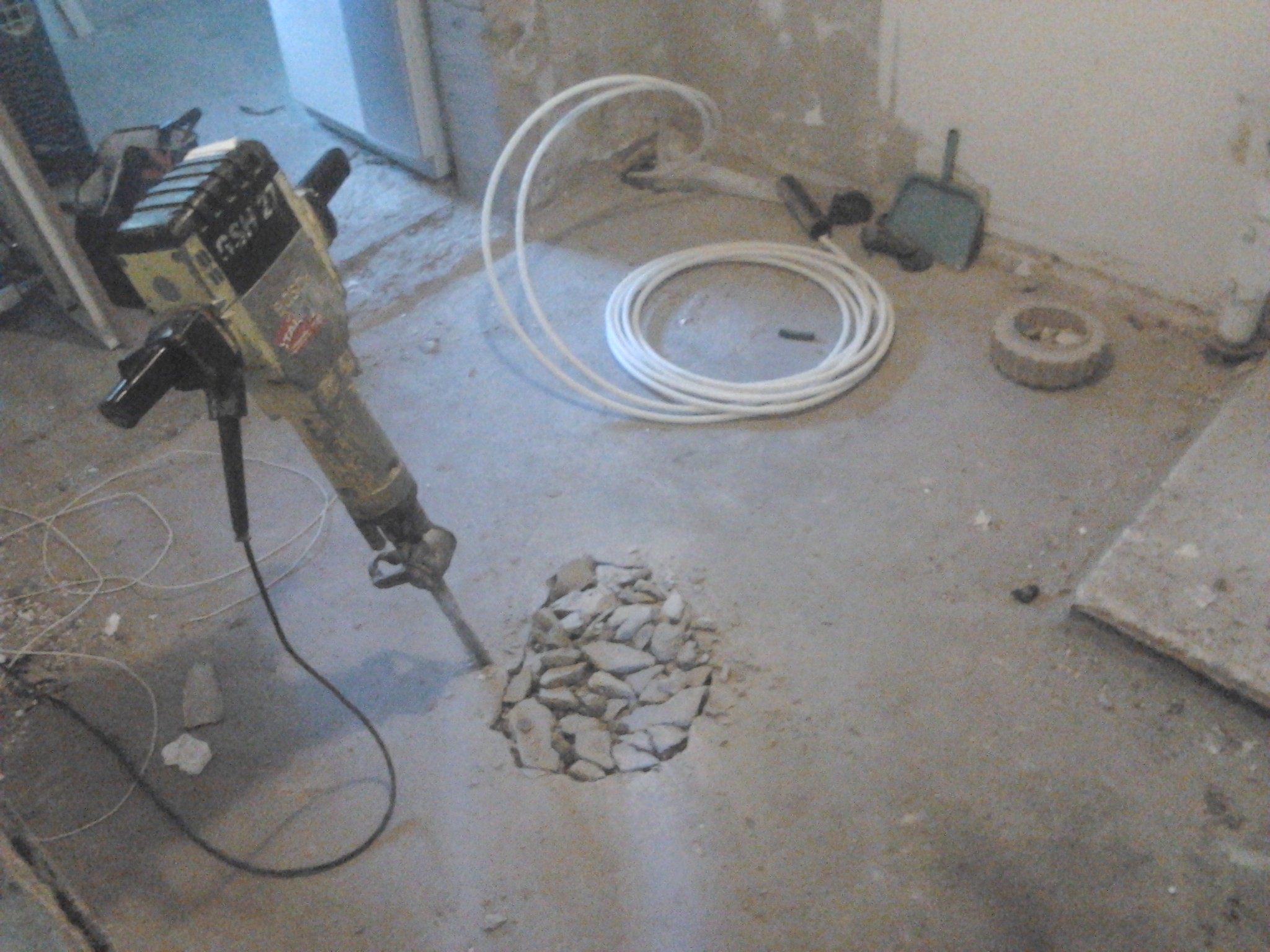
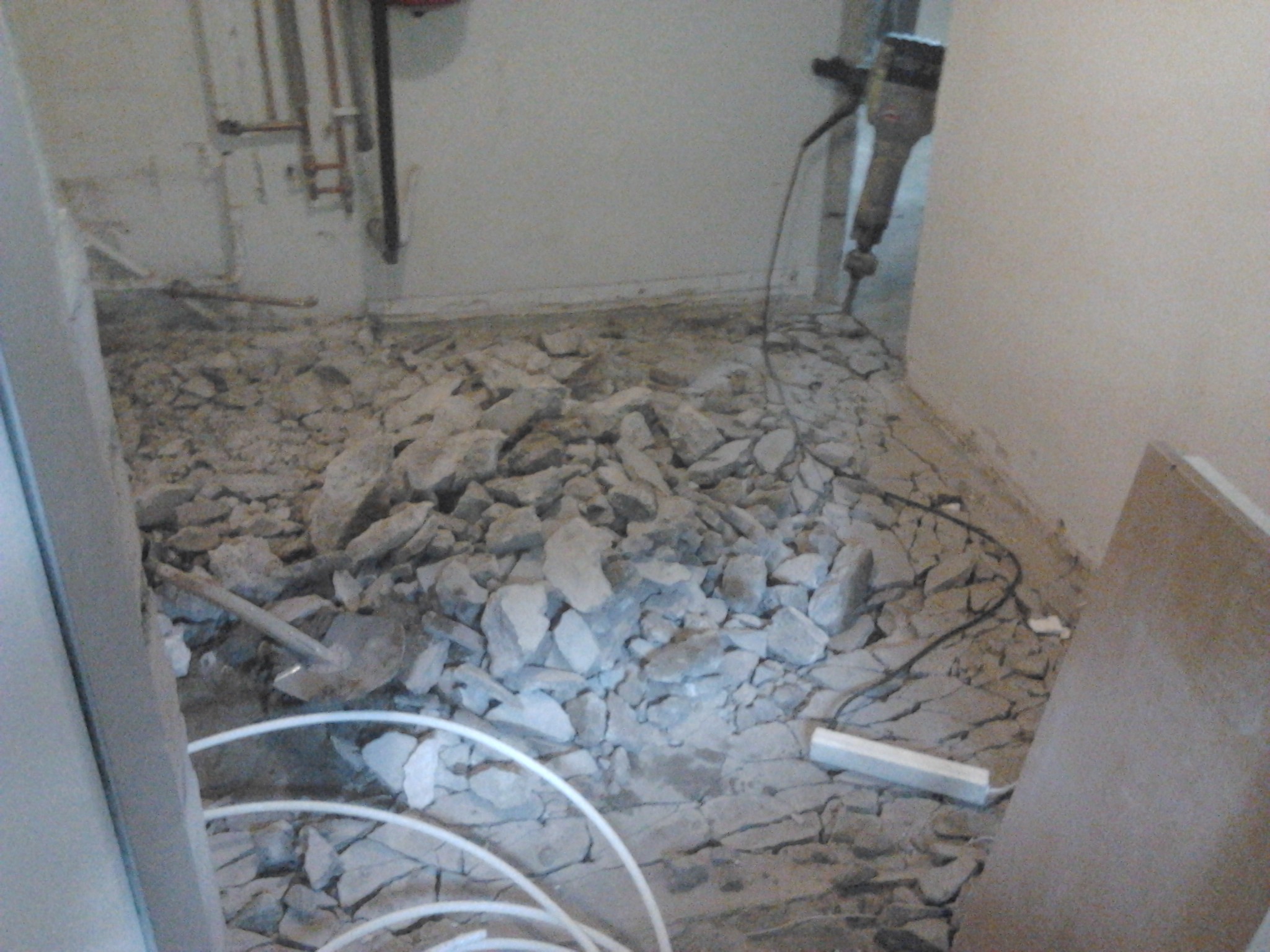
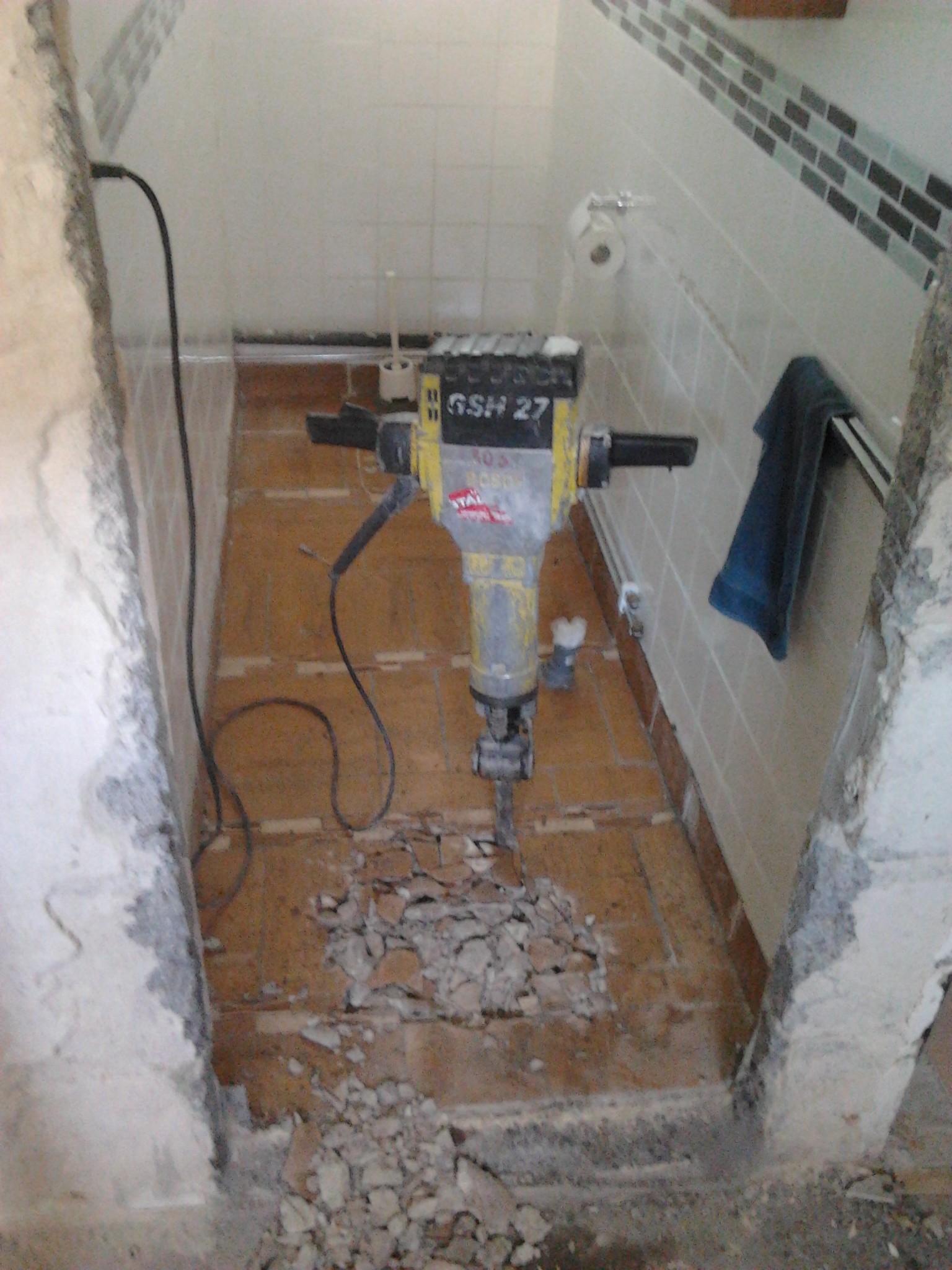
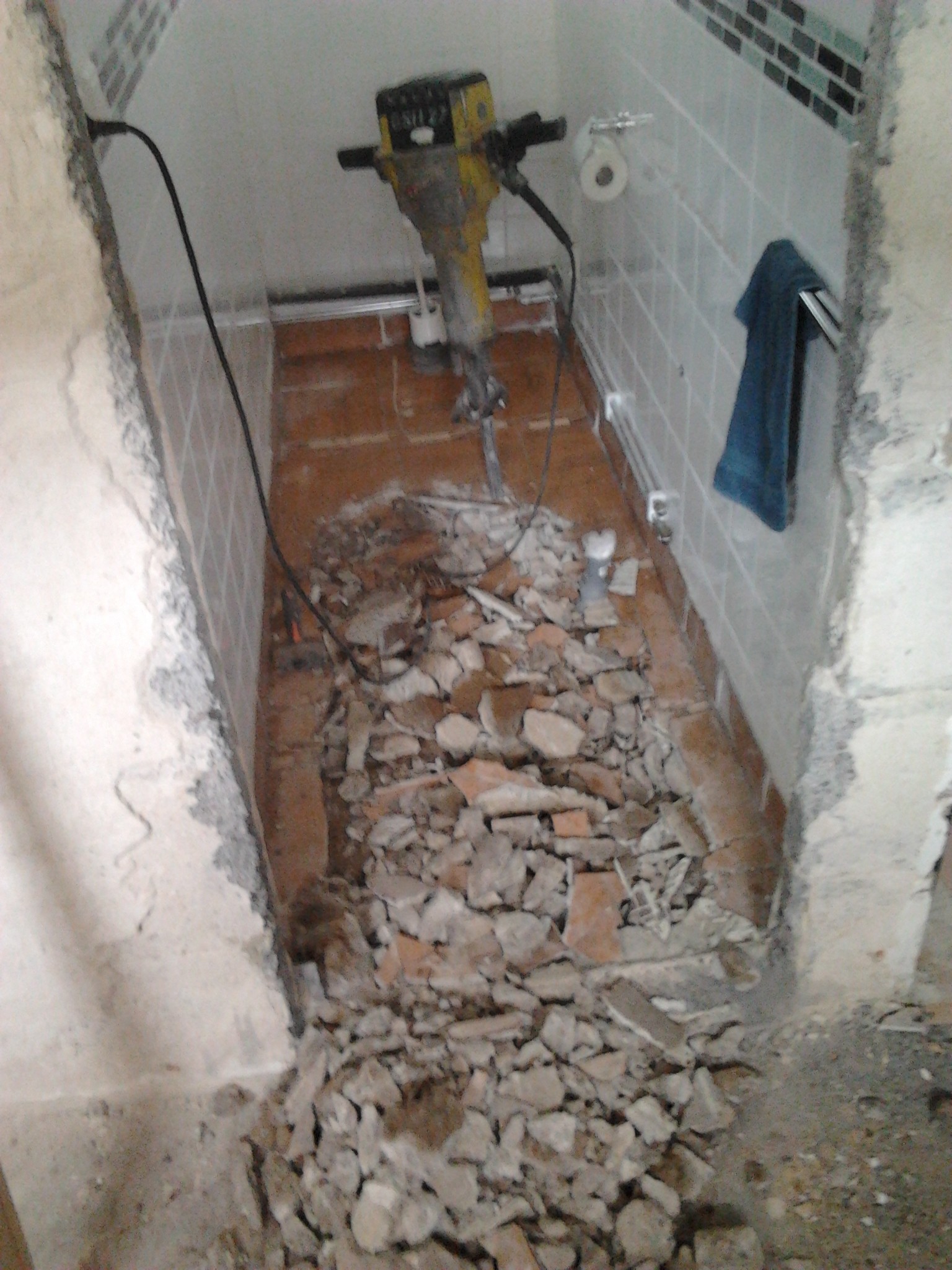
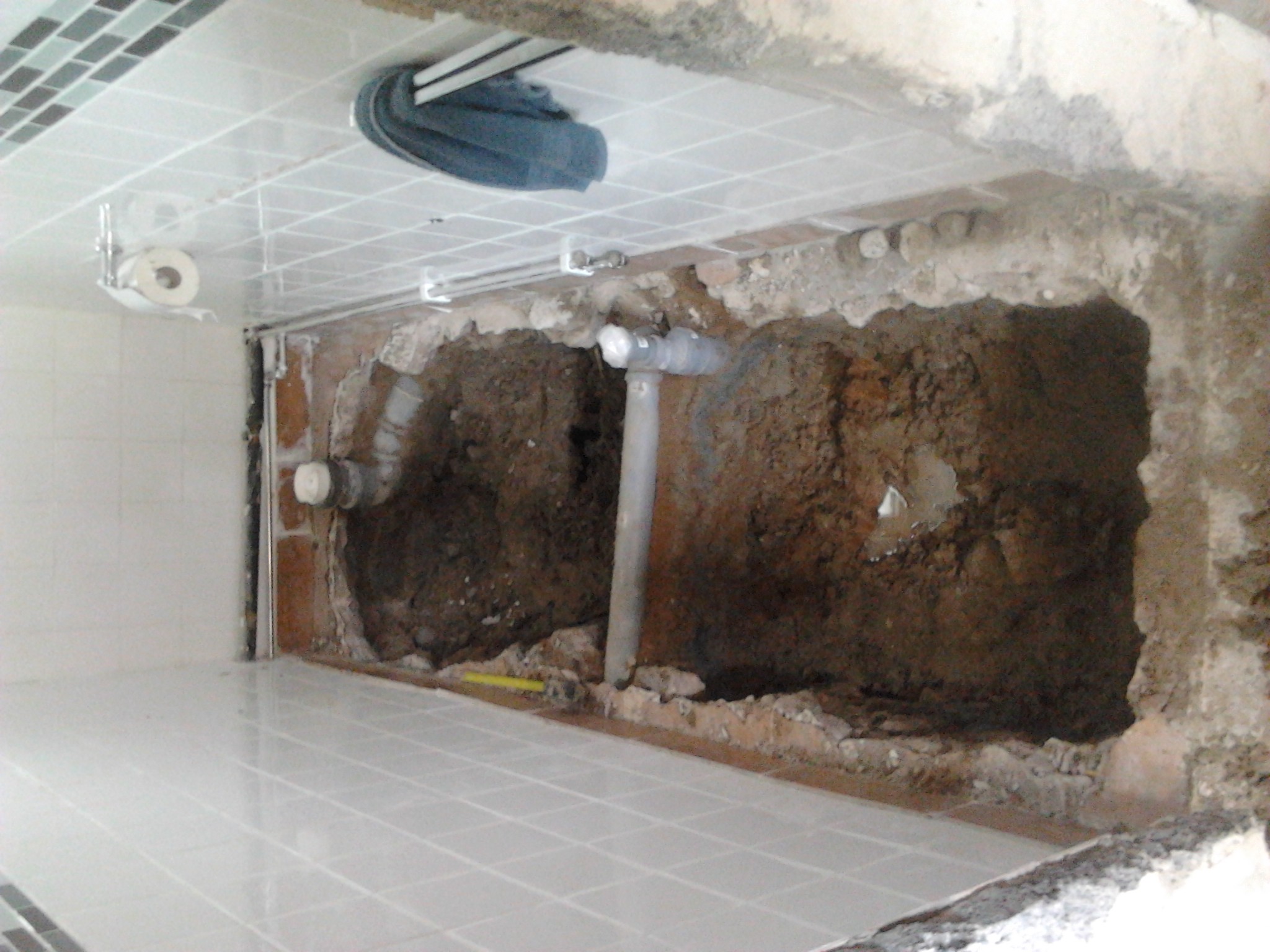
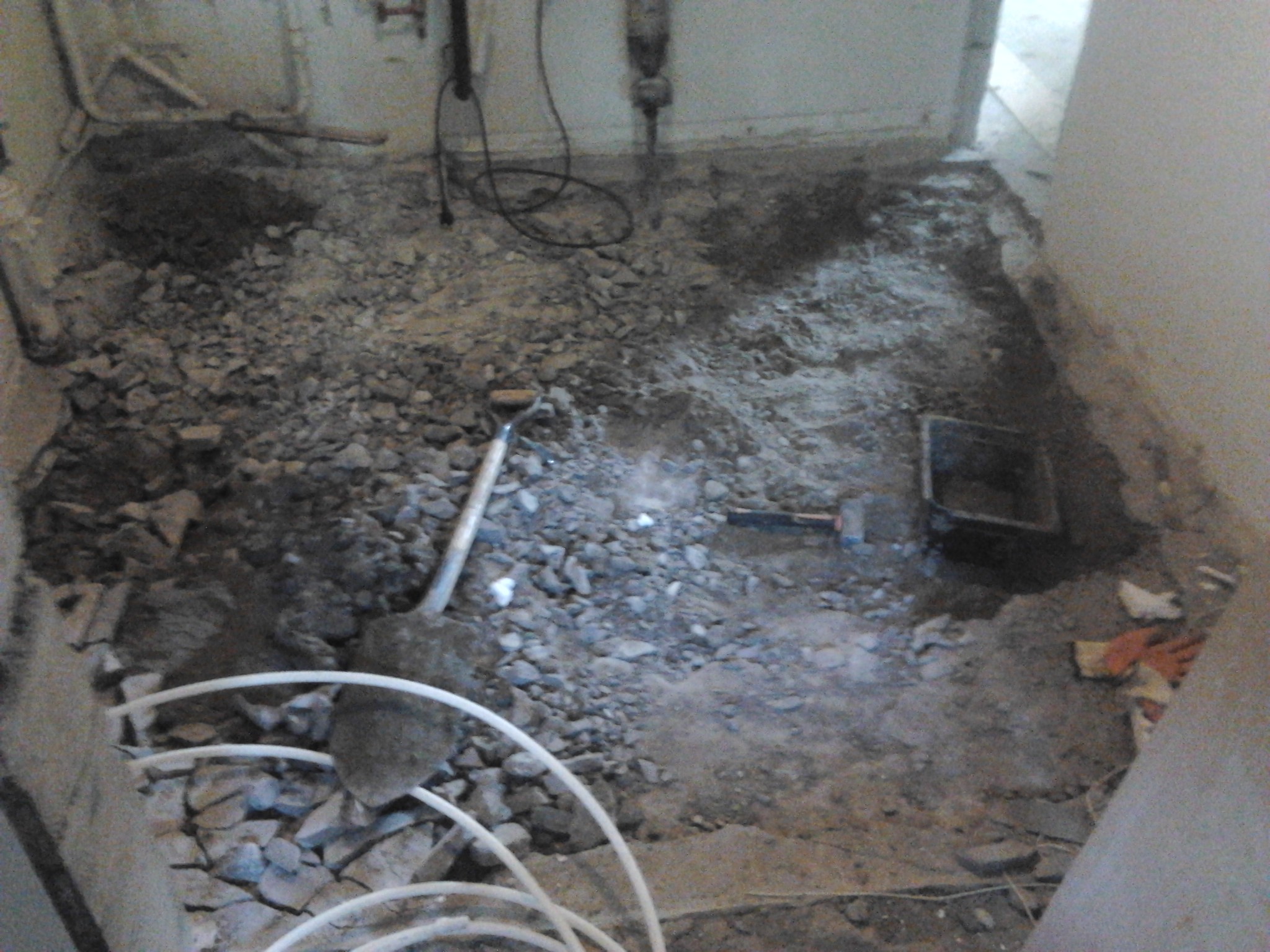
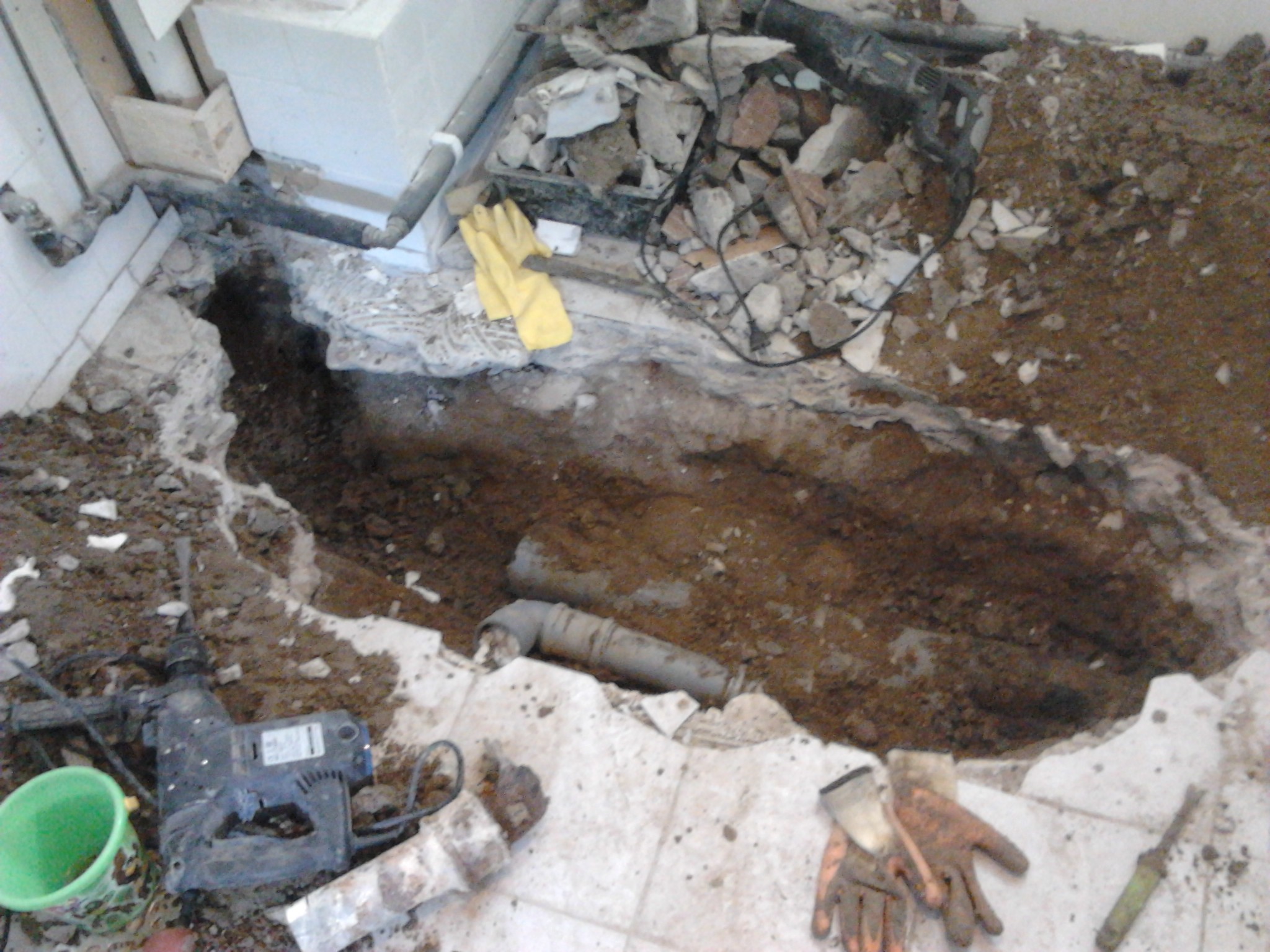
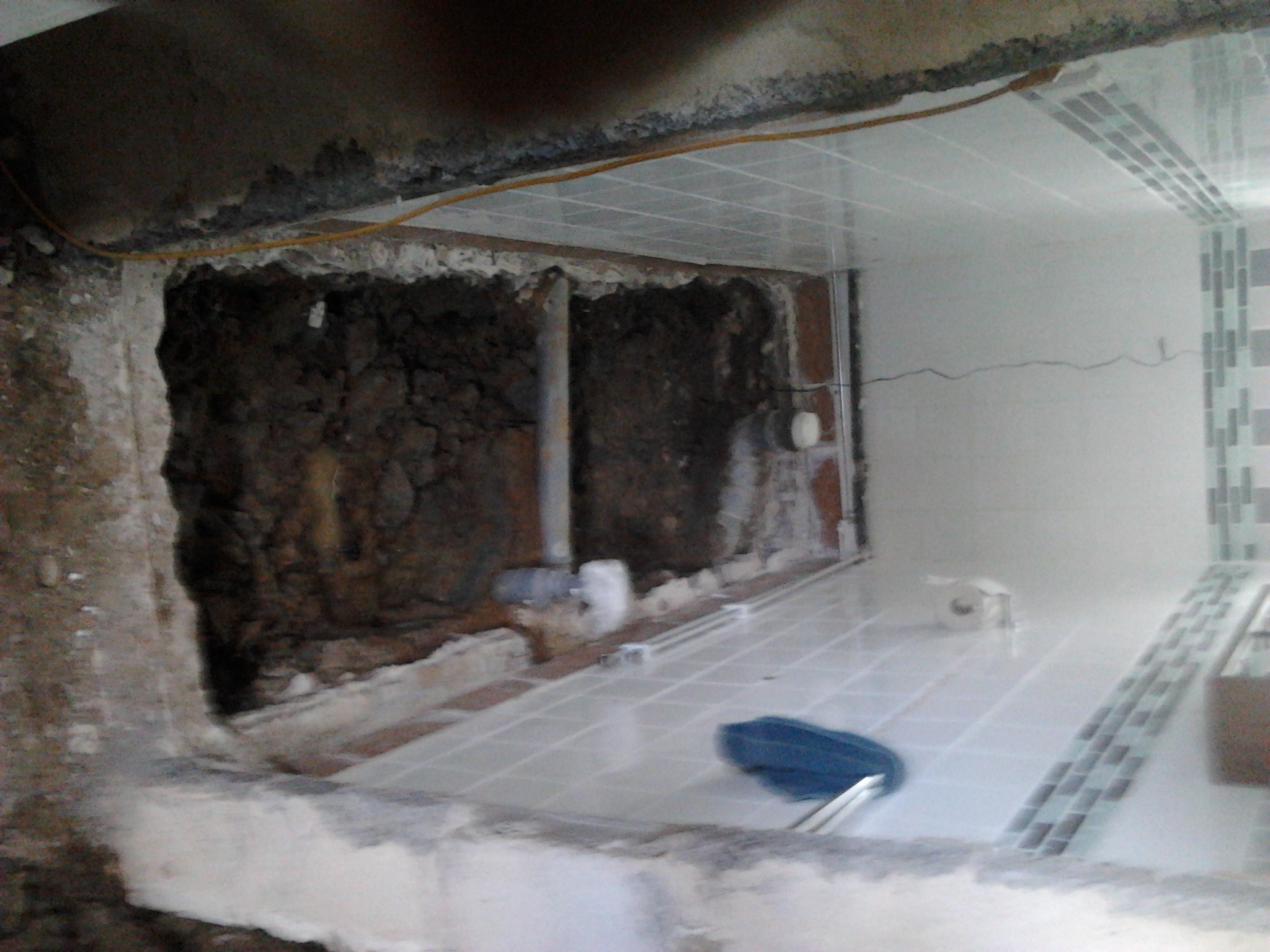
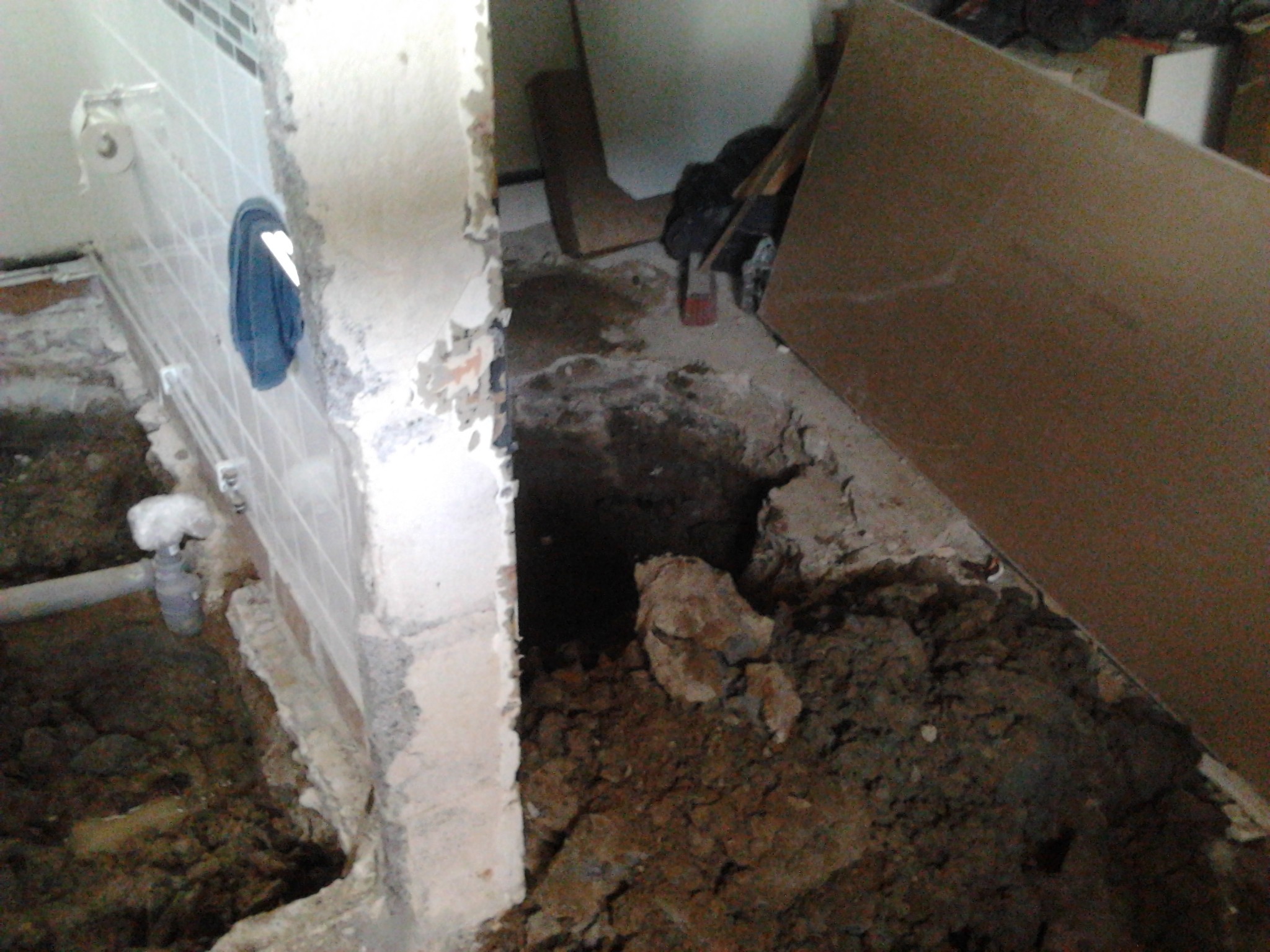
Today, I began chiseling the old slab; it went very quickly in the boiler room and the toilet (6-10 cm of reinforced concrete).
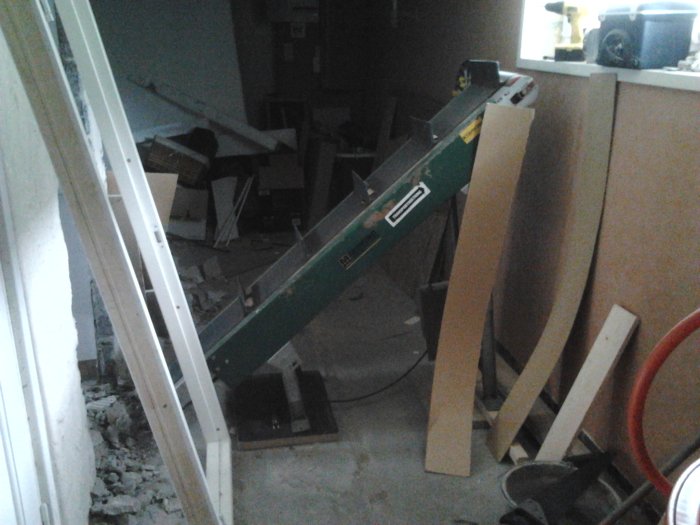
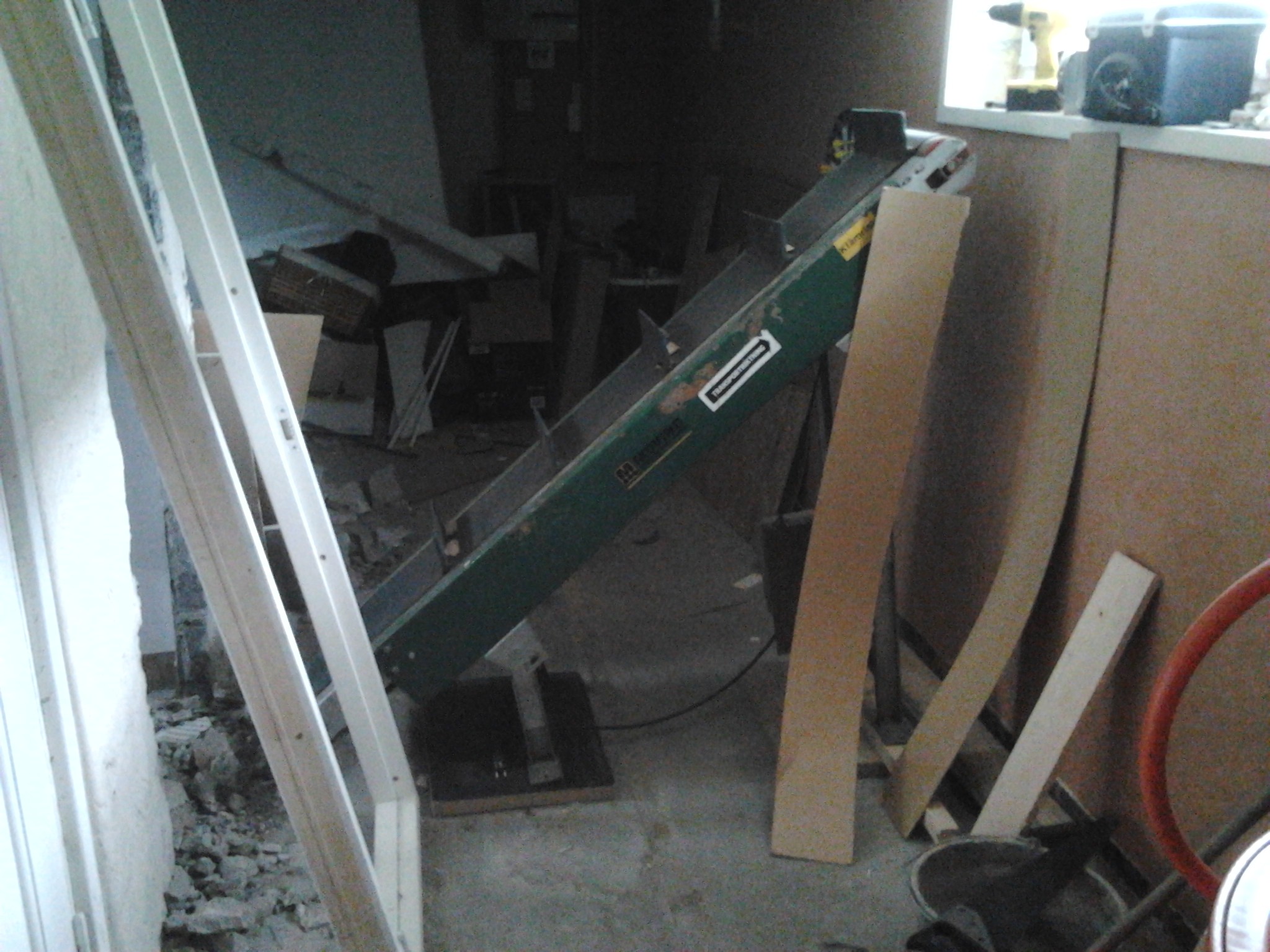
Tomorrow, I'm going to test the conveyor belt that's supposed to help me transport all the old concrete and clay through the window to a wheelbarrow and then drive 6 meters straight to the container. We'll see, I got this idea from a guy at work, hehe, fun, right?

I plan to do the chiseling and digging myself and then proceed like this:
1- Ground fabric
2- Leca balls 5-10
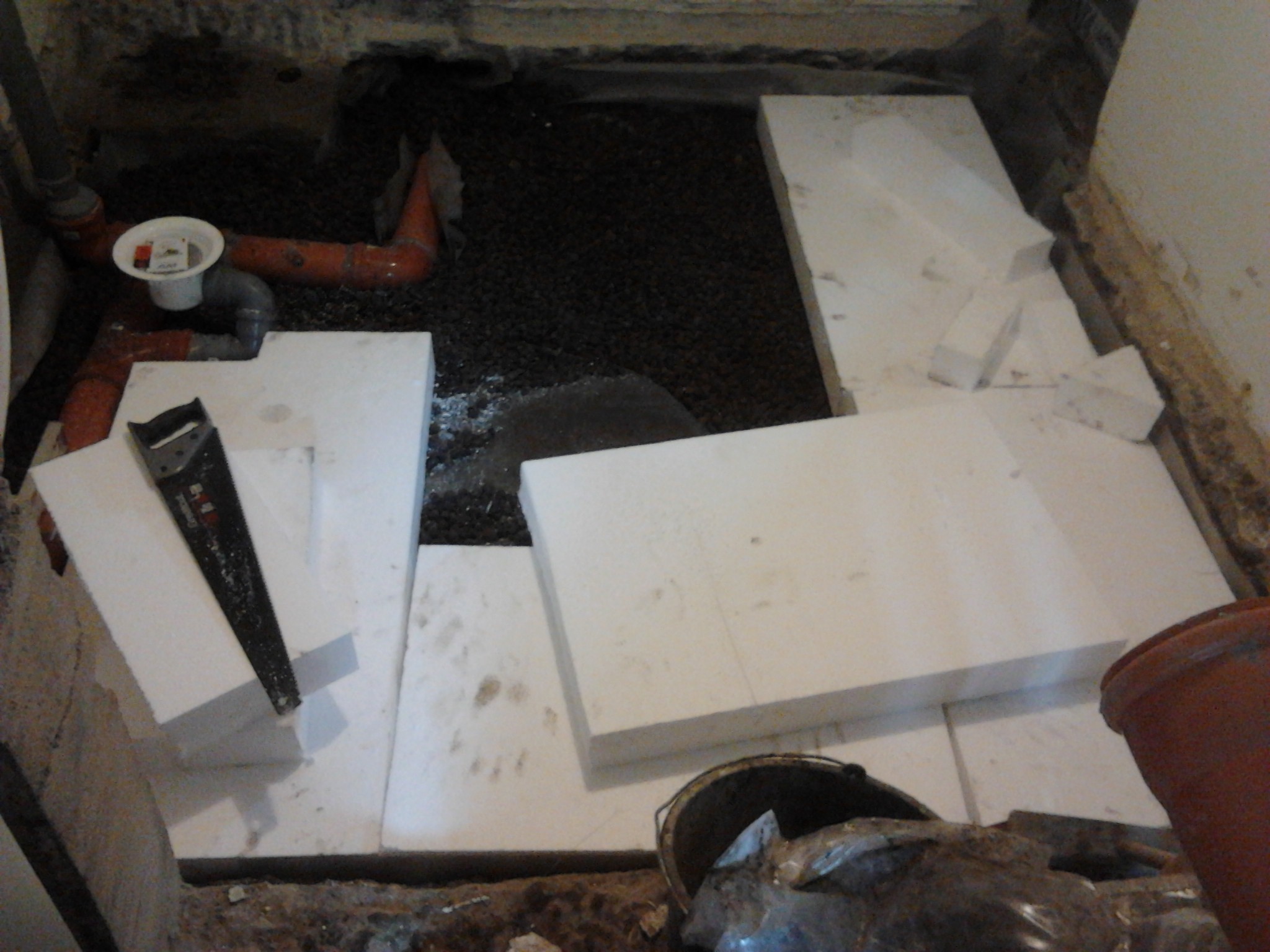
3- Two pieces of 100 mm Styrofoam S100 totaling 20 cm of insulation
4- Plastic
5 - Heating pipes laid by a professional. What do you think?
6- Concrete slab 8 cm, I will hire a professional, and I will mix the concrete. I've talked to the insurance company, and they said that water, electricity, and concrete casting that covers electrical or water pipes should be laid by a professional; otherwise, I risk losing compensation for layout damage and such.

What do you think about this?
Here are some pictures:
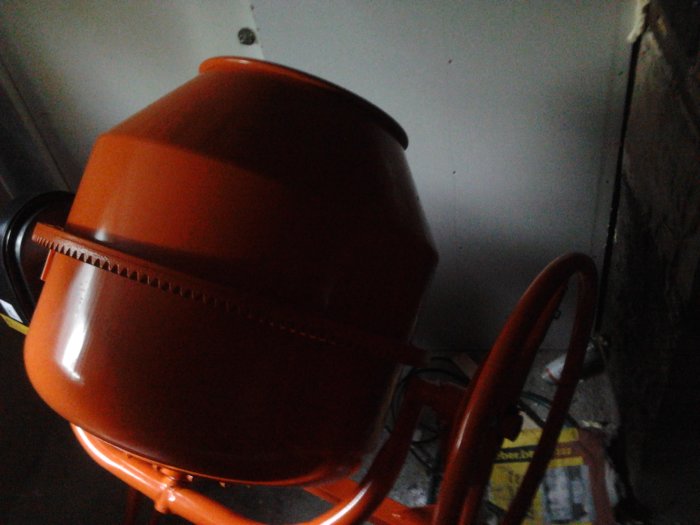
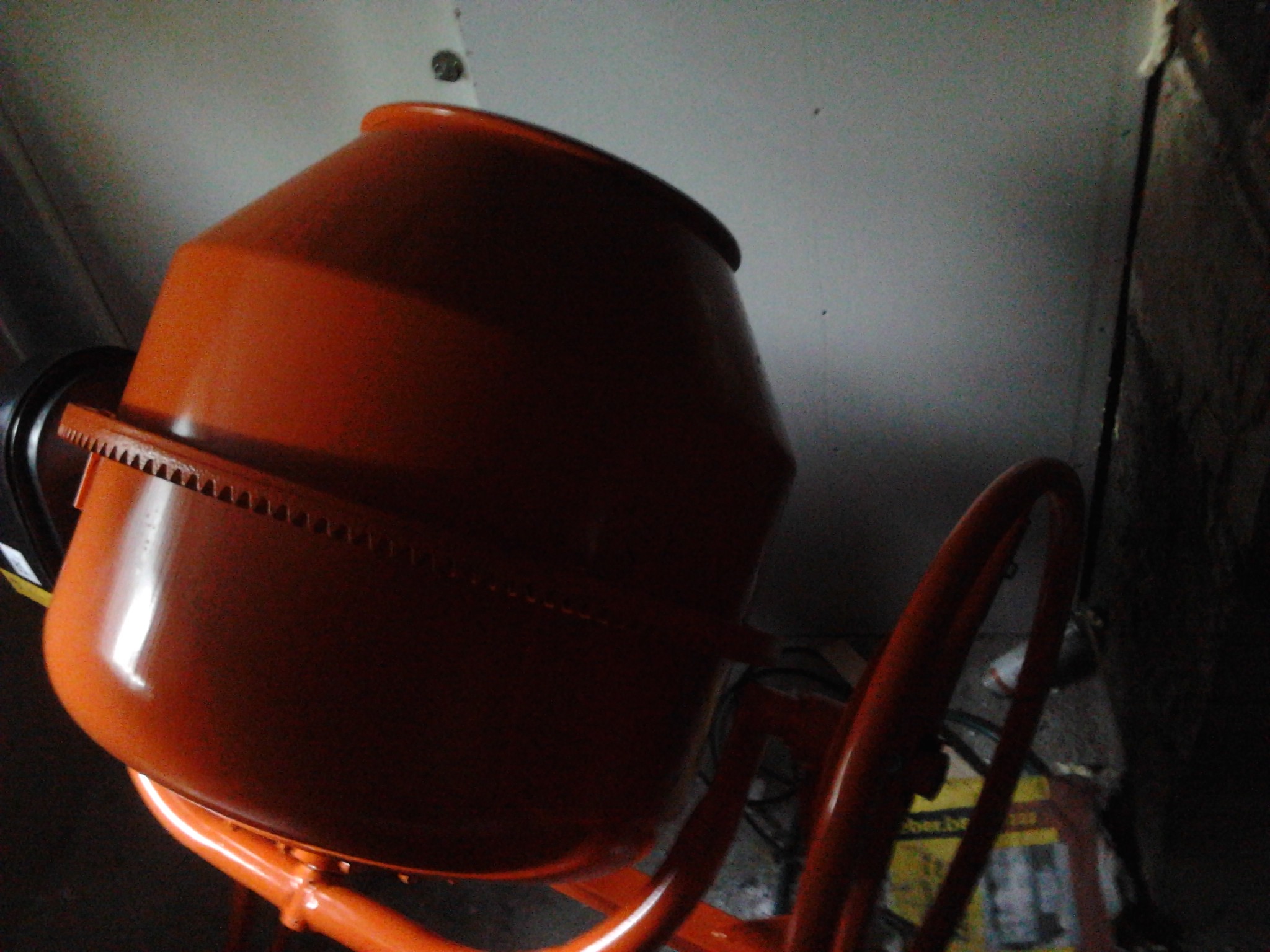
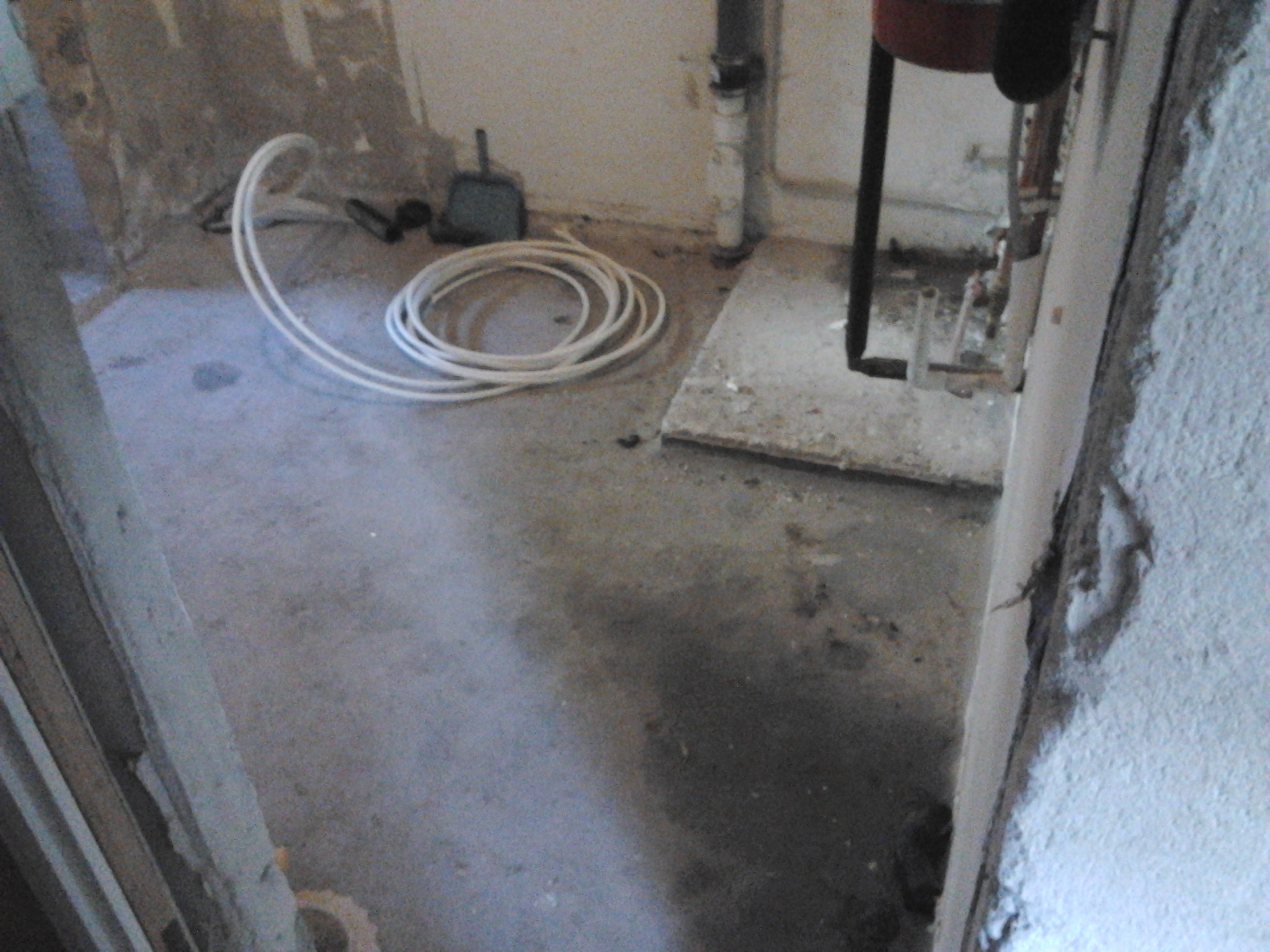
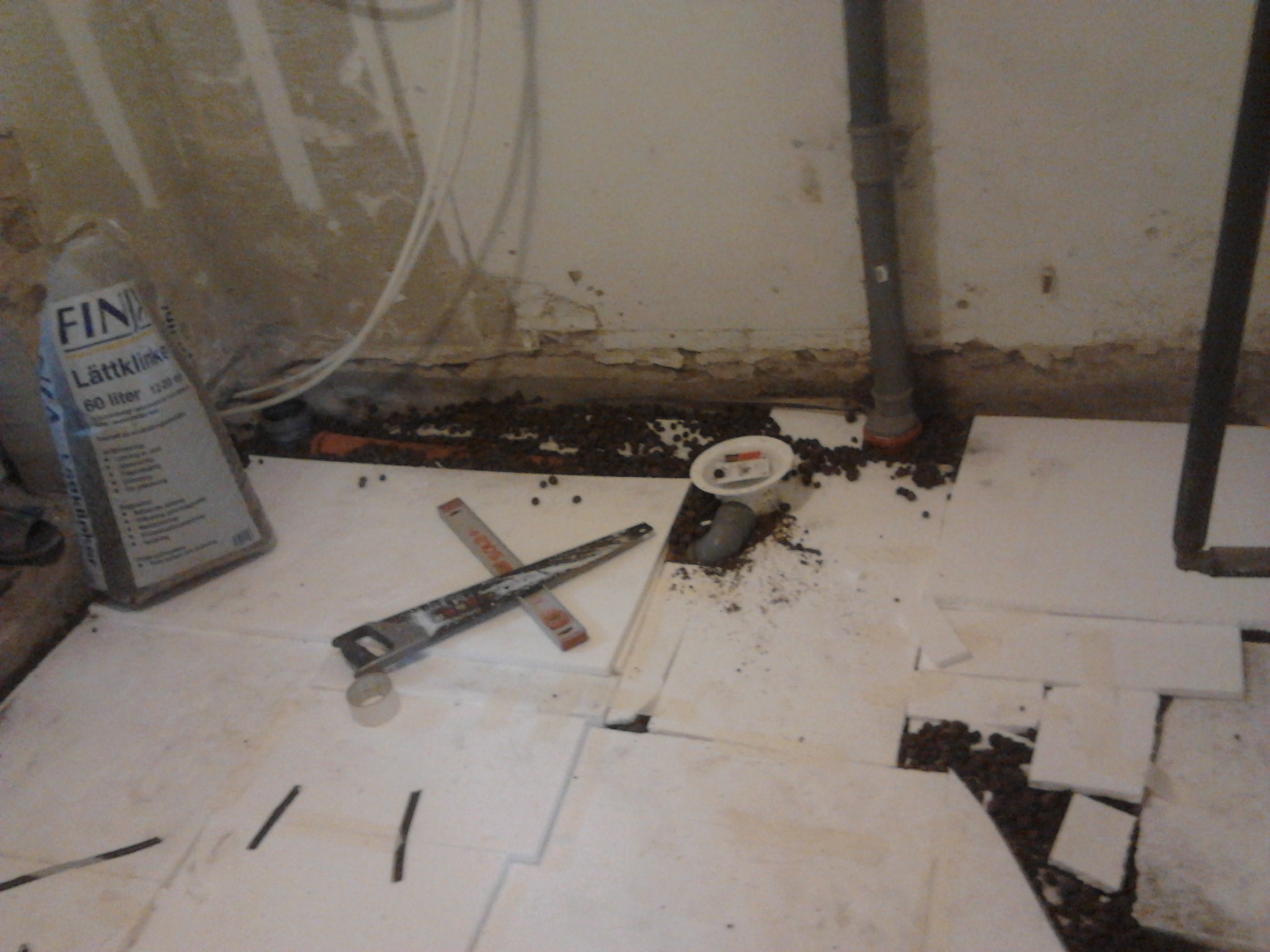
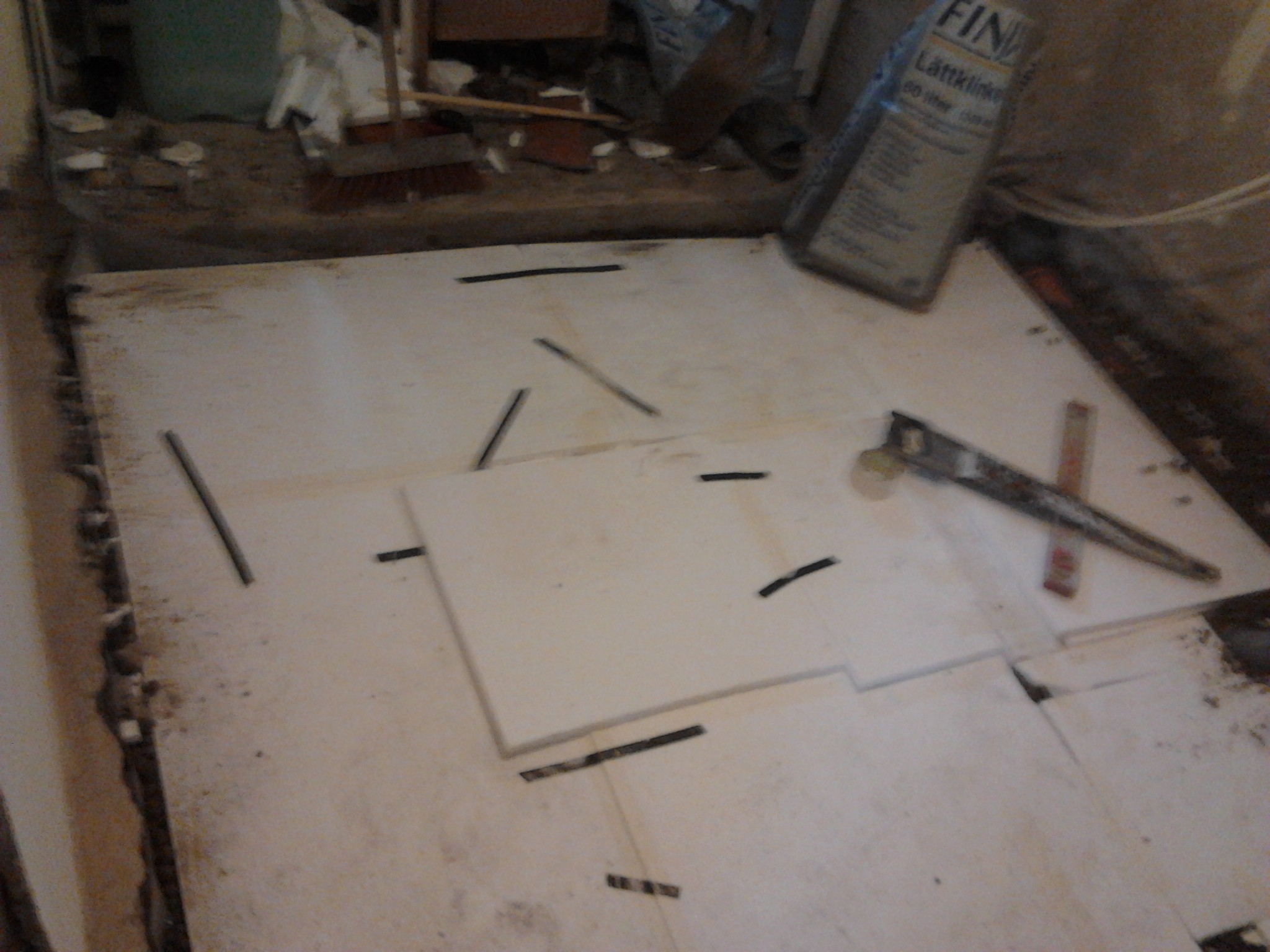
An orange cement mixer inside a basement, ready for a renovation project. Bathroom with demolished floor, showing broken concrete and debris; walls are tiled, with a shovel and tools visible. Jackhammer on concrete floor with pile of rubble, white cable coil, dustpan, and tools visible in a partially demolished basement room. Broken concrete pieces on the basement floor with visible pipes and a drill, illustrating the initial demolition phase of a renovation project. A conveyor belt system set up in a basement for transporting debris out of a window during a renovation project. A drill breaking old concrete in a basement bathroom renovation, debris scattered on the tile floor. Basement renovation with rolled-up wiring, a dustpan, and a partially dismantled concrete floor near plumbing pipes. A jackhammer in a bathroom with broken concrete pieces on the floor, white tiled walls, and a towel hanging on a rack.
 
noticed that the images were not in order.......
 
Rent a mixer and you'll be free of worries. Bad equipment only leads to frustration. But if you do buy one, take care of it. Clean it with small stones after use. And if you want to save money, make the concrete yourself—order casting sand and some gravel and regular standard cement, then you'll have money left over to buy a "real" mixer.
 
Drive first and test the transportbnd later. Living on the edge! :)
 
Here are some results
Jula 165 Liters mixer cannot be operated with more than four 25 Kg bags. Many have said it, but it works fine.
 
  • Bathroom renovation with exposed plumbing and excavated floor, showcasing ongoing construction work.
  • Concrete floor with rubble, a shovel, and a mixing box, possibly illustrating mixing results using a Jula 165-liter mixer for construction work.
  • Excavated area in a construction site with exposed pipes, rubble, gloves, drill, and dirt scattered around.
  • Renovation site showing an excavated area in a tiled room, possibly a bathroom.
  • Construction site with a partially demolished wall and exposed floor, showing a hole and rubble.
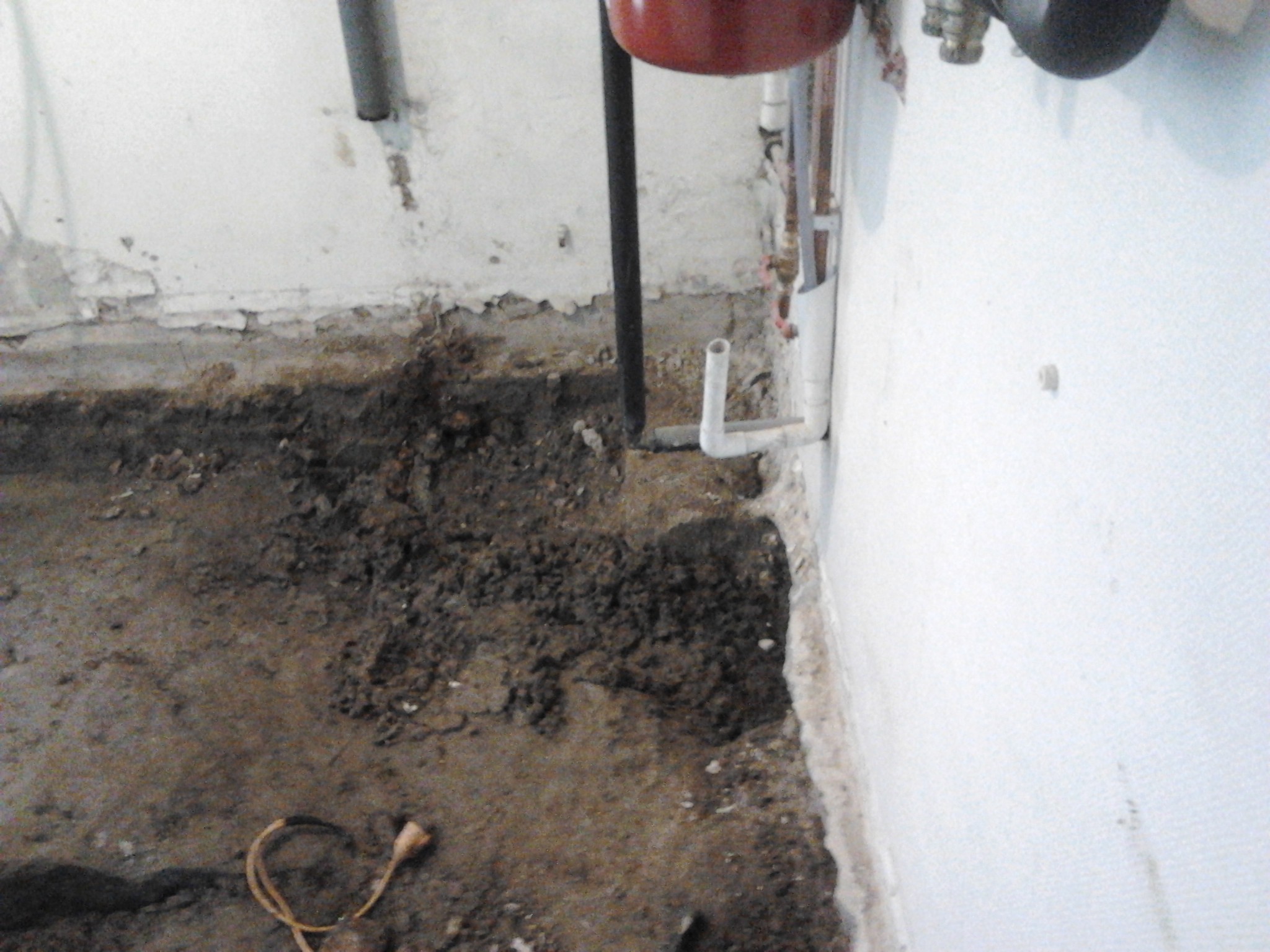
  • Image of a partially renovated room corner with exposed pipes and a concrete floor where soil is visible, likely from recent construction work.
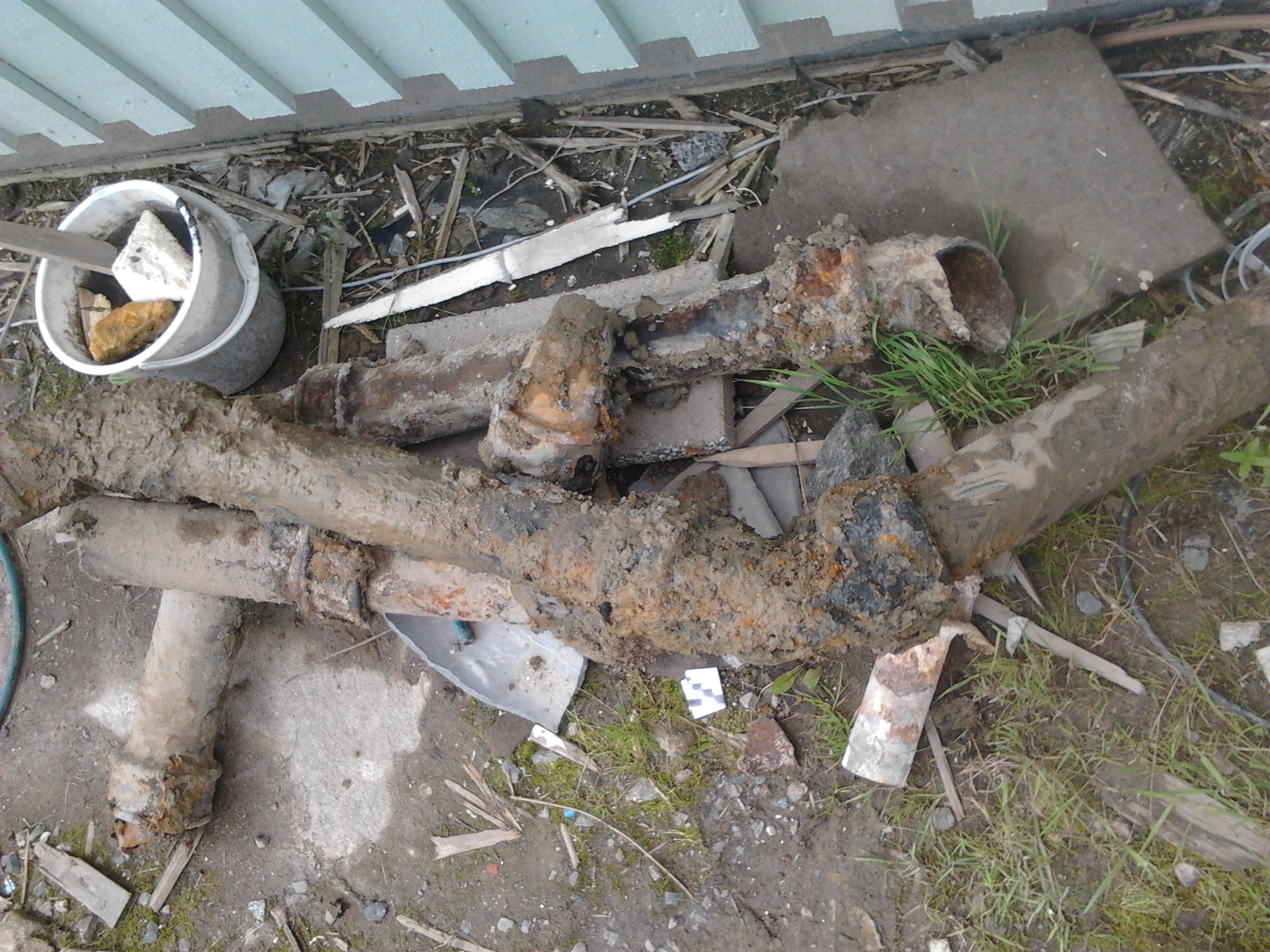
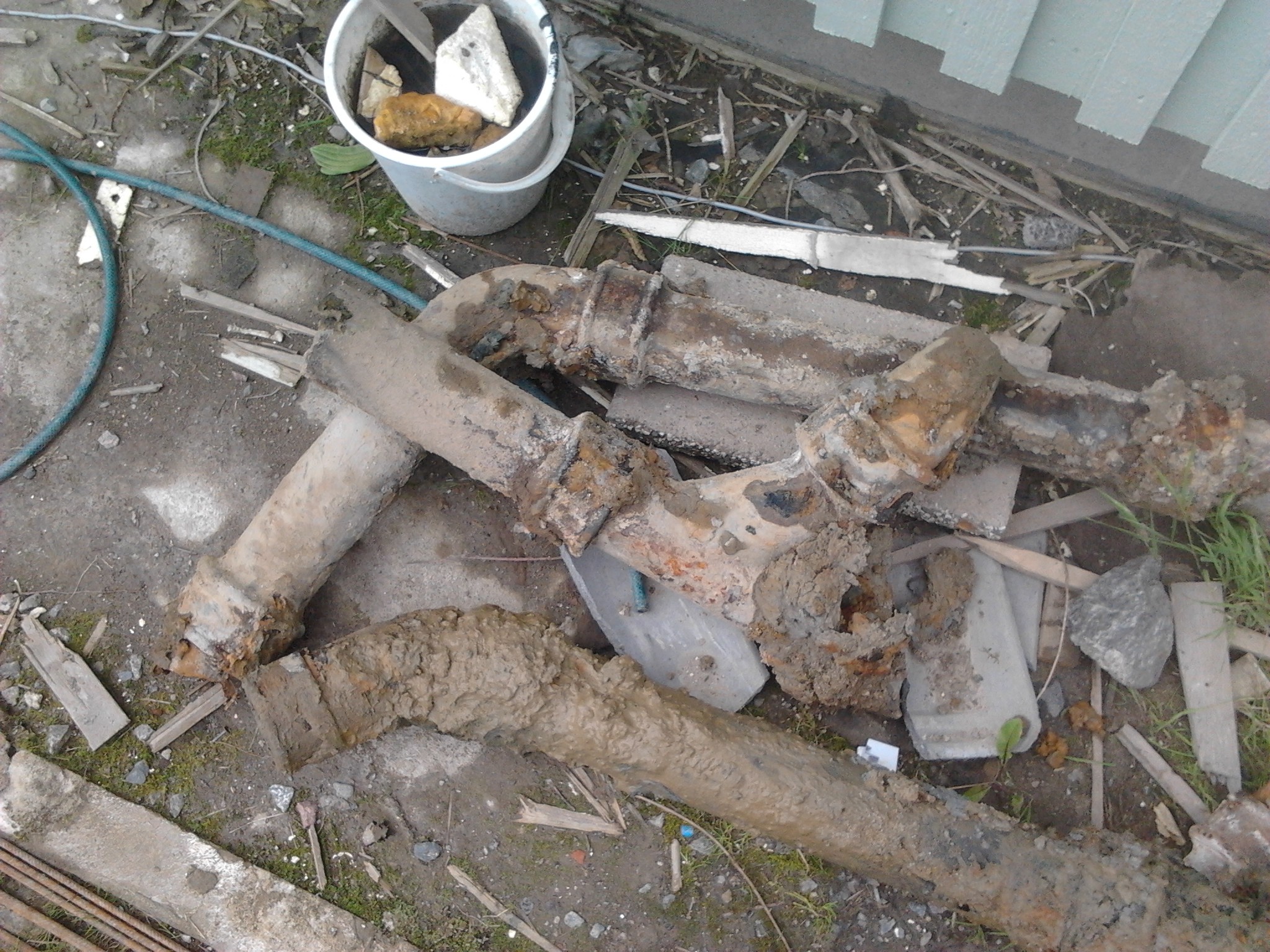
  • Old pipes covered in concrete and rust lying on the ground near a white bucket and a blue wall.
  • Old rusty pipes on the ground near a house wall, with a white bucket filled with debris and a garden hose nearby.
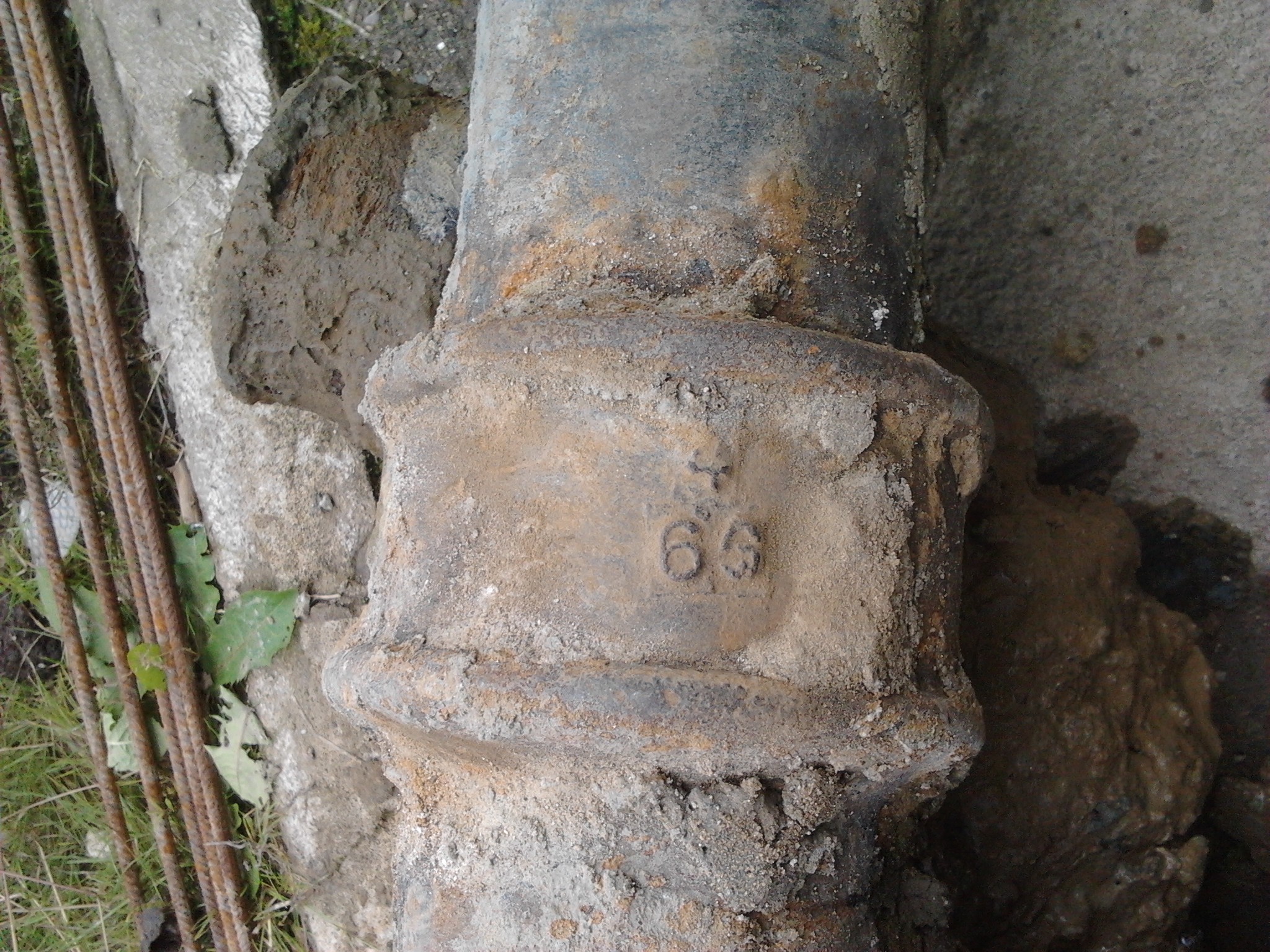
  • Old, rusted metal pipe partially embedded in concrete with visible markings.
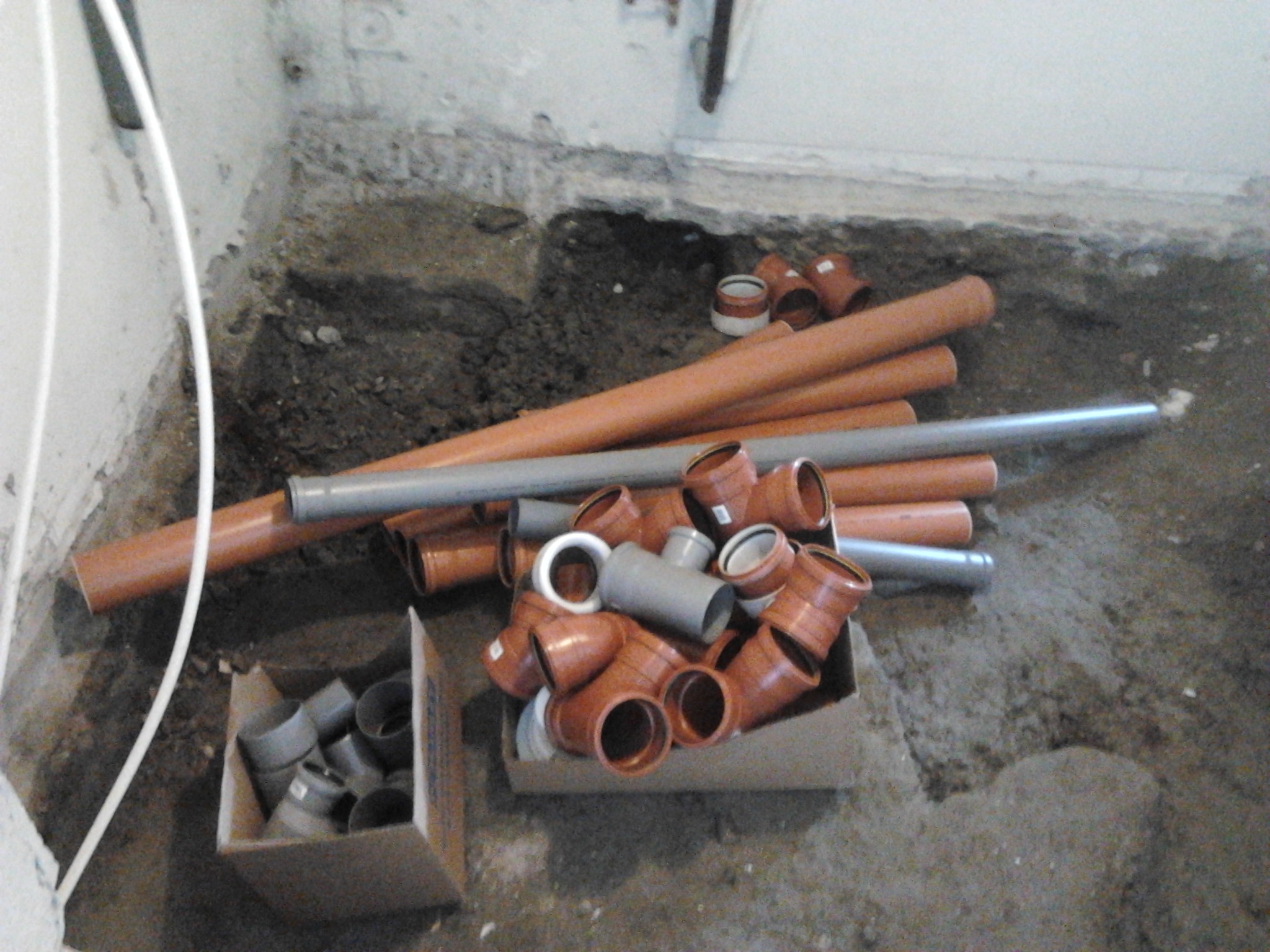
  • Pipes and fittings scattered on a concrete floor, including orange and gray tubes, with a box nearby containing additional connectors.
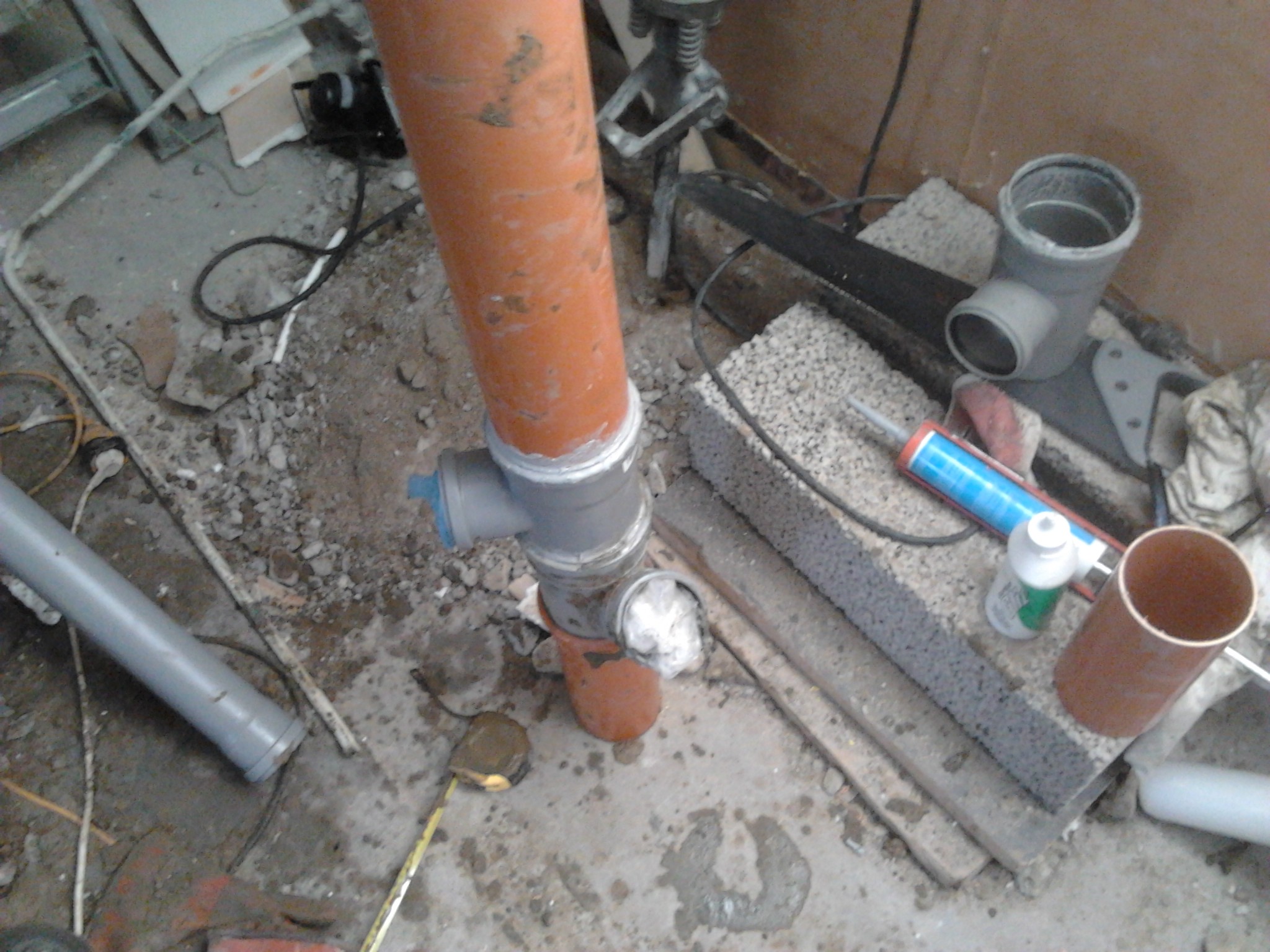
  • A DIY construction area with orange PVC pipes, cement blocks, and tools scattered.
  • Pipes laid on the ground in a construction or renovation setting.
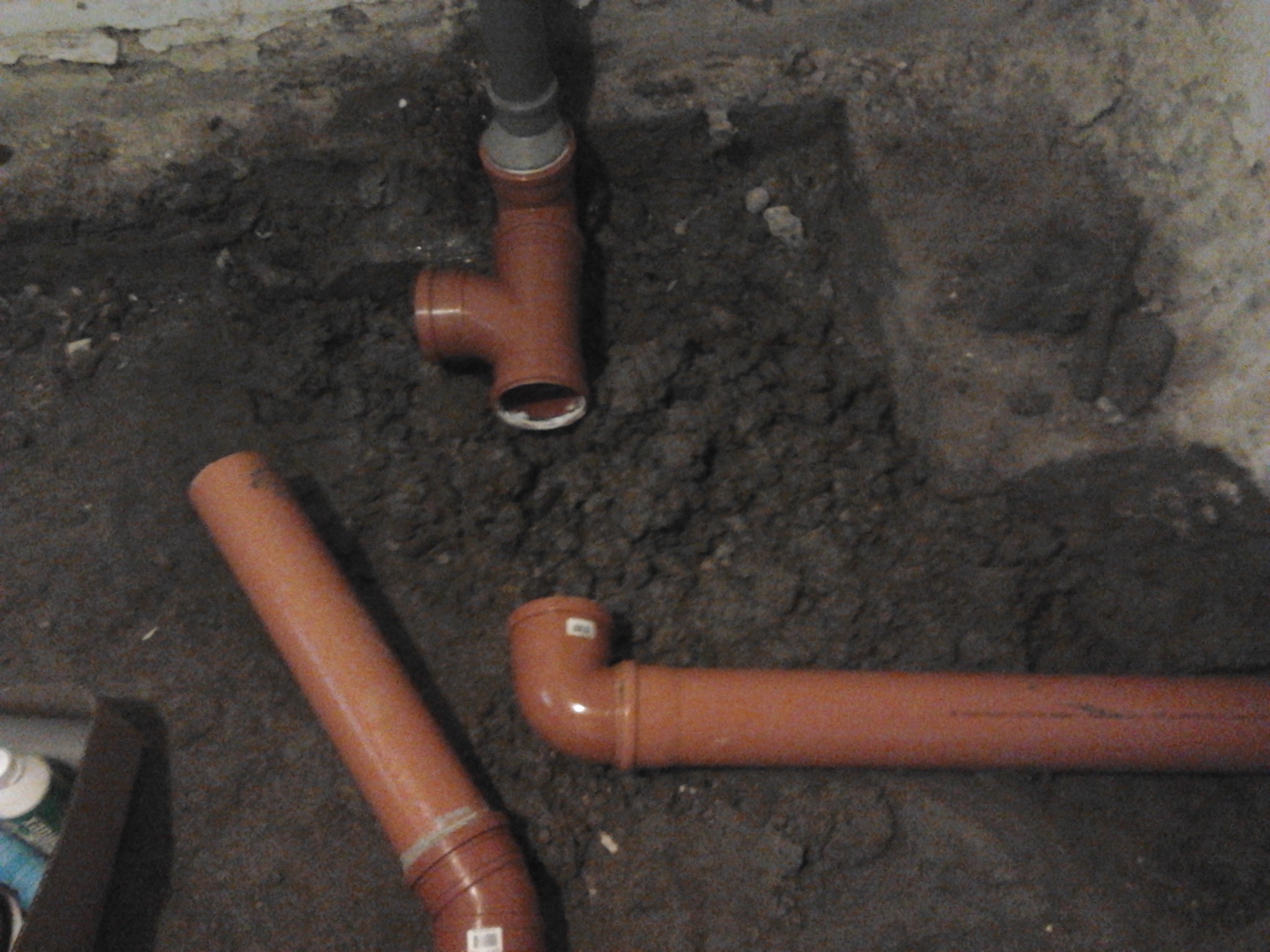
  • A construction site with exposed pipes and rubble, showing a gray and orange pipe installation partially buried in the ground.
Last edited:
more pictures
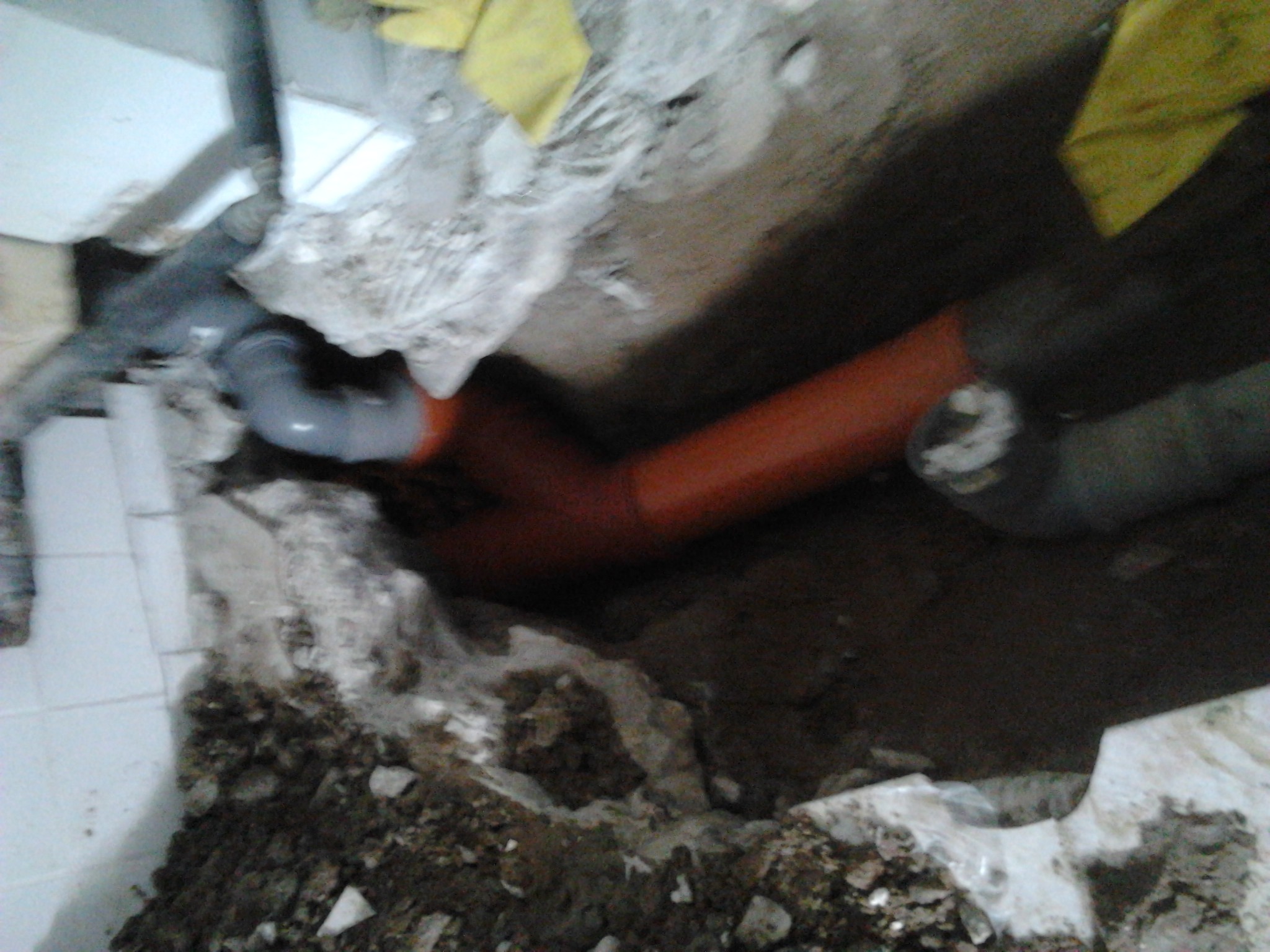
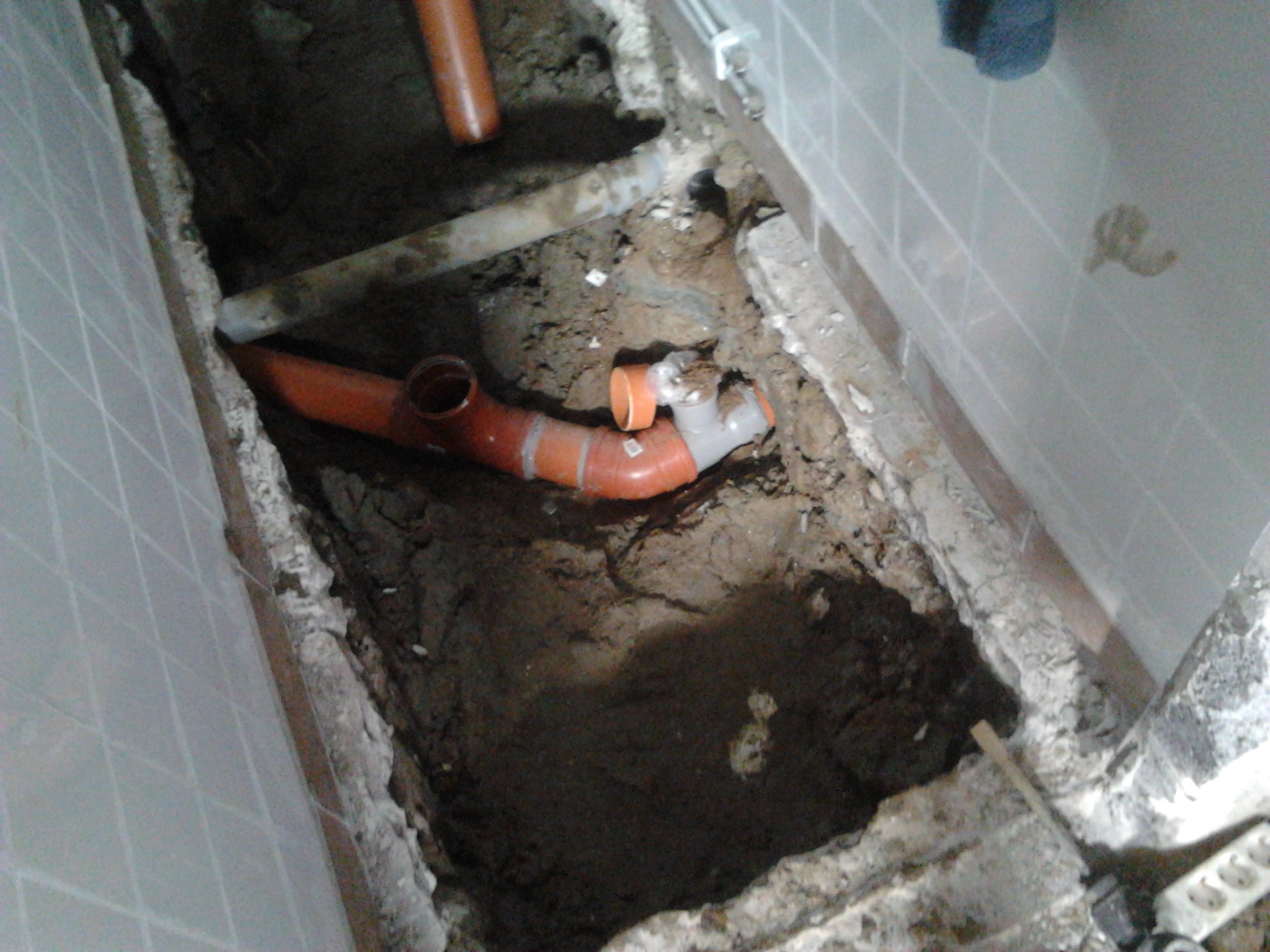
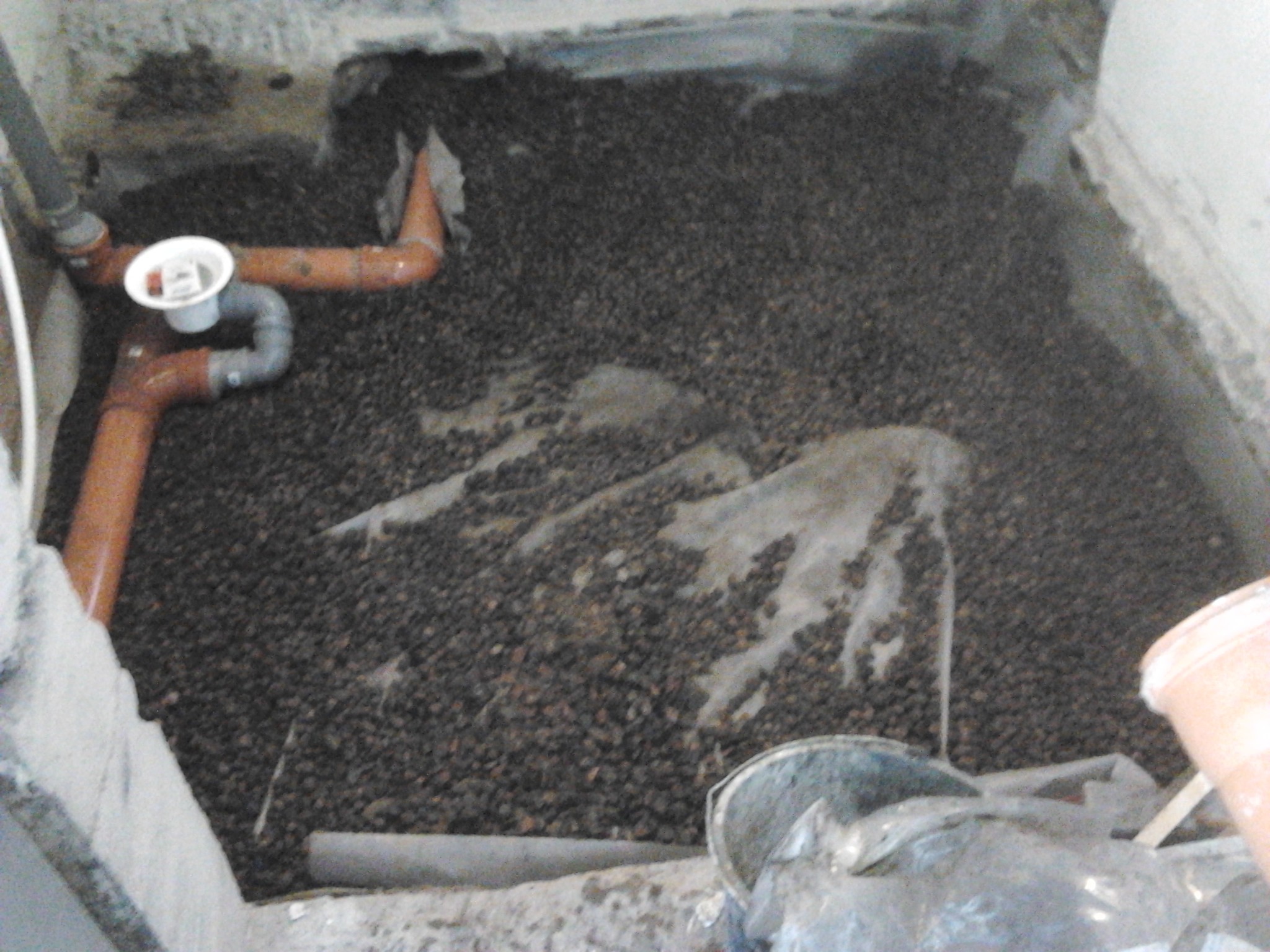
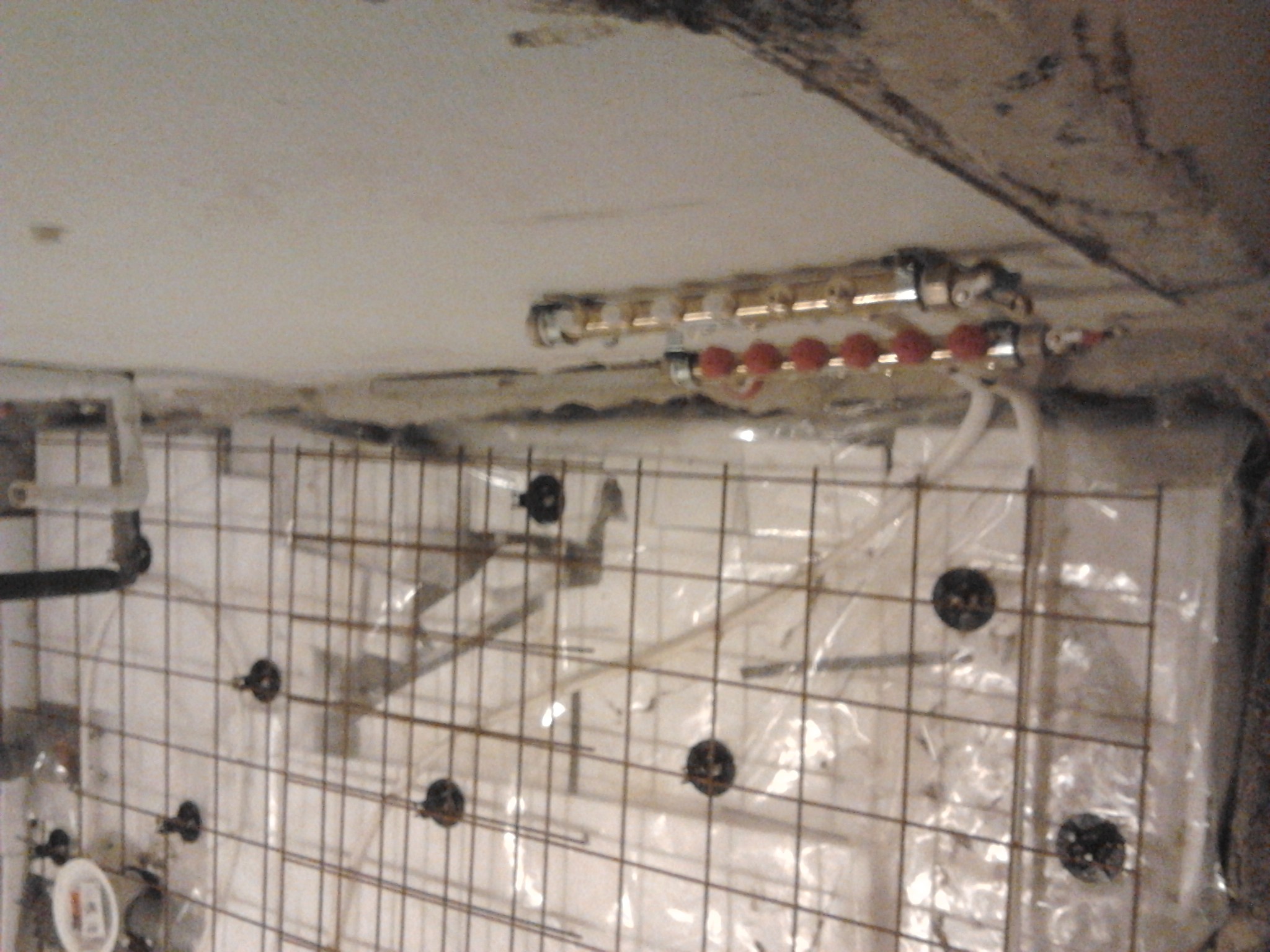
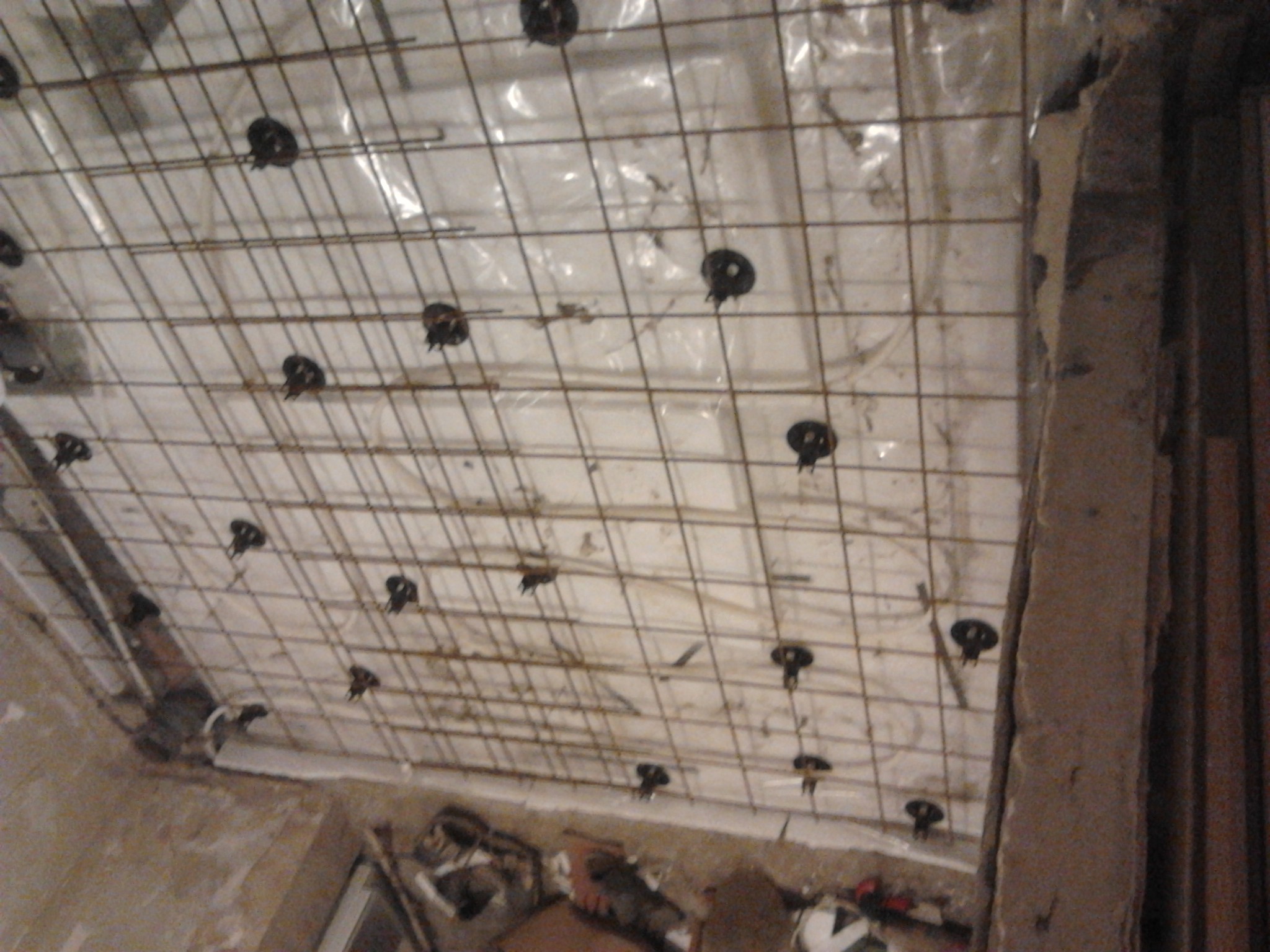
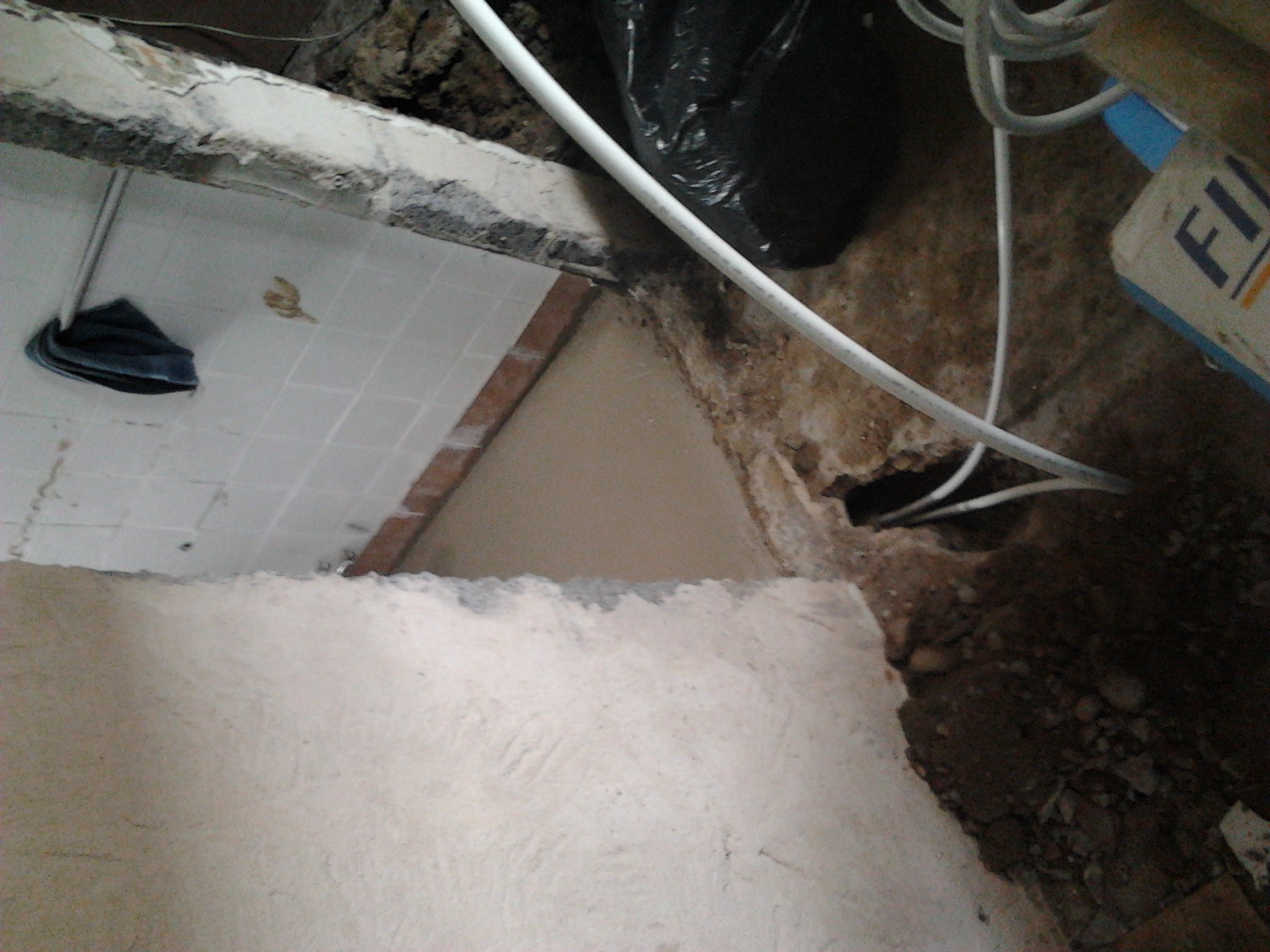
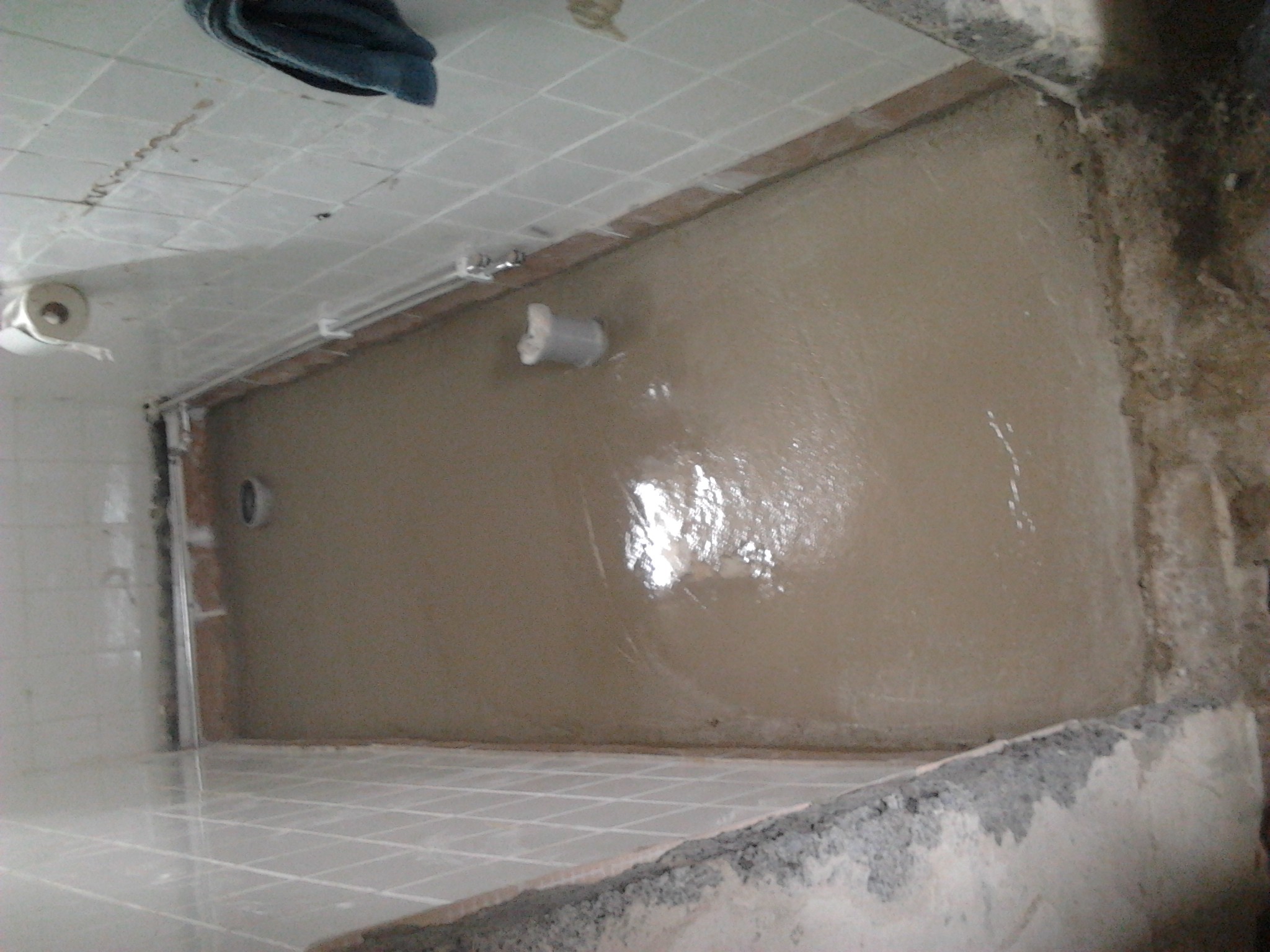
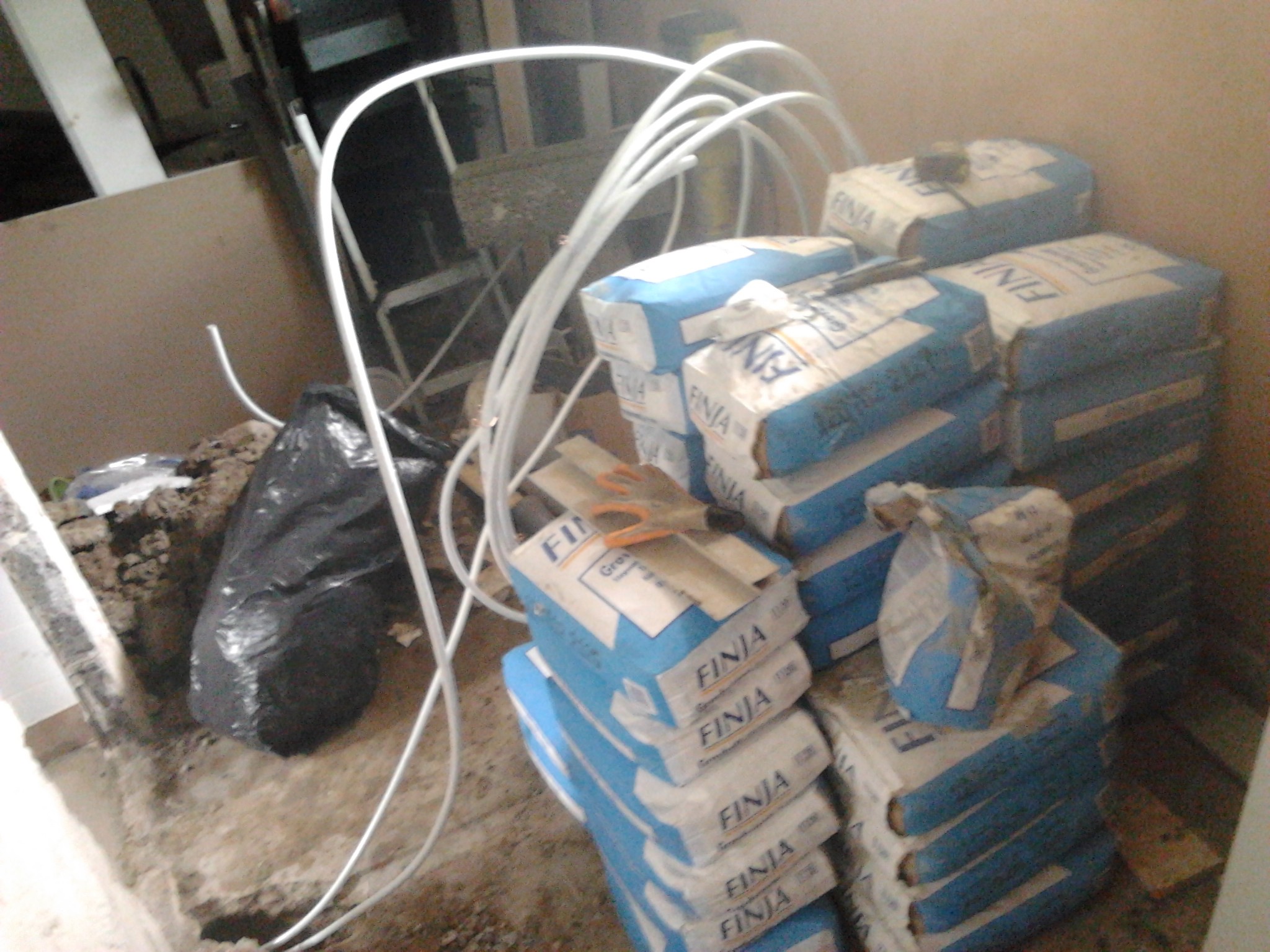
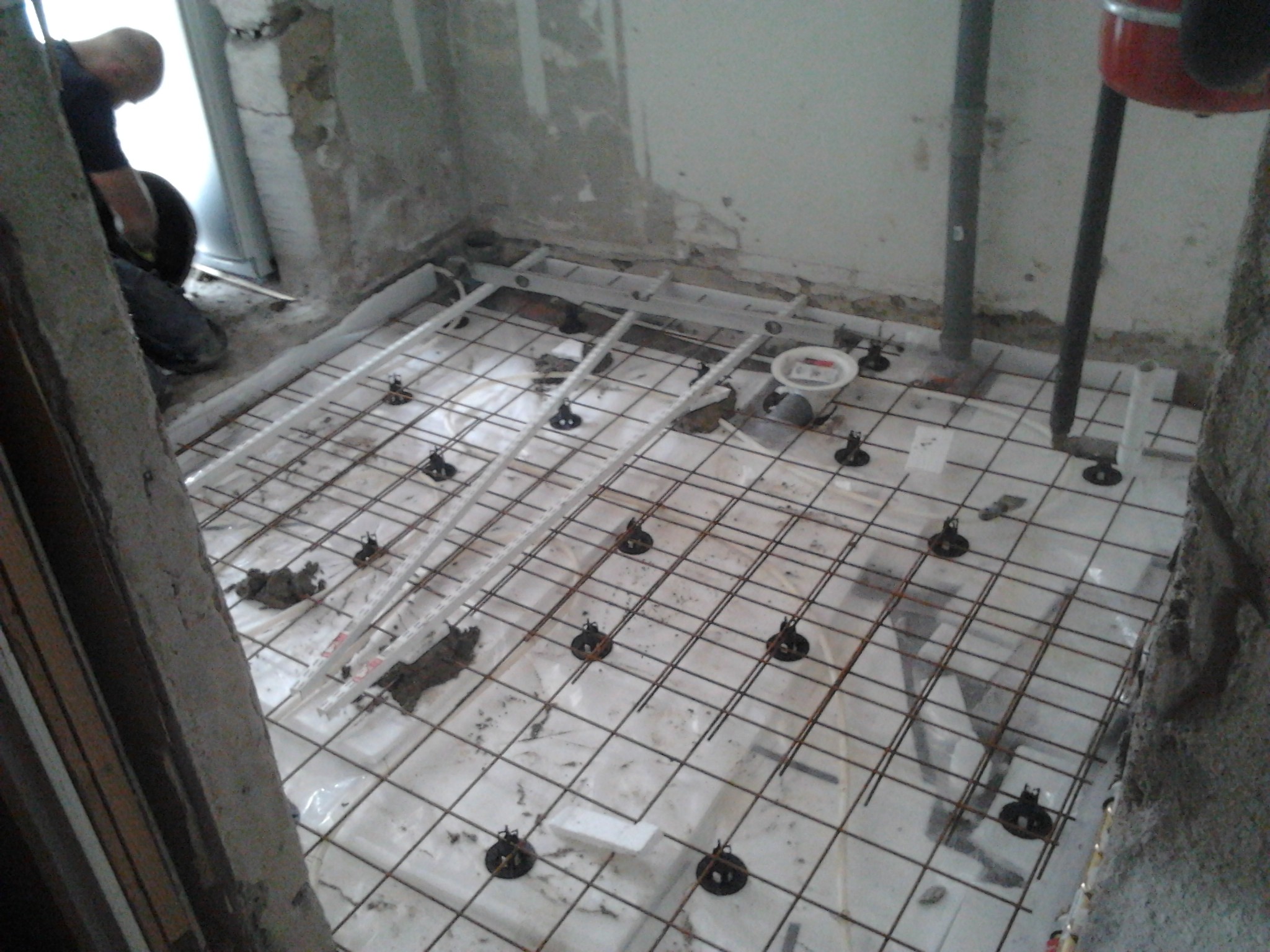
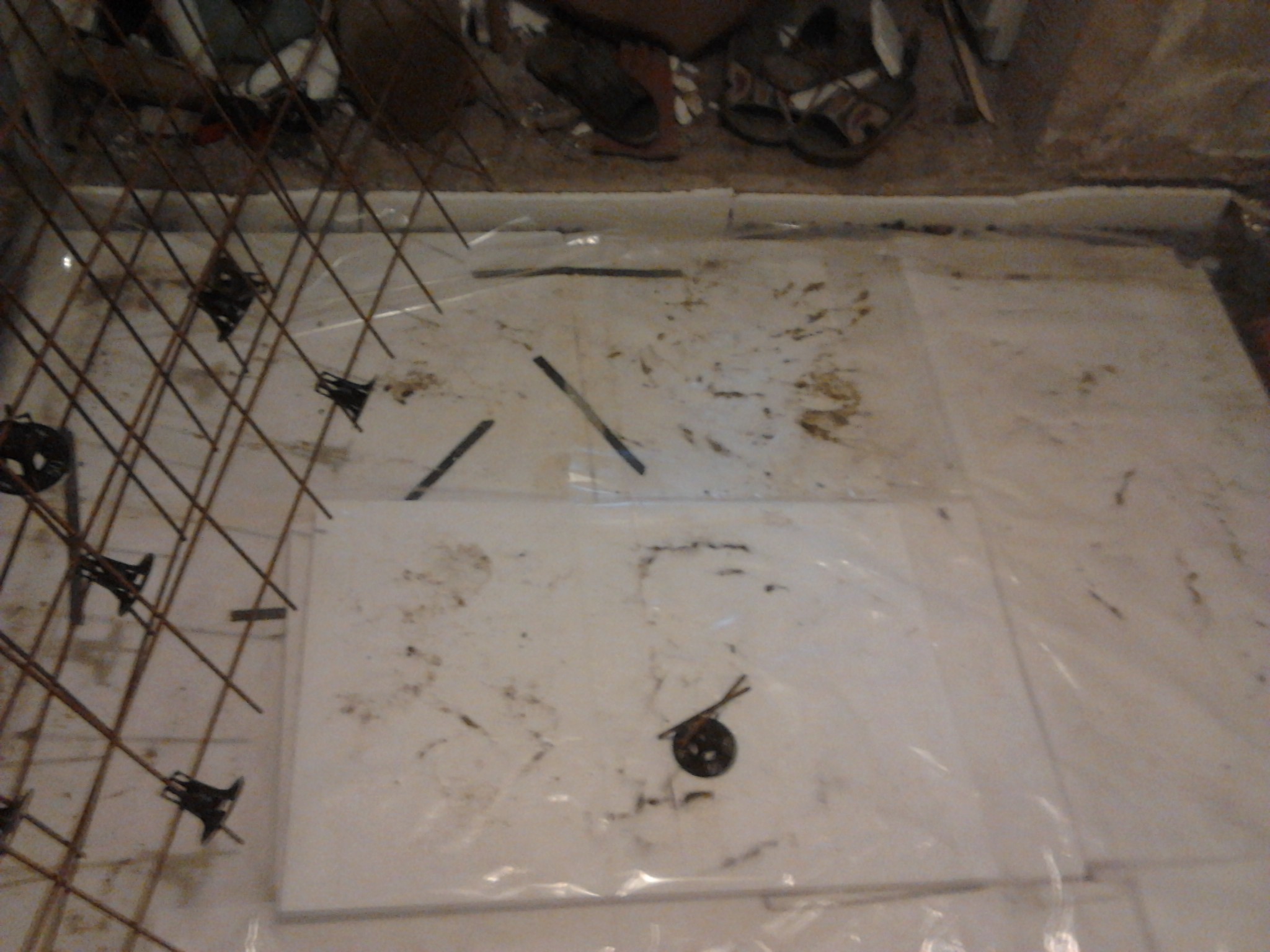
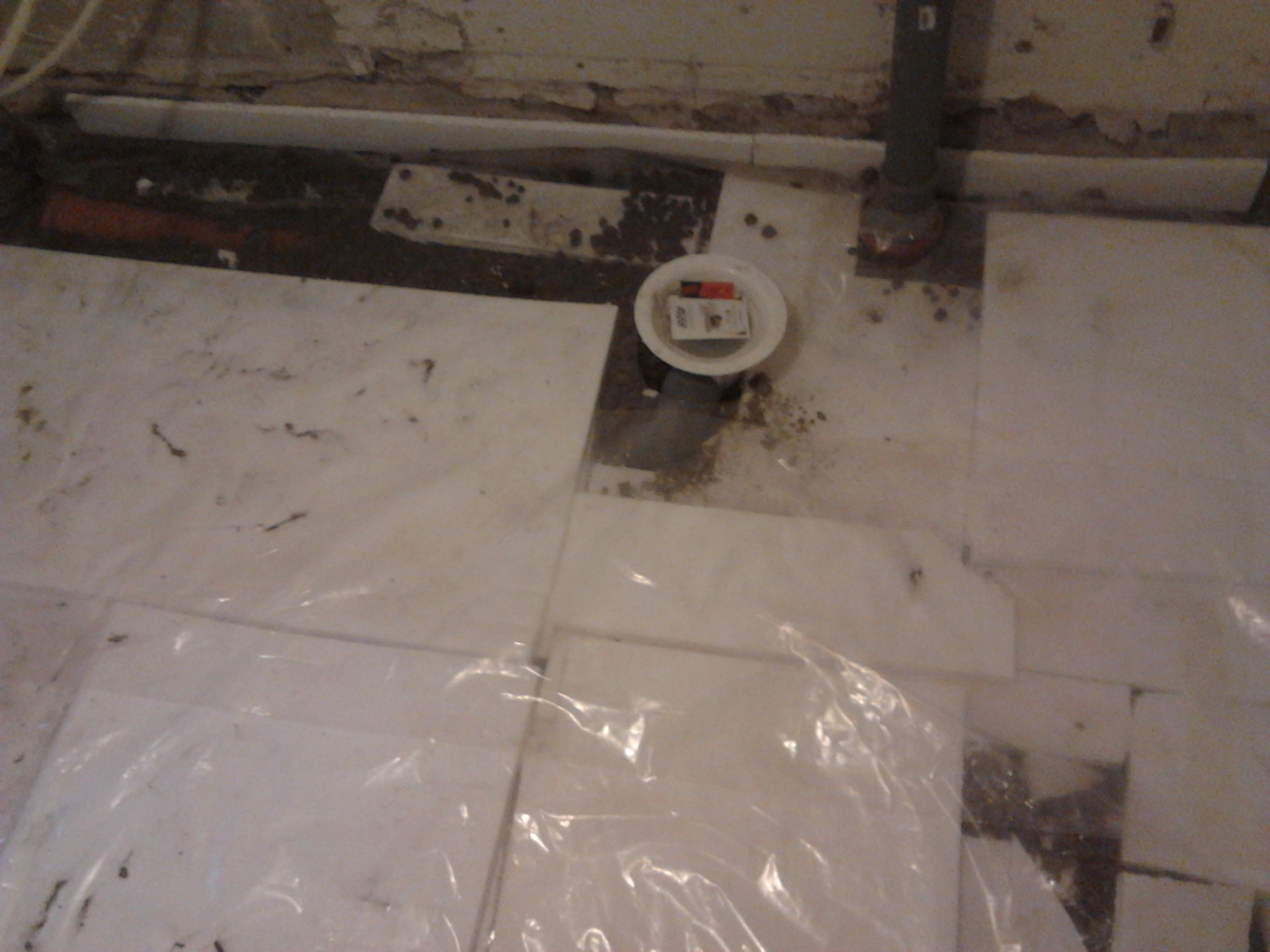
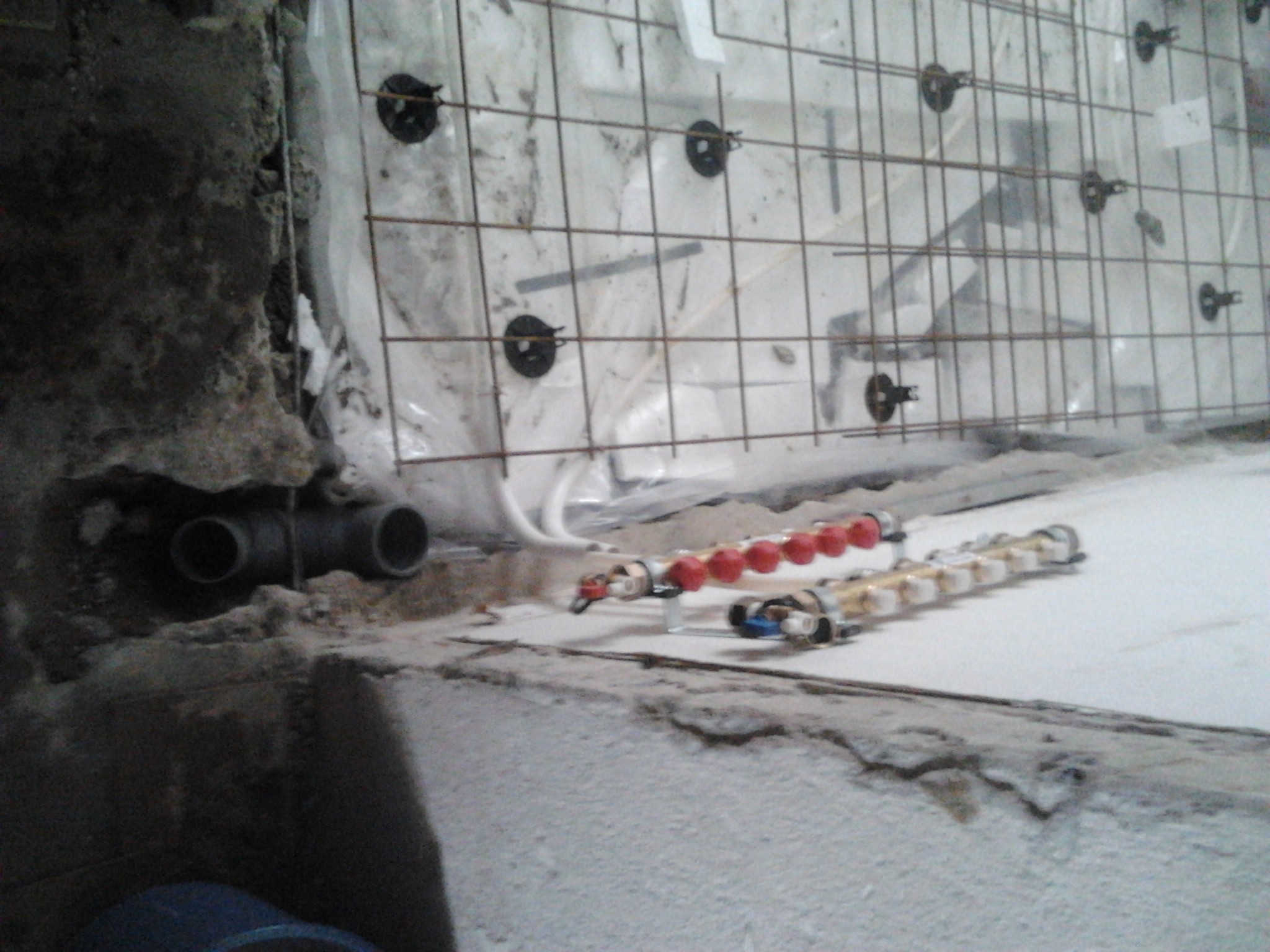
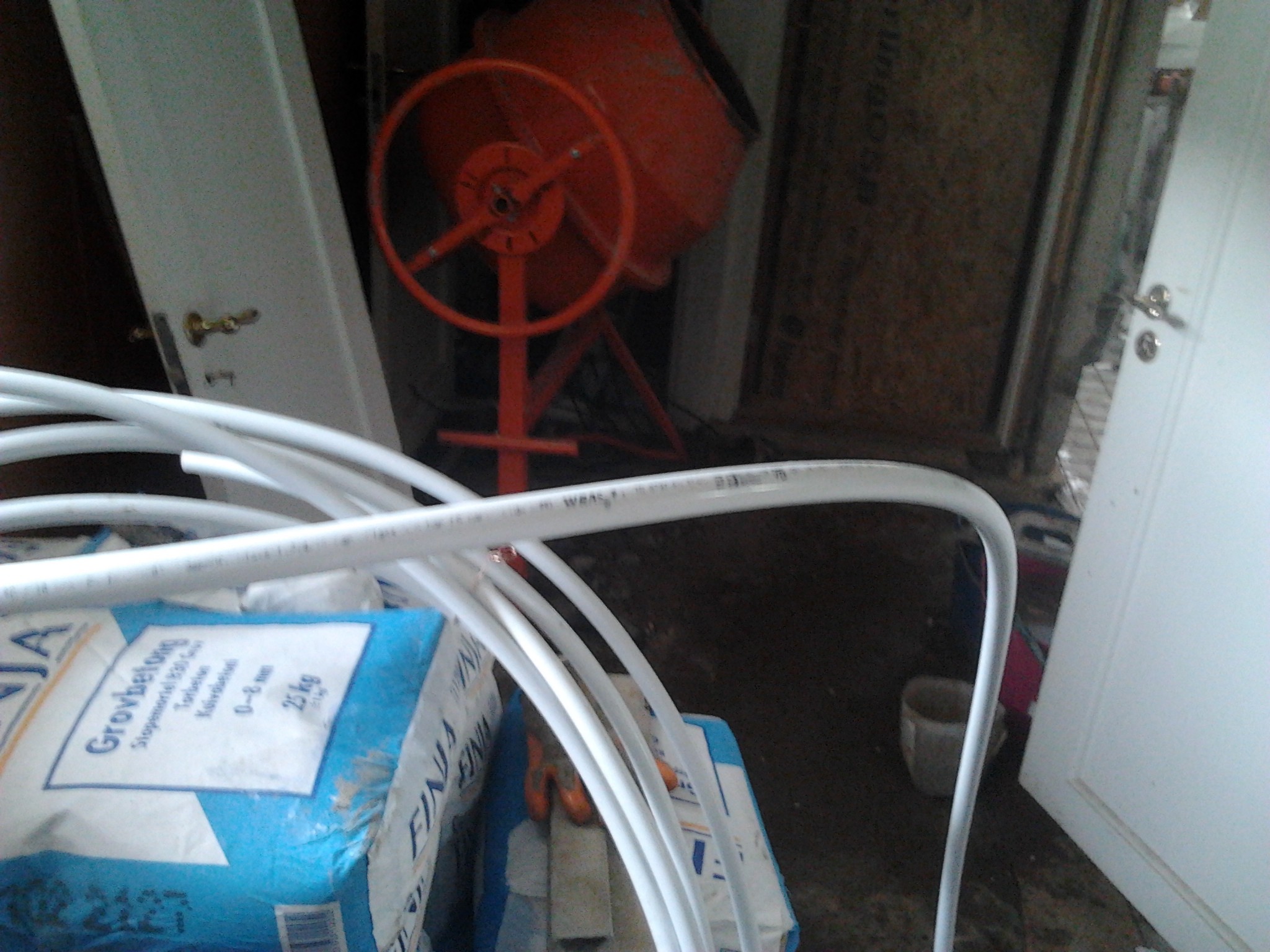
Close-up of exposed orange plumbing pipes in a trench with surrounding dirt and tiled bathroom wall. Construction site with drainage pipes and scattered gravel, partially covered with plastic sheeting. Insulation panels and tools arranged over a prepared floor area during a construction project, with visible plumbing pipes in the background. Underfloor heating pipes with valves attached to a manifold, installed on a grid structure in a construction setting. Construction project showing a ceiling with metal grid and plastic insulation for renovation. A partially renovated area with exposed pipes, tiles, and a hole in the ground. Freshly poured concrete floor in a partially tiled bathroom under renovation. Bags of Finja cement stacked in a room under renovation, with white tubing and a black garbage bag on the floor. Underfloor heating installation with exposed pipes and wiring grid in a partially renovated room. Worker in the corner adjusting ventilation. Newly poured concrete floor in a room with visible plumbing pipes and a valve manifold on the wall. Renovation in progress.
 
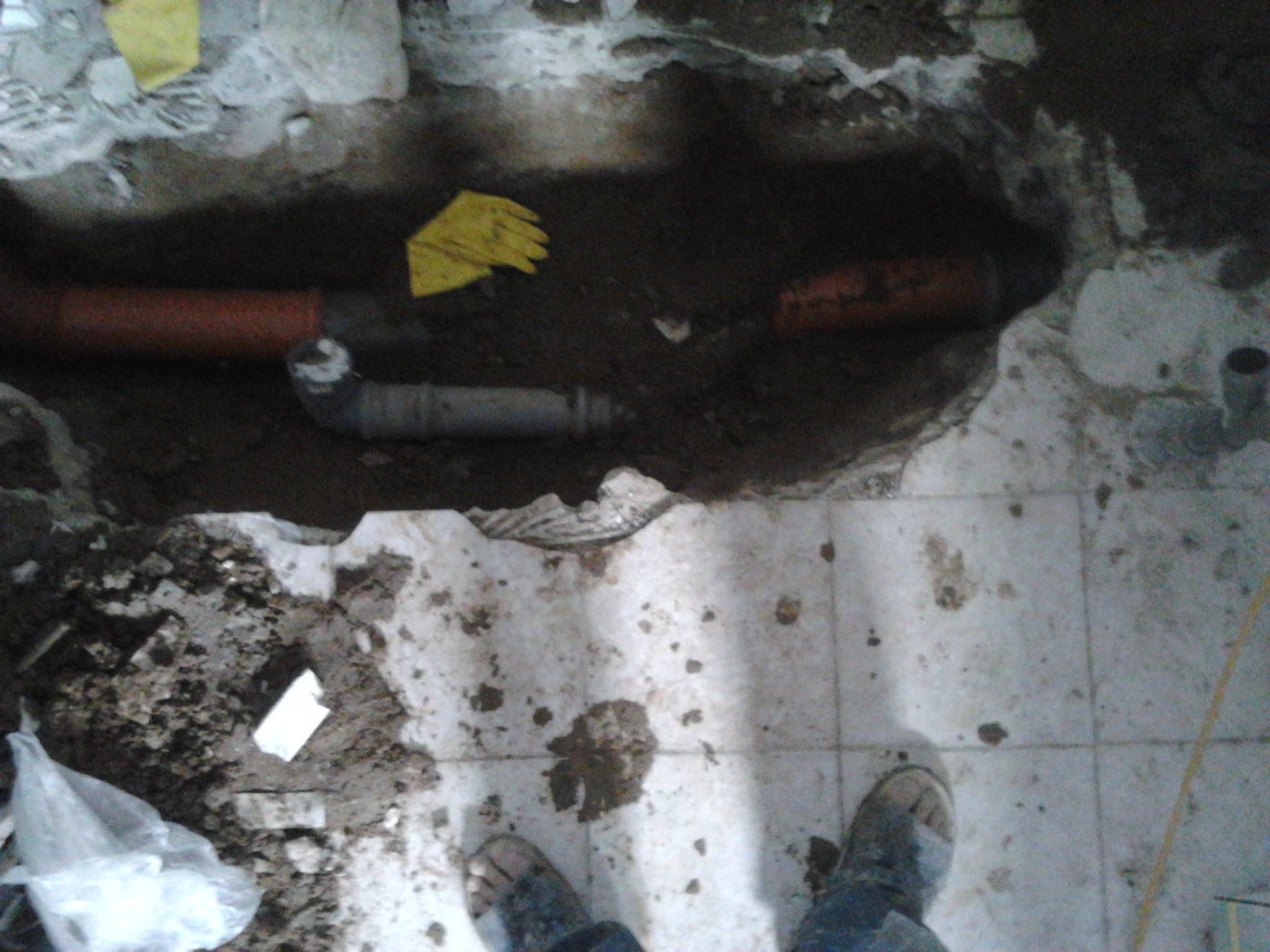
  • Repair work on tiles revealing pipes in the ground; a pair of yellow gloves lies nearby on the dirt.
  • A buried orange pipe partially covered with dirt in a small excavation site with uneven walls.
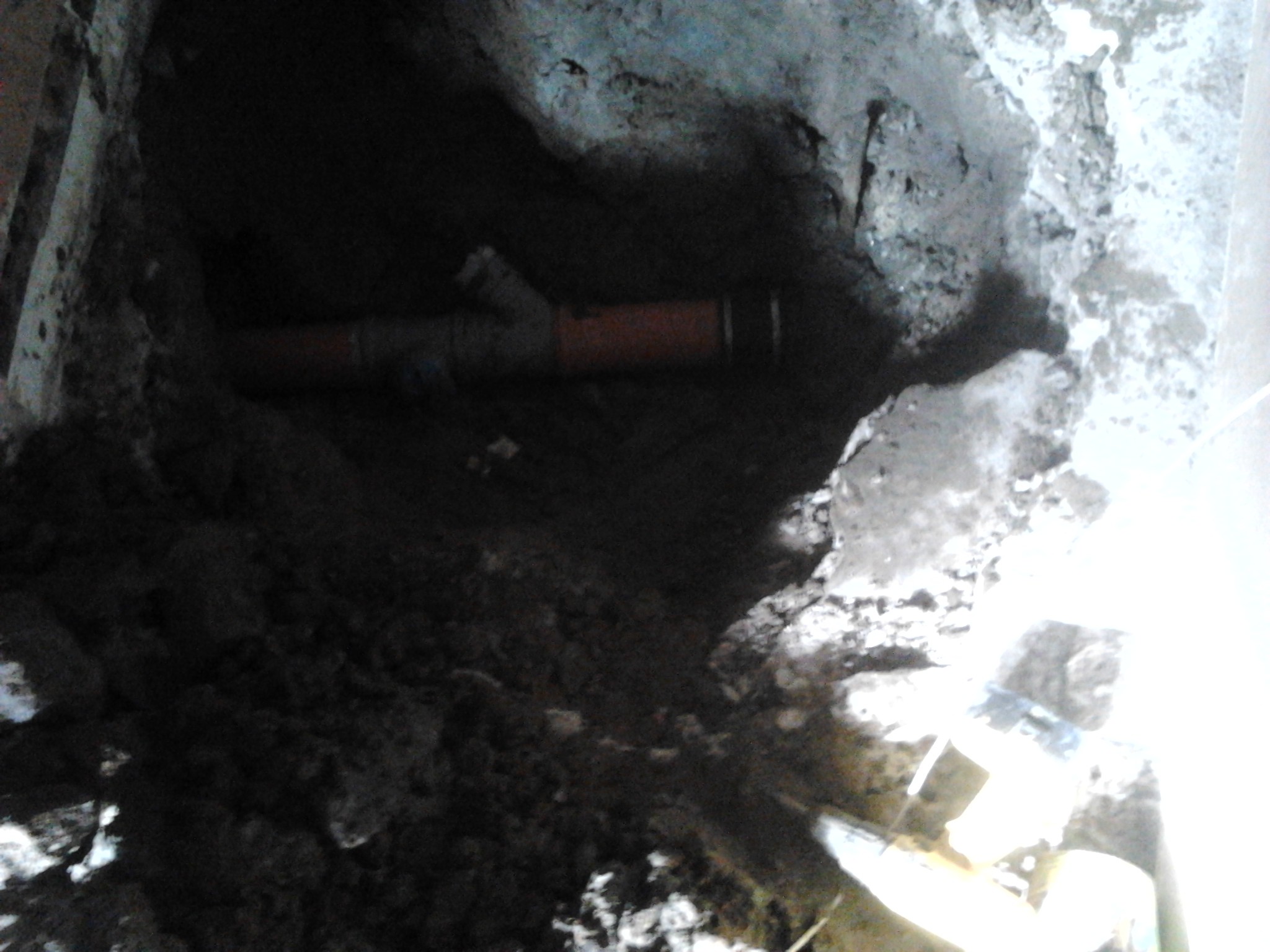
  • A plumbing pipe partially buried in soil.
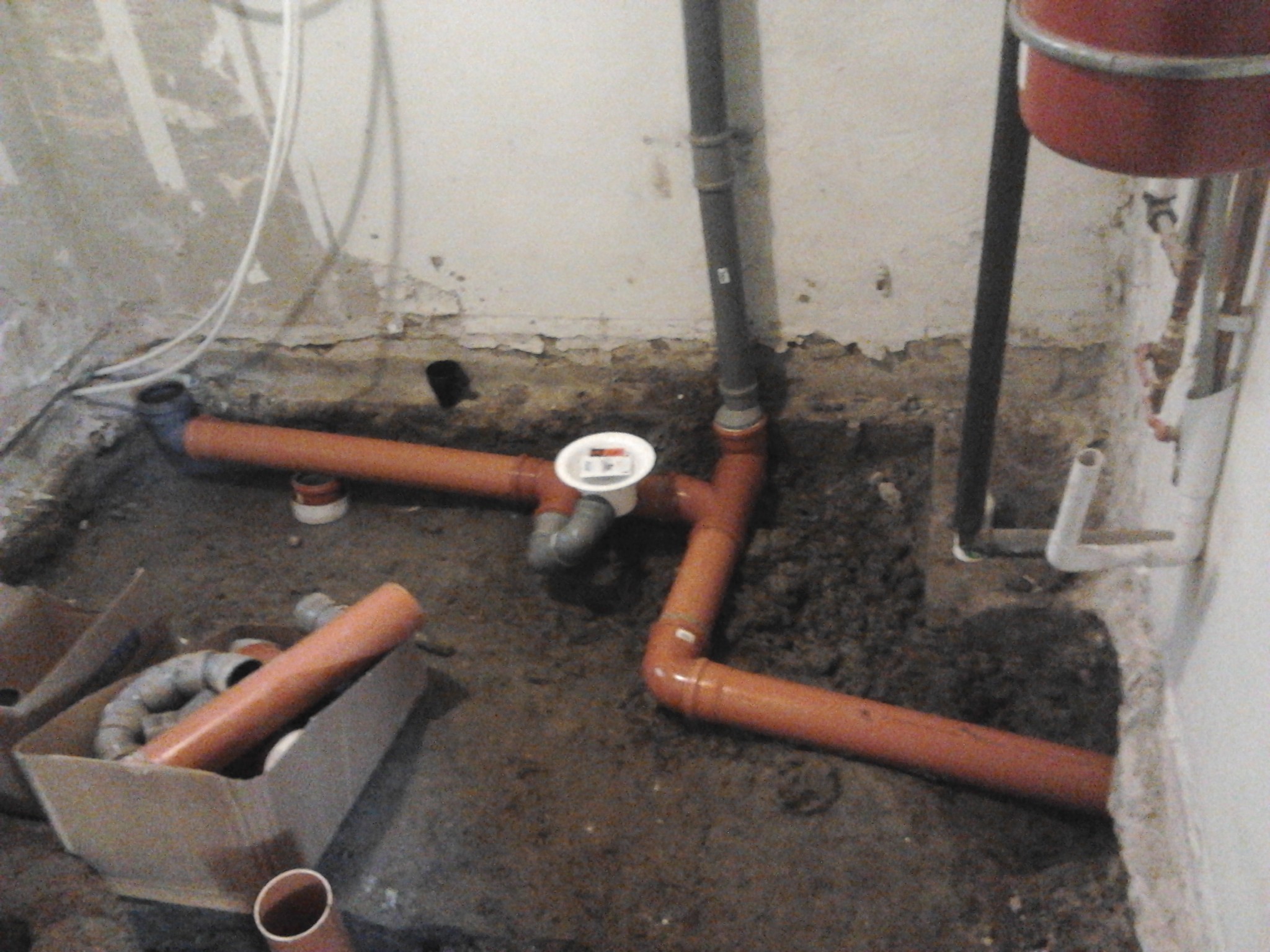
  • Sewer pipes installation in a basement under renovation, with exposed concrete floor and cardboard box containing additional pipe fittings.
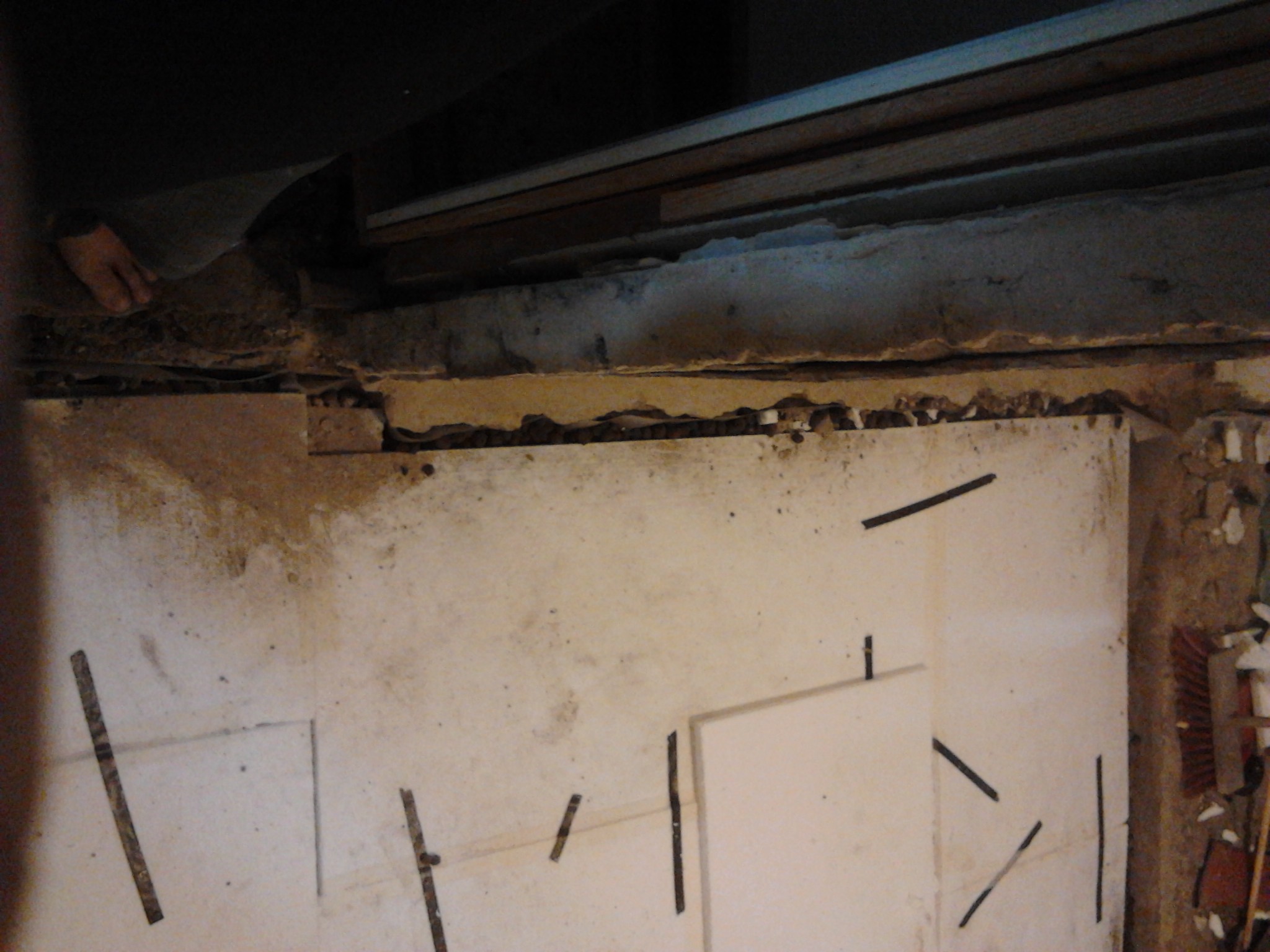
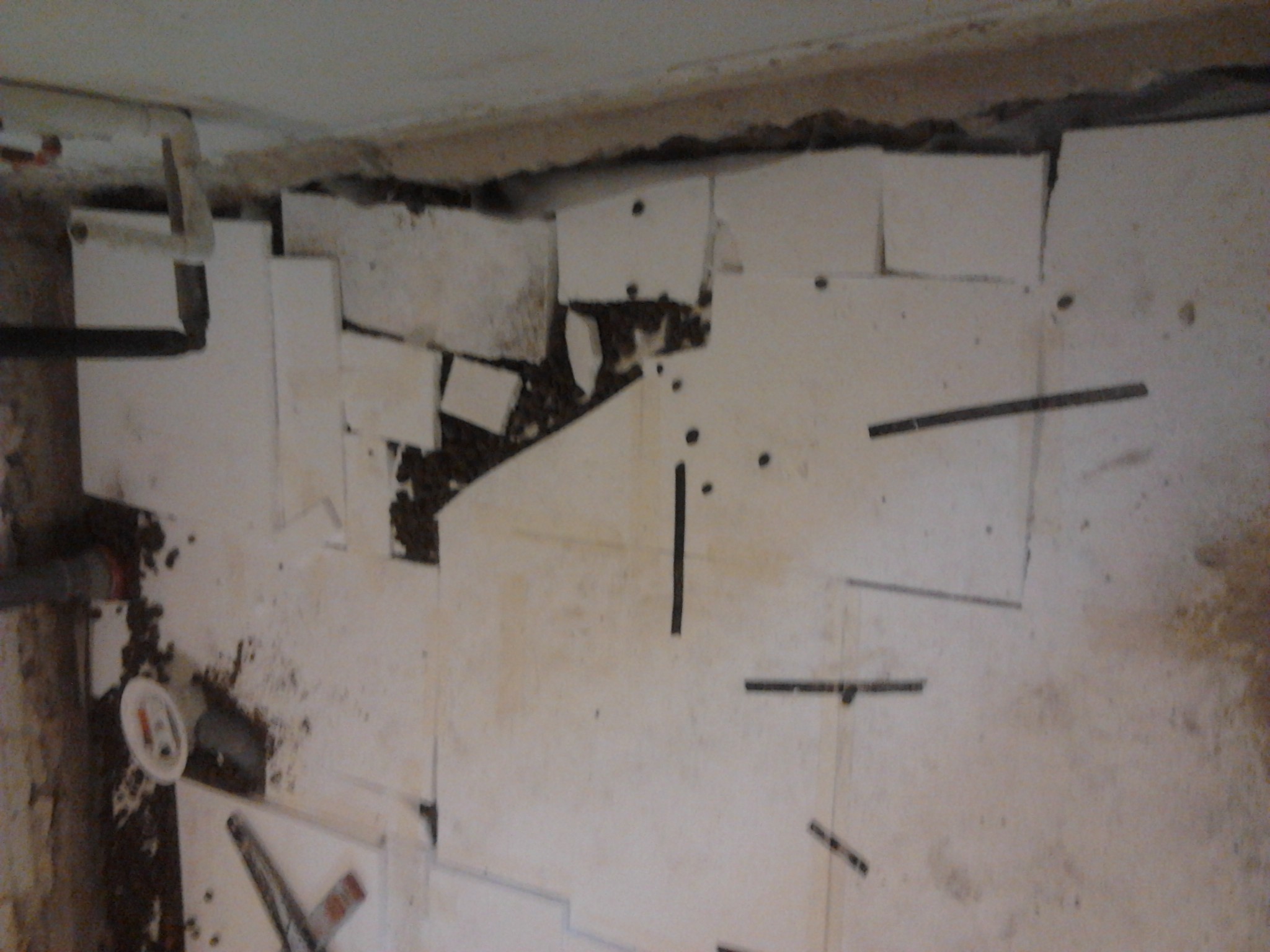
  • Cracked and damaged wall section with exposed materials in a construction or renovation project.
  • Broken white tiles scattered on the floor, with visible dirt and some pipes.
  • Renovation project showing a partially tiled floor, tools, lightweight concrete bag, and plumbing pipes near a wall.
  • Construction site with white boards on the floor, various tools, and a bag of materials.
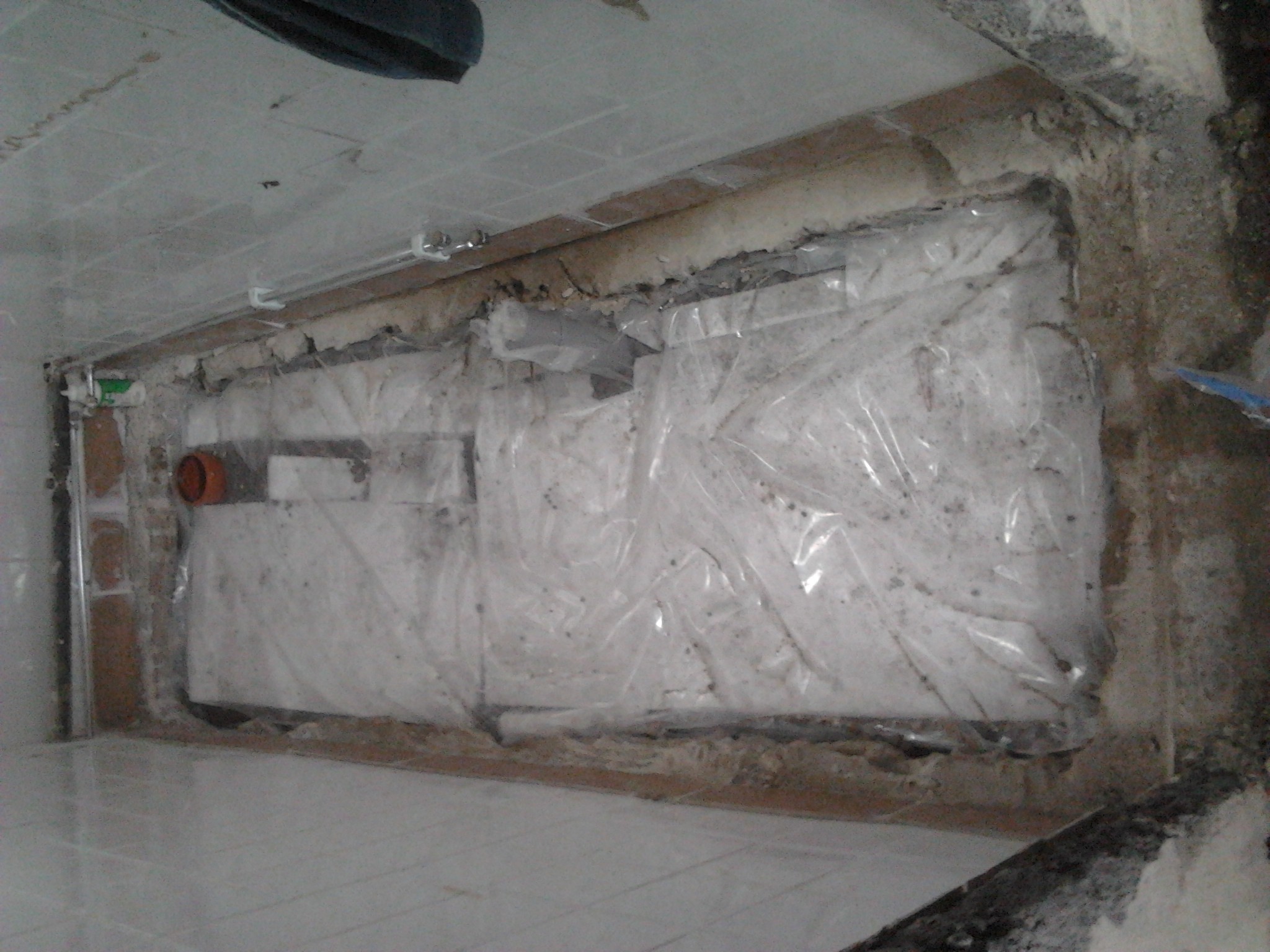
  • A constructed space with plastic-covered insulation and exposed pipes, possibly a bathroom under renovation, showing tiles and wall structure.
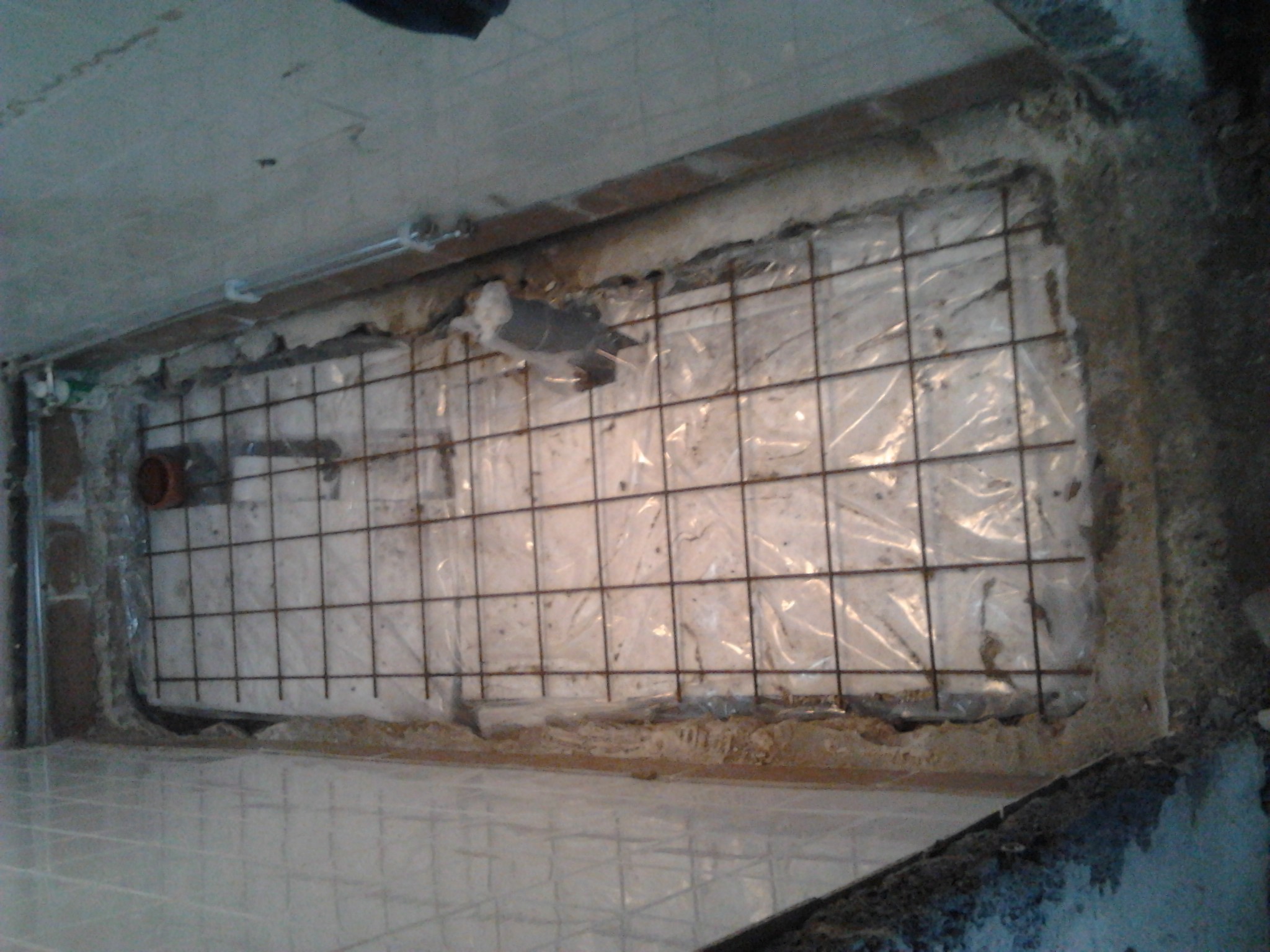
  • Concrete floor preparation with rebar and plastic sheeting in a renovation project.
  • Plastic sheets on a floor with wire mesh and some dirt, suggesting a construction or renovation space.
  • Damaged bathroom floor with scattered debris, exposed pipes, and a plastic covering, suggesting ongoing renovation or construction work.
  • Construction site with exposed pipes and wiring on a concrete wall, possibly in the initial stages of a building renovation project.
  • A concrete mixer in a workshop with PVC pipes and cement bags in the foreground.
  • Concrete floor being installed in a room with visible pipes and grid structure. Worker partially visible in the process of laying cement.
Last edited:
there are quite a few pictures hehe have a lot but these should be enough
Regards
 

Best answer

Looks good. Hopefully, you won't have to change the sewer next time because this floor might be a bit more difficult to tackle? ;-).
 
Maxpayne Maxpayne said:
Thanks, but I don't have sand or gravel, I have ordered ready-mixed coarse concrete. I want to check how much time (or how many mixes in the concrete mixer) it will take for casting a room of 6 sqm with a 10 cm thick slab. Thanks for the help
That's about 600 liters, so it will likely be around 12 drumloads with about 50L in each. If it's a 240 volter and a small mixer, it will probably be double, as they can't handle the weight. When I cast, I borrowed so I had 3 larger mixers and 2 good friends on hand. It was still quite stressful to vibrate and cast, load into the mixer, etc. A bit larger than what you're planning... around 14 sqm and 15 cm thick. 2.1 cubic meters. Next time, I will order...
 
Don't you think the problem is solved after 7 years? ;)
 
  • Like
Christian.a
  • Laddar…
Click here to reply
Vi vill skicka notiser för ämnen du bevakar och händelser som berör dig.