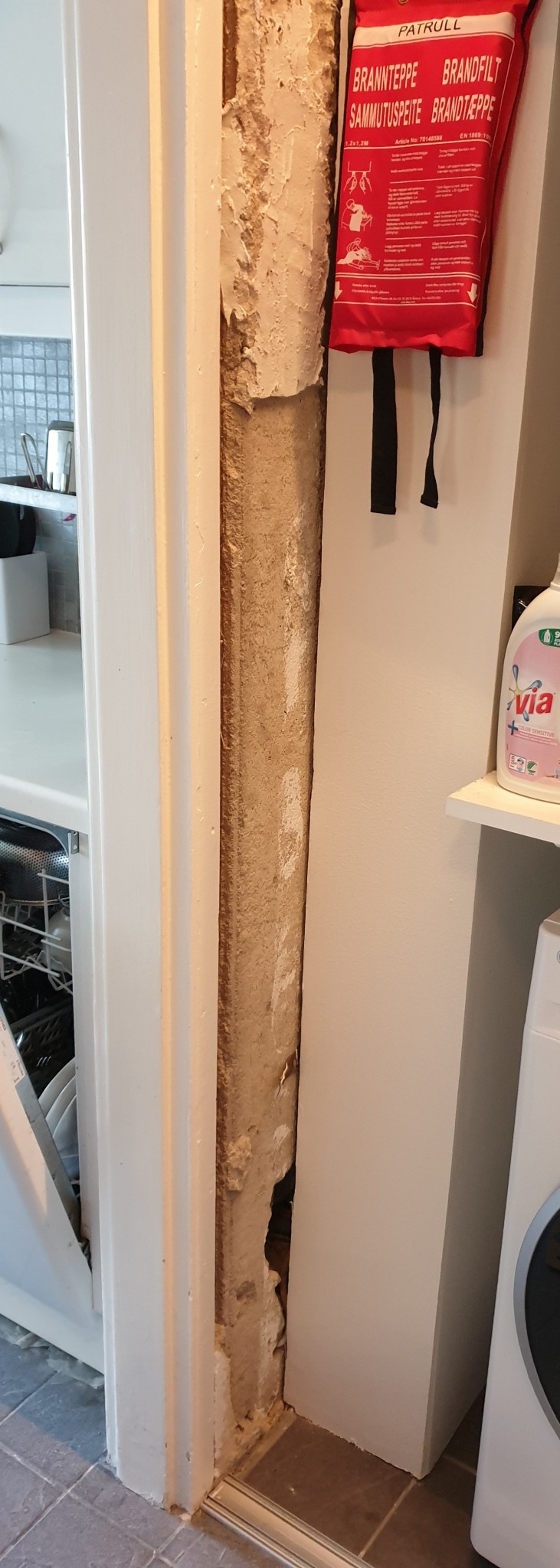
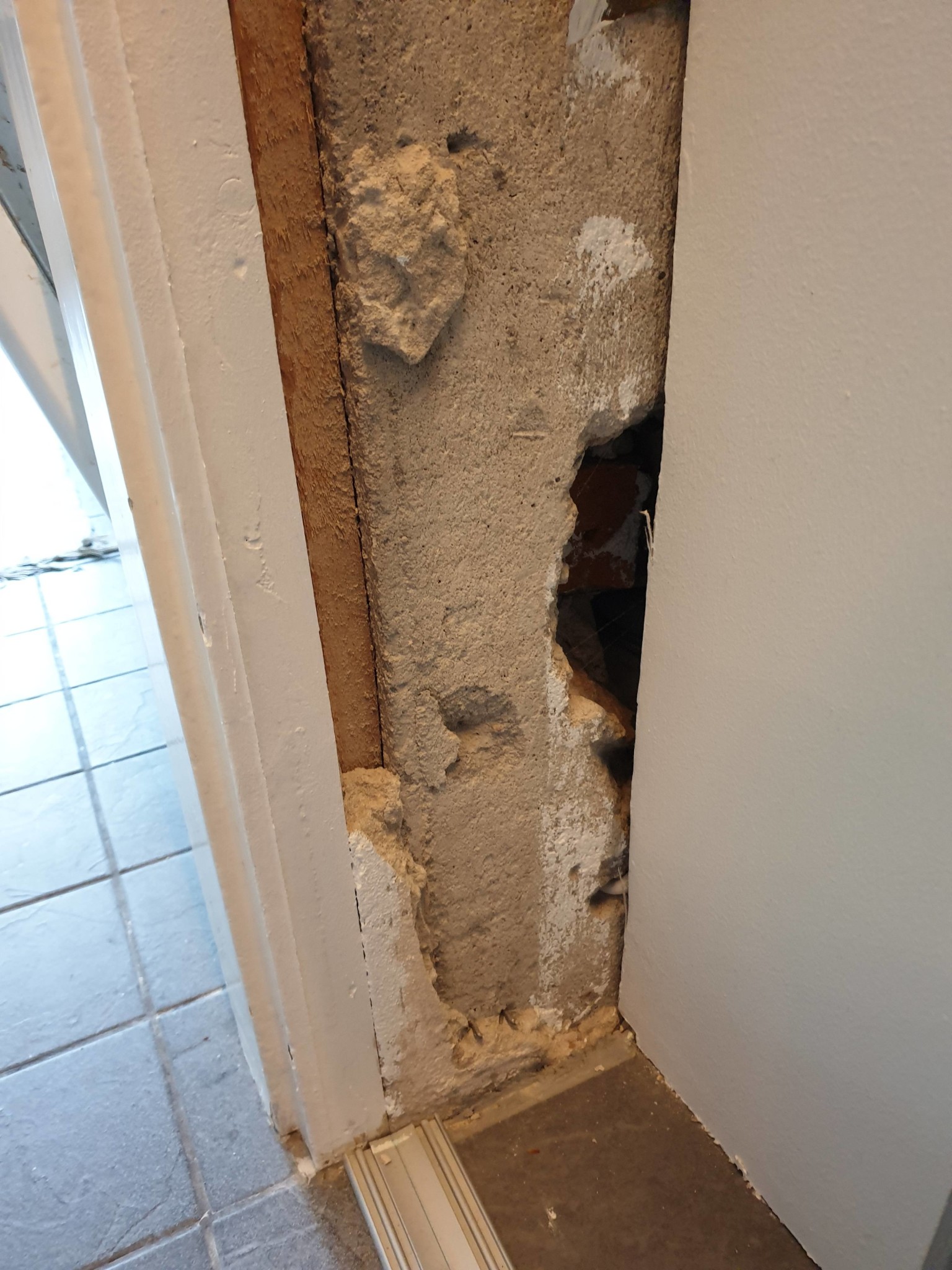
I redid the wardrobe at home a few months ago. Everything turned out nice and well, but a small part was left unfinished, and now I really need to tackle it and complete it. I've been hesitant to fix it since I have little experience working with concrete surfaces.
Does anyone have tips on how to approach this to make it look reasonably nice for a wardrobe?
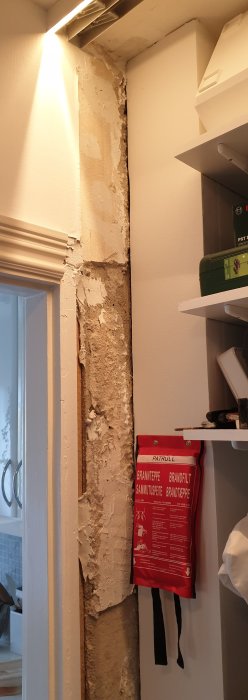
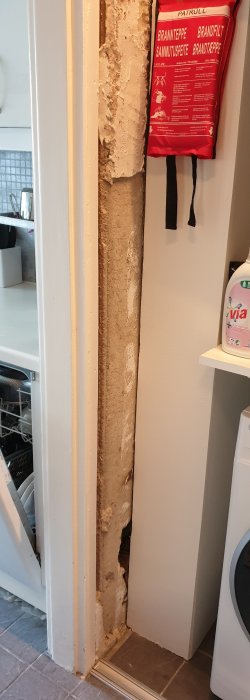
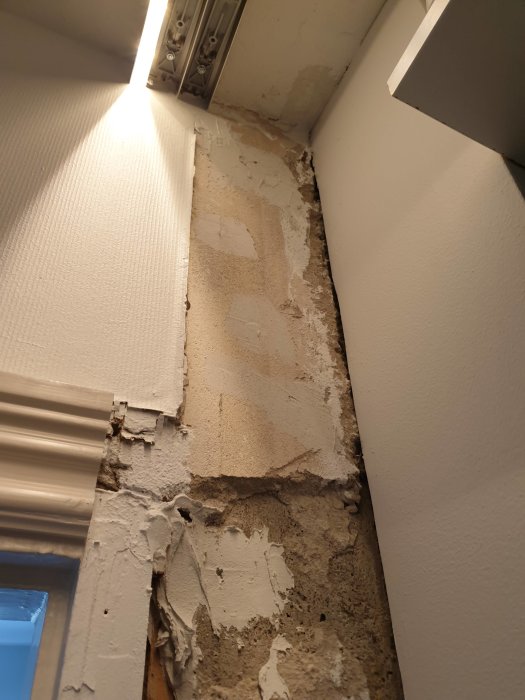
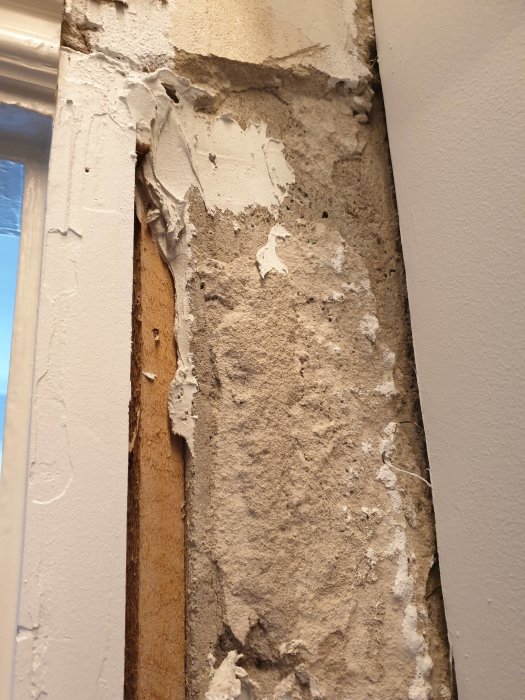
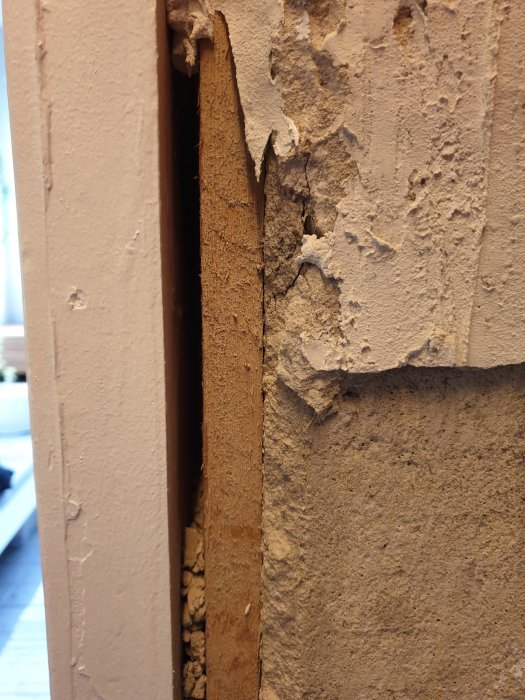
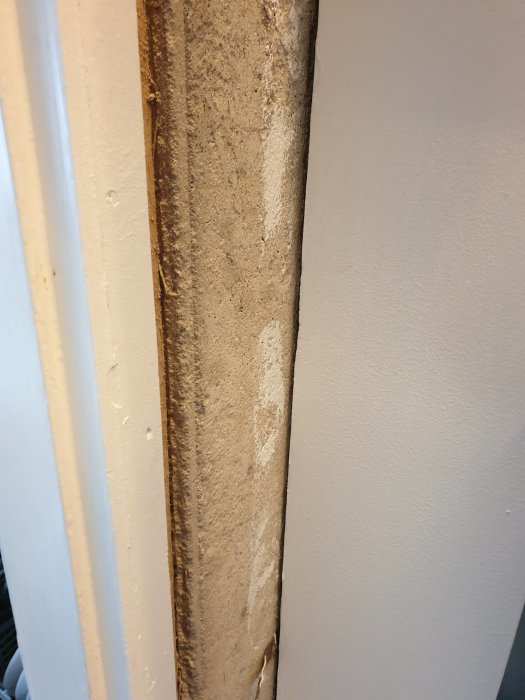
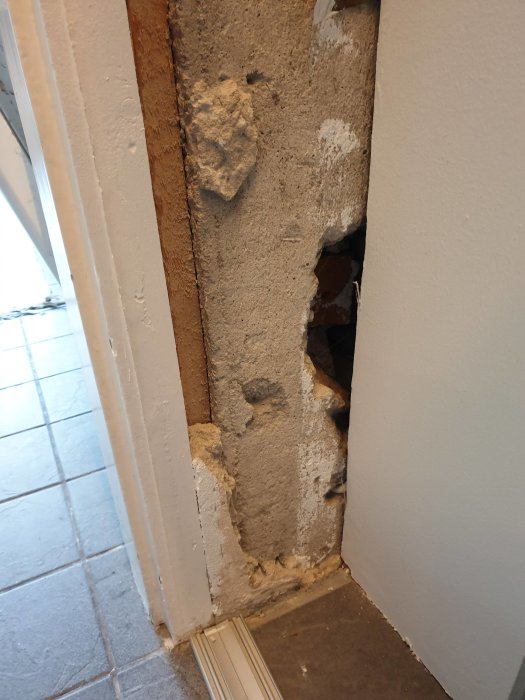
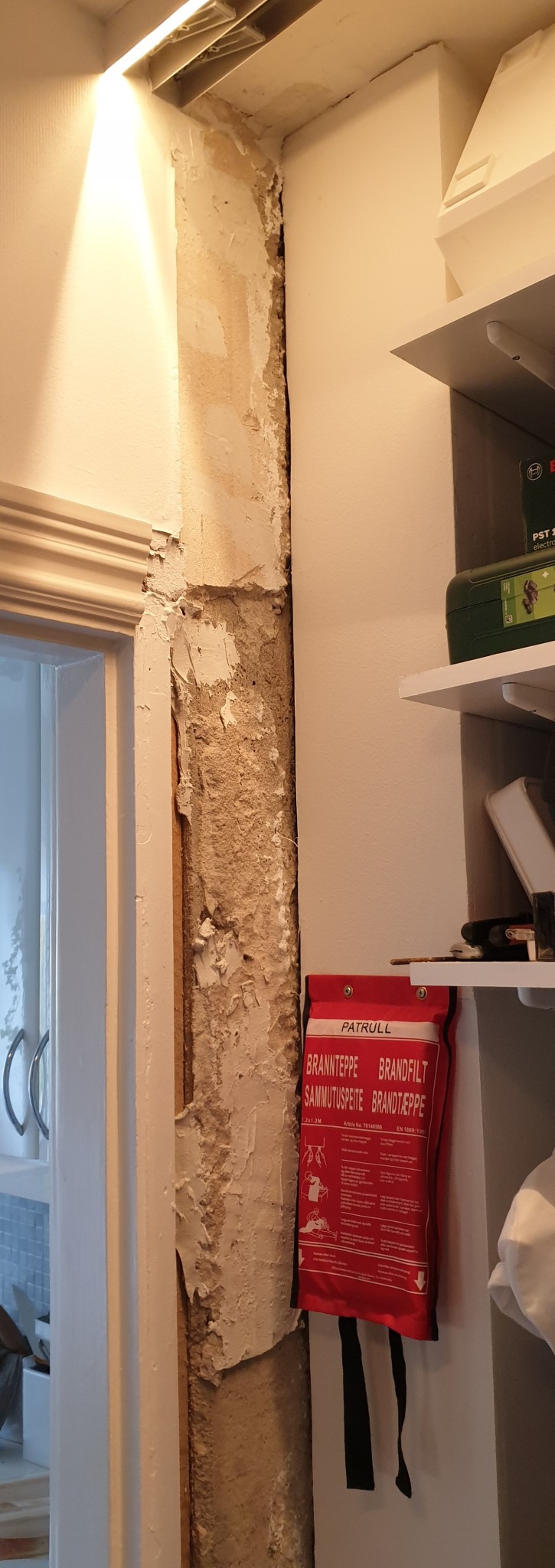
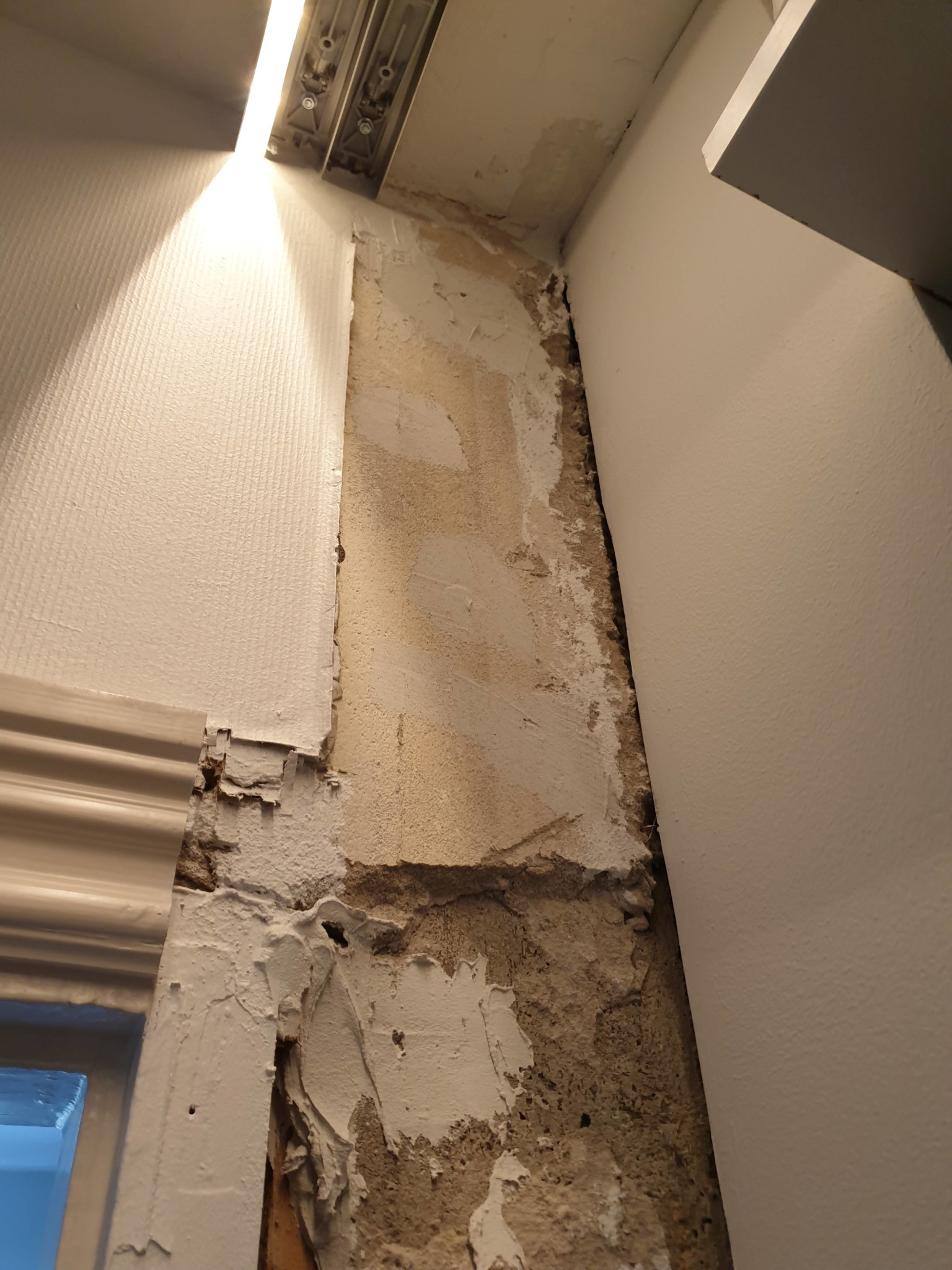
It didn't look particularly nice there before we started the wardrobe renovation. But during the process, most of the surface layer fell off (fix or render or what should we call it?), and it ended up looking even worse. So now I've knocked down everything that was loose.
Pictures from top to bottom:
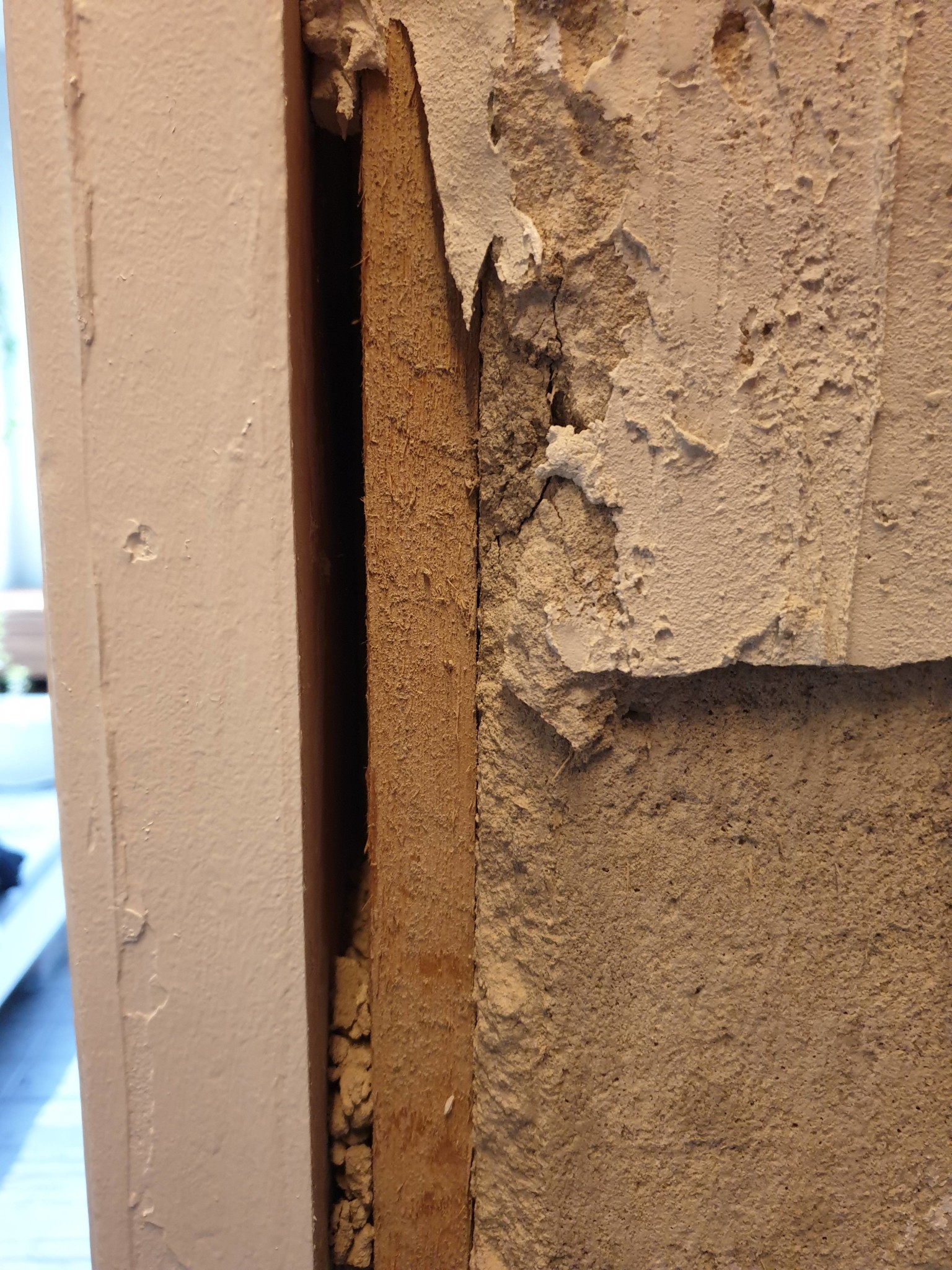
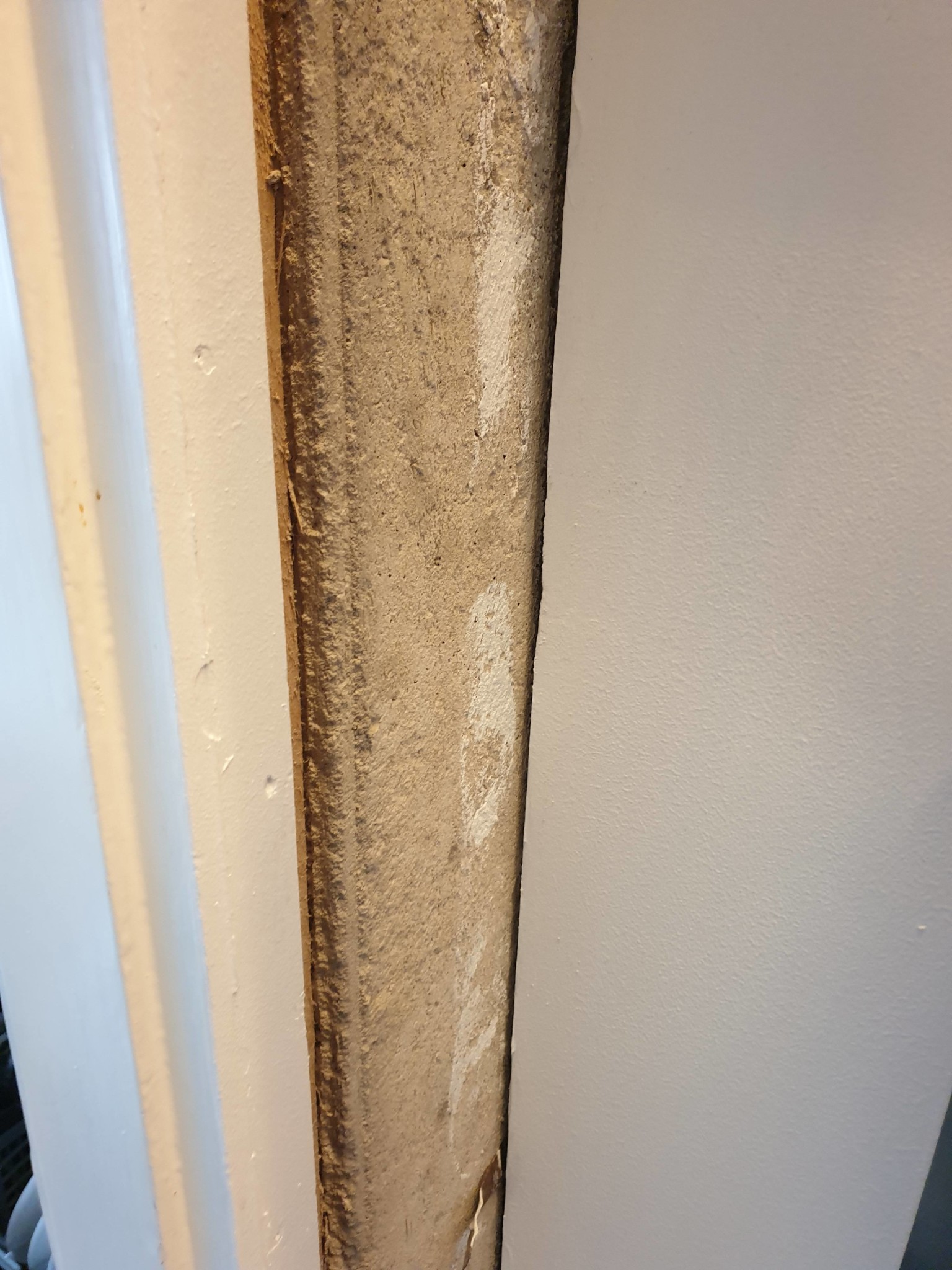
And in more detail:
I used "husfix" to repair smaller holes in other parts of the wardrobe where the surrounding surface layer remained intact (without any tendency to crack or fall off), and it worked excellently. I used regular filler for the smallest holes. I tried applying some "husfix," which might be visible in the pictures, to see if it was possible to work with it, but it feels impossible to fill that area with "husfix" and achieve a somewhat even end result. Or should I work on the consistency of the "husfix," and how do I succeed with that if so? What other material can be used?
Placing a board there is possible, but it would require a fair amount of fiddling to attach it, and it probably won't look very nice and might interfere slightly with the sliding doors. But if anyone comes up with a simple way to solve it, I would be grateful for tips.
Hi,
I redid the closet at home a few months ago. Everything turned out nice and well, but a small part was left, and now I really have to tackle this and finish it. I have been reluctant to fix it as I have little experience working with surface layers on concrete.
Anyone who has tips on how I should approach this to make it look reasonably nice for a closet.
It didn't look particularly nice there before we started the renovation of the closet right there. But during the work, most of the surface layer fell off (fix or plaster or what should we call it?), and it looked even worse. So now I have knocked down everything that is loose.
Pictures from top to bottom:
[image]
[image]
And in more detail:
[image]
[image]
[image]
[image]
[image]
I used husfix to repair smaller holes in other parts of the closet where the surrounding surface layer remained (without a tendency to crack or fall off), it worked excellently. Used regular filler for the smallest holes. I tried applying a bit of husfix, which might be visible in the pictures, to see if it was possible to work with it, but it feels impossible to fill that area with husfix and get a somewhat even final result. Or should I work on the consistency of the husfix, how do I succeed with that in such a case? What other material can be used?
Putting a board there is possible, but there will probably be quite a bit of tweaking to attach it, and it might not be very nice and could disturb the sliding doors a bit. But if anyone comes up with a simple way to solve it, I'm grateful for tips.
Grateful for all tips!
Gypsum plaster is relatively easy to work with. Cheap too. Just remember to prime first!
It's not concrete but plaster. If it's an older house, it's likely lime plaster. In that case, one should be careful about using cement-based products. New lime plaster is best.
It's not concrete but plaster. If it's an older house, it's probably lime plaster. Be cautious about using cement-based products in that case. New lime plaster is best.
Isn't it concrete underneath?
I was thinking of knocking down the remaining "plaster" and then filling it with a suitable material that is easy to work with.
Do you mean I should apply lime plaster there? Is it easy to work with?
Lime plaster is easy to work with. When was the house built?
The house was built in the mid/late 40s. The closet that was directly attached to the wall has been there since at least the 60s. I found a lottery ticket from 1960 that got stuck between the wall and a batten. The battens were "nailed" through the plaster and into the hard (concrete?)
The house has a plank frame that is plastered. Reinforced concrete began to be used as a wall material in apartment buildings in the 1960s. In small houses, it has practically never been used except in basement walls. Lime plaster is the best and most flexible material you can use.
The house has a wooden framework that is plastered. Reinforced concrete began to be used as wall material in apartment buildings in the 1960s. In small houses, it has virtually never been used except in basement walls. Lime plaster is the best and most flexible material you can use.
Then I'll go with lime plaster! Will report back with the results.
Then I'll go with lime plaster! I'll return with the results.
I see I promised to return with the results. It was absolutely right to use lime plaster. I was a bit sloppy with the dampening beforehand, so there were some cracks. Now, it was inside a closet, so not very important; had I dampened properly beforehand and been careful with the dampening during and after application, I guess no cracks would have appeared.
What the hell is lime plaster? There's both air and water lime mortar where the common one is air lime mortar. If you apply thickly with 3 mm air lime mortar, it cracks. But it's a good mortar.
What the hell is lime plaster? There are air lime and water lime mortars, where the common one is air lime mortar. If you layer it thickly with 3 mm air lime mortar, it will crack. But it is a good mortar.
This was referred to me when I asked for lime plaster.
Ok, it's an air lime mortar with 1 mm ballast, good mortar, but if you apply more than 5 mm at a time, it can crack. You always start with a 3 mm mortar, then you can apply 10 mm at once. It's unusual for private individuals to use 1 mm mortar because it cracks easily. I don't think it would have cracked if you had used a 3 mm mortar and not lime mortar, a c mortar would have been better.
Ok, it's an air lime mortar with 1 mm aggregate, good mortar, but if you apply more than 5 mm at a time, it can crack. You always start with a 3 mm mortar, then you can plaster 10 mm at once. It's unusual for private individuals to use 1 mm mortar because it cracks easily. I don't think it would have cracked if you used a 3 mm mortar and not lime mortar; a c mortar would have been better.
Okay, good to know. But no worries now, right? It feels like it's holding like a rock with a few small cracks here and there on a surface of 20x260 cm.