Y
  • One should not use pressure-treated wood indoors - risk of smell.
  • It can be advantageously used outdoors, for example, decking.

But... How is it to start mixing in pressure-treated wood in constructions that previously have untreated wood?

I am renovating an outbuilding now, columns that support the roof, and so on.
- Is it an advantage or disadvantage to start replacing damaged parts with pressure-treated wood, or is it like putting moist wood against the existing so that the existing gets damaged?

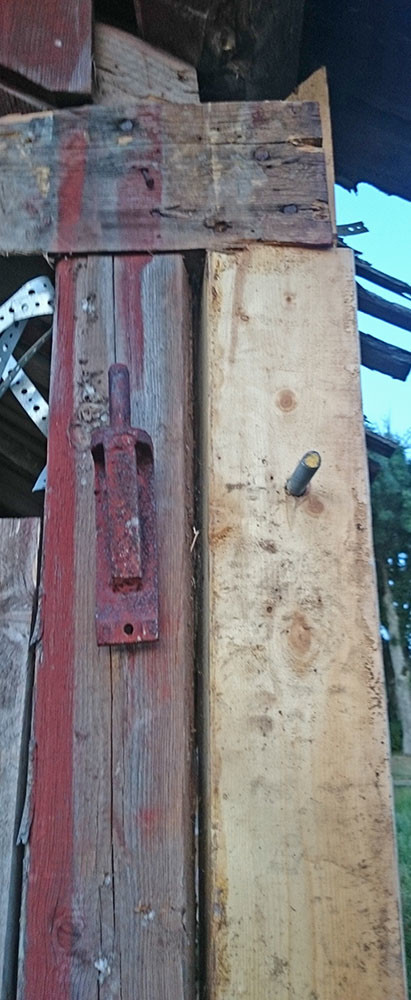
For example, I need to replace the horizontal block. Will the rest of the construction suffer if I choose pressure-treated wood?
Old wooden beam with red paint and a new untreated wooden post with a metal bracket; part of a building under renovation.
 
In that position, it probably matters less, since we are presumably above a door or gate under an eave?

But yes, I think your reasoning holds. It's not always wise to just throw in treated timber in the wrong place, as it can still be "continuously wet" and carry moisture to the unprotected parts of a structure. However, if it's airy enough to dry out, it works.

A few years ago, I replaced the sill beam on one side of my barn/hayloft. It's slightly low, but on stones, and there is water splashing and so on (the 100-year-old part) that was just powder in places. It seems to work in the "joint" between treated and untreated parts, but there is also good ventilation.
 
Click here to reply
Vi vill skicka notiser för ämnen du bevakar och händelser som berör dig.