
2,061 views ·
11 replies
2k views
11 replies
What type of plaster is suitable? Interior wall in basement laundry room
Hello,
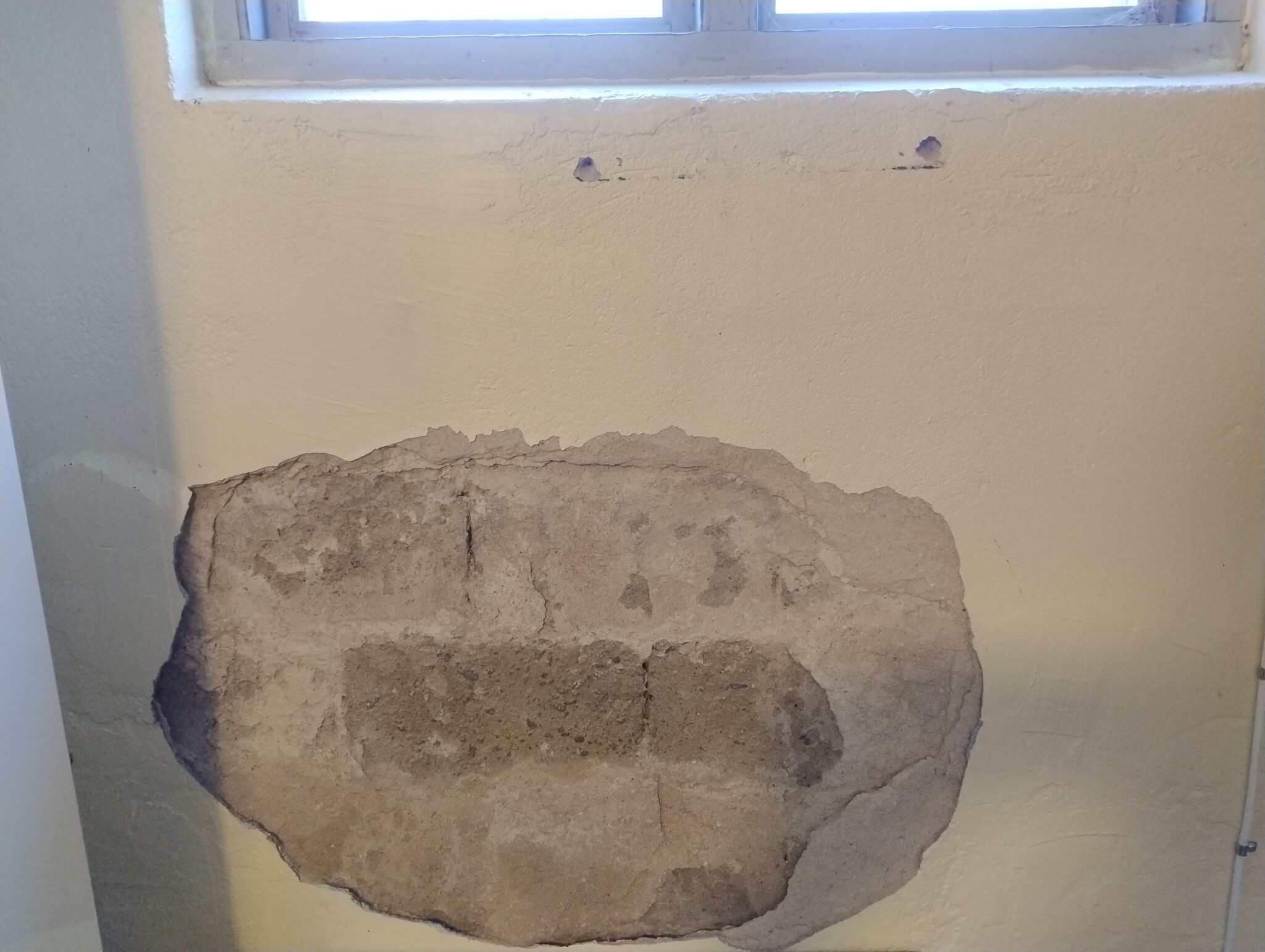
As the title suggests, what is the best type of plaster/lime/mortar for patching a spot on an internal wall in a basement laundry room? I want something that breathes and minimizes dust. I will probably paint with breathable paint. The surface is about 0.5x0.5m in size, below ground level.
I'm not worried about moisture from the laundry room itself, as it is well-heated, ventilated, and has a dehumidifier. What I'm concerned about is that any moisture coming from the foundation should be able to enter the laundry room as unobstructed as possible and then be managed through the same ventilation and drying solution as the laundry.
As is probably clear, I am an amateur in this matter. Is it sensible to plaster so thickly on one spot, or should I renovate the entire laundry room...? Could it suffice/hold to do it in several layers and build up to a reasonably even wall?
Thanks in advance!
Additional info for the curious:
We moved in last autumn. The cause of the damage seems to be that the walls were previously painted with non-breathable paint, moisture got trapped behind, and the plaster under the paint has completely crumbled. The house is 100 years old, the laundry room is in a corner of the basement where neither of the façades is drained, only has a plaster mat on the foundation (unclear how old, 15+ years). Sandy soil with a slope away, so a previous owner probably assessed that drainage in that corner wasn't necessary. I noticed a bulging area on the wall that gave way with a crunching sound when I pressed on it, have now removed all the loose surface and gently brushed away loose plaster behind. In the middle of the now bare area, there is a small spot that feels noticeably damp to the touch, guessing there's a small leak in the plaster mat and that there was enough water from thaw and rain in recent weeks for it to be noticeable. Must have been like this every spring over time, it didn't happen in one season?
Improving the drainage situation on the outside is definitely on the agenda, but there won't be capital or time for that for a while, exploring cheaper temporary solutions. Just because the laundry room is kept warm, ventilated, and dry, I don't think it's urgent. I have thoroughly inspected the rest of the two façade walls, no other bubbles.
As the title suggests, what is the best type of plaster/lime/mortar for patching a spot on an internal wall in a basement laundry room? I want something that breathes and minimizes dust. I will probably paint with breathable paint. The surface is about 0.5x0.5m in size, below ground level.
I'm not worried about moisture from the laundry room itself, as it is well-heated, ventilated, and has a dehumidifier. What I'm concerned about is that any moisture coming from the foundation should be able to enter the laundry room as unobstructed as possible and then be managed through the same ventilation and drying solution as the laundry.
As is probably clear, I am an amateur in this matter. Is it sensible to plaster so thickly on one spot, or should I renovate the entire laundry room...? Could it suffice/hold to do it in several layers and build up to a reasonably even wall?
Thanks in advance!
Additional info for the curious:
We moved in last autumn. The cause of the damage seems to be that the walls were previously painted with non-breathable paint, moisture got trapped behind, and the plaster under the paint has completely crumbled. The house is 100 years old, the laundry room is in a corner of the basement where neither of the façades is drained, only has a plaster mat on the foundation (unclear how old, 15+ years). Sandy soil with a slope away, so a previous owner probably assessed that drainage in that corner wasn't necessary. I noticed a bulging area on the wall that gave way with a crunching sound when I pressed on it, have now removed all the loose surface and gently brushed away loose plaster behind. In the middle of the now bare area, there is a small spot that feels noticeably damp to the touch, guessing there's a small leak in the plaster mat and that there was enough water from thaw and rain in recent weeks for it to be noticeable. Must have been like this every spring over time, it didn't happen in one season?
Improving the drainage situation on the outside is definitely on the agenda, but there won't be capital or time for that for a while, exploring cheaper temporary solutions. Just because the laundry room is kept warm, ventilated, and dry, I don't think it's urgent. I have thoroughly inspected the rest of the two façade walls, no other bubbles.
Last edited:
You should almost have a worse mix than those in use today... i.e., if it crumbles, then that kind of mix
Which, as far as I know, doesn't exist...
So c mix comes closest, but the question is whether you should mix in a bit of extra sand to make it worse.
But try to remove all the loose stuff so you reach something a bit harder...
According to the picture, you have an area on the left that is either damaged as well or repaired...
If it's repaired, it may very well be done with too strong a mix...
Which, as far as I know, doesn't exist...
So c mix comes closest, but the question is whether you should mix in a bit of extra sand to make it worse.
But try to remove all the loose stuff so you reach something a bit harder...
According to the picture, you have an area on the left that is either damaged as well or repaired...
If it's repaired, it may very well be done with too strong a mix...
I understand! So a "worse" mortar is good in this case, because it is porous and breathes more? Should it also be left unpainted, or are there paints that can help hold it together but still breathe well?
I have a bag of "finputs," 3mm grains, that the previous owners left behind. Is that the complete opposite of what I should use then?
I have a bag of "finputs," 3mm grains, that the previous owners left behind. Is that the complete opposite of what I should use then?
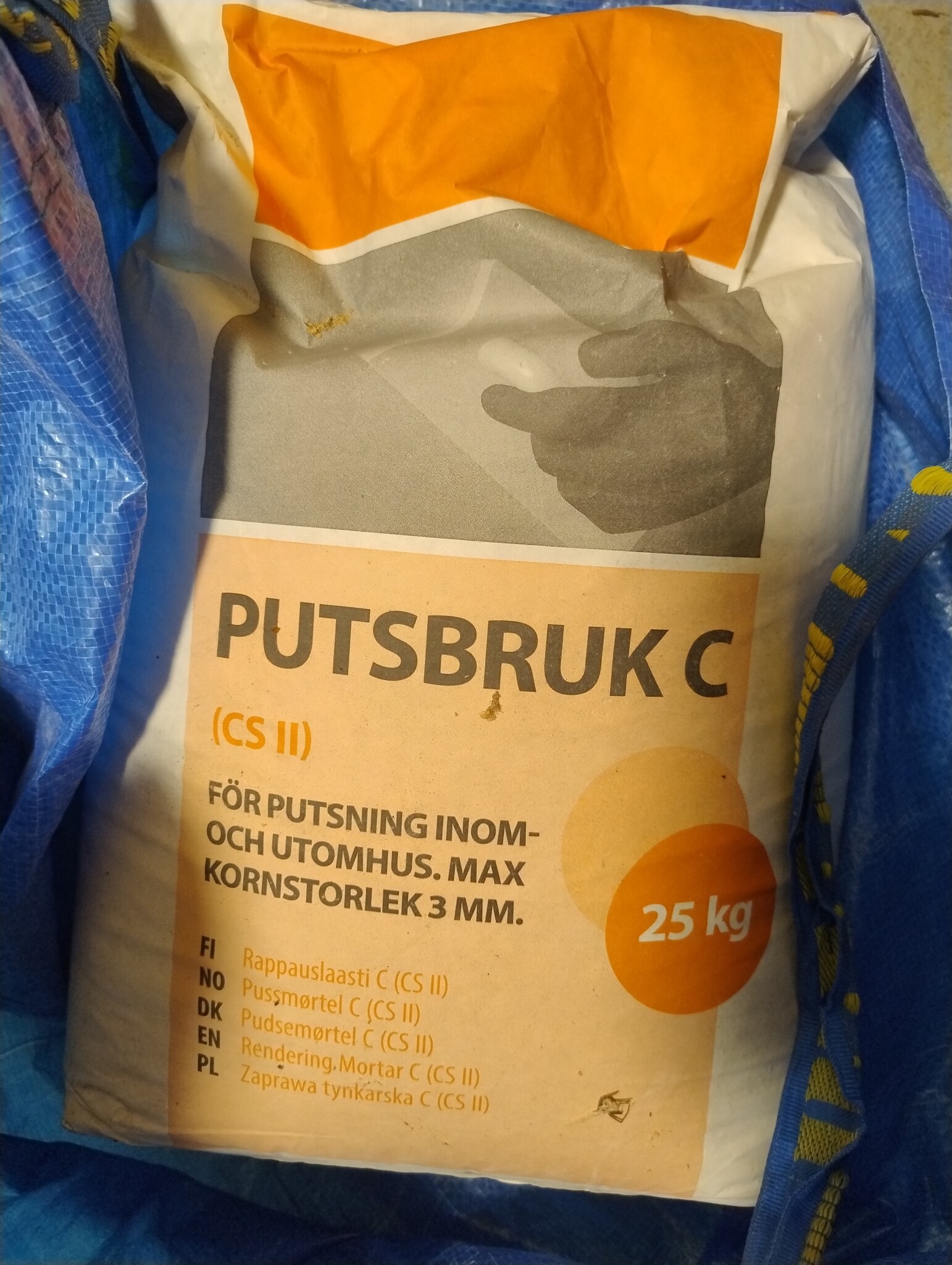
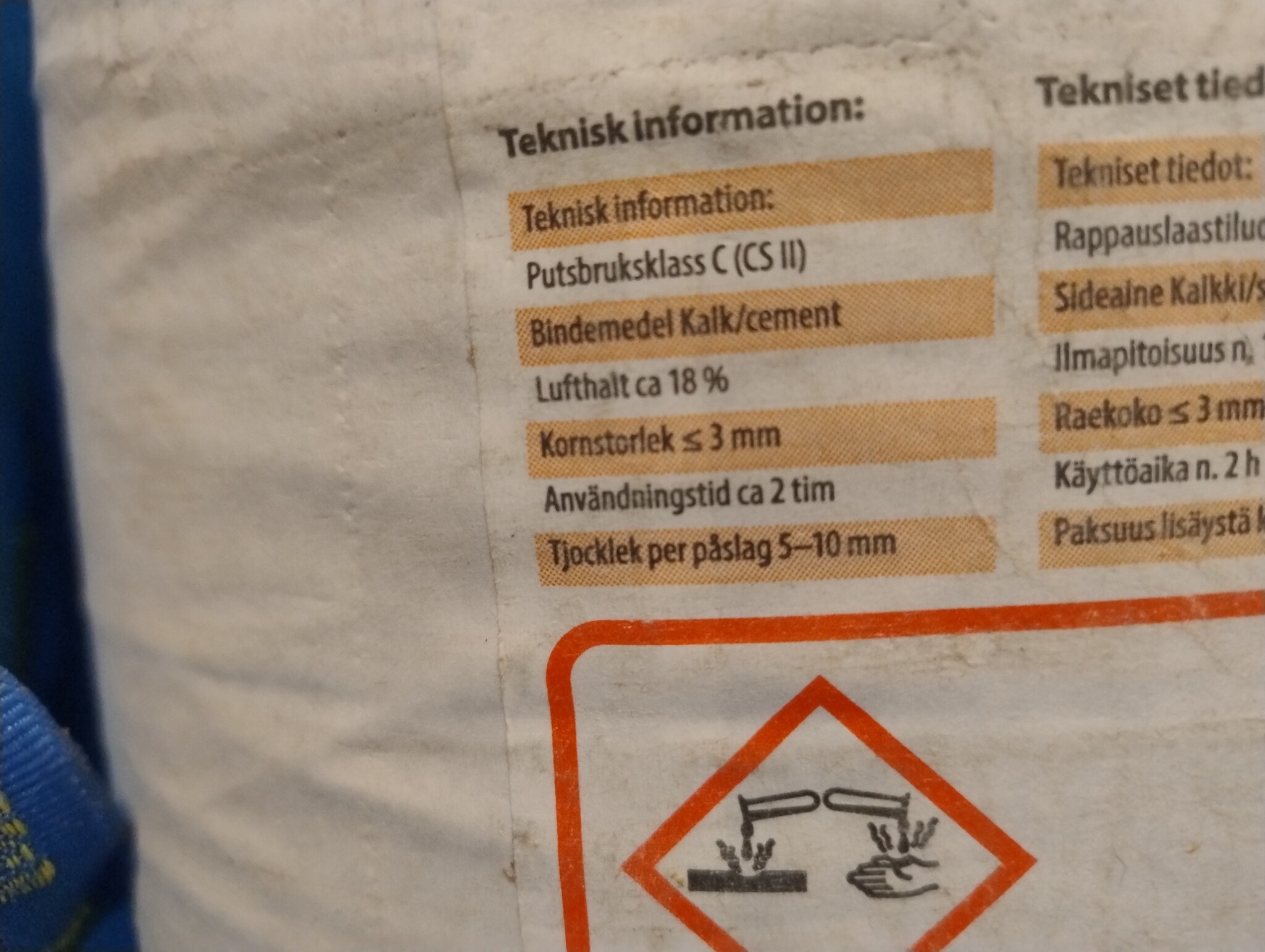
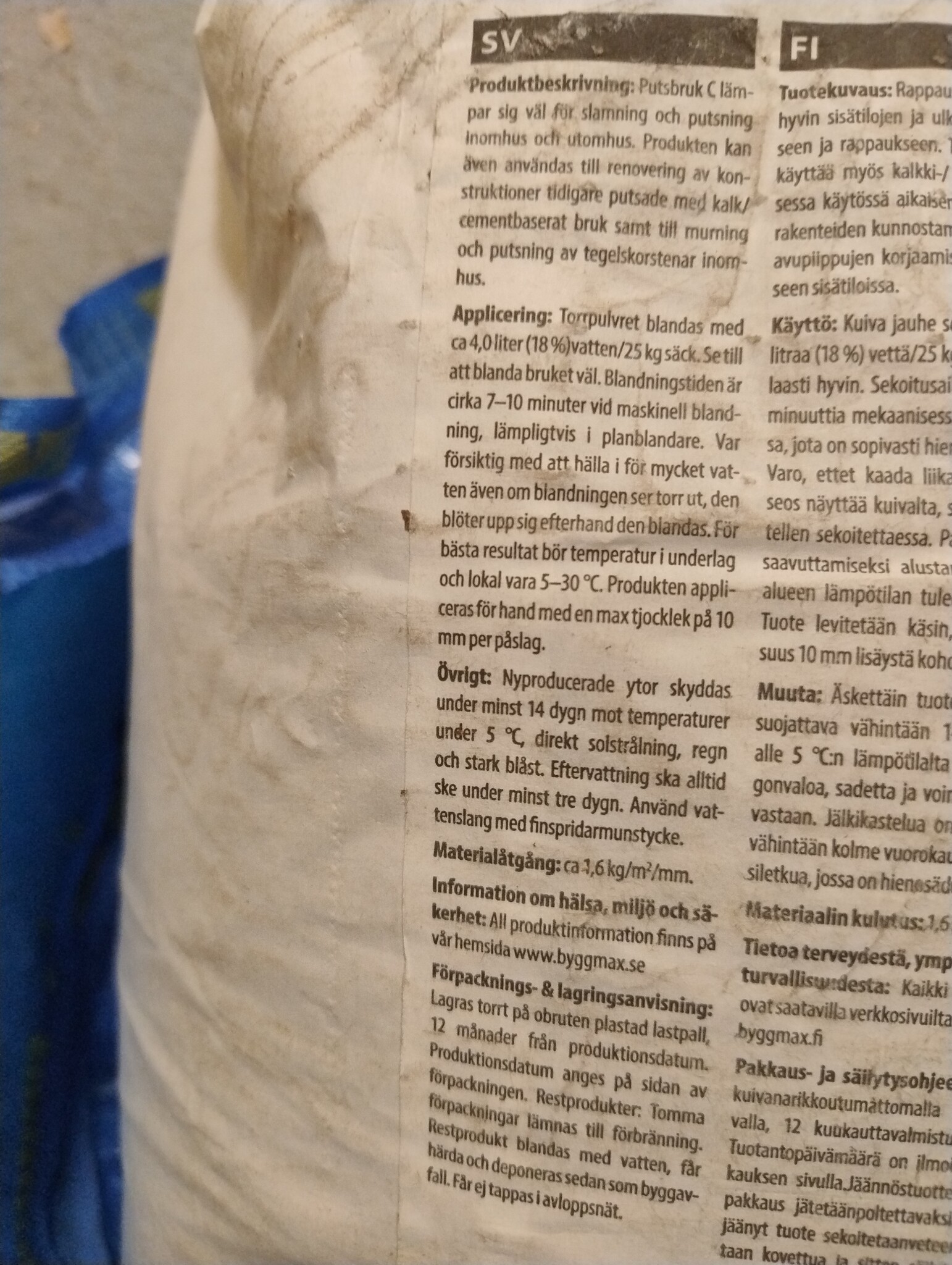
Finputs (usually 1mm) is just the size of the sand in the plaster.
After-watering is simple.
A spray bottle and a little moistening once a day.
Yes, it works. (if the bag isn't rock hard)
Don't forget to pre-water.
Then I would have waited to paint until the outside is fixed.
After-watering is simple.
A spray bottle and a little moistening once a day.
Yes, it works. (if the bag isn't rock hard)
Don't forget to pre-water.
Then I would have waited to paint until the outside is fixed.
A worse mortar is better because they can more easily move with the substrate.K Karlslok said:I understand! So a "worse" mortar is good in this case because it is porous and breathes more? Should it also be left unpainted, or are there paints that can help keep it together while still breathing well?
I have a sack of "finputs", 3mm grains, left behind by the people we bought the house from. Is that the exact opposite of what I should use then?
But it is not more porous for that reason.
Rot bruk weber 384 is supposed to be a D mortar, I haven't personally proven it.A Alexn72 said:You almost need a worse mortar than those in use today... i.e., if it crumbles, it's that type of mortar
Which as far as I know doesn't exist...
So C mortar then becomes the closest, but the question is if you shouldn't mix in a bit of extra sand to make it worse.
But try to remove all the loose parts so you get to something a bit harder...
According to the picture, you have an area on the left that is either damaged as well or repaired...
If it's repaired, it could very well be repaired with too strong a mortar...
Otherwise, air lime mortar is an E mortar.

Click here to reply