
27,700 views ·
3 replies
28k views
3 replies
What is normal moisture in a basement wall?
Hello,
We have recently moved into a house with a basement. Before moving in, we bought a moisture meter to get an indication of the moisture content in the walls, floors, and other areas of the house.
In the basement, we have a former closet that we want to renovate (see image). When we start taking down the interior, we see that the previous owner has hung a painting over a hole in the drywall (see image). When I measure the moisture content there, I get readings on the meter between 14-18% depending on where I measure, as well as readings on other areas of the wall (which in the image is to the left).
So the question is, what is the normal moisture content in a basement?
How do you measure moisture in concrete?
Is the instrument we are using reliable?
Is there anything we need to consider?
We have recently moved into a house with a basement. Before moving in, we bought a moisture meter to get an indication of the moisture content in the walls, floors, and other areas of the house.
In the basement, we have a former closet that we want to renovate (see image). When we start taking down the interior, we see that the previous owner has hung a painting over a hole in the drywall (see image). When I measure the moisture content there, I get readings on the meter between 14-18% depending on where I measure, as well as readings on other areas of the wall (which in the image is to the left).
So the question is, what is the normal moisture content in a basement?
How do you measure moisture in concrete?
Is the instrument we are using reliable?
Is there anything we need to consider?
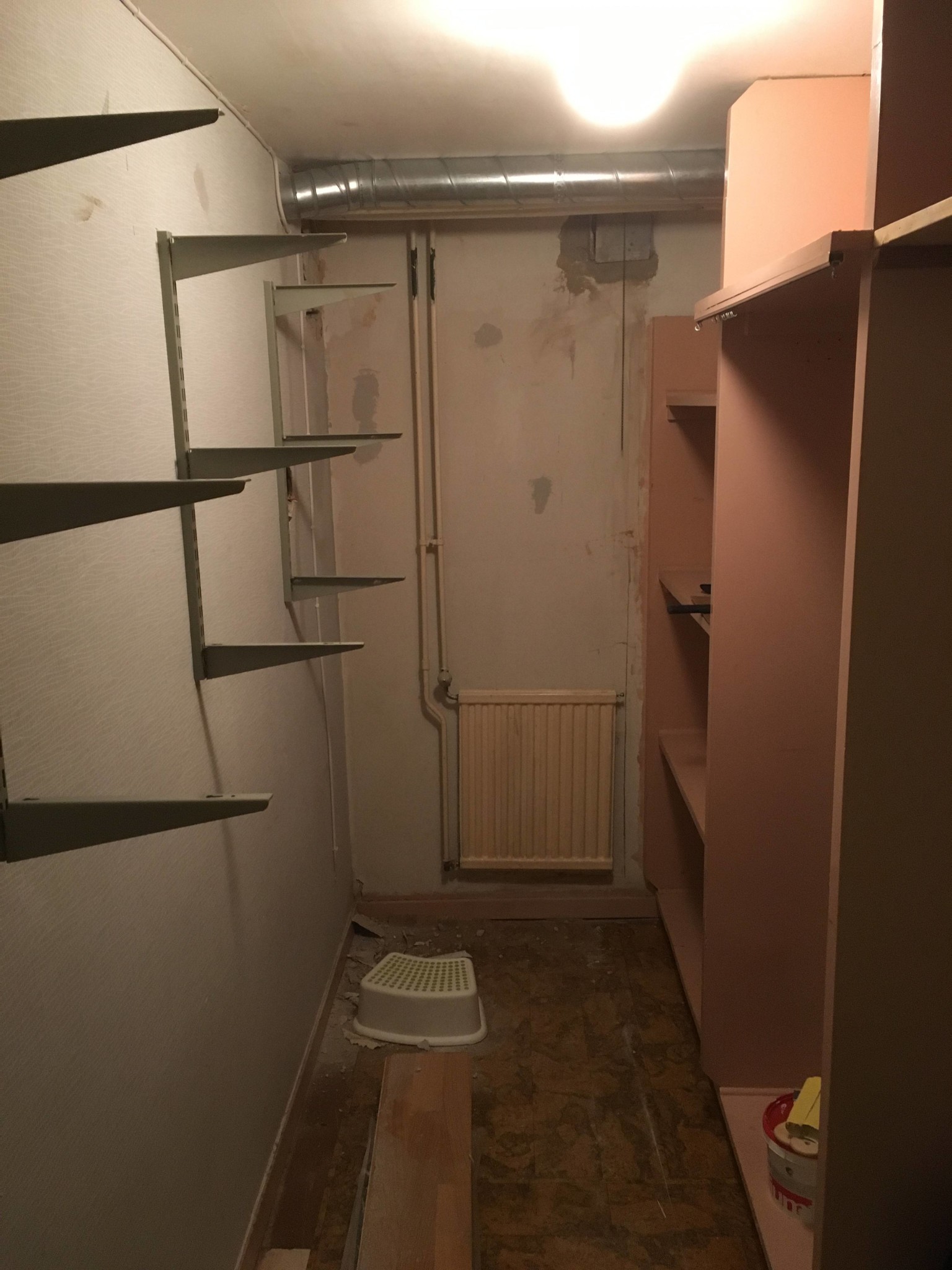
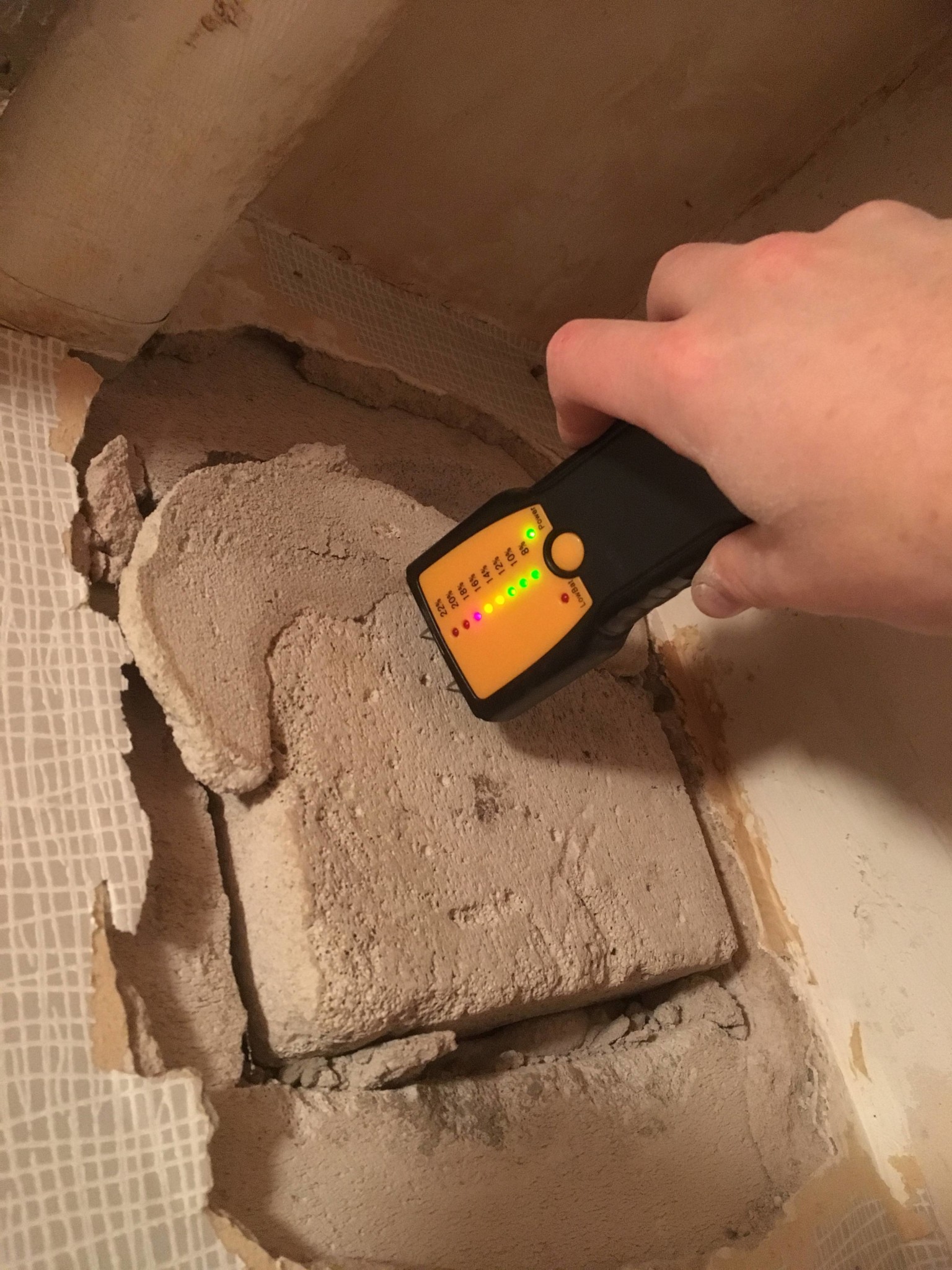

The moisture meter is for soft materials like wood that you can insert the probes into. So the reading might unfortunately have a fair margin of error.
14 percent moisture is not particularly damp though. For example, wood is usually considered dry when it's down to 11 percent.
But otherwise, for basements — drainage, drainage, drainage. If it works as it should, there's nothing to worry about. When it doesn't, you will see moisture spots and paint peeling, starting in the corners.
The seller should be able to inform you about the last time drainage was done. It's usually expected to have a lifespan of about 25 years. If it's newer than that, there's no need to lose sleep over it.
A small warning might be in order. Don't place a bunch of stuff directly against the concrete walls in the basement; damp cold air gets trapped behind, leading to ugly spots. (Don't ask me how I know this...)
14 percent moisture is not particularly damp though. For example, wood is usually considered dry when it's down to 11 percent.
But otherwise, for basements — drainage, drainage, drainage. If it works as it should, there's nothing to worry about. When it doesn't, you will see moisture spots and paint peeling, starting in the corners.
The seller should be able to inform you about the last time drainage was done. It's usually expected to have a lifespan of about 25 years. If it's newer than that, there's no need to lose sleep over it.
A small warning might be in order. Don't place a bunch of stuff directly against the concrete walls in the basement; damp cold air gets trapped behind, leading to ugly spots. (Don't ask me how I know this...)

surris
Construction veteran
· Sverige
· 1 692 posts
surris
Construction veteran
- Sverige
- 1,692 posts
To measure moisture in concrete you need to drill holes and place a moisture indicator that measures RH. This is not something you can do yourself.
The question is what should you do in the basement? How should you furnish it? Is the house drained?
The question is what should you do in the basement? How should you furnish it? Is the house drained?
Tape a piece of transparent plastic tightly on the concrete on the wall and on the floor and see if moisture forms underneath.
If it doesn’t and no unusual flaking occurs, then you have a dry basement!
Normal humidity in a drained basement wall should not cause condensation at a normal temperature of 20°C.
If it doesn’t and no unusual flaking occurs, then you have a dry basement!
Normal humidity in a drained basement wall should not cause condensation at a normal temperature of 20°C.
Click here to reply