
4,801 views ·
2 replies
5k views
2 replies
Wall directly against Stone/earth wall

Hello,
Now I need your help!
I am going to build a wall.
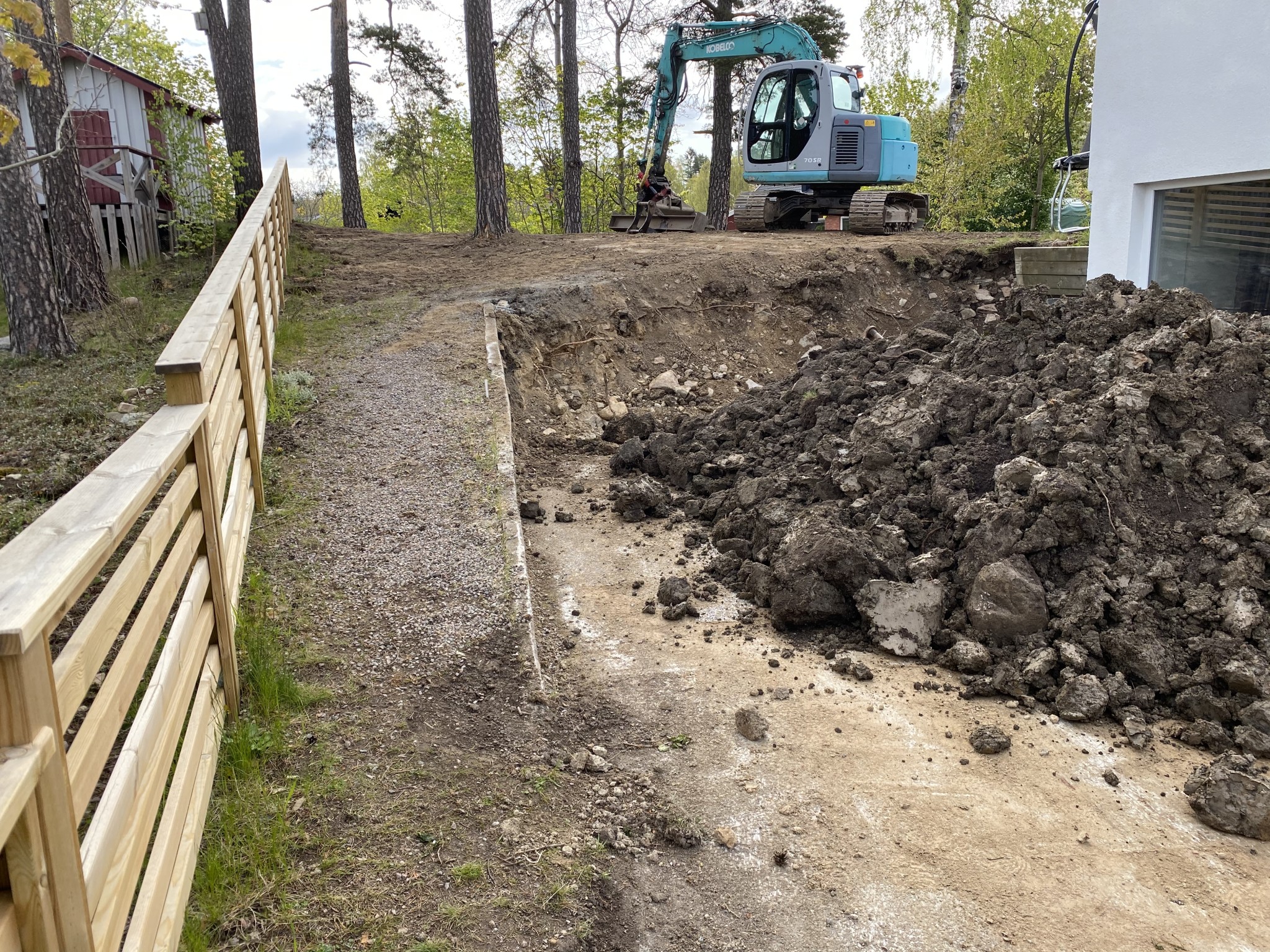
My first thought as a complete novice on this is to cast a wall against the mass behind (see image). The mass consists of blasted rock (mostly) and some sand. A meter into the mass, it's probably bedrock.
The second thought is to install L-supports but it might be a problem with all the blasted rock.
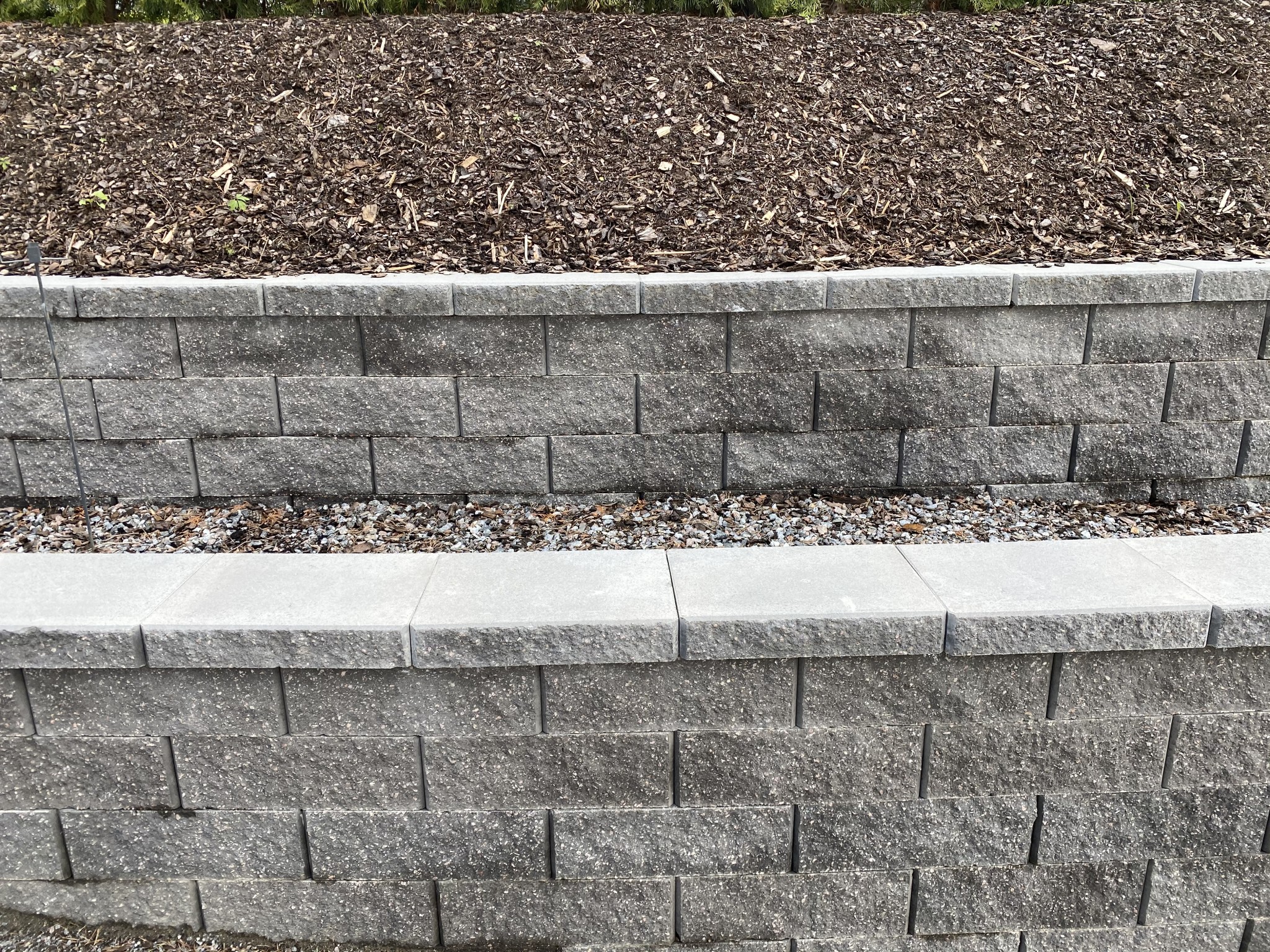
The idea is that the “wall” (L-support or cast footing) against the mass should only be used as support for any pressure from the mass. In front of the “wall,” I plan to build up with the same blocks as in image 2 since I have these on the driveway.
The plan is to do the job myself as cheaply as possible.
How would you do it? Am I way off track?
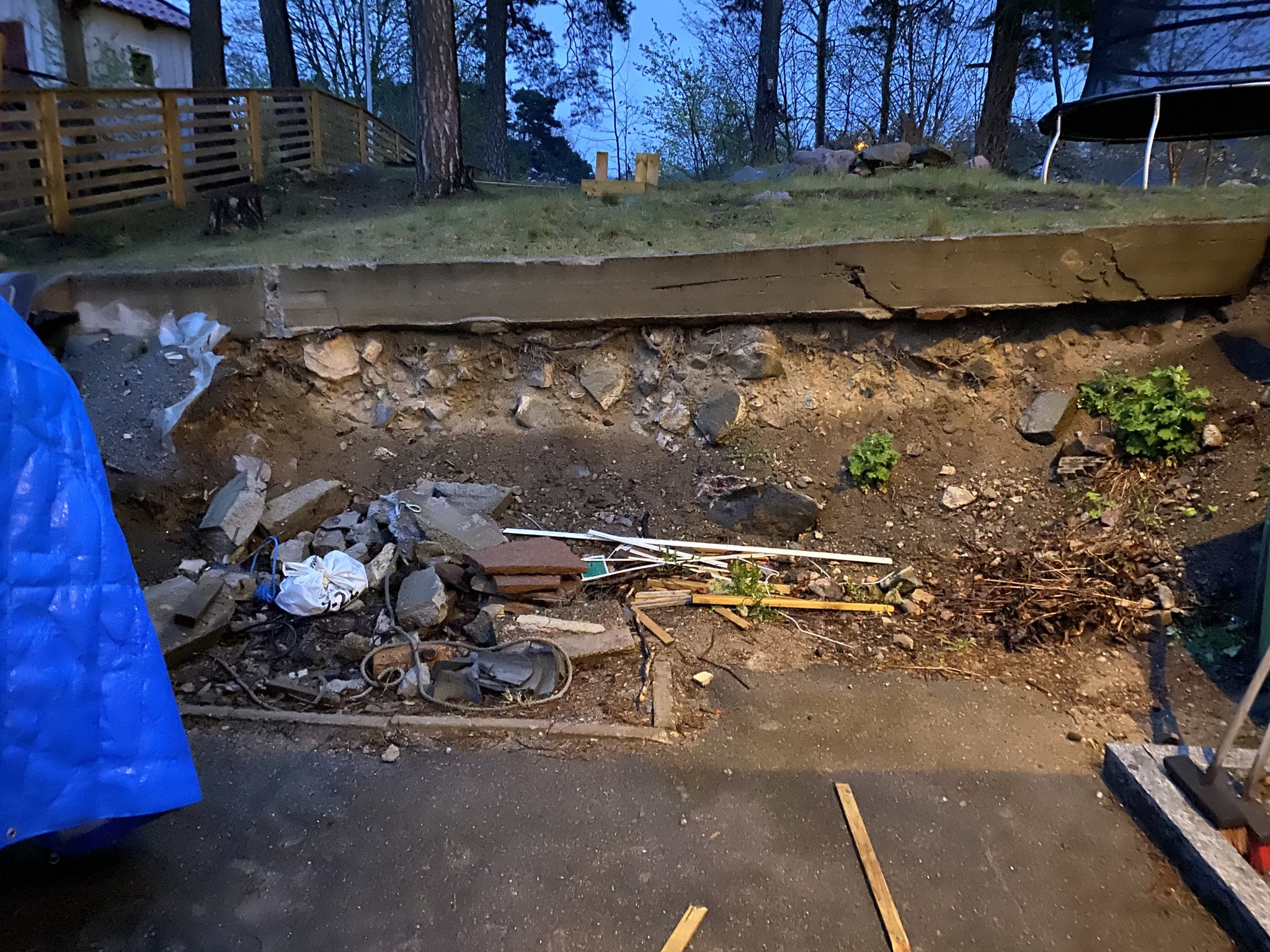
If I am going to cast, I thought I would build a form with plywood about 5cm wide and fill with concrete and reinforcement bars directly against the earth wall. I plan to solve the drainage with small holes about 10cm up from the ground along the entire “wall”. Previously, there was only a cast concrete part at the upper part. See image. I think there's not much pressure from the earth since it has held up well over the years.
The third alternative is to build with the masonry stone directly, but how would you approach the earth pressure, etc.? What do you put between the “wall” and the masonry stone?
The height is about 160cm and the width is about 7 meters on the "wall". See image.
Looking forward to your thoughts.
Best regards, Marcus
Now I need your help!
I am going to build a wall.
My first thought as a complete novice on this is to cast a wall against the mass behind (see image). The mass consists of blasted rock (mostly) and some sand. A meter into the mass, it's probably bedrock.
The second thought is to install L-supports but it might be a problem with all the blasted rock.
The idea is that the “wall” (L-support or cast footing) against the mass should only be used as support for any pressure from the mass. In front of the “wall,” I plan to build up with the same blocks as in image 2 since I have these on the driveway.
The plan is to do the job myself as cheaply as possible.
How would you do it? Am I way off track?
If I am going to cast, I thought I would build a form with plywood about 5cm wide and fill with concrete and reinforcement bars directly against the earth wall. I plan to solve the drainage with small holes about 10cm up from the ground along the entire “wall”. Previously, there was only a cast concrete part at the upper part. See image. I think there's not much pressure from the earth since it has held up well over the years.
The third alternative is to build with the masonry stone directly, but how would you approach the earth pressure, etc.? What do you put between the “wall” and the masonry stone?
The height is about 160cm and the width is about 7 meters on the "wall". See image.
Looking forward to your thoughts.
Best regards, Marcus
Last edited:
Inside the wall, there should be draining material; gravel, with a drainpipe at the bottom of the gravel. You want to avoid having material that can retain moisture directly next to the wall, because when the moist material freezes, it creates forces that can crack the wall. I have never worked with L-supports, but they are supposed to stand on compacted ground that does not yield, so pushing them in would not work as far as I can understand. I have personally built granite walls that I reinforced from the inside with rebar in the rock and concrete hollow blocks that are stabilized with the help of geogrid.
Thank you very much for the information, I will definitely consider this!pacharan said:
Inside the wall, there should be draining material; macadam, with a drain pipe at the bottom of the macadam. You want to avoid having material that can bind moisture closest to the wall, because when the moist material freezes, it creates cracking forces against the wall. I have never worked with L-brackets, but they should stand on compacted ground that does not give way, so pushing them in, as far as I understand, would not be possible. I have built granite walls myself, which I reinforced on the inside with rebar into the rock and concrete hollow blocks reinforced with the help of geogrid.
Click here to reply