Or rather, how much does the seal compress if it is a foam-type seal, like a camping mat? Yes, it might be a silly consideration, but I had it in mind when I was setting up the frame.
But now I have an answer. I removed a part of the sill a month ago; there was some sill left by the front door for no particular reason. There was a notch cut out of the sill so that the front door could be put in place, so the sill insulation wasn't compressed there at all, but otherwise, this is on the most loaded part of my exterior walls. If I remember correctly, I have a bearing load from the trusses of max 37kN, if I remember correctly. Plus, there has been significant snow load for a couple of winters, so I suspect I've achieved a line load on the sill here of at least 20kN/meter.
Now I removed the sill here to tile the floor in the hallway and could then study how compressed the foam had become. It was actually more than I thought.
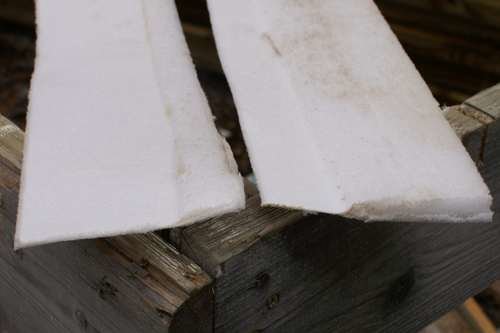
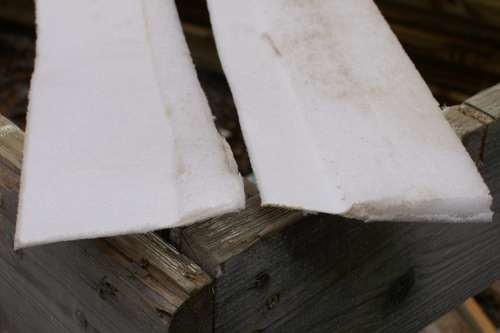
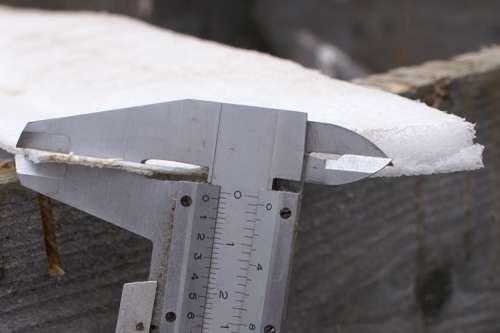
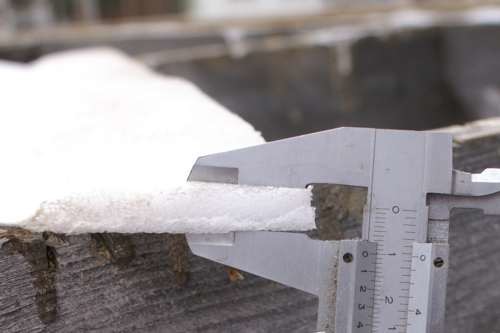
This is what the sill insulation looked like:
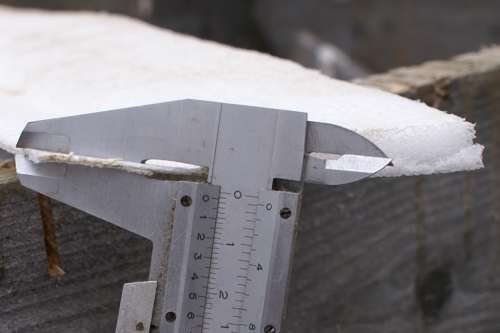
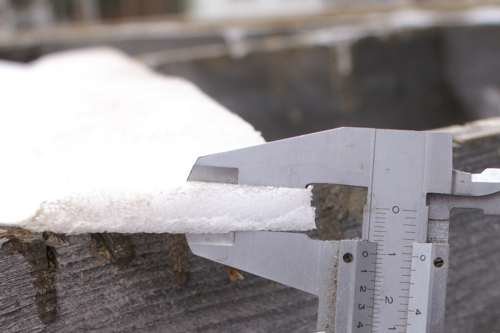
The compressed part was a little over 1mm thick. A few minutes passed from the removal of the load to the measurement and the picture, so possibly it was just 1mm. I left these pieces out for a few days afterward; I didn't measure again, but the thickness increased insignificantly, the compression can probably be considered relatively permanent.
One answer I'm unfortunately missing is how much of the settling was complete when the house was framed and the roof laid, etc.
That is, how much movement was left to damage surfaces and such.
One can imagine that it wouldn't be particularly successful if, for example, you install drywall flush against the floor and then the frame sinks another few mm.
mycke_nu said:
10 mm feels like quite significant settling if there is something that doesn't follow along in the movement, like a wall or steel structure.
Is it really called "syllisolering" (with emphasis on "insulation")? The purpose must be to prevent moisture migration between slab/foundation. I would have been a bit worried if it hadn't compressed so much right away, otherwise there's a risk of unpleasant settling.
I have this problem right now. I'm about to lay floor joists that I want to align with the existing ones. The old ones have settled as much as they will for a long time now, but the new ones will be on a sill that rests on insulation that hasn't compressed much yet. Any idea how I should approach this to get it right?
I will need to notch the floor joists where they rest on the sill, otherwise, they will be higher than the existing joists. The question is, how much should I notch them...
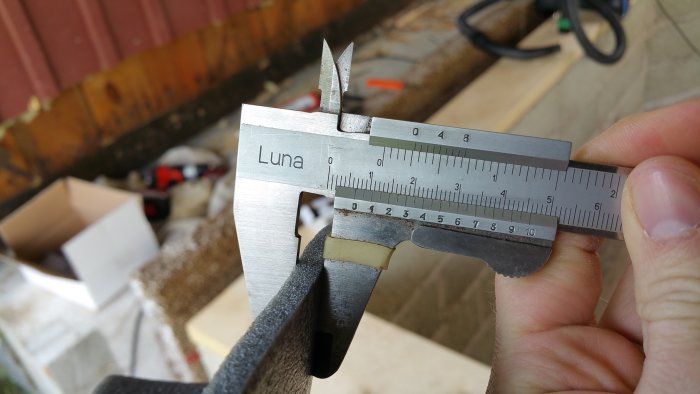
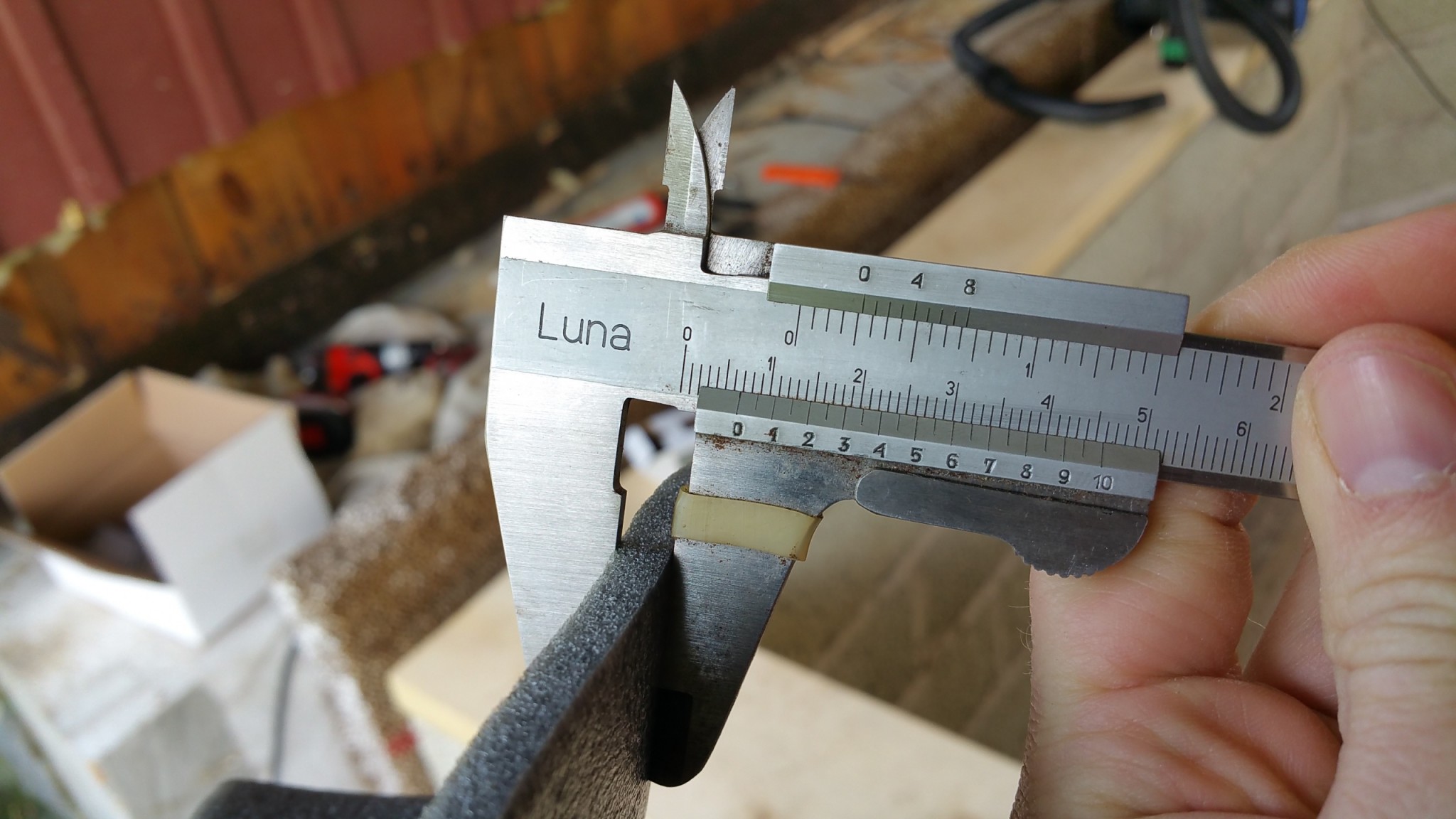
Uncompressed, my sill insulation is barely 7 mm thick
I don't have a measurement, but it doesn't look like it gets significantly compressed when I screw the sill onto it. (The picture shows a screwed-down sill with insulation underneath, next to a sill without insulation underneath)
If you compare a screwed-down sill with and without insulation underneath, you can see that the screws only compress the insulation a few millimeters at most
That is interesting! I have been somewhat concerned about using "syllpapp." Since no significant compression occurs, I had to (!) seal the sill with MS-polymer caulk against air currents. It might have been a fortunate mistake, especially considering it was a bathroom where I don't want any settling?
What's wrong with regular tar paper?? It has worked excellently for probably 100 years, and can be said to be well-proven.
I'm just pondering.
Tar paper (syllpapp) is good stuff.
But my concrete slab wasn't even enough for it to be wind and insect-proof with only syllpapp.
So to get an extra function (and avoid sealing afterwards), I went with the foam plastic variant.
Under the sill in interior walls, it was syllpapp here, though.
I think it's very rare for a concrete slab to be even enough for it to be sealed with paper.