
4,499 views ·
26 replies
4k views
26 replies
What is heating my floor?
In a room, I have unjustifiably warm floors and I can't understand why. If I place something on the floor for a while, like a pillow or a piece of cardboard, the floor feels warm to the touch when I remove it. As if it were underfloor heating.
It's not underfloor heating but radiators, which are used very little because the room is the warmest in the house. Underneath the room is a crawl space that is not heated. The floor structure is made of lightweight concrete and the unknown is between the structure and the floor. Built in the 60s. The floor is solid wood flooring, oiled with a brown hue and joint sealant in the gaps. (picture in the next post) I don't think it was meant as a surface layer but as a base, but the previous owner sanded, oiled, and sealed it.
When I drilled down to the crawl space to run a cable, it seemed to be a distance of about 10cm between the floor and the structure. If I remember correctly, some wood shavings fell out, which could be shavings in the floor structure for insulation, but I'm not sure, the only insight I've had into the interior is through that drill hole. Wood shavings in the structure feels strange, as there is mineral wool in the cold attic above. But I don't know if it was used that way in the 60s?
The first thing I thought was that it's radiator pipes, but they run in the crawl space and straight up under where the radiators are. So it's at least not for the radiators that are there right now.
Granted, it's a pleasant problem to have warm feet, but the house consumes a lot of electricity for heating and I'm wondering what is warming the floor. So I would appreciate tips here.
It's not underfloor heating but radiators, which are used very little because the room is the warmest in the house. Underneath the room is a crawl space that is not heated. The floor structure is made of lightweight concrete and the unknown is between the structure and the floor. Built in the 60s. The floor is solid wood flooring, oiled with a brown hue and joint sealant in the gaps. (picture in the next post) I don't think it was meant as a surface layer but as a base, but the previous owner sanded, oiled, and sealed it.
When I drilled down to the crawl space to run a cable, it seemed to be a distance of about 10cm between the floor and the structure. If I remember correctly, some wood shavings fell out, which could be shavings in the floor structure for insulation, but I'm not sure, the only insight I've had into the interior is through that drill hole. Wood shavings in the structure feels strange, as there is mineral wool in the cold attic above. But I don't know if it was used that way in the 60s?
The first thing I thought was that it's radiator pipes, but they run in the crawl space and straight up under where the radiators are. So it's at least not for the radiators that are there right now.
Granted, it's a pleasant problem to have warm feet, but the house consumes a lot of electricity for heating and I'm wondering what is warming the floor. So I would appreciate tips here.
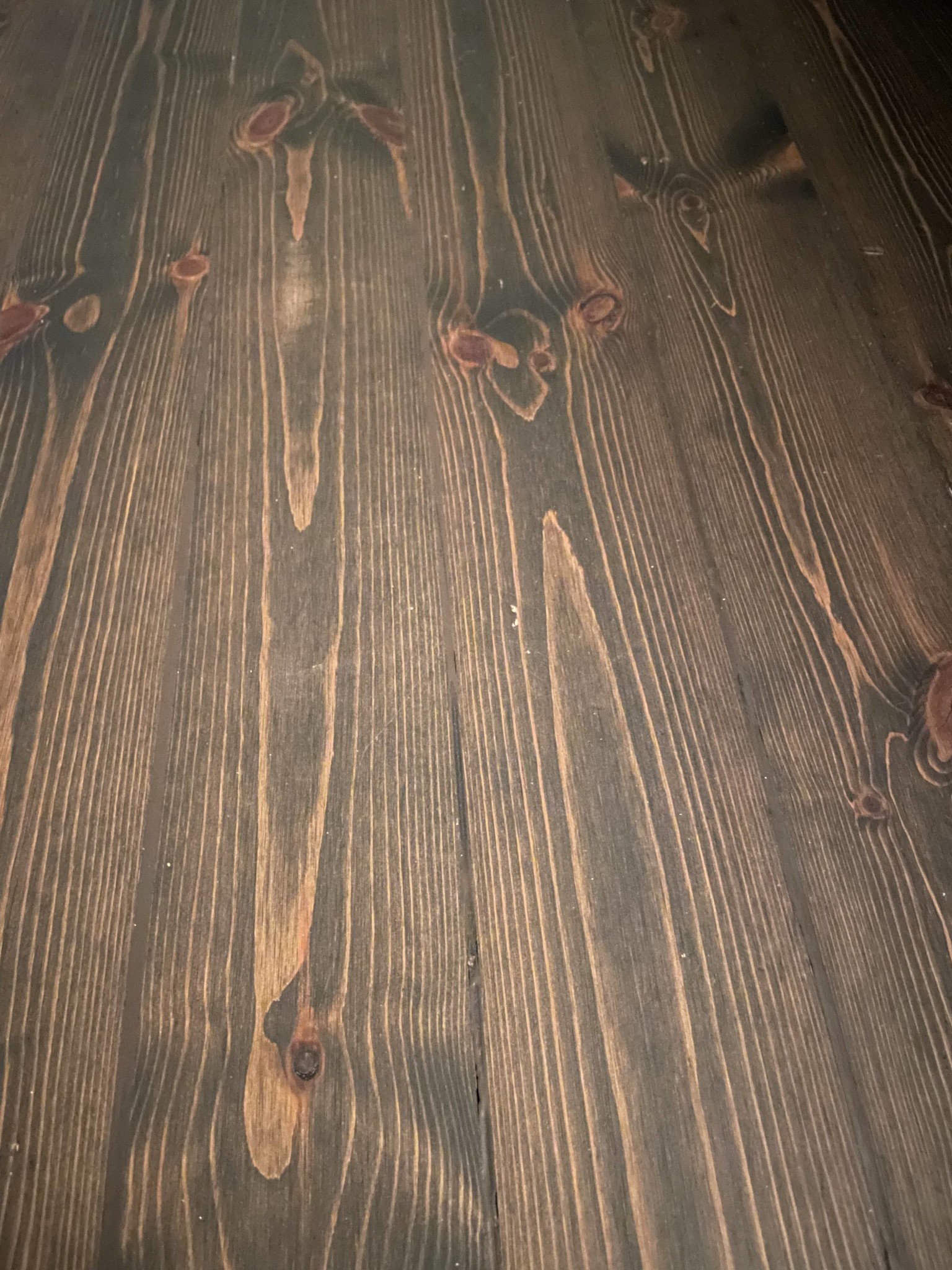
Is the entire floor equally warm or just parts of the floor? If the entire floor is warm, it must be some kind of underfloor heating, right? Unless there is a boiler room underneath with an oil burner or similar that heats the room below.
Could the attic be uninsulated, with the original wood shavings replaced by mineral wool? But still in this floor structure? (I had wood shavings in the attic and rock wool in the floor structure in a house from 1965) As far as I know, wood shavings as insulation was not uncommon until the 1960s.
Is the entire floor warm or just a half-meter strip? There could be different arrangements of the pipes to the radiators. Or are you sure that there is an upstand to each one from the crawl space?
No hot water pipe to the kitchen or bathroom that could be there either?
Is the entire floor warm or just a half-meter strip? There could be different arrangements of the pipes to the radiators. Or are you sure that there is an upstand to each one from the crawl space?
No hot water pipe to the kitchen or bathroom that could be there either?
I mean, it's not that the floor feels warm to the feet, like underfloor heating feels on stone surfaces. It's always neutral. But the room temperature is always just right, even though the radiators don't seem to be working hard.Ludde Jakobsson said:
I only notice the warmth on the floor when I've placed something insulating on it and then remove it. So I don't know if it's everywhere, but definitely in several places. (Total floor area is about 25 sqm)
Just a crawl space underneath. A few decimeters and bedrock below. "Unexcavated" was what the floor plan said, but "unblasted" would probably be more accurate.
It is possible that the attic is done. I don't know.Karrock said:
Could the attic be uninsulated, with the original wood shavings replaced by mineral wool? But left in this flooring? (I had wood shavings in the attic and mineral wool in the flooring in a house from 1965) Wood shavings as insulation is, as far as I know, not surprising until the 1960s.
Is the whole floor warm or just a half-meter strip? It could be different pipe arrangements for the radiators. Or do you consider yourself sure that it rises to each from the crawl space?
No hot water pipes leading to the kitchen or bathroom either that could be there?
Pipes definitely go up where the radiators are, I can see that clearly from the crawl space. But that doesn't mean there can't be other pipes running in the flooring, they do in the rest of the house (which was built in the 40s).
But I don't understand why there would be other pipes with circulation there. They can't go further to another room, this is at the gable.
The same with hot water pipes to the bathroom, they run in the crawl space.
Was it common to run pipes between flooring and floors in the 60s?
Gables can have special solutions if the radiator loop is to be connected between the front and back sides, while simultaneously passing doors. Could that be a reason for the pipes to be drawn in the beams?
Funny phenomenon. I think of Oklo, that for some reason you might happen to have your house built on a natural nuclear reactor, but that's a bit far-fetched... although we do have some uranium in the Swedish bedrock 
Natural nuclear fission reactor - Wikipedia
Natural nuclear fission reactor - Wikipedia
Exactly, there's so much uranium in the lightweight concrete floor that the primary product is heat, rather than radonH Harald Blåtumme said:
Is it one of those funny electric loops? That would explain why you think a lot of electricity is being used. Usually, they were placed right at the edge of the floors against the outer walls, but there could be variations. In the early '70s, it was not entirely uncommon, though I'm not sure if it occurred as early as the '60s.
Construction veteran
· 2 675 posts
My old house from 66 had radiators throughout the house plus water-based underfloor heating in 2 rooms that were not visible anywhere.Jiji said:
Isn't it one of those funny electric loops? That would explain why you think a lot of electricity is being used?
Most commonly, they were placed right at the edges of the floors against the outer walls, but there could be variations. In the early 70s, it wasn't entirely uncommon, although I'm not sure if it existed as early as the 60s.
No control or any form of thermostat, just ran directly on the circulation.
One was the large bathroom upstairs, and the other room was the rec room in the basement.
Both had both radiators and underfloor heating.
Oh. I really hope it's not an electric coil.Is it one of those funny electric coils? That would explain why you think so much electricity is being used?
The most common was that they went right at the outer edge of the floors against the outer walls but there may be variations. In the early 70s, it wasn't entirely uncommon, but I'm not sure if it occurred as early as the 60s.
I don't think so, because the household electricity isn't inexplicably high. I have a meter on the heat pump, so I know it draws a lot for the radiators and hot water.
I also don't see any indications that there is any wiring in the beam layer. The heat is definitely in the middle of the room too and not just out by the walls.
But I can't completely rule it out either. So I'll keep it in mind if I make some inspection hole down in the floor.
Weirdly built, but it would explain a thing or two. It's not impossible that the pipes make a detour on the way up from the crawlspace to the radiators. I'd actually like to tear up the floor, insulate, and install floor heating. But it's a bit too big of a project right now. I'll take it "next round in the house."A Argastesnickaren said:My old house from '66 had radiators throughout the house plus waterborne floor heating in 2 rooms that weren't visible anywhere. No control or any form of thermostat, it was directly on circulation. One was the large bathroom upstairs and the other room was the recreation room in the basement. Both had radiators and floor heating.

Could it not be heating pipes embedded in the concrete slab/floor then?
There was actually "underfloor heating" already in the 40s-50s, even though it was very rare. Iron pipes. I have seen it in handbooks from that time.
The radiators may have been complementary for the slightly lower insulation class of the windows at that time.
Otherwise, could it be pipes going through to something, or is the entire floor warm?
There was actually "underfloor heating" already in the 40s-50s, even though it was very rare. Iron pipes. I have seen it in handbooks from that time.
The radiators may have been complementary for the slightly lower insulation class of the windows at that time.
Otherwise, could it be pipes going through to something, or is the entire floor warm?