I am going to extend my garage from 6x8m to 12x8m. At the same time, I want to install a car lift.
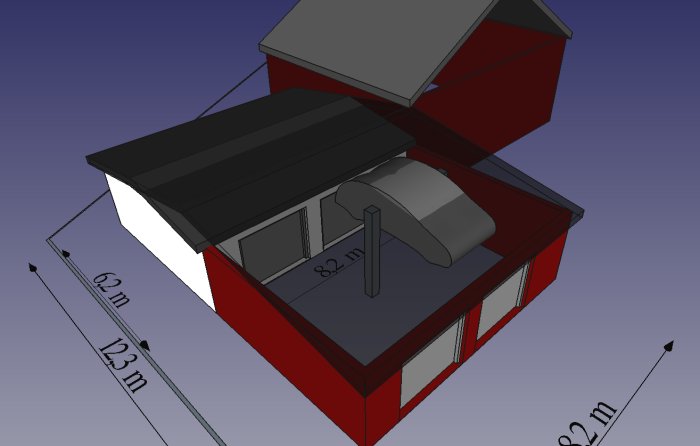
Here is a sketch:
The current garage is shown in white. The extension, with a transparent roof, is shown in red at the front. Behind the garage is the house that shares a wall with the current garage.
One problem is that the eave of the house limits the ridge height of the garage to about 3.6m. I want to be able to lift cars high and stand underneath them while I work. So, I want to build a thin roof to achieve the highest possible interior ceiling. I've therefore considered a ridge roof with a 12m span or a sloping roof with a 6m span for the extension, and some truss variant over the current garage. But it seems that it's not possible to build a thin roof with such a long span as 6m. I used an online tool to calculate for sloping roofs. Here are some results:
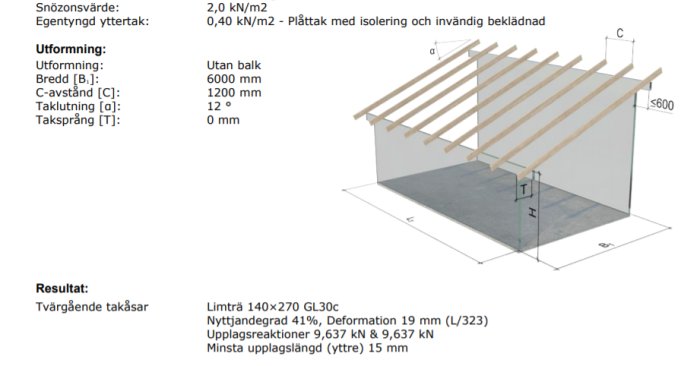
Variant 1, without transverse beams:
With 1200mm between the roof trusses, 115x270mm laminated beams are needed, which I suspect will be very expensive (the budget is also a parameter, of course). Even with as little as 300mm between the trusses, regular timber 45x225 is not sufficient. A laminated beam 56x225 is needed. I assume 240mm C-C would work. But then it would almost be all wood in the roof, so not great insulation. And it probably won't be cheap either.
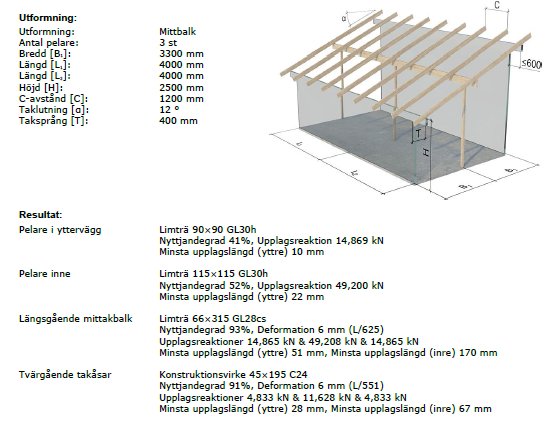
Variant 2, one transverse beam and a central pillar:
With a longitudinal beam in the middle and a supporting pillar, regular timber 195 high is sufficient for the trusses. However, a 315mm high laminate beam is required in the middle, which means that the total thickness is about half a meter in the middle of the roof, significantly limiting the lift height, as the roof is already low due to the roof angle. Additionally, the area in the garage is limited by a central pillar.
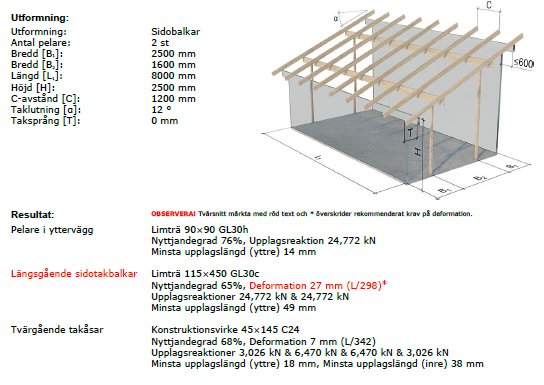
Variant 3, two transverse beams without pillars.
This variant appealed to me at first glance. No pillar in the garage, and the timber in the trusses only needs to be 145mm. However, the longitudinal beams need to be 450mm high laminated beams! This solution thus restricts the interior height even more than earlier variants.
My idea:
My idea is to build the roof much like Variant 3, but construct it with regular timber (like 225x45). Then glue and screw the inner ceiling (plywood) and add insulation. Finally, glue and screw the roof decking (glue both in the groove and to the studs). The advantage is that each stud becomes like an I-beam. Or rather an H-beam. Which should be very strong, I think. But I am not a very experienced builder. I mostly work with machines and weld in metal otherwise.
What do you think of this idea?
How should one calculate the structural integrity?
You must start by deciding how the roof will be resolved. I would treat the garage after the extension as three volumes from the outside. One: The existing part with a flat gable roof. Two: A short connecting section with a gable roof at a right angle to the one on the existing garage. Three: The new section with a lift. It can essentially have any roof shape as long as it is high enough. A flat gable roof with raised walls is probably more attractive and better than a shed roof. If you live in a detailed development plan area, you need to check what is allowed.
I am going to expand my garage from 6x8m to 12x8m. At the same time, I want to install a car lift.
Here is a sketch:
[image]
The current garage is shown in white. The planned extension is in red at the front, with a transparent roof. Behind the garages, the house is visible, sharing a wall with the current garage.
One problem is that the eaves of the house limit the ridge height of the garage to about 3.6m. I want to be able to lift cars high and stand under them when I work. Therefore, I want to build a thin roof, so I get as high an interior ceiling as possible. That's why I have considered a gable roof with a 12m span, or a single-pitch roof with a 6m span for the extension, and some truss variant over the current garage. However, it seems impossible to build a thin roof if it also has to span as much as 6m. I used an online site where one could calculate single-pitch roofs. Here are some results from the site:
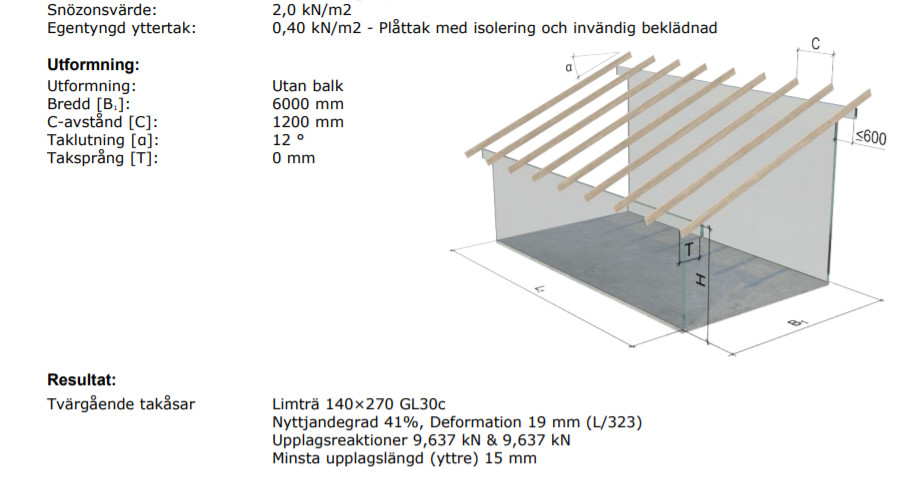
Variant 1, without cross beams:
[image]
With 1200mm between roof trusses, 115x270mm glue-laminated beams are needed, which I suspect will be very expensive (economy is, of course, a parameter too). Even with as little as 300mm between roof trusses, ordinary lumber of 45x225 will not suffice. A glue-laminated beam of 56x225 is needed. I suppose 240mm C-C might work. But then there would be almost only wood in the roof, so not very good insulation. And it probably won't be cheap either.
Variant 2, one cross beam and central pillar:
[image]
With a longitudinal beam in the middle and a pillar as support, ordinary wood for the roof trusses, 195 high, suffices. However, a 315mm high glue-laminated beam is required in the middle, which means the total thickness is about half a meter in the middle of the roof, which will significantly limit the lifting height, since the roof is already low there due to the roof angle. Additionally, the area in the garage is limited by a pillar in the middle.
Variant 3, two cross beams without a pillar:
[image]
This variant appealed to me at first glance. No pillar in the garage, and the wood in the roof trusses only needs to be 145mm. However, the longitudinal beams need to be 450mm high glue-laminated beams! This solution impinges on the ceiling height inside even more than previous variants.
My idea:
[image]
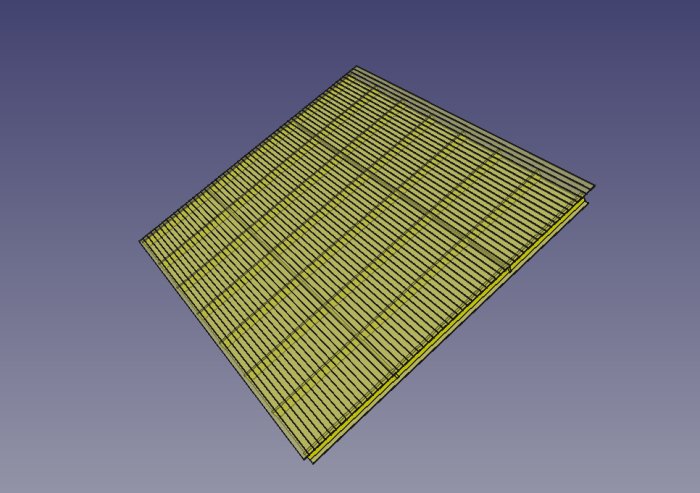
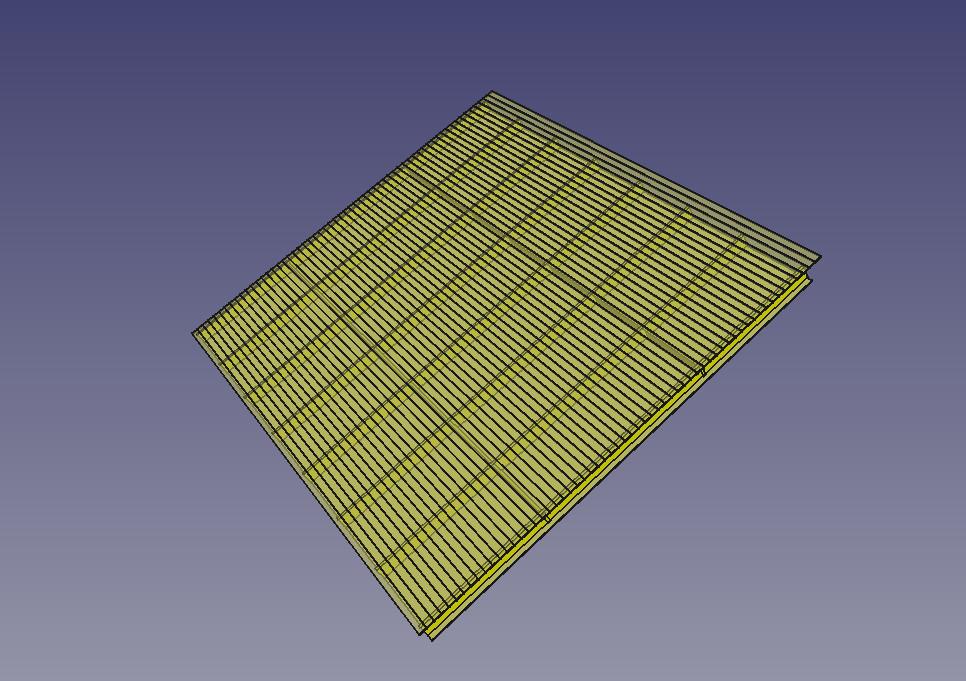
My idea is to build the roof roughly like Variant 3, but constructing it in ordinary wood (like 225x45). Then glue and screw the inner ceiling (plywood), and install insulation. Finally, glue and screw the roof boards on the roof (gluing both in the groove and against the beams). The advantage is that each beam becomes like an I-beam. Or rather an H-beam. Which I think should be very strong. But I'm not a particularly experienced builder. I mostly screw machines and weld metal otherwise.
What do you think about this idea?
How should one calculate the strength?
Your idea is called roof cassettes. It is very difficult to calculate, I have done it once and it takes many hours. You also don't use roof boards but plywood. Many manufacturers make the underside of a thin steel plate instead of wood. Your principle is correct! But there are simpler ways to solve it.
You need to start by deciding how the roof should be solved. I would treat the garage after extension as three volumes from the outside. One: The existing part with a shallow gable roof. Two: A short connecting part with a gable roof at a right angle to what lies on the existing garage. Three: The new part with lift. It can essentially have any roof shape as long as it is high enough. A shallow gable roof with raised walls is probably nicer and better than a shed roof. If you live within an area with detailed planning regulations, it's important to check what is allowed.
Yes, you're right, a different roof construction is better. The latest sketch is this:
The downside compared to a lower roof is that I need to cut into the corner of the house roof. And water will flow from the house towards the corner of the wall. But I hope to be able to divert it with a sheet metal or something similar.
Wwitten said:
Your idea is called roof cassettes. It's very difficult to calculate; I've done it once and it takes many hours. You also don't use raw wood but plywood. Many manufacturers make the underside of a thin steel sheet instead of wood. Your principle is right! But there are simpler ways to solve it.
Thanks for the information!
Yes, it might be venturing into deep water to attempt something like that on my first roof build.
With the above construction, the beams still need to handle a span of over 6m, but I don't have any restrictions on the dimensions of the beams. I'm considering trying to manufacture lightweight beams, about 400mm high. Much like this guy did, but with heavier dimensions. https://attlevadetlevandelivet.wordpress.com/2013/08/30/arbetsdag-3-och-4-nya-vagnen/
What do you think about that?
Either that or stacking two 45x220 on top of each other. Which is probably simpler. However, the beams become so heavy. It will probably be difficult to lift them 5m up. That's partly why I'm considering building lighter.
Yes, you are right, another roof structure is better. The latest sketch is this:
[image]
The disadvantage compared to a lower roof is that I need to cut into the corner of the house roof. And water will run from the house towards the corner of the wall. But I hope to be able to redirect it with a sheet or something similar.
Thanks for the info!
Yes, it might be risky to attempt something like this on my first roof construction.
With the above structure, the beams still need to cover more than 6m span, but I don't have any limitation on the dimensions of the beams. I'm considering making lightweight beams, about 400mm high. Similar to what this guy did, but with thicker dimensions.
[link]
What do you think about that?
Either that or placing two 45x220 on top of each other. Which is probably easier. However, the beams become so heavy. It will probably be difficult to lift them 5m up. That's partly why I'm considering building lighter.
There is only one reasonable solution, and that is a ridge roof in the same direction as the house's!
There are many reasons why we have so few shed roofs in our country!
Then you'll have space for a proper roof.
There is only one reasonable solution and that is a pitched roof in the same direction as the house!
There are many reasons why we have so few monopitch roofs in our country!
Then you get space for a proper roof
Do you mean on the extension or on the entire garage?
How do you solve water drainage, gutters, etc.?
Do you mean on the extension or on the whole garage?
How do you solve water drainage, gutters, etc.?
On the whole garage you have to join the roofs!
Between the garage and the house with a small cold roof to avoid leaks since warm roofs without inspection space are more difficult!
Do not be so fixated on the existing volumes. First extend the existing garage so that you go past the residential house. You have thought incorrectly if you have to cut the roof of the residential house.
Gabled roofs have a long tradition in Swedish construction, mainly because they allow for substantial roof pitches even on deep buildings. However, it is not always the best solution. You must start from the functional requirements. It is better to create the impression of several small volumes than a large one, through a divided roof design.
What I'm thinking is that it would be smart to utilize the old exterior wall for support of the new construction. Then the old garage facade is in white brick. And I think it would look strange if I extend the old part with wooden paneling, and then a bit out, raise the walls and the roof. It would look better if the change of material and roof elevation coincide.
Regarding changing to a gable roof on both garage sections; if I'm going to succeed in merging the roofs, I suppose the bases need to be at the same level. And then I would have to raise the walls on the old part, which would also result in a change of material, in the middle of the walls. Then I'm a little worried about what carpentry skills are needed if I start joining roofs at various angles. It becomes a lot of sawing and fitting.
Instead of cutting the corner of the house roof, would it be possible to make a "cut" in the new wall, and then "recess" the corner of the house roof and the gutter?
A full saddle roof hardly solves your request for ceiling height for a car lift, does it? I would extend the existing garage even at the cost of using different materials and colors.
What I think is that it would be smart to use the old outer wall for support in the new construction. Then the old garage has a facade in white brick. And I think it would look strange if I extend the old part with wood paneling, and then raise the walls and roof further out. It would look better if the change of material and raising of the roof coincides.
Regarding changing to a gable roof on both garage parts. If I'm going to succeed in joining the roofs, I assume the footings need to be at the same level. And then I have to raise the walls of the old part, and that also means a change of material. In the middle of the walls. Then I'm a little afraid of what carpentry skills are needed if I start splicing roofs at various angles. It becomes a lot of sawing and fitting.
Instead of cutting the corner of the house roof, would it be possible to make a "cut" in the new wall, and then "embed" the corner of the house roof and the gutter?
If you make pieces in Lego and cardboard, you'll see how you can puzzle the roofs together...
The elegant thing is how you join the house with the garage and get a cold outer roof for the garage so that you can better protect yourself from problems with snow.
Click here to reply
Vi vill skicka notiser för ämnen du bevakar och händelser som berör dig.