
1,649 views ·
8 replies
2k views
8 replies
Two questions regarding construction
Question 1:
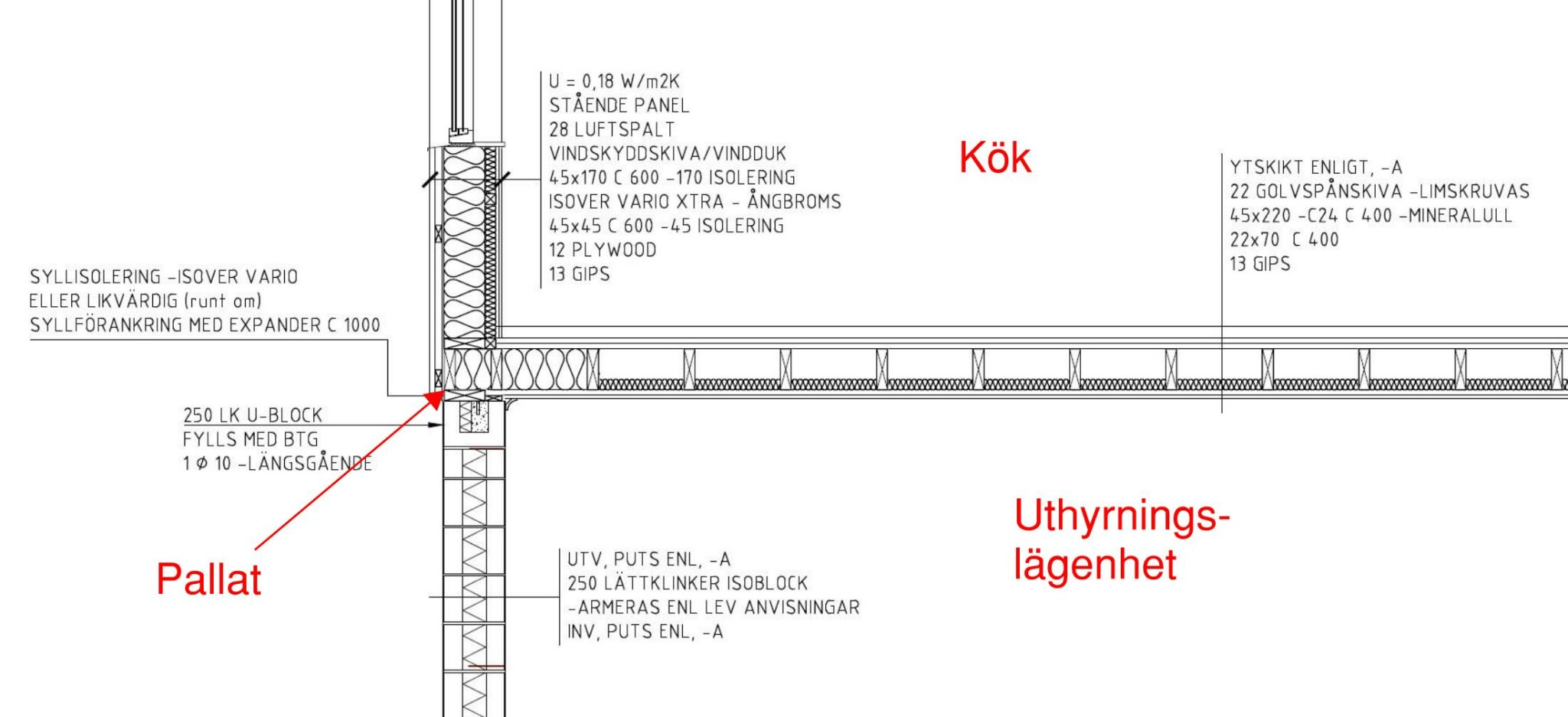
I am in the process of building an addition to my existing house. It will include a basement section that will be used as a rental apartment. Above it, we will have our kitchen. The contractor has specified a 220mm floor structure with 45mm of mineral wool insulation. I think it sounds insufficient and want the best possible sound insulation. Should I fully insulate with 220mm mineral wool or stone wool? What else should I do? Should I install a suspended ceiling with acoustic profiles in the apartment, or are there other effective methods without losing too much ceiling height?
The contractor has placed the sill on the basement walls according to the drawings, but it seems the basement walls are not perfectly straight or have ended up too low, as the floor structure is propped up by about 5-10mm around the entire construction. Is it acceptable to do this, or does the floor structure need to be in direct contact with the sill?
I am in the process of building an addition to my existing house. It will include a basement section that will be used as a rental apartment. Above it, we will have our kitchen. The contractor has specified a 220mm floor structure with 45mm of mineral wool insulation. I think it sounds insufficient and want the best possible sound insulation. Should I fully insulate with 220mm mineral wool or stone wool? What else should I do? Should I install a suspended ceiling with acoustic profiles in the apartment, or are there other effective methods without losing too much ceiling height?
The contractor has placed the sill on the basement walls according to the drawings, but it seems the basement walls are not perfectly straight or have ended up too low, as the floor structure is propped up by about 5-10mm around the entire construction. Is it acceptable to do this, or does the floor structure need to be in direct contact with the sill?
Regarding sound
I recommend checking floor structure setups from a drywall manufacturer that has good solutions. For example, type 6 in this pdf:
https://www.gyproc.se/sites/mac3.gy...F48A54D239BFAAA7DCE23387C/HB10_BJLKLAG-TR.pdf
Regarding sound, it definitely feels inadequate. For both your and the tenant's sake, you want high sound insulation. For the tenant, you also want low impact sound levels.B Baskavoda said:Question 1:
Currently adding an extension to the existing house. It will be a basement section used as a rental apartment. Above it will be our kitchen. The contractor has specified a 220mm floor structure with 45mm mineral wool insulation. It seems insufficient to me, and I want the best possible soundproofing. Should I fully insulate with 220mm mineral wool, or stone wool? What else should I do? Hang a suspended ceiling with acoustic profiles in the apartment, or are there other effective methods without losing too much ceiling height?
The contractor has placed the sill on the basement walls according to the drawing, but it seems the basement walls are not 100% straight or have been positioned too low, as they have braced the floor structure about 5-10mm around the entire construction. Is that acceptable, or does the floor structure need to be tightly against the sill?
I recommend checking floor structure setups from a drywall manufacturer that has good solutions. For example, type 6 in this pdf:
https://www.gyproc.se/sites/mac3.gy...F48A54D239BFAAA7DCE23387C/HB10_BJLKLAG-TR.pdf
Yes, acoustical profile seems to be a reasonable solution, along with fully insulated flooring. Not cheap though.H HRico said:Regarding sound
regarding sound, it really feels weak. For both your and the tenant's sake, you want high sound insulation. For the tenant, you also want a low impact sound level.
I recommend that you look at floor structure from a gypsum manufacturer that has good solutions. For example, type 6 in this pdf:
[link]
Another question—does the construction meet fire safety requirements since it is classified as a multi-family dwelling?B Baskavoda said:Question 1:
I'm building an extension to an existing house. It will have a basement section to be used as a rental apartment. Above it, we will have our kitchen. The constructor has prescribed a 220mm joist with 45mm mineral wool insulation. I think that sounds minimal and want it to have the best possible soundproofing. Should I fully insulate with 220mm mineral wool, or stone wool? What more should I do? Suspend a drop ceiling with acoustic profiles in the apartment, or are there other effective methods without losing too much ceiling height?
The contractor has placed a sill on the basement walls according to the drawing, but it seems like the basement walls are not 100% straight or ended up too low since the joists have been propped up about 5-10mm around the entire construction. Is it okay to do this, or do the joists need to rest firmly against the sill?
If all homeowners who rent out parts of their homes had to take into account requirements for noise, fire, accessibility, daylight, etc., similar to new production, the housing shortage in major cities would increase even more, which is not needed. Thank you for your points.
Click here to reply