
1,933 views ·
5 replies
2k views
5 replies
Turn-of-the-century apartment: Need for load-bearing wall adjustments or not?
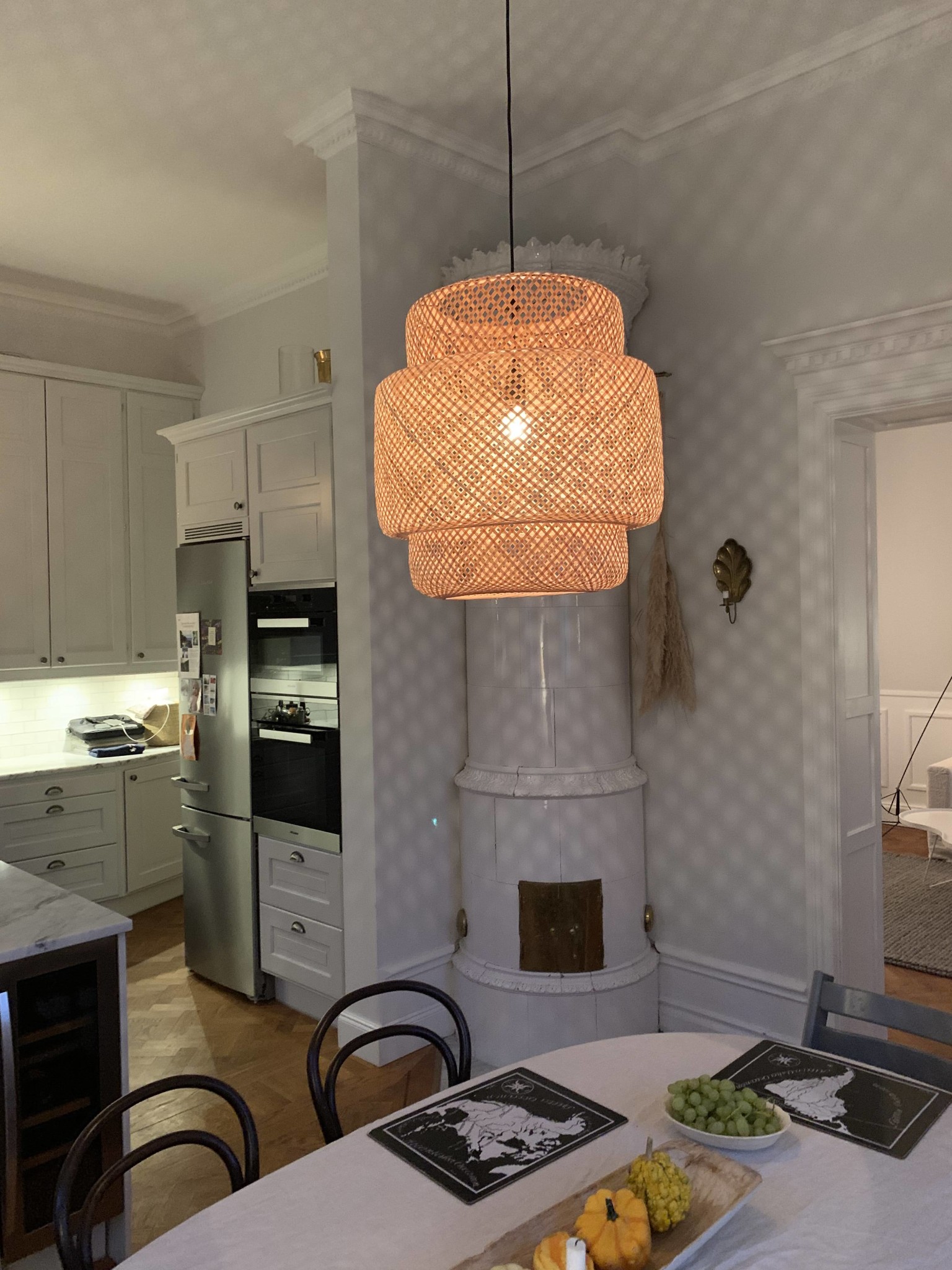
I have a wall between the kitchen and living room that I wish to open up into a square arch. The wall is located between the tiled stoves. Note also that the neighbor has removed their wall without support beams. See the image of the finished opened wall and the neighbor's opening.
Possibly, the wall is load-bearing for the floor structure above (second highest floor)?
I wonder if it is load-bearing and if the neighbor did the right thing by not using support beams?
Possibly, the wall is load-bearing for the floor structure above (second highest floor)?
I wonder if it is load-bearing and if the neighbor did the right thing by not using support beams?
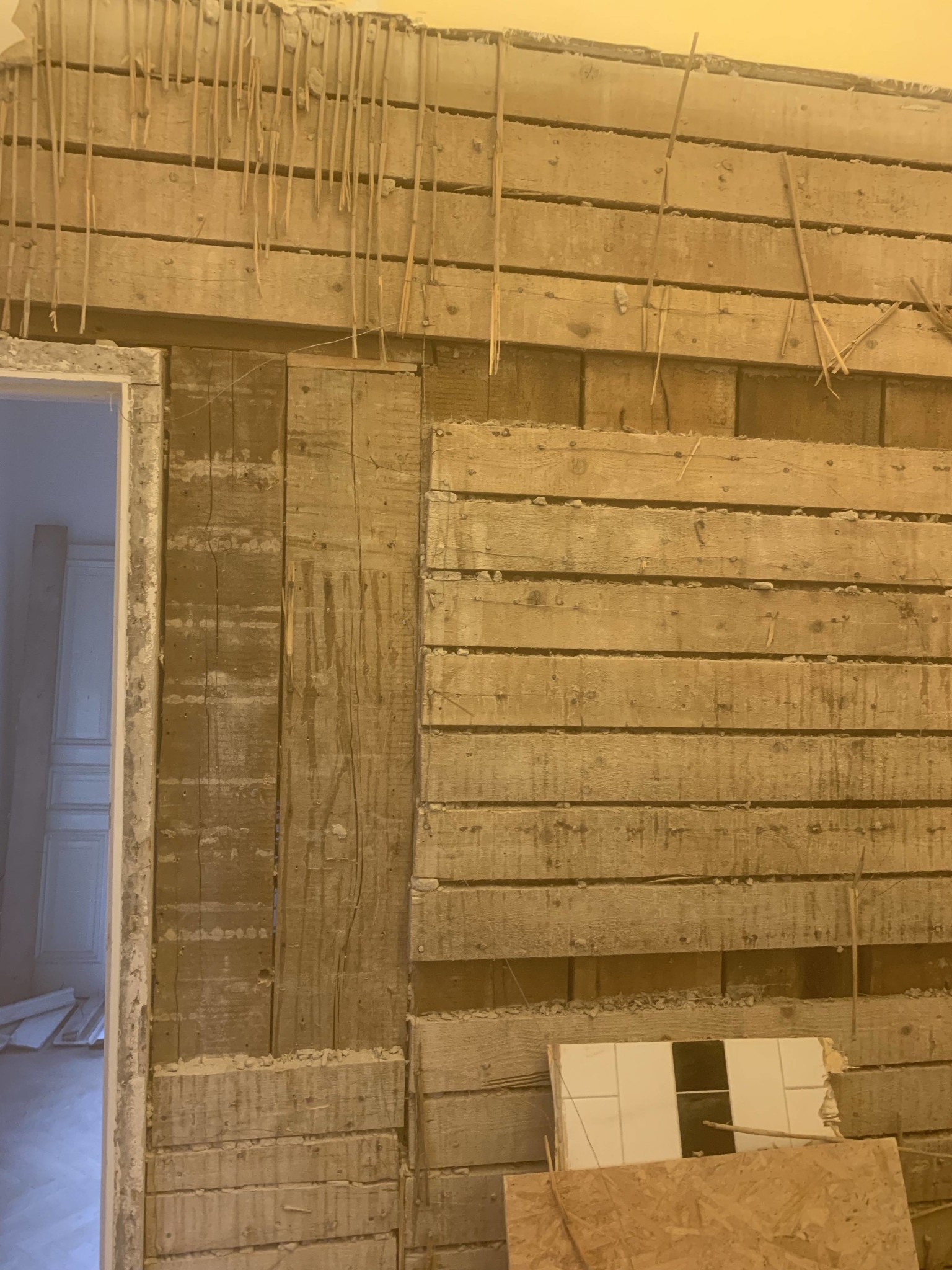
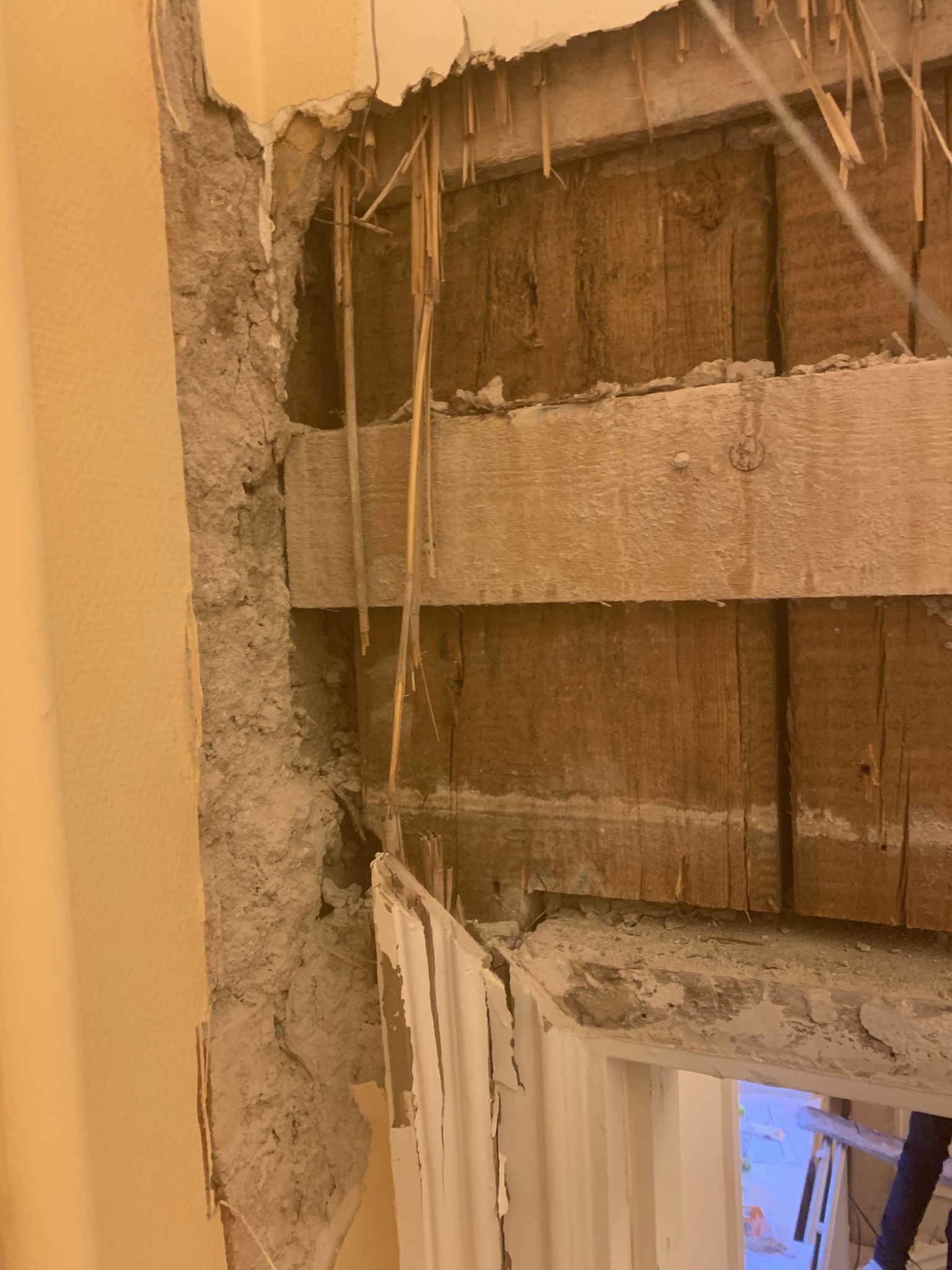
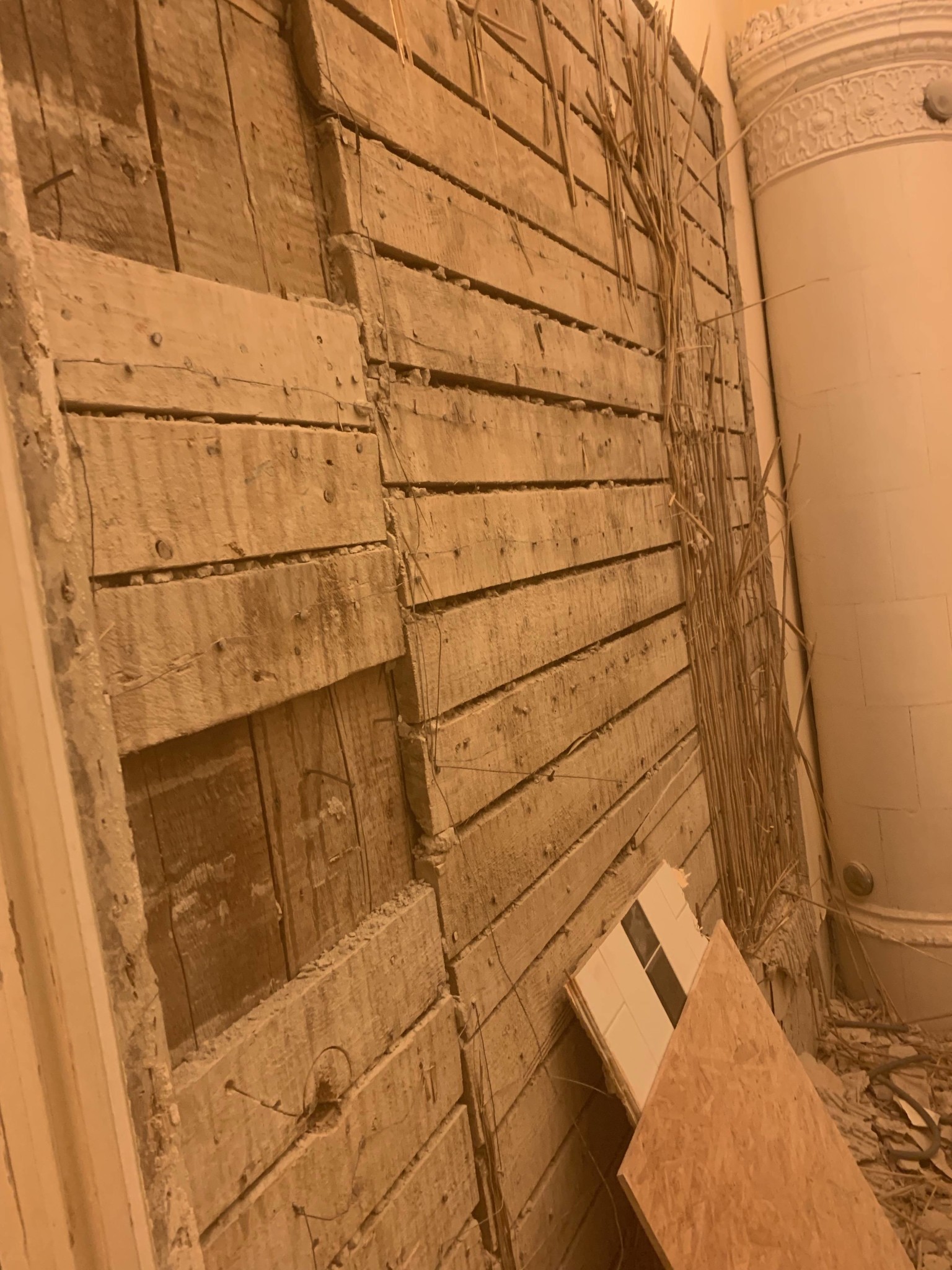
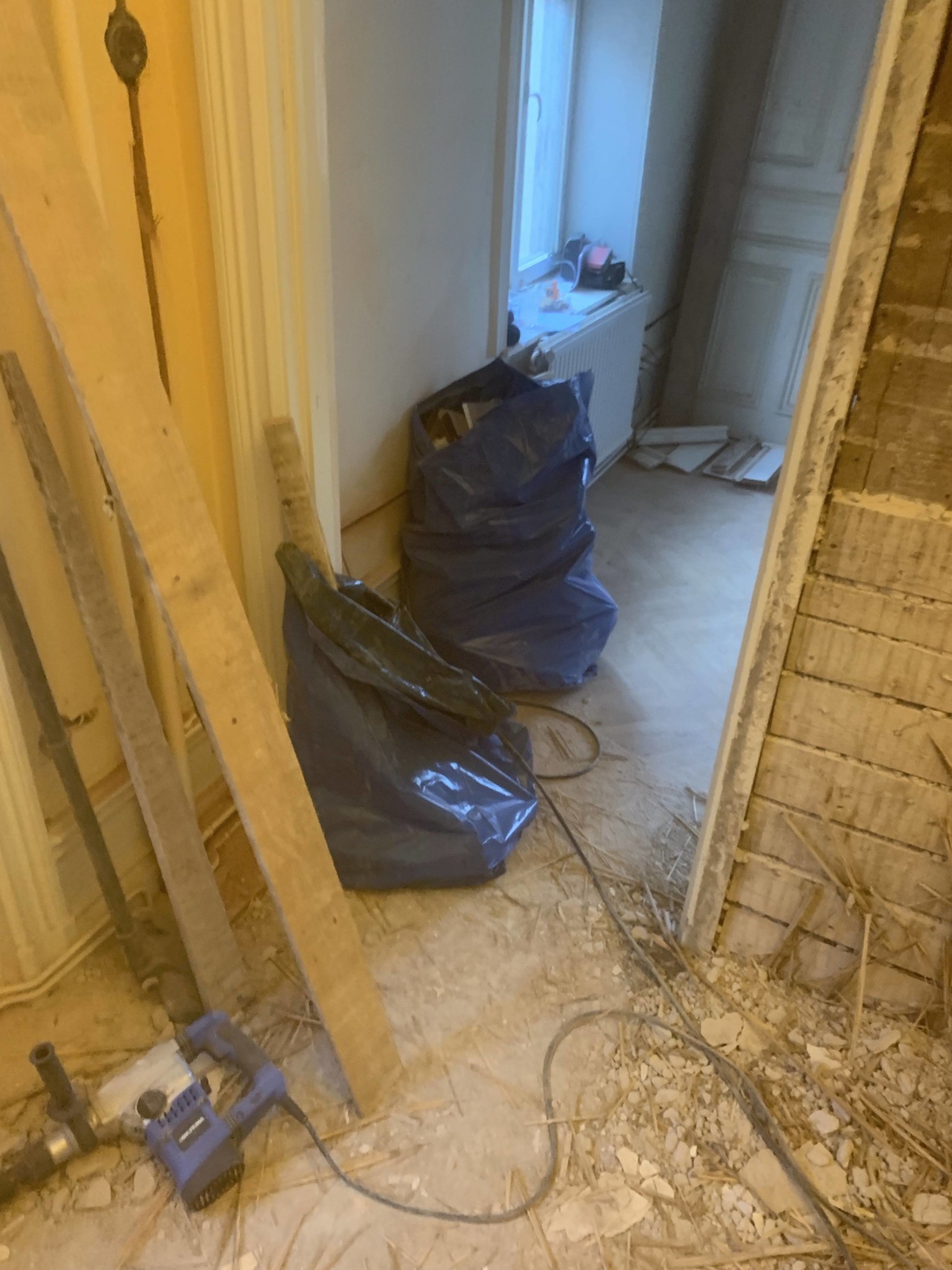
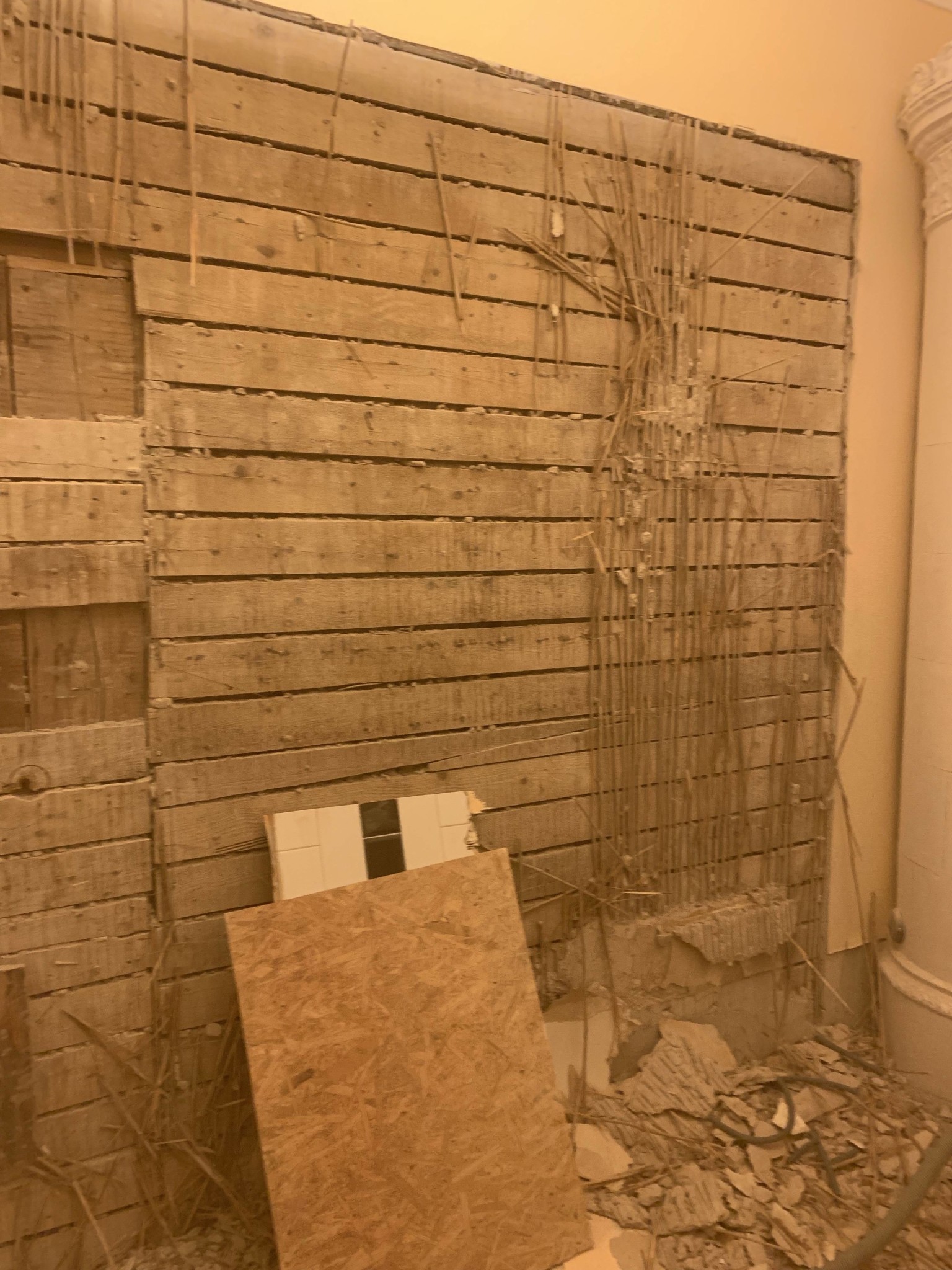

Everything suggests that it is not load-bearing. In principle, load-bearing walls made of wood do not occur in masonry houses. The parts of the partition walls that contain flues from the tiled stoves are made of masonry and are thus thicker. For the assessment, it is always good if one can see the plan for the entire floor.
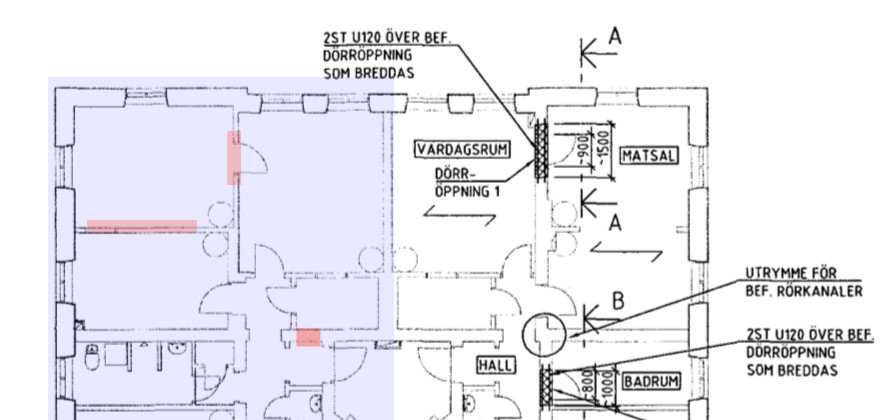
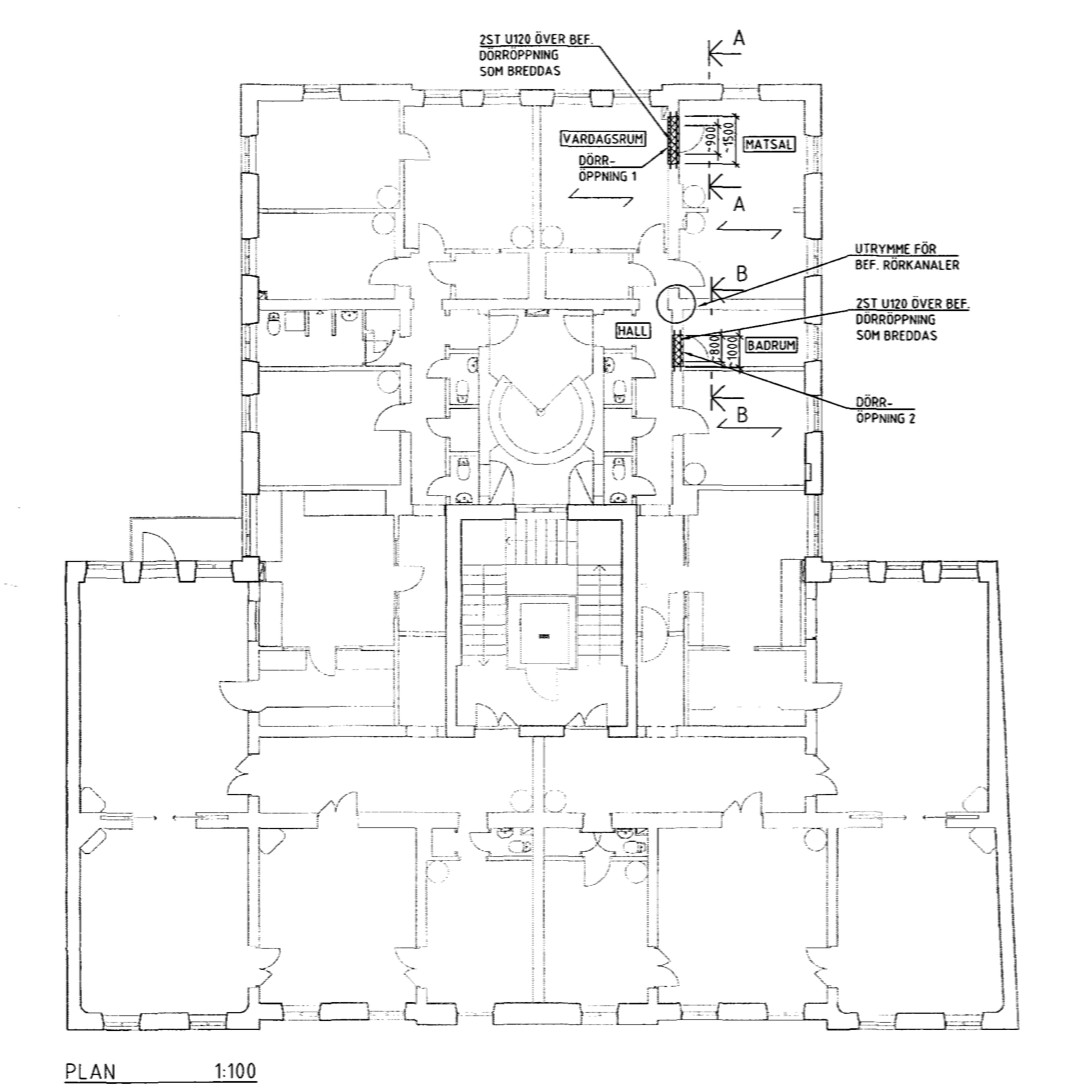
Interesting! Here is the drawing for the entire floor plan.J justusandersson said:Everything suggests that it is not load-bearing. In principle, load-bearing walls made of wood do not occur in masonry houses. The parts of the partition walls that contain flues from the tiled stoves are bricked and therefore thicker. For the assessment, it is always good if you can see the drawing for the entire floor plan.
Do you still think it is not load-bearing?
Note that I mean load-bearing for the floor structure above, not load-bearing for the entire house. But of course, there are larger rooms without partition walls.
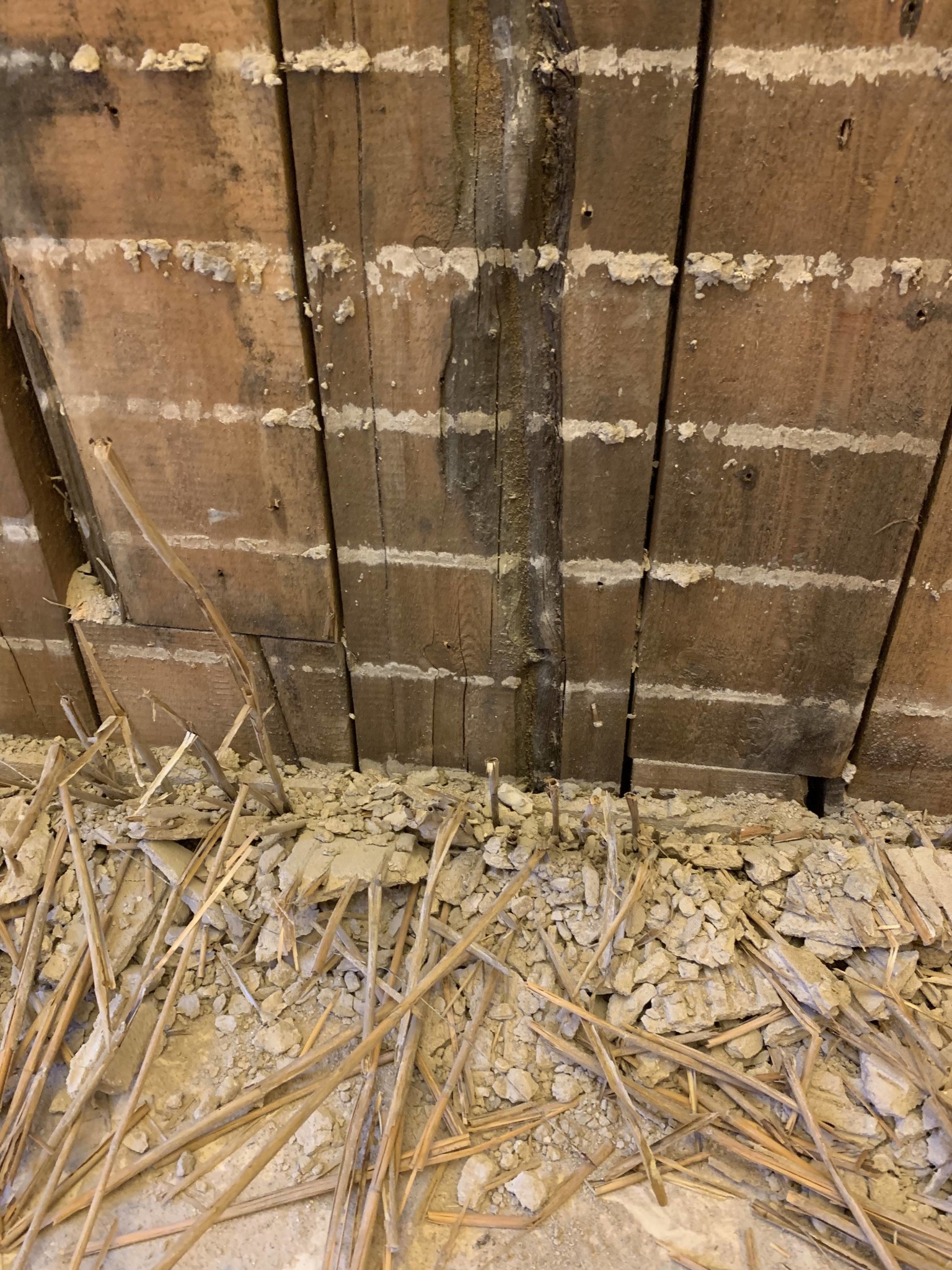
The standing dense studs make me uncertain.
Best answer
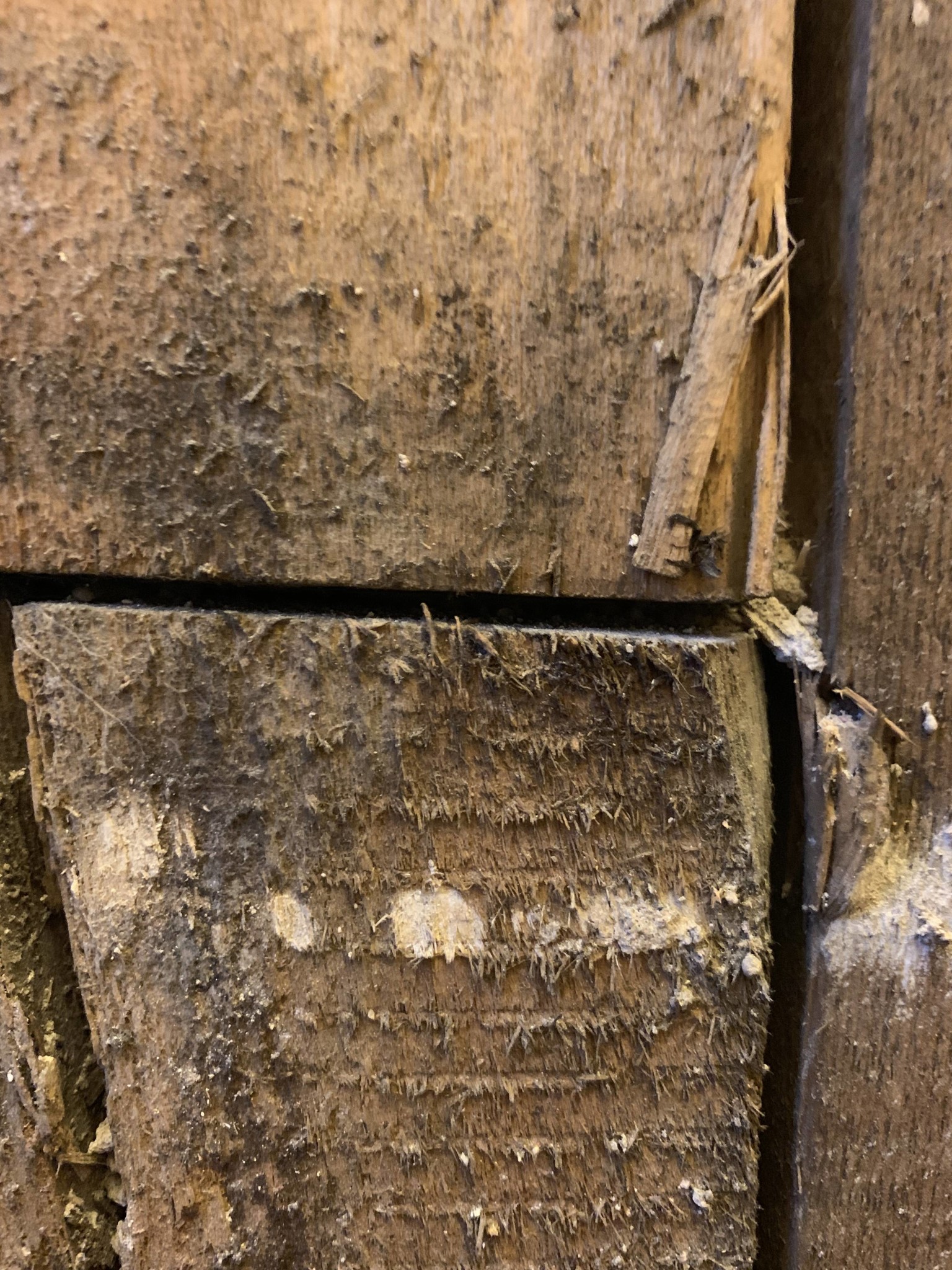
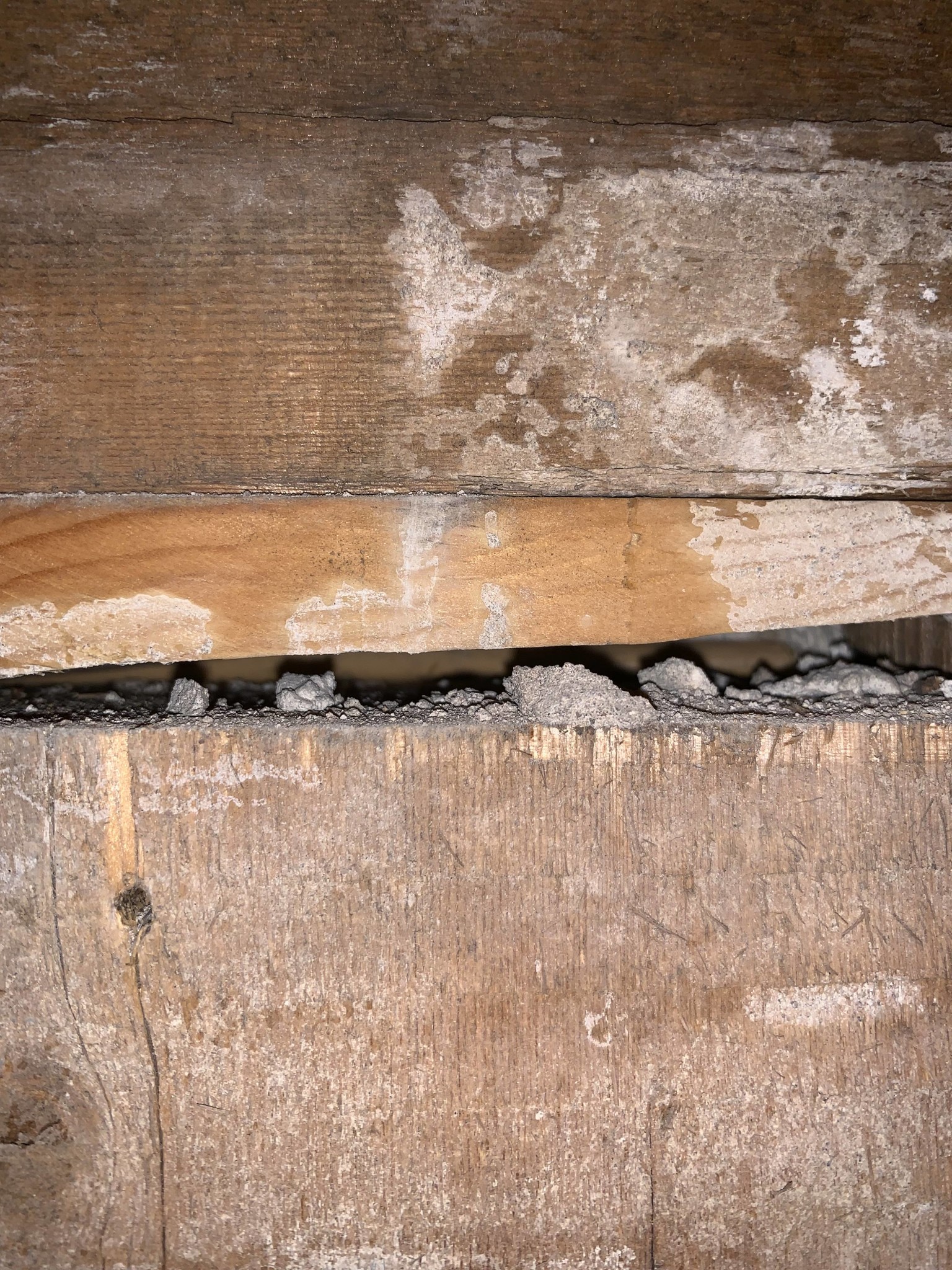
It is a beautiful house with a rather complicated structure. Floor joists at this time were either made of steel beams or wooden beams or combinations of these materials. The direction of the beams can vary across the floor plan. The load-bearing is in the masonry walls, exterior walls, and certain core walls. Your wall is a brädvägg, not a plankvägg. That it does not have any load-bearing function is clearly shown in photo no. 2 where the boards end in the air above the door frame.
J justusandersson said:It is a beautiful house with a rather complicated structure. Floors at this time were either built of steel beams or wooden beams or combinations of these materials. The direction of the beams can vary across the plan. The load-bearing is in the masonry walls, exterior walls, and certain core walls. Your wall is a plank wall, not a beam wall. That it does not have a load-bearing function is evident from photo no. 2 where the planks end in the air above the door frame.
Click here to reply
Similar threads
-
Behövs vattbrädan?
Tak & Vind -
Need for lintel when making openings below the window
Building Materials and Construction Technology -
Opening to angled extension - need for structural support
Building Materials and Construction Technology -
Konstruktör i Göteborg som kan bedöma om avväxling behövs vid håltagning i betongvägg?
Referenser Hantverkare & Entreprenörer -
Behövs avväxling?
Fönster & Dörrar