We had crumbly and poor tretex in one of our rooms and removed it to replace it with drywall.
A couple of things I'm unsure about:
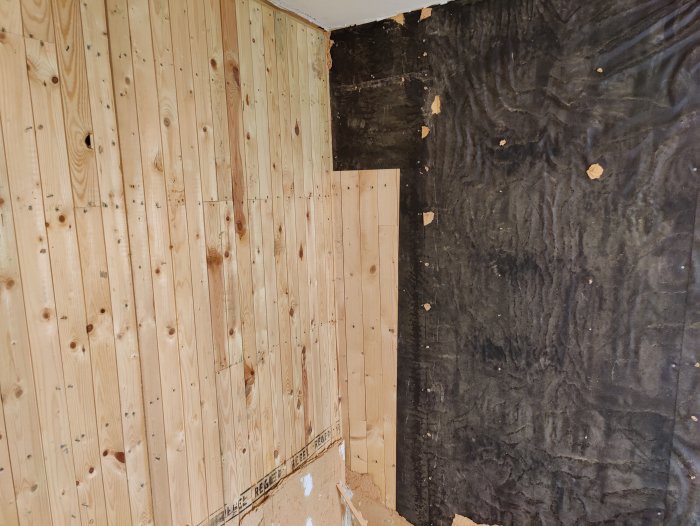
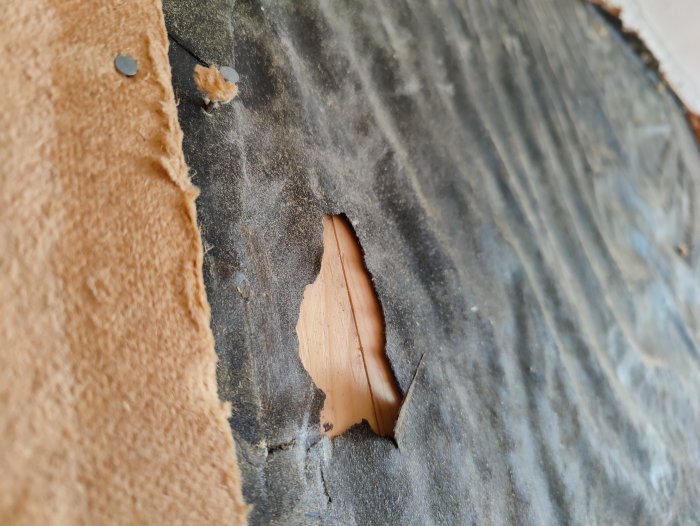
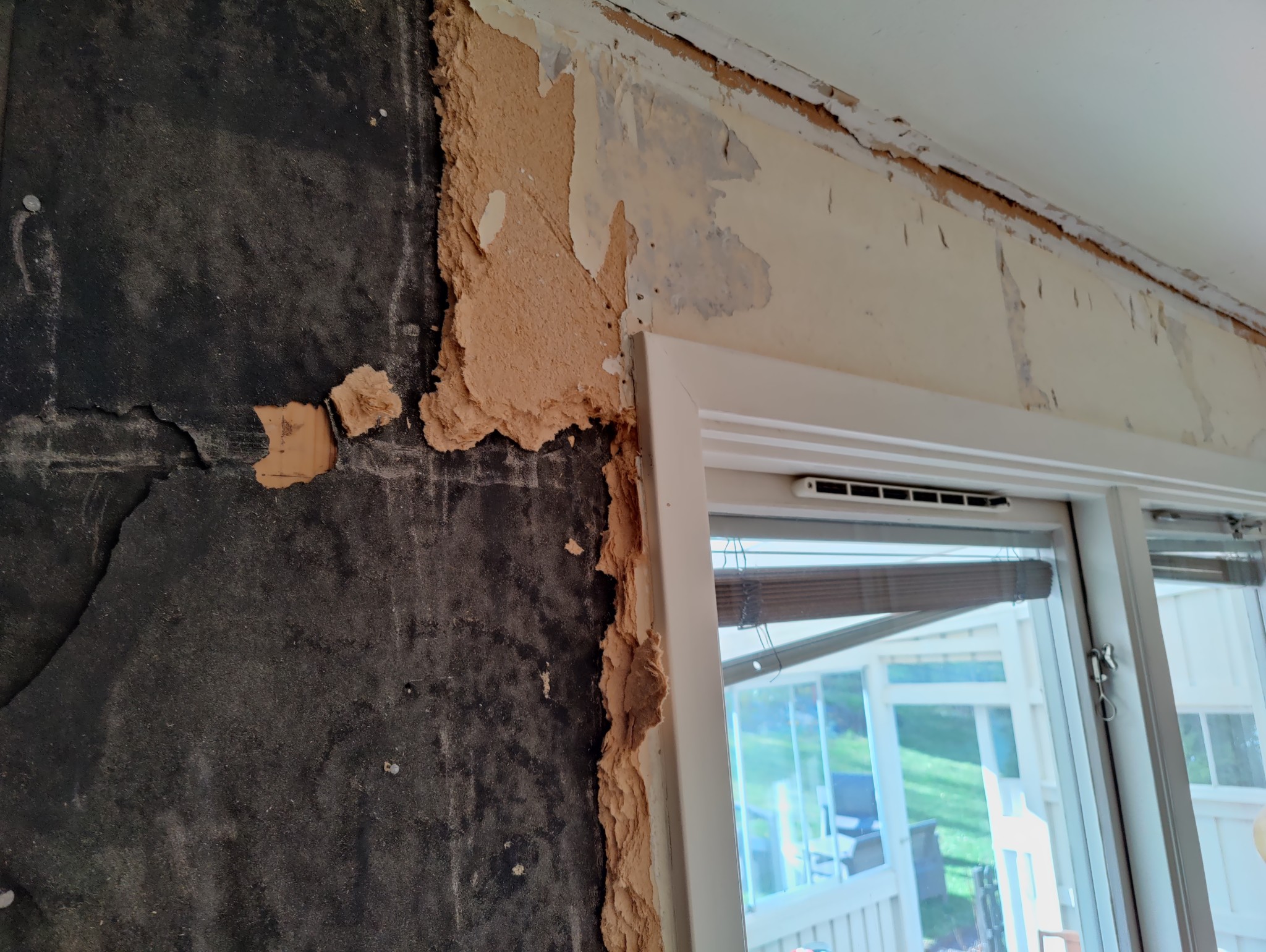
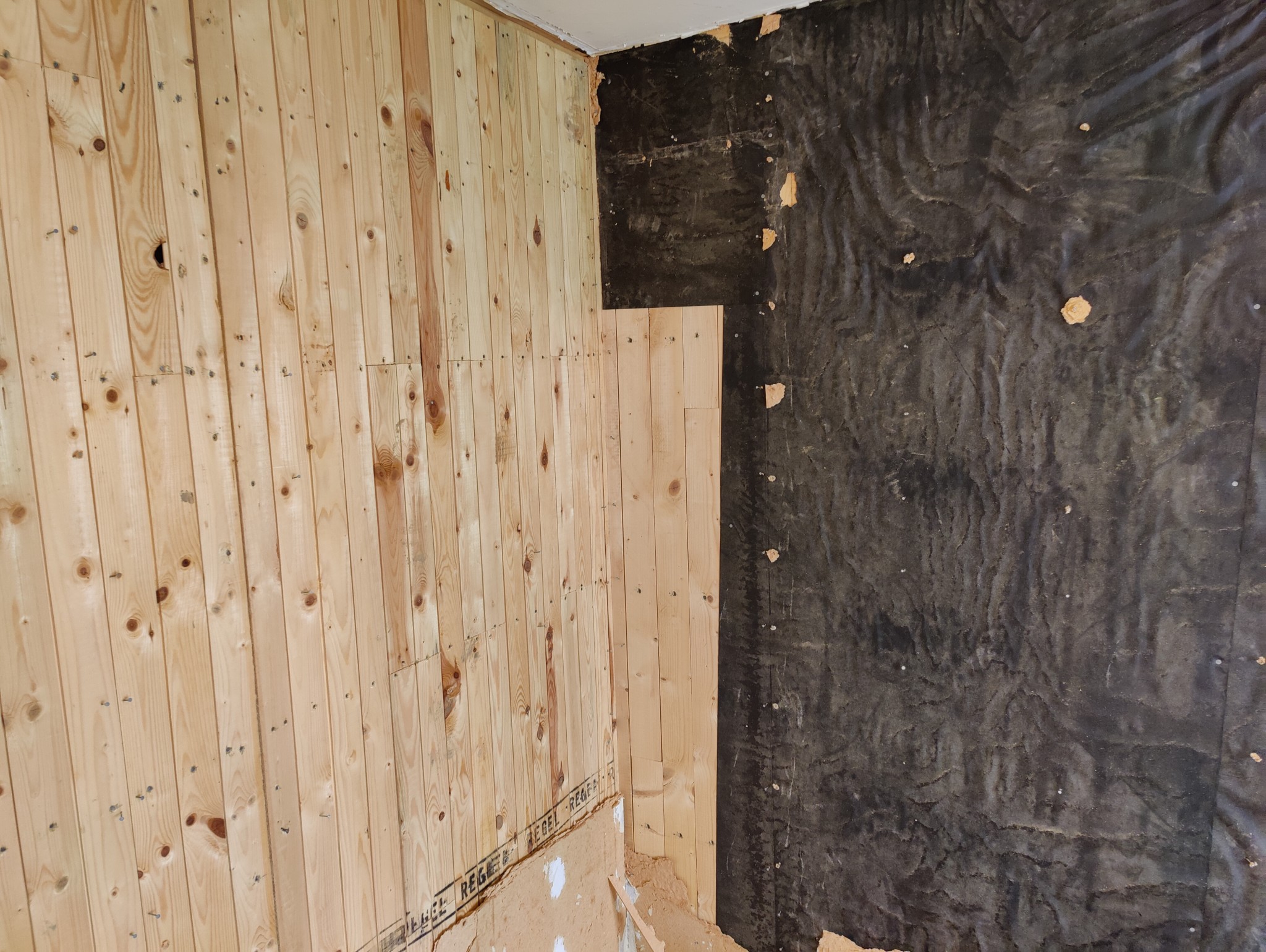
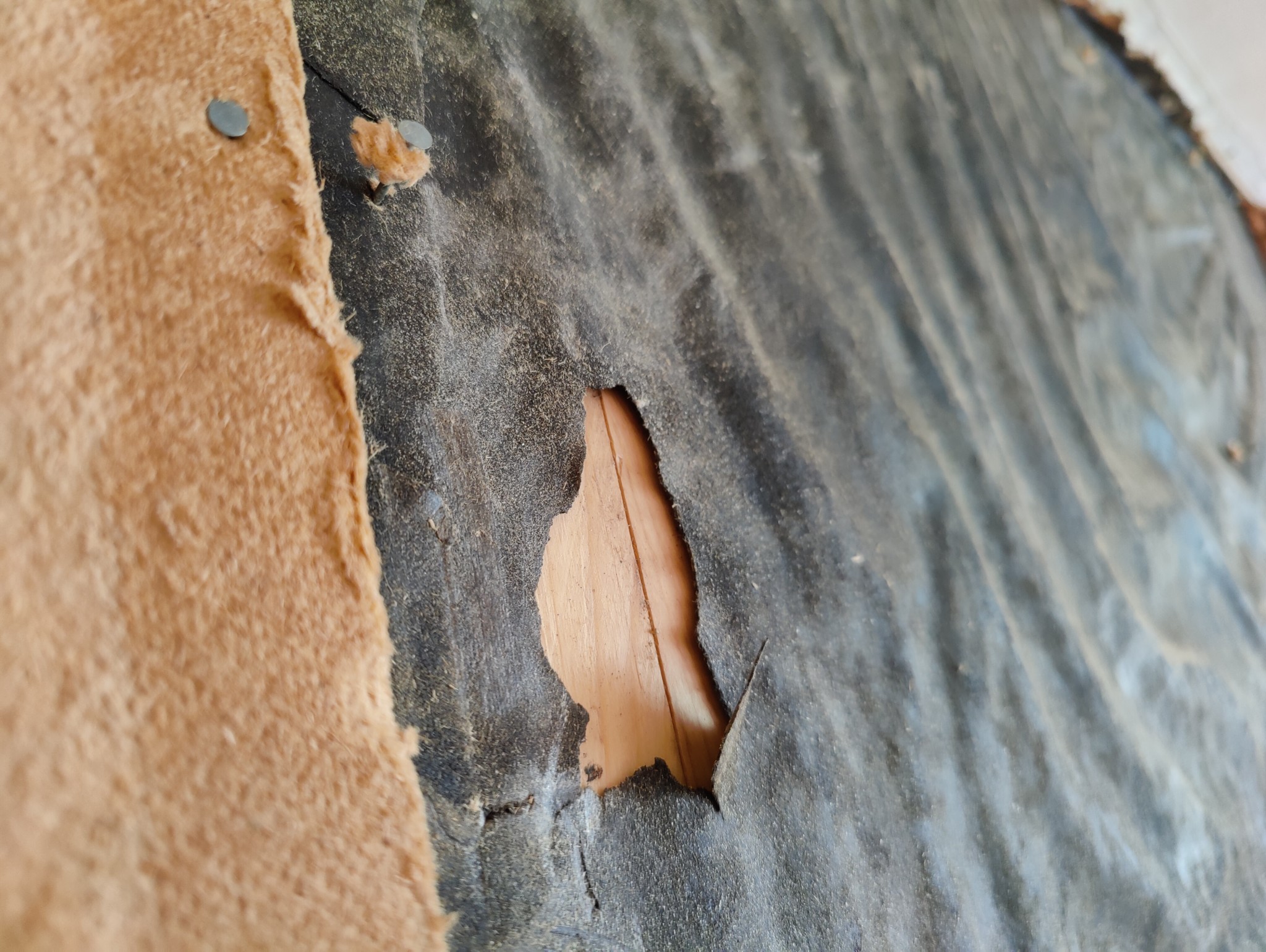
there is black paper on the external walls. After some googling, I think it's some sort of diffusion barrier. Is this something I should replace?
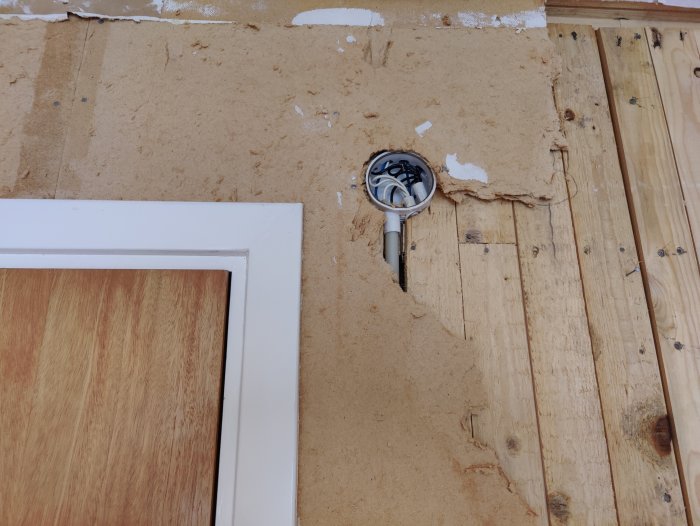
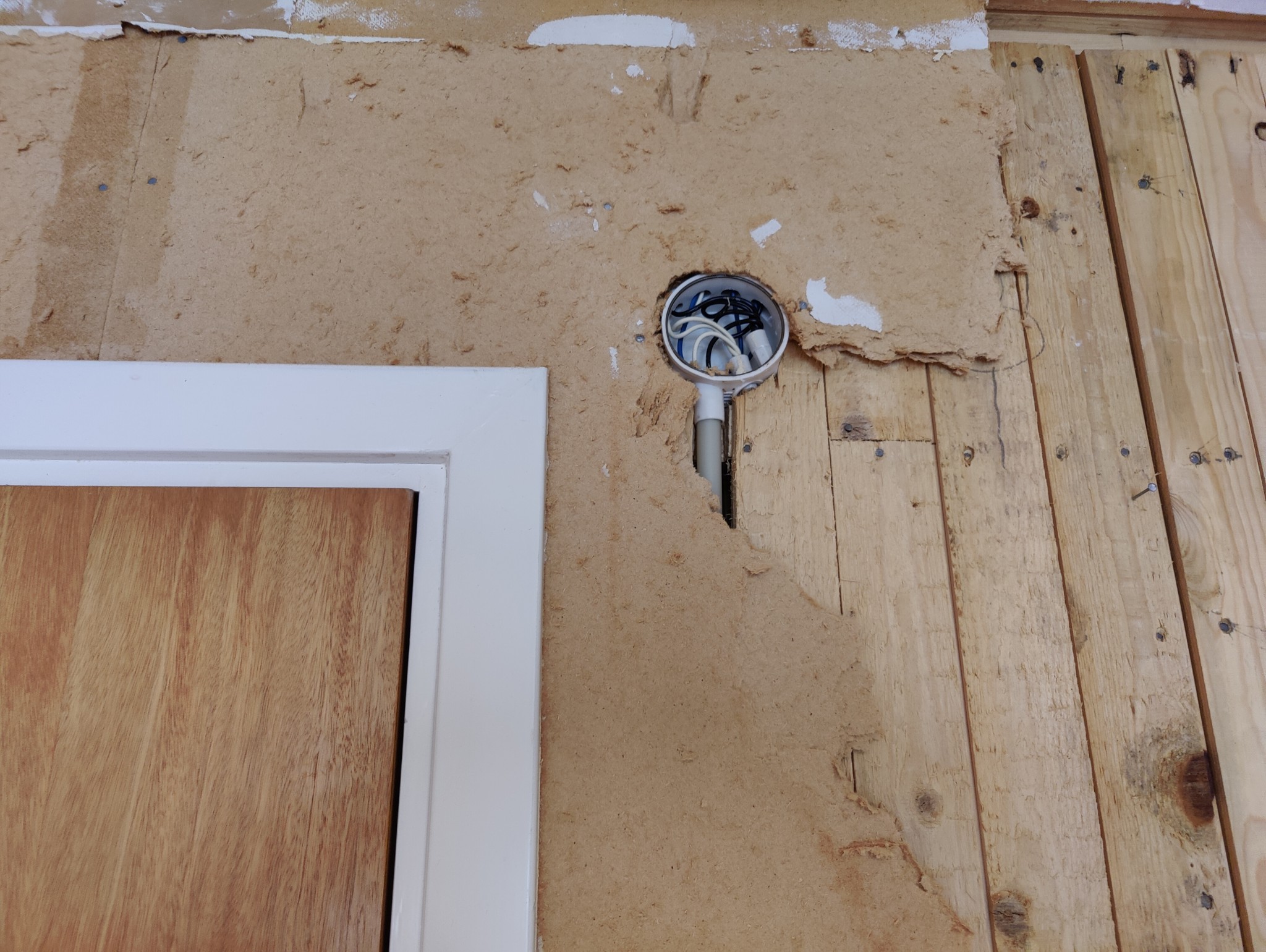
How should I handle around electrical outlets, windows, doors, etc.?
I have read that tretex has insulating properties... if anything, wouldn't you want MORE insulation in the current economy, not remove it? Is something more insulating needed than the drywall?
I've also read that tretex gives a nice sound in the room and warmer walls... Will the room feel "dead" now?
Attaching some pictures as well thanks in advance!
Treetex provides some insulation, but considering it's so thin, it doesn't make much of a difference. The sound might also feel a bit softer with Treetex, but once you set up furniture and hang curtains, it doesn't make a significant difference either.
You should carefully remove the trim around doors and windows. They can likely be reused with a bit of wood filler and paint.
I don't know if any sort of paper is needed in between.
Others probably know better than I do how to handle electrical boxes, but it's not that difficult with the right tools.
And then you forever have a crappy wall to screw things into........no thanks.
well if you normally screw things with very short screws then okay......most tretex walls usually have rough sheathing underneath and it's an excellent surface to screw into.
well if you normally screw things up with very short screws, okay then......most tretex walls normally have raw planks underneath them, and that's an excellent surface to screw into.
Sure, it also seems to be raw planks underneath here. But the combination of drywall, tretex, and then a bit of raw planks isn't optimal.
For my part, I would have removed the tretex, which doesn't make anyone happy, then framed out 45 or 70mm, fixed the outlets, etc., and redone the window lining, but it all depends on how much you want to work too.
Sure, even here it seems to be rough-sawn under. But the combination of plasterboard, tretex, and then a bit further in some rough-sawn is not optimal.
For my part, I would have removed the tretex that pleases no one and then framed out 45 or 70mm, fixed up the sockets, etc., and redone the window fittings, but it all depends on how much you want to work as well.
Optimal? What you were talking about was attaching something. Plasterboard and tretex are no different than double plasterboard in that case, and you would have to take that into consideration in regular cases as well.
Okay, but plasterboard and fiberboard don't get any better just because double plasterboard is also bad for fastening. I'm not quite following the argument here.
If you want to do as little as possible, you just put a little filler on the fiberboard and go back to sleep.
If you want to do a bit more and get a better surface to work with, plasterboard is nice. If you put it on top of the fiberboard, you'll have to redo the moldings and infill anyway, so you might as well do the job properly. Leaving the fiberboard in place and creating more work for yourself sounds crazy to me, but everyone is free to do as they wish.
We had tretex with terrible cracks between each panel in our living room. When we renovated, we traced the wiring in the tretex and the raw wood paneling and added a number of outlets. Then we actually put renovation plasterboard on top of the tretex. Not according to the rulebook if you're keen on everything being absolutely perfect behind what you see, but we avoided having to extend around the windows, etc. It was enough to install clack trim around the two existing windows. Still looks good after 5 years.
Thank you for all the answers, but it feels like the discussion went a bit sideways The tretex is gone, so it doesn't matter whether it's best to leave it or not, I need to figure out what to do now.
Can't you just buy plasterboard that's as thick as the tretex and saw along the edges and electrical outlets? Leave some tretex behind there and fill any seams?
Well, the black board that was against the outer wall should be replaced with a new similar one to start with. Whatever you do, do not put plastic there anyway. Then, gypsum and tretex are almost the same thickness so you could do as you plan, but I doubt that it would look nice.
I haven't seen any black paper like yours at any of the places where I've torn down tretex. I probably can't advise you on this, but I would have torn it down too and just gone with drywall. Remove all door frames, baseboards, and ceiling moldings, and then put up the drywall. Measure where you want the holes for the boxes and use a tool like this: Hålsåg 7-pk | För plast och trä | BOSCH | Jula
Drywall also soundproofs, so you won't notice a difference compared to how it was before. For cutting drywall, you can use an old handsaw or simply cut with a utility knife and then snap it. The room won't feel dead now, and, in my opinion, there's no significant change in heat insulation.
I haven't seen any black paper like the one you have at any of the places where I've torn down tretex. I probably can't advise you on this, but I would have torn it down too and just gone with drywall. Remove all door casings, baseboards, and crown moldings, and then put up the drywall. Measure where the holes for the boxes should go and then use this type:
Hålsåg 7-pk | För plast och trä | BOSCH | Jula
Drywall also dampens sound, so you probably won't notice any difference compared to how it was before.
Drywall that needs to be cut can be done with an old handsaw or simply scored with a utility knife and then snapped.
The room won't feel dead now and, in my opinion, there won't be a significant change in heat insulation.
Don't listen to Åke.
I would guess it's tar paper you have on the wall.
The hole saw he suggests is too small. You need 74mm for device boxes and 84mm for junction boxes.
You might need to move out boxes if you add insulation and build out the wall.
Drywall dampens sound from outside, but it is a hard surface that reflects sound coming from inside, whereas treetex works somewhat as a sound absorber. However, I have no idea how good an absorber treetex with filler and wallpaper/paint actually is!
However, Åke is right in that it makes little difference as insulation since the treetex is so thin. Think of insulating with 10mm fiberglass; it would feel pretty minimal.
Optimal? What you talked about was attaching something. Gypsum and tretex aren't any different than double gypsum in that case, and you should consider that in regular cases as well.
Yes, there is a difference. Double gypsum is rigid against raw wood paneling.
Tretex in between and you need to screw something up. The tretex compresses slightly, and the screw you previously used for the gypsum board will come out, causing bumps on the wallpaper, etc.
Personal experience. I wanted to remove the tretex, but my father-in-law thought it was unnecessary. Keeping the tretex turned out to be a failure.
Instead, I got a tip to use 22*95 panel to align the walls. Then we would use an insulation board covered with paper on one side that was 20 mm thick, then gypsum. The walls turned out straight and nice.
Having studs to screw into as usual or using gypsum anchors, and then avoiding tretex completely behind.
The black material is a vapor barrier that you need to put back in place; I believe the original name was alkydpapp or something like that, and it's not a plastic type vapor barrier but a combination of wind protection and diffusion-resistant paper, so you need to put up a new one to protect the exterior walls.
Vi vill skicka notiser för ämnen du bevakar och händelser som berör dig.


 thanks in advance!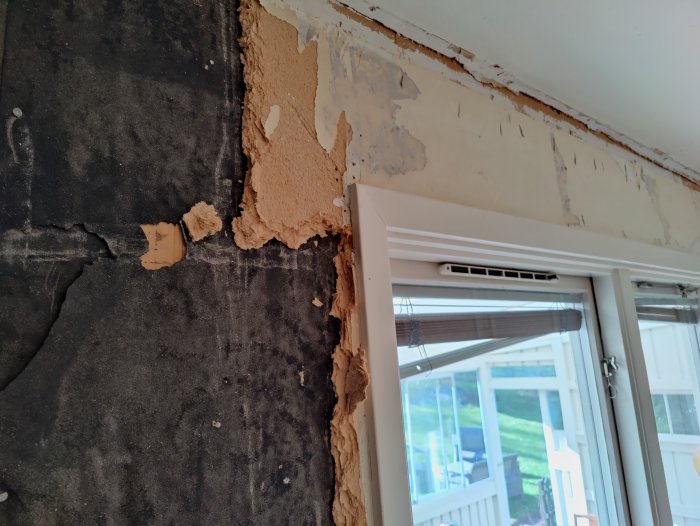

MathiasS said:
Sure, even here it seems to be rough-sawn under. But the combination of plasterboard, tretex, and then a bit further in some rough-sawn is not optimal.
