
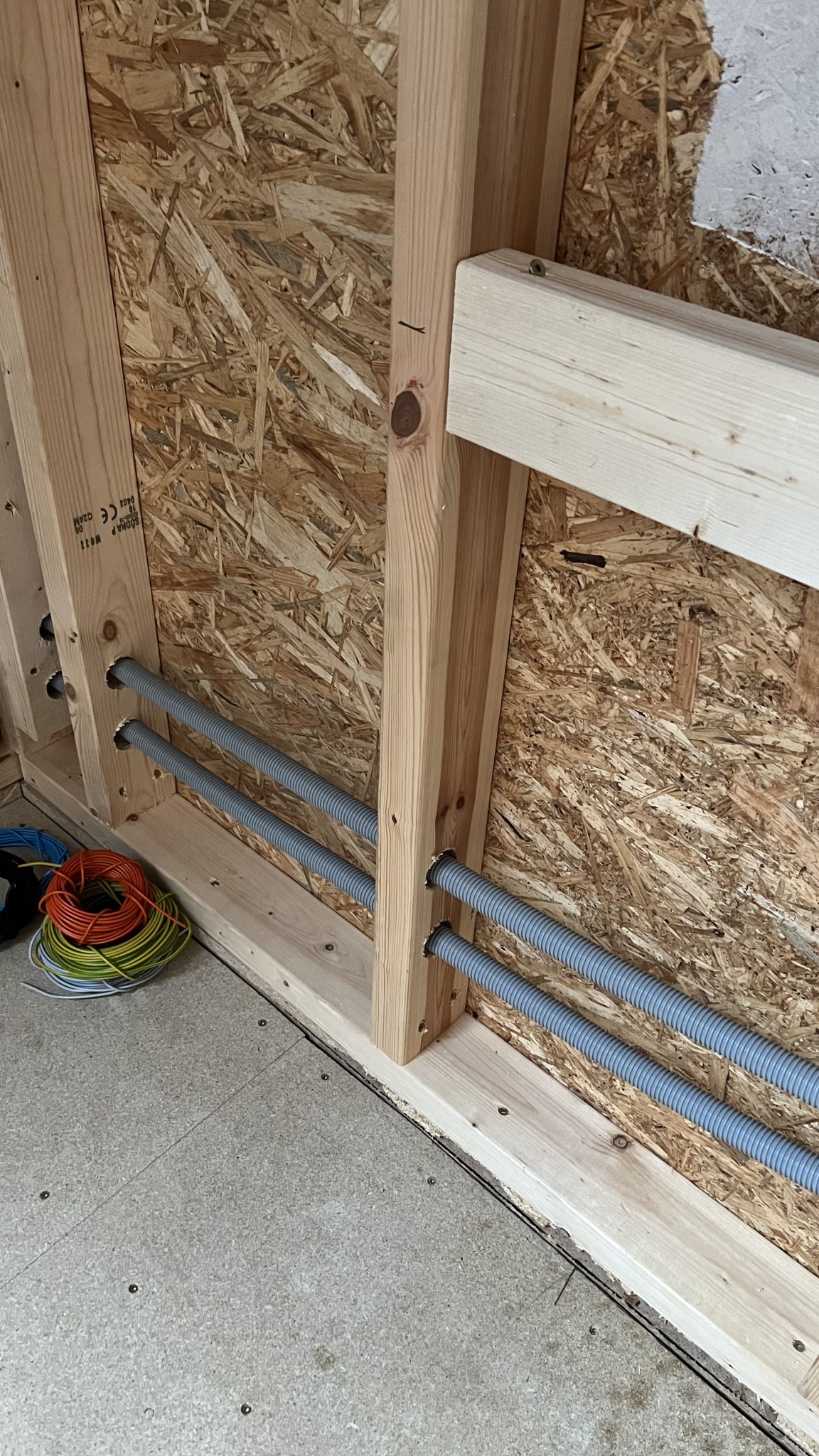
A search on the internet for "spikskydd regel" yields, among others, the following results,
https://www.ahlsell.se/products/var...ppvattensystem/tappvattensystem-roth/1877398/
https://www.elbutik.se/product.html/tm-spikskydd-25
https://www.rskdatabasen.se/kategor...eservdelar/for-plastror/spikskydd-2555428-507
https://www.ahlsell.se/products/var...ppvattensystem/tappvattensystem-roth/1877398/
https://www.elbutik.se/product.html/tm-spikskydd-25
https://www.rskdatabasen.se/kategor...eservdelar/for-plastror/spikskydd-2555428-507
Thank you for trying to help, it is appreciated.Demmpa said:
I have also found your links.
Two of them require attaching the protection as the pipes are being laid, and the last one is for steel studs.
I don't understand why there isn't a simple solution to install afterwards.
I find LK Spikskydd but no information on how this should be installed…
https://www.lksystems.se/sv/produkter/universal/monteringsdetaljer/ovrigt/lk-spikskydd-77746944
Measure where they are and then mark on the plywood areas where you shouldn't screw. Free, and very effective.A Andy_44 said:

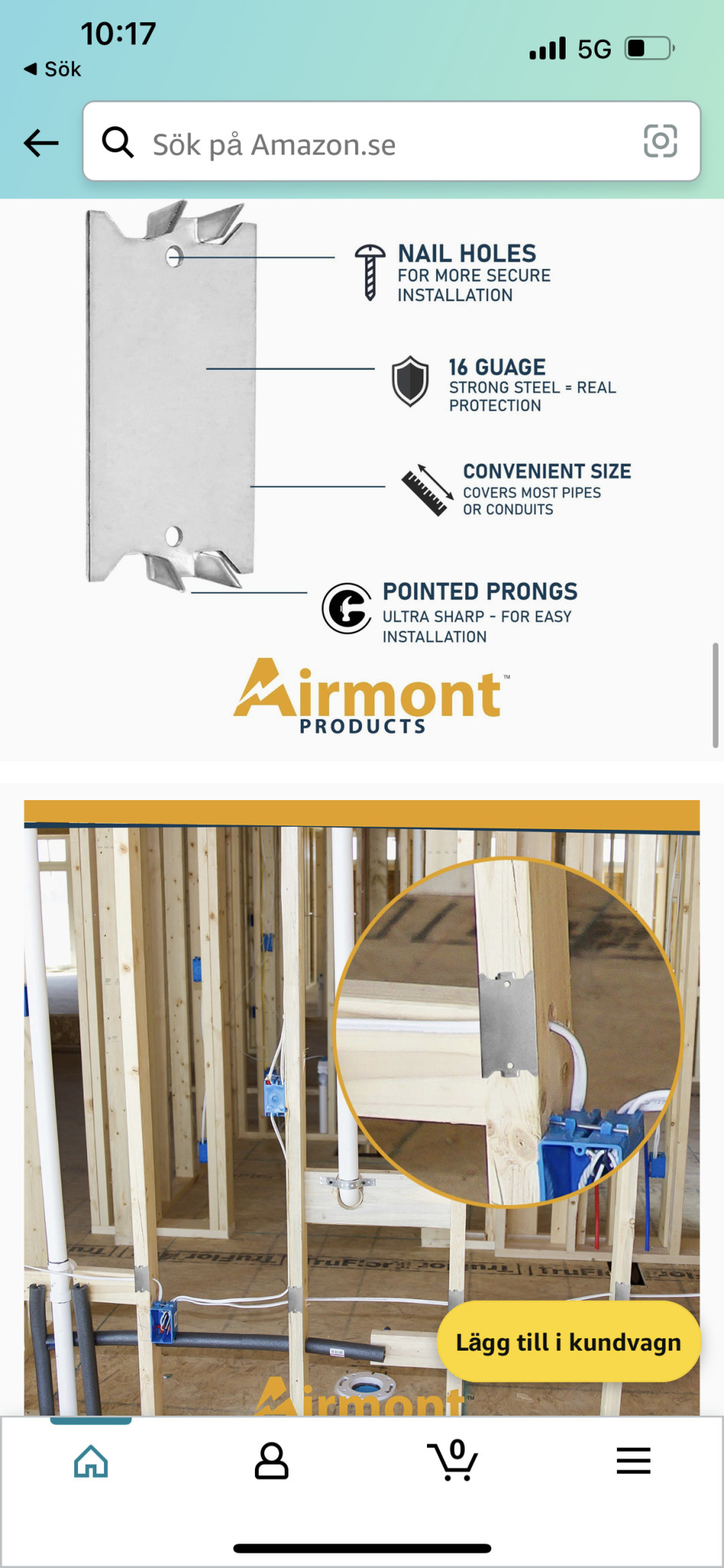

One can always cut just the right pieces from an angle profile, e.g. https://www.bauhaus.se/norgips-vinkelprofil-lp-50-50.

When I ran pipes in a wall over a longer distance that would later be covered with drywall, I ordered strips of 1.5mm galvanized steel sheet that with margin covered the pipes and screwed them over the pipes before the drywall was in place. I have done the same in a few places where pipes pass through studs at unsuitable spots, but with smaller metal pieces similar to those from airmont. But without fastening lugs.
Click here to reply