
42,978 views ·
27 replies
43k views
27 replies
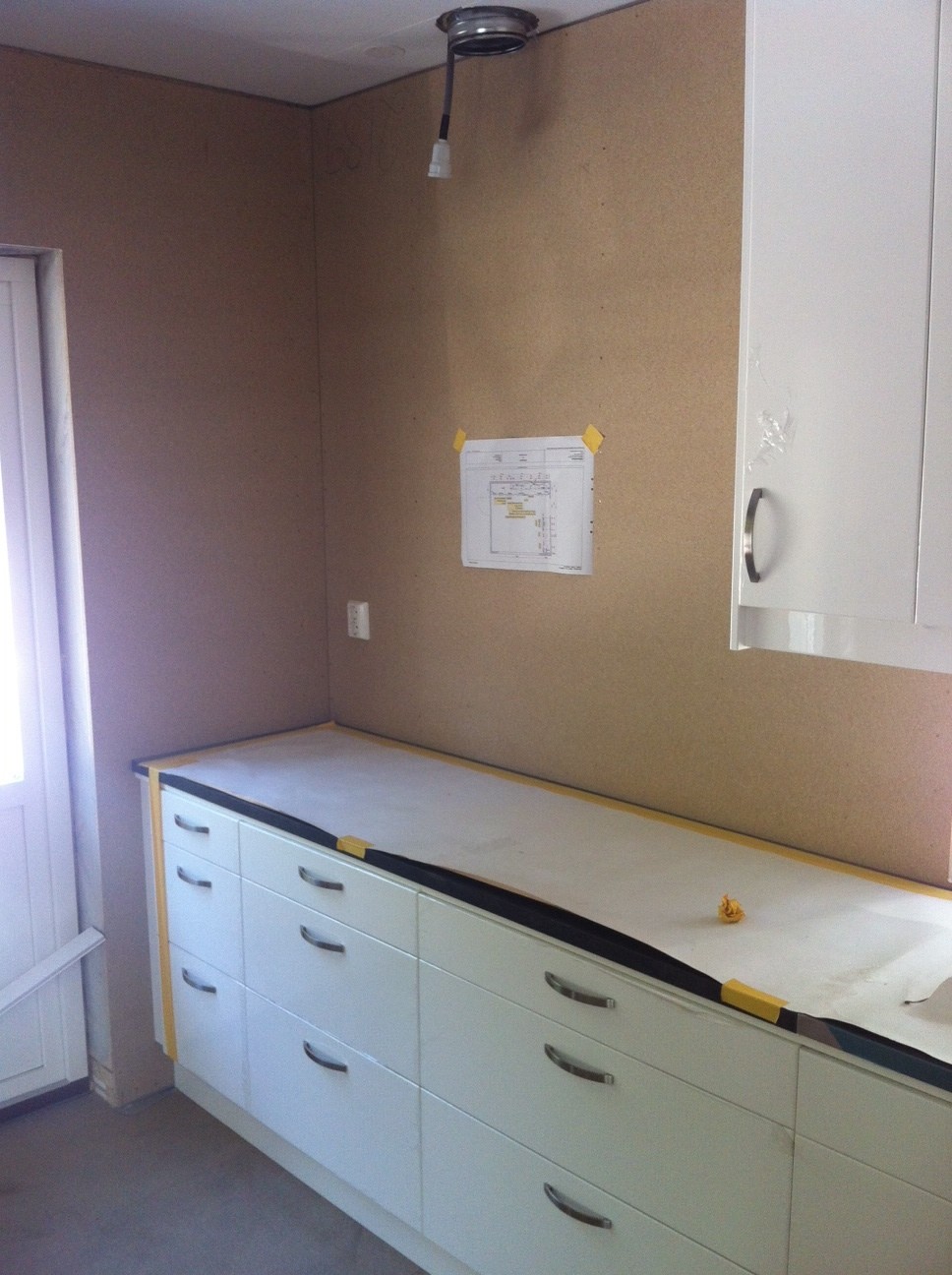
Tiling directly on chipboard?


Member
· Korpilombolo
· 3 724 posts
in Casco's brochure: "In dry areas, it is possible to install tiles and clinker with Casco Tile Adhesive 3461 directly on chipboard."
I would have installed 6mm renovation drywall with staggered joints and then primed and tiled on it instead. Personally, I think it's only a matter of time before the joints crack if you tile directly on chipboard. Especially if a joint falls in line with a board joint.

My parents' house from '73 has chipboard in the walls and tiles above the sink. To my knowledge, there are no cracks.
They also have tiles in the hall directly on the floor chipboard. No problems there either. So, it has obviously lasted for over 40 years now.
So, clearly, it's possible to tile directly on chipboard with good and durable results. However, I wasn't very old at the time and unfortunately can't explain how it was done.
They also have tiles in the hall directly on the floor chipboard. No problems there either. So, it has obviously lasted for over 40 years now.
So, clearly, it's possible to tile directly on chipboard with good and durable results. However, I wasn't very old at the time and unfortunately can't explain how it was done.
Shouldn't it be chipboard first and then drywall? That's what you've seen in every building show that exists, and that's how I built when we were renovating at home. Then you get a dead material to wallpaper, tile on and the chipboard behind to easily hang heavy cabinets, pictures, etc. without having to mess with molly, etc. Why only chipboard, feels very short-sighted? Or have they forgotten the drywall?
/S
/S


I had never done that, it's working against the laws of nature since sawdust is not a dead material. But what do you do then with the rest of the house? I have sawdust in my walls and almost all the joints are cracking, I am putting gypsum in all the rooms I renovate.
Member
· Korpilombolo
· 3 724 posts
But a few rows of tiles above the sink will never be burdened by anything other than a dishcloth now and then. There is flexible adhesive/tile glue and grout if you're worried it might move. I would plasterboard if I were doing the walls as well, but if there's already chipboard, it seems unnecessary to extend further and reduce the countertop space.

In my previous house, there were tiles on chipboard on a wall. The grout kept cracking in just one place, from the edge of a window and downwards. I assume the chipboard underneath was joined there. I probably re-grouted just that little section 3-4 times over the years.
I hung large tiles on plywood but used construction adhesive (PL400) and grouted with bathroom silicone because I was afraid the wood would move relative to the rigid tiles and crack the adhesive and grout. It looks good 12 years later, no damage.
There seem to be two camps... for and against...
Many of those who are in favor have found it to work... My guess is that it will work. You can try tightening the particle board a bit more... so that it becomes as rigid as possible... Then tile. I don't think it will move so much that it cracks. But I'm just guessing.
However, I probably wouldn't lay tiles directly on a particle board... But that's a bit different...
Many of those who are in favor have found it to work... My guess is that it will work. You can try tightening the particle board a bit more... so that it becomes as rigid as possible... Then tile. I don't think it will move so much that it cracks. But I'm just guessing.
However, I probably wouldn't lay tiles directly on a particle board... But that's a bit different...
Yes, Bauhaus is known for having competent staff...237 said:

A friend wanted paintable sealant and was sold silicone that "would work just as well." Fun then when the paint peeled off everywhere it was sealed...